

TotalEnergies Urges South Africa to Reform Oil and Gas Appeal Framework
The energy giant warned that protracted regulatory appeals and administrative bottlenecks threaten investment across South Africa's nascent upstream hydrocarbon sector.
By The Global Wire Newsroom · Reported from Irma Venter
Link preview · horizonglobalnews.com
TotalEnergies Urges South Africa to Reform Oil and Gas Appeal Framework
The energy giant warned that protracted regulatory appeals and administrative bottlenecks threaten investment across South Africa's nascent upstream hydrocarbon sector.

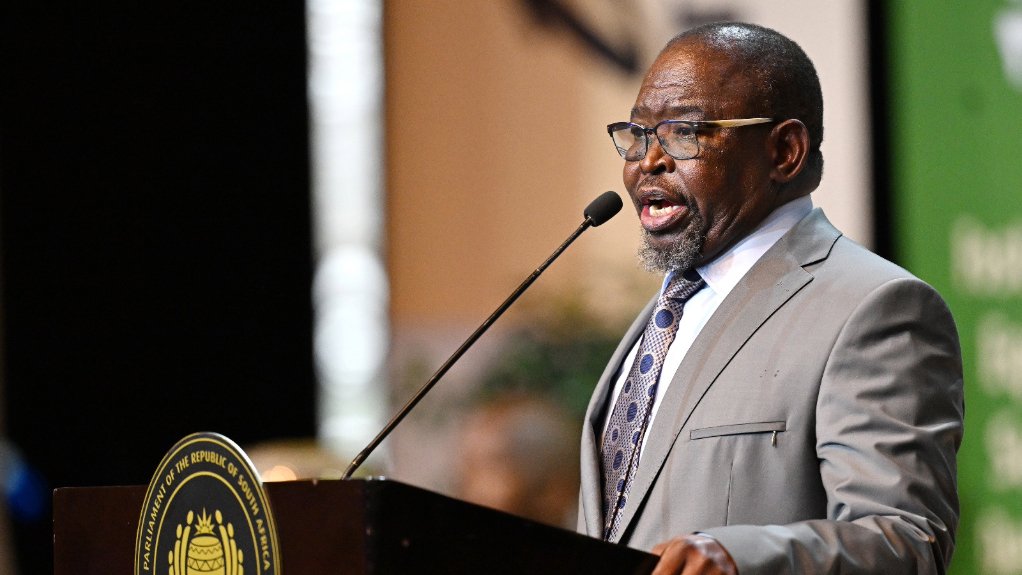
CAPE TOWN — TotalEnergies Exploration and Production South Africa has called on the South African government to overhaul its regulatory architecture and resolve pervasive administrative appeal delays that the French multi-energy company warns are stymieing upstream oil and gas investments. Speaking during a panel session at the African Energy Week conference in Cape Town, company representatives emphasized that protracted legal disputes and redundant appeals mechanisms create severe commercial uncertainty, jeopardizing capital deployment in deepwater exploration off the southern African coastline.
Key facts
What happened
During a dedicated panel discussion at African Energy Week, leadership from TotalEnergies Exploration and Production South Africa delivered a direct message to public officials: the existing regulatory machinery governing environmental approvals and administrative appeals is no longer workable for capital-intensive offshore exploration, according to reporting by Irma Venter.
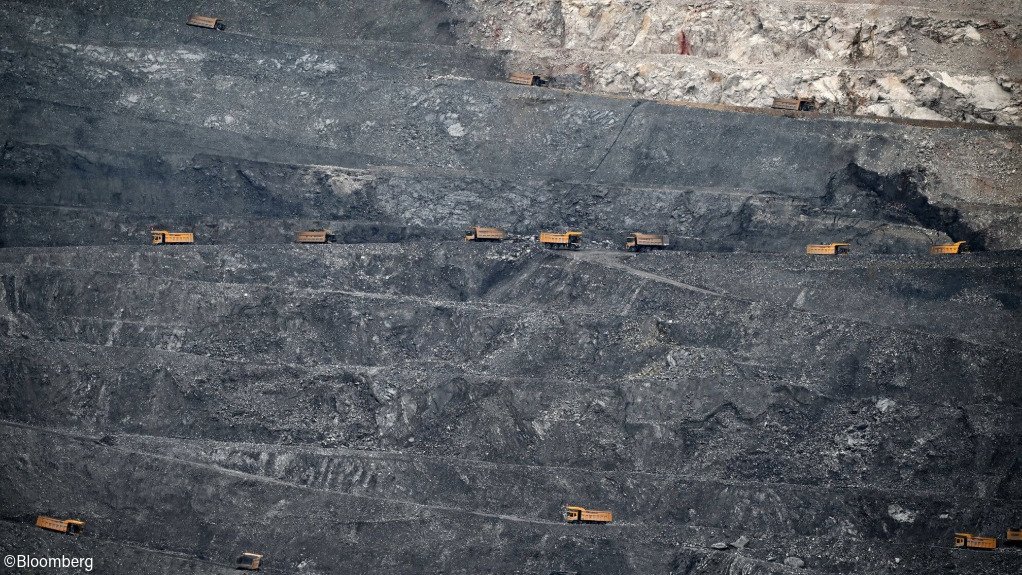
The company argued that while regulatory rigor is necessary, the current system allows administrative appeals to freeze exploration authorizations indefinitely, preventing operators from meeting tight contractual and seasonal drilling windows. In offshore exploration, specialized deepwater drilling rigs and seismic exploration vessels must be contracted months or years in advance at rates often exceeding several hundred thousand dollars per day. When approvals granted by the Department of Mineral Resources and Energy or the Department of Forestry, Fisheries and the Environment are subjected to rolling appeals, operational schedules collapse.
TotalEnergies stressed that without clear legislative intervention to compress timelines, provide procedural finality, and establish predictable legal mechanisms for resolving environmental objections, foreign direct investment will migrate to more legally decisive jurisdictions across the African continent and globally.
Why it matters
The call for administrative reform cuts directly to the core of South Africa's long-term energy security and industrial trajectory. The country remains overwhelmingly reliant on aging coal-fired power stations operated by state utility Eskom, alongside imported natural gas from Mozambique delivered via the Rompco pipeline. With Sasol anticipating a sharp decline in Mozambican gas supply from the Pande and Temane fields before the end of the decade, South Africa faces a looming domestic gas cliff that threatens industrial manufacturers in Gauteng, KwaZulu-Natal, and Mpumalanga.
Developing domestic gas reserves has been positioned by economic planners as a critical transitional bridge to support industrial feedstock and provide flexible power generation to balance intermittent renewable energy. However, if exploration programs are locked in perpetual administrative limbo, commercial extraction remains years away. For the broader economy, the gridlock delays potential royalty receipts, infrastructure construction, port utilization, and local technical employment. Conversely, international oil companies operating with disciplined capital budgets are increasingly demonstrating that they will not wait indefinitely for South African regulatory clarity when nearby basins, such as Namibia's offshore Orange Basin, offer faster permitting pathways and equally promising geology.
The background
South Africa's upstream regulatory regime has historically been governed by the Mineral and Petroleum Resources Development Act (MPRDA) of 2002. For years, petroleum operators complained that treating oil and gas exploration under the same legal regime as open-cast coal or hard-rock gold mining ignored the distinct operational realities, risk profiles, and capital intensity of offshore drilling. In response, authorities drafted the Upstream Petroleum Resources Development (UPRD) Bill, intended to establish an independent statutory framework for hydrocarbons, clarify state participation rights through the national oil company PetroSA, and establish predictable licensing procedures.
Despite this legislative movement, environmental authorizations remain anchored in the National Environmental Management Act (NEMA) of 1998 and the Promotion of Administrative Justice Act (PAJA) of 2000. Under Section 43 of NEMA, any affected party can lodge an administrative appeal against an environmental authorization directly with the Minister of Forestry, Fisheries and the Environment. Although an appeal does not always automatically suspend an authorization depending on specific regulatory revisions, in practice it frequently halts operations while ministerial reviews grind on for months.
If a ministerial appeal is dismissed, civil society coalitions and small-scale fishing communities frequently take the matter to the High Court under PAJA for judicial review. This dynamic was dramatically demonstrated in late 2021 and 2022, when legal challenges mounted by coastal communities and non-governmental organizations successfully halted Shell's three-dimensional seismic survey along the Wild Coast. The courts ruled that public consultation had been procedurally flawed and culturally inadequate. TotalEnergies experienced similar friction regarding its Block 5/6/7 exploration program off the southwest coast, where environmental groups lodged formal appeals challenging the government's environmental authorization.
Frustrations over regulatory delays and complex commercial dynamics culminated in TotalEnergies announcing in mid-2024 its intent to exit Block 11B/12B, situated in the Outeniqua Basin roughly 175 kilometers off South Africa's southern coast. The block had yielded major gas-condensate discoveries at the Brulpadda and Luiperd prospects in 2019 and 2020. However, prolonged negotiations over gas pricing, infrastructure off-take agreements with the state-owned gas-to-liquids refinery in Mossel Bay, and the regulatory burden contributed to the consortium's decision to relinquish its operating interest.
Reaction
While state officials at African Energy Week reiterated South Africa's commitment to creating an enabling climate for upstream development, the Department of Mineral Resources and Energy faces structural resistance from civic organizations that view oil and gas exploration as fundamentally incompatible with the country's climate commitments under the Paris Agreement.
Environmental justice organizations, including The Green Connection, Natural Justice, and groundWork, have consistently maintained that the appeals and judicial review processes are vital constitutional checks against executive overreach and inadequate ecological assessment. Representatives from civil society argue that attempts to truncate public participation or narrow appeal pathways undermine the constitutional right to an environment that is not harmful to health or well-being. These groups contend that communities dependent on small-scale artisanal fishing and coastal tourism bear the primary ecological and economic risks of offshore drilling operations.
Government authorities, including the Petroleum Agency of South Africa (PASA), are expected to address industry concerns during ongoing portfolio committee hearings and implementation phases of the new petroleum legislation. Official responses will require balancing constitutional mandates for public consultation against the Department of Mineral Resources and Energy's objective of monetizing domestic resources.
What we don't know yet
Several key policy parameters remain uncertain. The reporting from the conference does not specify the exact legislative mechanisms TotalEnergies is proposing to compress appeal timelines. It remains unclear whether the company is seeking hard statutory deadlines for ministerial appeal rulings, exemptions for specific exploration activities, or a specialized administrative tribunal dedicated to energy disputes.
Additionally, there is no public indication yet of whether the Ministry of Forestry, Fisheries and the Environment is willing to amend the NEMA appeal regulations to accommodate the energy sector's scheduling constraints. Finally, it remains unconfirmed how TotalEnergies will balance its remaining South African exploration portfolio—including deepwater acreage in the Orange Basin near the maritime border with Namibia—against its capital commitments in neighboring Namibian discoveries, where the company recently fast-tracked evaluation of the Venus oilfield.
What to watch
The trajectory of South Africa's upstream sector will be determined by three distinct developments over the coming twelve to eighteen months. First, market watchers must observe the final promulgation and implementation of the Upstream Petroleum Resources Development Act, specifically examining the accompanying regulations that govern licensing timelines and inter-departmental approvals.
Second, the outcome of pending judicial review cases in the High Court and Supreme Court of Appeal concerning offshore exploration permits will establish legal precedents regarding the required standard of public consultation. If the judiciary sets higher consultative thresholds without clear statutory timelines, administrative delays are likely to persist.
Third, industry observers will monitor whether other international supermajors follow TotalEnergies in publicly pressing for reform or choosing to quietly divest South African acreage. The forthcoming licensing rounds administered by PASA will serve as a definitive barometer of whether regulatory bottlenecks have decisively chilled institutional investor appetite for South Africa's offshore hydrocarbon potential.
This article draws on reporting published by Irma Venter.
How this story was produced
This report was written by The Global Wire newsroom from reporting first published by Irma Venter. We verify the core facts against the original report, write our own account, and add the background and consequences a short wire item leaves out. Drafting is AI-assisted inside an editor-supervised pipeline, and every story is checked for accuracy of attribution, structure and duplication before it appears — full detail in our AI and funding disclosure.
Spotted an error? Tell us at corrections@horizonglobalnews.com and read our corrections policy or editorial standards.



Reader comments
Loading comments…