

Orionid Meteor Shower Enters Annual Peak as Earth Crosses Halley Debris Stream
The annual Orionid display reaches its mid-October crescendo, sending fast-moving debris from Comet 1P/Halley into Earth's upper atmosphere under prime viewing conditions.
By The Global Wire Newsroom · Reported from Trending Desk
Link preview · horizonglobalnews.com
Orionid Meteor Shower Enters Annual Peak as Earth Crosses Halley Debris Stream
The annual Orionid display reaches its mid-October crescendo, sending fast-moving debris from Comet 1P/Halley into Earth's upper atmosphere under prime viewing conditions.
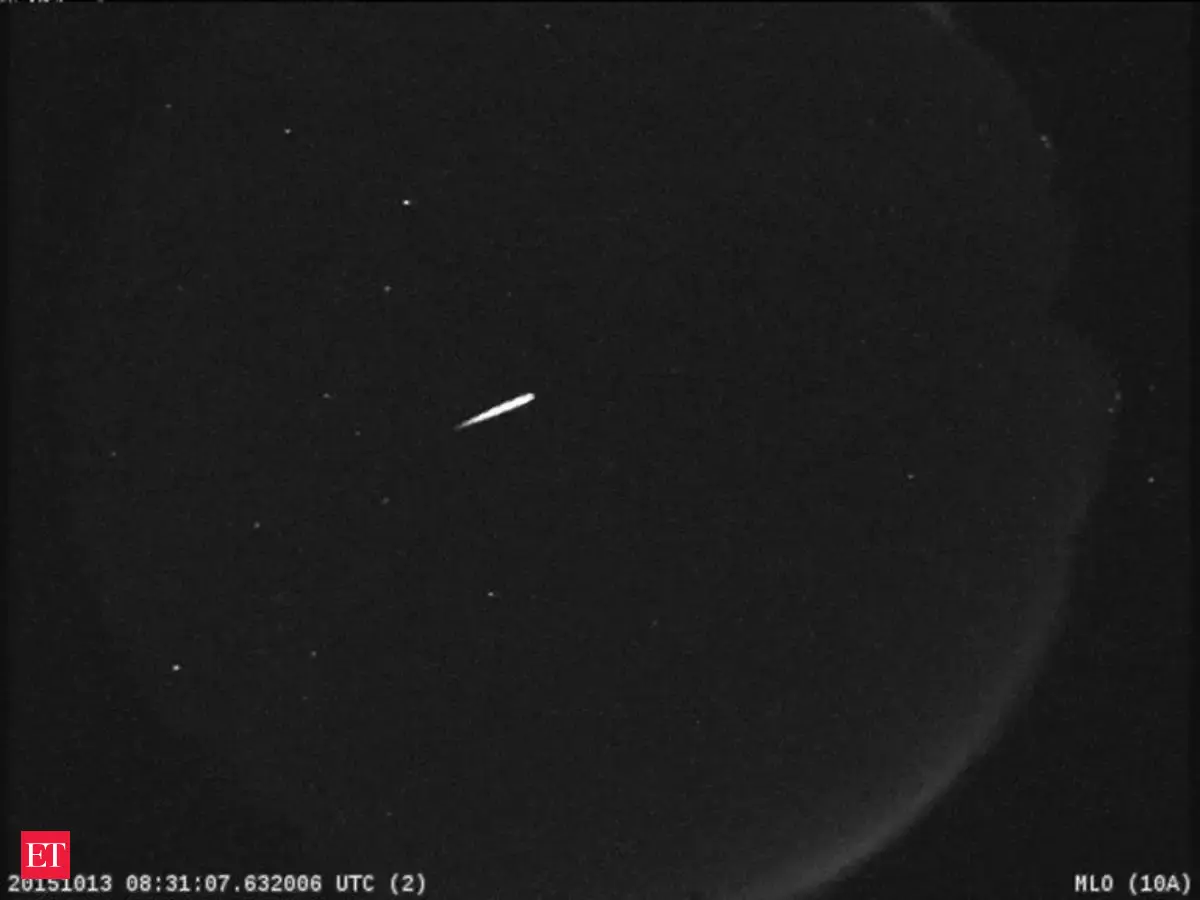
Skywatchers across both hemispheres are turning their attention upward this week as the annual Orionid meteor shower enters its window of peak activity in mid-October. According to reporting by Trending Desk, the recurring astronomical display is drawing observers toward rural and dark-sky destinations to witness high-speed particles striking Earth's upper atmosphere. The celestial event occurs each autumn as the planet navigates the dense debris stream cast off by Comet 1P/Halley during its multi-millennial travels through the inner solar system. For ground-based viewers, the display provides a reliable and striking autumn spectacle that requires no optical equipment, relying instead on expansive views of dark night skies uninhibited by artificial illumination.
Key facts
What happened
In mid-October, Earth's orbital path once again intersected the inbound orbital trail of Comet 1P/Halley, initiating the peak phase of the Orionid meteor shower. Trending Desk reported that observers are preparing for peak viewing windows during late-night and pre-dawn hours, when the constellation Orion ascends well above the horizon for observers worldwide. The meteors materialize when millimeter-sized particles, preserved along the comet's ancient path, collide with Earth's atmosphere at hypersonic speeds, incinerating through frictional heating in the mesosphere between 80 and 100 kilometers above ground level.
Astronomical monitoring networks note that the Orionids are distinguished by their speed and luminescence. Particles impacting the upper atmosphere at roughly 66 kilometers per second vaporize instantly, leaving behind glowing ion trains that can remain suspended against the backdrop of stars for several seconds after the initial flash has dissipated. While individual meteoroids are rarely larger than a grain of sand or a small pebble, the kinetic energy unleashed during their atmospheric entry produces bright fireballs that cut swift, elongated arcs across the sky. Trending Desk noted that viewing conditions depend heavily on environmental factors, prompting advisories for prospective viewers to seek unobstructed observation sites outside metropolitan centers.
Why it matters
For professional astrophysicists and atmospheric scientists, the annual return of the Orionids serves as an invaluable natural laboratory. The encounter allows researchers to sample the density, distribution, and chemical makeup of the Halley debris stream without deploying costly deep-space probes. Optical spectroscopy of meteor ionization trails reveals the elemental composition of material originating from the primordial outer solar system, offering direct evidence of the volatile compounds, metals, and silicate dust present during the formation of the planets more than 4.5 billion years ago.
Beyond specialized scientific research, the Orionids carry operational significance for the commercial aerospace and satellite industries. Low Earth orbit and geostationary orbits host thousands of active communication satellites, Earth observation constellations, and crewed orbital platforms, including the International Space Station and the Tiangong space station. While meteoroid impacts on orbital infrastructure are statistically rare, hypervelocity particle showers elevate collision hazards. Satellite operators utilize meteor prediction models to reorient solar panels and sensitive optical payloads parallel to the incoming debris vector, minimizing surface exposure during the shower's peak.
For the broader public, the event underscores growing civic interest in astronomy and the preservation of pristine night skies. The logistics of viewing faint meteors highlights the rapid proliferation of artificial light pollution, which now obscures the Milky Way from roughly 80 percent of the North American population. Meteor showers act as key focal points for astrotourism, channeling seasonal economic activity into rural communities, national parks, and designated dark-sky sanctuaries that actively enforce lighting curfews and shielding ordinances.
The background
Comet 1P/Halley is the most famous periodic comet in recorded human history, with written observations dating back more than two millennia to Babylonian, Chinese, and Greco-Roman chroniclers. Edmond Halley mathematically established its periodicity in 1705, correctly deducing that sightings documented in 1531, 1607, and 1682 represented visits by the same celestial body returning roughly every 75 to 76 years. Halley's comet last visited the inner solar system in early 1986, reaching perihelion—its closest approach to the Sun—on February 9 of that year, and is not scheduled to return until mid-2061.
As comets travel along highly eccentric elliptical orbits, solar radiation vaporizes their icy surfaces, a process known as outgassing. This sublimating gas releases trapped dust grains, creating expansive cometary tails and seeding a vast ribbon of particulate debris along the orbital path. Because Earth's orbit crosses this trajectory twice each calendar year, Halley's comet is the parent body for two separate annual meteor showers: the Eta Aquariids in early May and the Orionids in October. Over hundreds of revolutions, planetary gravitational perturbations—principally from Jupiter—have smeared these meteoroids into a relatively stable ring of cosmic dust.
The shower's name derives from its apparent radiant point, the specific coordinate in the night sky from which the meteors appear to originate due to perspective. For the Orionids, this point sits in the northeastern quadrant of the constellation Orion, adjacent to the constellation Gemini. Standard observation guides compiled by the International Meteor Organization note that under dark, moonless skies, the shower typically delivers a Zenithal Hourly Rate of 15 to 20 meteors per hour during peak activity, though historical periodic spikes—such as those observed between 2006 and 2009—have pushed rates past 50 to 75 meteors per hour.
Reaction
Public and institutional engagement surrounding the mid-October display reflects coordinated efforts between amateur astronomical societies, educational planetariums, and international monitoring consortiums. Community observatories and municipal parks routinely schedule public star parties timed to coincide with the Orionid maximum, providing audiences with guided navigation of the autumn constellations and dark-sky viewing access.
Regional dark-sky advocates and environmental groups frequently leverage the event to raise awareness regarding lighting standards. DarkSky International and affiliated local chapters emphasize that excessive upward-directed artificial light wastes energy and diminishes public access to natural celestial phenomena. Meteor displays regularly prompt municipal leaders to review outdoor lighting codes, encouraging the transition toward full-cutoff fixtures and warm-spectrum light-emitting diodes that minimize atmospheric scattering.
Among scientific organizations, the International Meteor Organization coordinates global crowdsourced observational data. Visual observers submit standardized meteor counts, while automated video cameras and multi-station radar installations log meteor velocity, deceleration, and luminous trajectories. These coordinated reports feed directly into planetary defense and space environment models maintained by organizations such as NASA's Meteoroid Environment Office.
What we don't know yet
Despite centuries of observation, key variables regarding the current Orionid cycle remain uncertain. Primary among these is the exact peak density of the debris filament through which Earth is currently passing. Because cometary dust ribbons are subject to complex gravitational resonances caused by Jupiter and Saturn, the concentration of particles varies significantly from year to year. Astrodynamicists cannot predict with total certainty whether Earth will intersect a dense, concentrated dust clump or a more dispersed background ribbon until real-time ground-based radar counts materialize.
Furthermore, localized cloud cover and atmospheric transparency introduce substantial observational uncertainty for prospective viewers. Weather systems crossing continental landmasses dictate local visibility far more than the astronomical rate of incoming meteoroids. Compounding this is the variable presence of lunar interference; the lunar phase during the shower determines the degree of ambient sky brightness, which can easily wash out all but the brightest fireballs.
What to watch
Over the coming days, observers will monitor the hourly rates reported by radar and visual tracking networks as Earth transits the densest portion of the debris stream. The International Meteor Organization will publish real-time flux graphs compiling counts from observers positioned across various longitudes, providing a comprehensive metric of the shower's peak activity and profile.
Prospective ground observers should monitor localized satellite weather forecasts to identify regions featuring cloudless conditions during the late evening and early morning hours between midnight and dawn. Those planning excursions should seek designated public lands, state parks, or certified international dark-sky reserves that offer wide, unobstructed horizon vistas.
In the scientific community, researchers will finalize automated video logs and spectroscopic captures of notable fireballs. Data gathered during this display will be compared against historical orbital baselines to refine predictive models charting the evolution of Halley's debris stream as the comet continues along its multi-decade trek toward its 2061 solar rendezvous.
This report incorporates operational and observational reporting originally published by Trending Desk.
How this story was produced
This report was written by The Global Wire newsroom from reporting first published by Trending Desk. We verify the core facts against the original report, write our own account, and add the background and consequences a short wire item leaves out. Drafting is AI-assisted inside an editor-supervised pipeline, and every story is checked for accuracy of attribution, structure and duplication before it appears — full detail in our AI and funding disclosure.
Spotted an error? Tell us at corrections@horizonglobalnews.com and read our corrections policy or editorial standards.






Reader comments
Loading comments…