

Locksley Resources Unveils 1,000-Square-Kilometre Copper Strategy in NSW Heartland
Locksley Resources has expanded its footprint in New South Wales by combining its 9.86Mt Tottenham copper resource with an option over the neighboring Iron Duke project.
By The Global Wire Newsroom · Reported from theage.com.au
Link preview · horizonglobalnews.com
Locksley Resources Unveils 1,000-Square-Kilometre Copper Strategy in NSW Heartland
Locksley Resources has expanded its footprint in New South Wales by combining its 9.86Mt Tottenham copper resource with an option over the neighboring Iron Duke project.
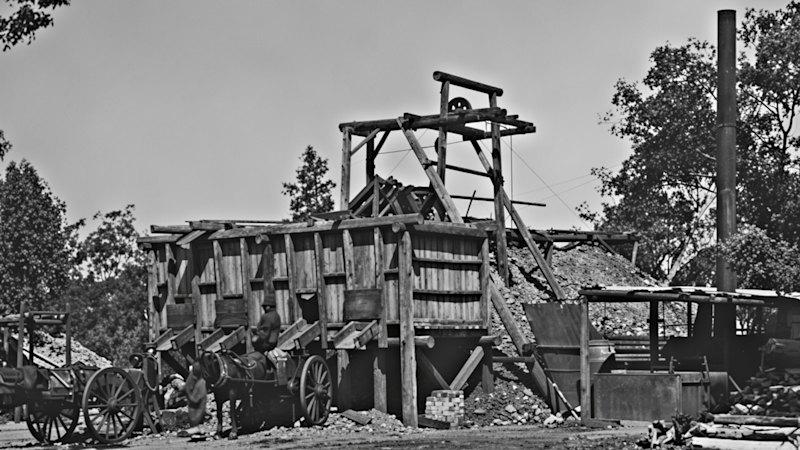
Mineral exploration company Locksley Resources has unveiled a consolidated copper growth strategy centered on the Greater Tottenham district in central-western New South Wales, combining its flagship asset with new exploration rights across a 1,000-square-kilometre footprint. Announced on October 15, 2026, the strategic initiative aims to expand the company's existing 9.86-million-tonne Tottenham mineral resource by integrating the newly optioned Iron Duke project. The transaction creates a unified regional exploration platform designed to identify high-grade copper deposits within a historically productive Australian mining corridor.
Key facts
What happened
Locksley Resources outlined a district-scale consolidation strategy intended to establish a major copper exploration presence in central-western New South Wales. Under the project structure detailed on October 15, 2026, the company is pairing its core Tottenham copper deposit, which contains an established resource of 9.86 million tonnes, with an option to acquire the adjacent Iron Duke project.
By securing contractual access to Iron Duke, Locksley has expanded its regional landholding into a contiguous exploration territory spanning approximately 1,000 square kilometres. The combined project footprint, designated as Greater Tottenham, aggregates historical copper workings, prospective fault lines, and under-explored geological host rocks under a single operational plan.
The consolidation enables Locksley to conduct exploration without the boundaries imposed by fragmented tenement ownership. Historically, exploration across the district was conducted in isolated patches, preventing previous operators from tracing structural trends across the regional strike length. Locksley plans to deploy modern exploration technologies across the combined acreage, including airborne magnetic surveys, ground electromagnetic prospecting, and targeted reverse-circulation and diamond core drilling.
The field program will focus on evaluating prospective corridors that connect the Tottenham deposit to historical workings at Iron Duke. Exploration teams aim to test both shallow mineralization surrounding former underground mines and deeper structural targets that could host higher-grade copper-gold feeder systems. By unifying these holdings, Locksley seeks to scale up resource definition efforts and establish a central hub for future feasibility assessments.
Why it matters
The consolidation of exploration land in New South Wales occurs amid sustained global demand for copper, driven by the expansion of electricity grids, electric vehicle manufacturing, and renewable power infrastructure. As mature mines around the world grapple with declining ore grades and increasing depth constraints, mining companies and financial investors are directing capital toward exploration projects located in stable, low-risk jurisdictions with established infrastructure.
From a commercial perspective, junior exploration companies face significant challenges when developing isolated, modest-scale deposits. A standalone resource of 9.86 million tonnes provides a solid baseline, but often lacks the critical mass needed to justify the capital expenditure required for processing facilities, tailings management systems, and regional transport links. Expanding the exploration area to 1,000 square kilometres provides the scale required to search for satellite deposits that can feed a centralized processing facility.
For the regional economy of New South Wales, sustained exploration spending provides direct benefits to rural communities in the central-west. Field exploration programs support regional suppliers, local lodging providers, equipment operators, and specialized drilling contractors. If exploration leads to economic feasibility, district-scale developments can generate long-term employment, royalty revenue for the state government, and localized infrastructure upgrades. Furthermore, Australian state and federal critical mineral strategies prioritize securing reliable supplies of key industrial metals, placing consolidated base-metal projects directly within national supply-chain priorities.
The background
The Greater Tottenham project is situated within the Lachlan Fold Belt of central-western New South Wales, a geological terrane recognized globally for its mineral wealth. The belt hosts several significant mining operations, including Newcrest Mining's Cadia-Ridgeway copper-gold mine near Orange, Evolution Mining's Cowal gold mine, and the long-running mining district of Cobar further to the northwest.
Geologically, the Tottenham region features volcanogenic massive sulfide (VMS) and shear-hosted mineralisation. These formations occurred when metal-rich geothermal fluids precipitated copper, gold, and other base metals along fault zones and sedimentary layers millions of years ago. Historical mining in the Tottenham and Iron Duke areas began during the late 19th and early 20th centuries, with early miners extracting high-grade copper oxide and secondary sulfide ores from shallow shafts and underground workings. However, early operators lacked the technological tools required to explore deeper underground or evaluate lower-grade bulk copper mineralisation.
Under modern Australian mining regulations, mineral resource estimates must comply with the Australasian Code for Reporting of Exploration Results, Mineral Resources and Ore Reserves (the JORC Code). The code requires strict geological verification, independent sampling protocols, and rigorous statistical modeling before a mineral resource can be publicly reported by ASX-listed entities. Junior resource companies often employ option agreements to gain rights over historical mining leases, allowing them to perform initial exploration work without incurring the immediate cost of outright acquisition. By combining advanced geophysics and systematic deep drilling, modern explorers in the Lachlan Fold Belt have repeatedly discovered extensions to historical high-grade deposits that were missed by early prospectors.
Reaction
Market participants and industry analysts are reviewing the announcement to gauge the commercial potential of the expanded land package. Investors on the Australian Securities Exchange routinely evaluate option announcements based on the financial terms of the deal, the prospective geology, and the speed at which exploration capital can be deployed on the ground.
Local government bodies and community stakeholders in central-western New South Wales generally support mineral exploration activities when conducted under established environmental and community guidelines. Land access agreements with local pastoralists and private landholders will be essential as Locksley prepares to move field crews and drilling rigs onto newly optioned tenements. Regulatory agencies, including the NSW Department of Regional NSW's Mining, Exploration and Geoscience branch, oversee exploration compliance, environmental rehabilitation obligations, and statutory work commitments across the state's exploration licenses.
What we don't know yet
Initial public summaries leave several key operational and financial parameters unconfirmed. The reporting does not disclose the specific financial terms, duration, or exercise conditions of the option agreement for the Iron Duke project, including any upfront cash payments, equity issuances, or mandatory minimum exploration spending requirements.
Additionally, while the Tottenham resource is reported at 9.86 million tonnes, available details do not specify the JORC resource classification breakdown between Measured, Indicated, and Inferred categories. The public details also omit the average copper grade, contained copper metal tonnage, and potential by-product credits such as gold or silver. Technical details regarding metallurgical recovery rates, preliminary processing flowsheets, environmental approval timelines, and the exact start date for the upcoming drilling program remain to be published in subsequent corporate releases.
What to watch
The execution of the Greater Tottenham copper growth strategy will depend on several upcoming milestones. Investors and market observers should monitor forthcoming disclosures to the Australian Securities Exchange for details regarding the formal execution of land access agreements and the scheduling of airborne geophysics across the 1,000-square-kilometre project area.
Subsequent milestones include the commencement of reverse-circulation and diamond core drilling campaigns at Iron Duke and peripheral satellite targets. Assay results from these drilling programs will provide critical data on copper grades and structural continuity. Furthermore, observers will watch whether Locksley satisfies the contractual conditions required to exercise its option over Iron Duke and whether ongoing exploration allows the company to publish an updated, integrated JORC resource estimate for the expanded Greater Tottenham project.
This report is based on original reporting from The Age and the Sydney Morning Herald.
How this story was produced
This report was written by The Global Wire newsroom from reporting first published by theage.com.au. We verify the core facts against the original report, write our own account, and add the background and consequences a short wire item leaves out. Drafting is AI-assisted inside an editor-supervised pipeline, and every story is checked for accuracy of attribution, structure and duplication before it appears — full detail in our AI and funding disclosure.
Spotted an error? Tell us at corrections@horizonglobalnews.com and read our corrections policy or editorial standards.



Reader comments
Loading comments…