

Six Flags Coaster Fatality in Georgia Reopens Debate on Thrill Ride Safety and Regulation
The fatal ejection of a rider from a Six Flags roller coaster in Georgia has heightened scrutiny over ride engineering, restraint systems, and state-level safety regulation across the United States.
By The Global Wire Newsroom · Reported from Jaimie Ding, Dylan Lovan And Sudhin Thanawala, The Associated Press; Jaimie Ding; Dylan Lovan; Sudhin Thanawala; The Associated Press; Feedloaderapi
Link preview · horizonglobalnews.com
Six Flags Coaster Fatality in Georgia Reopens Debate on Thrill Ride Safety and Regulation
The fatal ejection of a rider from a Six Flags roller coaster in Georgia has heightened scrutiny over ride engineering, restraint systems, and state-level safety regulation across the United States.
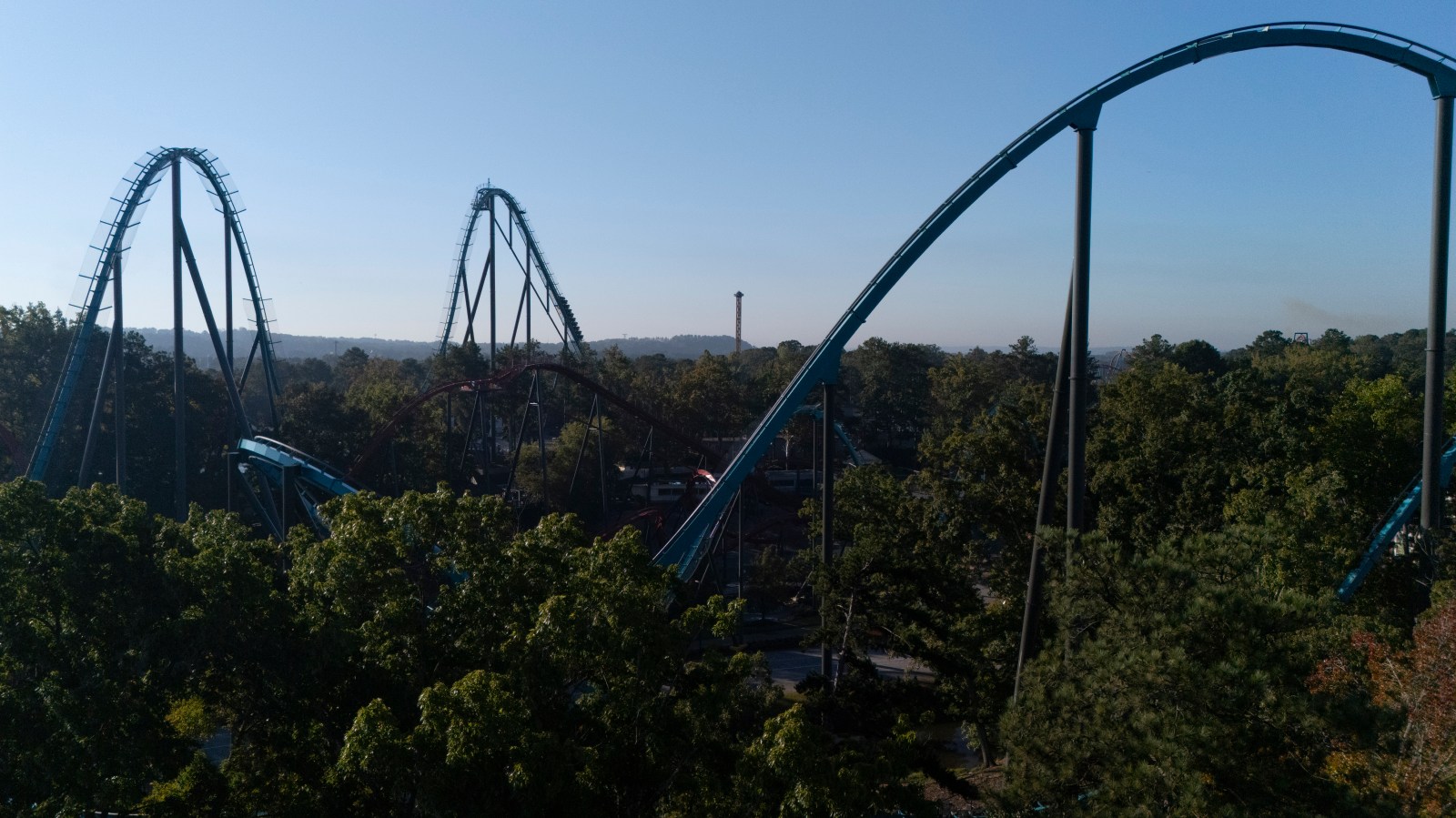
A fatal incident on a roller coaster at a Six Flags venue in Georgia has drawn national attention to the mechanical safety and regulatory oversight of modern amusement park rides. According to reporting by The Associated Press, a male guest died after being ejected from a roller coaster, an event that highlights mounting concerns as design firms engineer faster, steeper, and more aggressive attractions to meet public demand for intense thrill experiences. The casualty comes during a broader discussion among industrial engineers, state inspectors, and public safety advocates regarding restraint design standards, physical rider restrictions, and the patchwork of state-level oversight governing stationary amusement attractions across the United States.
Key facts
What happened
According to reporting by The Associated Press, a male visitor was fatally injured after being ejected from a roller coaster train during its operation at a Six Flags venue in Georgia. Emergency response personnel and local law enforcement were called to the scene following the ejection, which occurred while the train was navigating the track layout.
While official forensic investigations into the precise sequence of mechanical events remain underway, an ejection from a modern steel or wooden roller coaster typically signifies a breakdown in the ride's physical containment envelope. Contemporary roller coasters rely on complex safety systems engineered to counteract intense directional accelerations, sudden lateral shifts, and vertical negative G-forces—commonly referred to by coaster designers as airtime—which pull passengers upward out of their seating assemblies.
Standard ride safety architecture incorporates multiple redundant layers of protection. Passenger containment usually relies on hydraulic or mechanical ratcheting lap bars, over-the-shoulder harnesses, individual seat belts, and seat padding tailored to keep the hips and legs securely pinned. Electronic proximity sensors, known as limit switches, feed data directly into a central Programmable Logic Controller (PLC). This computerized control system is programmed to prevent the dispatch of any train from the station unless all restraint sensors verify that every harness is locked within pre-established safety tolerances. When an ejection takes place, state and forensic investigators audit the mechanical integrity of locking pins, hydraulic fluid pressures, restraint position sensor data logs, physical rider dimensions, operator dispatch procedures, and the dynamic forces generated along specific track segments.
Why it matters
The fatal ejection at Six Flags in Georgia highlights significant public safety and policy challenges within the amusement entertainment industry. For tens of millions of visitors who attend amusement parks annually across North America, roller coasters are designed to provide the illusion of risk while operating under strict safety margins. High-profile fatal accidents undermine public trust in an industry that generates tens of billions of dollars in economic activity through ticket sales, hospitality, and regional tourism.
The incident carries immediate regulatory implications. Because fixed-site theme parks operate without centralized federal oversight, state regulatory agencies are responsible for conducting investigations, issuing administrative stop-use orders, and determining whether structural or operational deficiencies exist. A major safety breach frequently triggers voluntary or mandatory inspection directives for identical or structurally similar ride designs at other amusement parks across the country. Park operators face major legal exposure, potential civil litigation, escalating insurance premiums, and prolonged closures of major capital assets during peak operating periods.
Additionally, the incident emphasizes the biomechanical boundaries of modern ride design. Over the past two decades, ride manufacturers have utilized advanced engineering techniques to build coasters featuring steeper drops, higher speeds, and rapid direction changes. As physical acceleration forces increase, the margin for error in restraint fit and physical body containment narrows. For riders who deviate from standard anthropometric proportions—including individuals with high body mass indexes, unusual torso lengths, or specialized physical needs—improperly fitted or inadequately checked restraints can significantly increase the risk of physical movement during high-G maneuvers.
The background
The roller coaster industry has undergone rapid technological transformation since the late 20th century. Traditional wooden coasters with simple friction brakes and manual lap bars have largely been augmented or replaced by computer-controlled steel coasters and hybrid steel-wood structures. Modern attractions utilize linear synchronous motors (LSM) for rapid acceleration, magnetic eddy-current brakes for precise stopping, and computerized block-section signaling to ensure absolute vehicle separation along the track. Thrill categories have expanded to include hypercoasters, standing over 200 feet tall, and giga coasters, exceeding 300 feet, which routinely subject passengers to forces greater than four times the force of gravity (4Gs).
Regulatory oversight of these machines in the United States is uniquely fragmented. In 1981, Congress passed amendment legislation that removed fixed-site amusement park rides from the jurisdiction of the Consumer Product Safety Commission (CPSC). While mobile carnival rides that move between temporary locations remain subject to CPSC regulatory monitoring, stationary rides located at permanent theme parks were placed under exclusive state or municipal jurisdiction. This statutory divide created a varied landscape of oversight across the country. Some states maintain dedicated inspection divisions with rigorous mandatory reporting laws, while others rely on private insurance underwriters or self-reporting mechanisms by amusement park operators. In Georgia, permanent amusement rides operate under state administrative regulations covering mechanical standards and annual operating permits.
To standardize engineering practices across disparate legal jurisdictions, the global theme park industry relies on technical guidelines published by ASTM International. Specifically, ASTM Committee F24 on Amusement Rides and Devices develops voluntary standards governing ride design, mechanical manufacturing, operational maintenance, and restraint system classifications. ASTM standards categorize restraints based on the calculated acceleration forces and containment requirements of each ride profile.
Prior high-profile coaster and drop tower fatalities have triggered major industry reforms over the past decade. In 2013, a passenger was fatally thrown from the New Texas Giant hybrid roller coaster at Six Flags Over Texas, an event that led to secondary seat belt installations, physical measuring devices at queue lines, and redesigned restraint padding across similar ride platforms. In 2022, a teenager died after slipping from the Orlando FreeFall drop tower in Florida; a subsequent state investigation revealed that custom adjustments had been made to the ride's mechanical restraint sensors, allowing the machine to operate despite improper harness position. That incident prompted Florida lawmakers to enact stricter state inspection and safety disclosure statutes.
Reaction
Following the fatal ejection in Georgia reported by The Associated Press, public safety authorities and corporate leaders are expected to follow established emergency protocols. Local law enforcement and municipal emergency services secure the scene immediately following an incident, after which state mechanical safety inspectors assume control of the ride envelope to conduct formal forensic examinations.
Six Flags Entertainment Corporation, a prominent regional amusement park operator managing dozens of properties across North America, is expected to initiate internal safety reviews and cooperate with state regulatory inspectors. The coaster's engineering design firm and equipment manufacturer typically dispatch forensic engineers to assist state investigators in evaluating control logs, hydraulic restraint cylinders, mechanical latch assemblies, and closed-circuit security footage.
Consumer advocacy organizations and public safety proponents are expected to reiterate long-standing requests for unified federal safety standards and a centralized national database for amusement ride injuries. Conversely, industry trade representatives, including the International Association of Amusement Parks and Attractions (IAAPA), traditionally highlight that serious injuries on fixed-site rides are statistically extremely rare when compared to the hundreds of millions of individual rides safely taken by park visitors each year.
What we don't know yet
Several critical facts surrounding the incident remain unconfirmed in initial reporting. According to reporting by The Associated Press, official statements have not yet identified the specific roller coaster involved, the precise location of the ride within the Georgia park, or the name and age of the victim.
Furthermore, technical investigations have not yet determined the root cause of the ejection. It remains unknown whether the fatality resulted from a structural mechanical breakdown of the safety harness, a failure of the electronic restraint position switches, an operational error during passenger loading, or physiological displacement resulting from extreme airtime forces on the rider's body profile. Detailed inspection histories for the specific attraction, including prior mechanical maintenance records, safety modification logs, and state inspection certifications, have not yet been released by regulatory authorities.
What to watch
In the coming weeks, several key benchmarks will indicate how this incident impacts park operations, engineering standards, and regulatory oversight:
This report is based on original news gathering conducted by Jaimie Ding, Dylan Lovan, and Sudhin Thanawala of The Associated Press.
How this story was produced
This report was written by The Global Wire newsroom from reporting first published by Jaimie Ding, Dylan Lovan And Sudhin Thanawala, The Associated Press; Jaimie Ding; Dylan Lovan; Sudhin Thanawala; The Associated Press; Feedloaderapi. We verify the core facts against the original report, write our own account, and add the background and consequences a short wire item leaves out. Drafting is AI-assisted inside an editor-supervised pipeline, and every story is checked for accuracy of attribution, structure and duplication before it appears — full detail in our AI and funding disclosure.
Spotted an error? Tell us at corrections@horizonglobalnews.com and read our corrections policy or editorial standards.





Reader comments
Loading comments…