

Copper Sector Needs $332 Billion in Capital to Avert 2050 Shortfall
Research from Bloomberg New Energy Finance projects a 20-million-ton copper deficit by 2050 without massive near-term mine investments, threatening global electrification plans.
By The Global Wire Newsroom · Reported from Bloomberg
Link preview · horizonglobalnews.com
Copper Sector Needs $332 Billion in Capital to Avert 2050 Shortfall
Research from Bloomberg New Energy Finance projects a 20-million-ton copper deficit by 2050 without massive near-term mine investments, threatening global electrification plans.
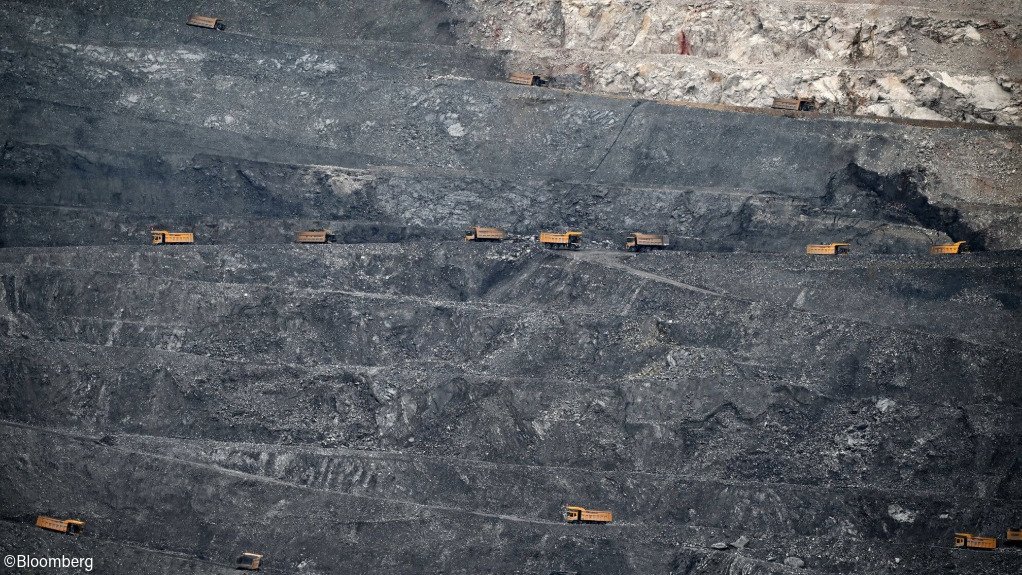
Global mining operations must deploy roughly $332 billion in new capital expenditure to avert a destabilizing supply shock in the copper market over the coming decades, according to research published by Bloomberg New Energy Finance. The analytical group found that failure to direct capital toward expanding existing operations and opening new deposits will leave the market facing an annual shortfall of 20 million metric tons by 2050. Because developing commercial extraction sites typically requires more than a decade of permitting, exploration, and construction, the findings underscore an urgent timeline for resource developers and industrial policymakers navigating the transition away from fossil fuels.
Key facts
What happened
Bloomberg New Energy Finance published comprehensive projections detailing the structural gap developing between global copper production capacity and future industrial consumption. The research organization calculated that the mining sector needs to invest $332 billion in fresh capital to build out operational capacity and upgrade infrastructure before long-term supply deficits become irreversible.
According to the analysis, if investment patterns remain constrained at status-quo rates, the global market will face an estimated deficit of 20 million metric tons annually by the middle of the century. The assessment accounts for the natural depletion trajectories of existing mines, the time lags inherent to mineral discovery, and the accelerating consumption patterns driven by international industrial transformations.
The findings place the copper supply chain under scrutiny at a moment when international mining conglomerates have exercised fiscal discipline, prioritizing dividend distributions, share buybacks, and balance-sheet repair over high-risk greenfield developments. The analytical report highlights that the long lead times required to bring mineral assets into production make delayed investment decisions particularly damaging, as projects deferred in the current decade cannot easily be expedited if shortfalls materialize in the 2030s and 2040s.
Why it matters
Copper is the fundamental mechanical backbone of electrification, serving as the primary conductive metal across power generation, grid transmission, industrial machinery, and consumer technologies. An unmitigated shortfall of 20 million metric tons would introduce severe operational disruptions across global supply chains. Because global annual consumption of refined copper currently stands at roughly 25 to 26 million metric tons, the projected deficit identified by Bloomberg New Energy Finance approaches the total scale of the modern market.
If miners fail to mobilize the required $332 billion, structural scarcity will drive prolonged commodity price spikes. Such cost escalations directly threaten the economic viability of national decarbonization commitments. Electric vehicles consume roughly three to four times more copper by mass than internal combustion vehicles, requiring copper wiring in electric motors, battery packs, and vehicle harnesses. Similarly, offshore wind turbines and utility-scale solar photovoltaic farms require between two and five times more copper per megawatt of generated capacity than traditional natural gas or coal generation facilities.
Beyond clean technology, municipal utility grids require extensive copper cabling to upgrade distribution infrastructure to handle rising electrical loads from data centers, artificial intelligence computing facilities, and domestic heating systems. A persistent shortage would translate into capital project delays for regulated utilities, forcing regulators and municipal authorities to choose between passing elevated raw-material costs directly to consumer utility bills or curtailing system reliability improvements.
Furthermore, high copper prices risk fueling general industrial inflation. Unlike minor specialty metals that can sometimes be redesigned out of components, copper's superior thermal and electrical conductivity, combined with its ductility and corrosion resistance, renders direct substitution technically difficult or economically disadvantageous across high-voltage applications.
The background
To understand the magnitude of a $332 billion investment requirement, it is necessary to examine the historical development of the global copper mining sector over the last quarter-century. The industry experienced a pronounced supercycle between 2002 and 2012, fueled by rapid urbanization and infrastructure construction across China. During that phase, mining conglomerates carried out aggressive, debt-financed expansions. When commodity prices subsequently dropped sharply in 2014 and 2015, major miners were forced to write down billions of dollars in asset values, slash operational budgets, and cut exploration spending.
That historical trauma created a decade of capital restraint. Institutional shareholders pushed boards of directors at major diversified miners—including BHP, Rio Tinto, Glencore, and Anglo American—to focus on return on capital employed rather than production volume growth. Greenfield exploration budgets contracted, and miners prioritized brownfield expansions of existing deposits, which carry lower geological risk but yield smaller incremental production volumes.
Simultaneously, the geological fundamentals of global extraction have deteriorated. Major legacy operations that have supplied world markets for decades—such as Escondida and Chuquicamata in Chile, and Grasberg in Indonesia—are contending with steadily falling ore grades. At many long-running mines, average copper concentration has fallen from over 1.5% to below 0.6%, requiring operators to blast, haul, and process far larger volumes of host rock simply to maintain flat levels of finished cathode output. Processing lower-grade ores demands larger amounts of energy, water, and specialized processing capacity, structurally driving up baseline operating expenses.
Geographic concentration adds another layer of complexity. Chile and Peru jointly account for nearly 40% of primary mined copper production. In both jurisdictions, project permitting has grown more complex due to heightened community consultation requirements, environmental regulations over water extraction in arid regions, and revised royalty frameworks. In North America and Europe, obtaining environmental clearances and social licenses to operate frequently stalls proposed mines for well over a decade before physical construction can even begin.
Reaction
The immediate data release from Bloomberg New Energy Finance has not yet generated formal public statements from individual mining executives, but the analysis aligns with persistent warnings delivered by raw-material trading desks, sovereign planners, and international institutions. The International Energy Agency (IEA) has consistently noted that announced mining projects cover only a fraction of the demand expected under stated net-zero policy scenarios.
Industry bodies, such as the International Copper Study Group (ICSG), are expected to review these capital requirement models during upcoming cyclical market assessments. Mining executives speaking in industry forums have historically argued that current copper pricing levels do not offer sufficient long-term certainty or adequate internal rates of return to justify committing tens of billions of dollars to high-risk, multi-decade capital programs, especially given rising inflation in engineering, procurement, and construction costs.
On the policy front, governments across North America, the European Union, and East Asia have placed copper on critical mineral registries, signaling that raw-material availability has transitioned from a purely commercial procurement question into a matter of economic security and industrial policy. Legislative bodies are under mounting pressure from business groups to pass permitting reforms to compress development timelines for approved mineral deposits.
What we don't know yet
The research brief leaves several critical operational questions unresolved. It does not break down the geographic allocation of the projected $332 billion, leaving unclear how much capital must be directed toward politically volatile regions with massive untapped resources—such as the Central African Copperbelt across the Democratic Republic of Congo and Zambia—versus more established jurisdictions in the Americas and Australasia.
Additionally, the reporting does not delineate the specific baseline commodity price assumed to trigger this scale of private capital mobilization. If benchmark copper prices on the London Metal Exchange (LME) remain insufficient to clear corporate hurdle rates, market participants will not deploy this capital organically, leaving an open question as to whether sovereign credit guarantees, national wealth funds, or government subsidies will step in to bridge the gap.
The analytical projections also leave ambiguity regarding technological assumptions around demand destruction, material substitution, and scrap recycling. It remains unverified to what degree secondary copper scrap supply could scale up through modern scrap-sorting technologies, or how effectively industrial manufacturers might substitute lower-cost aluminum in select medium-voltage power distribution lines to offset the projected 20-million-ton raw shortfall.
What to watch
Market observers should monitor several concrete indicators over the coming months and years to track whether the mining sector is beginning to close this investment gap:
This report is based on findings and market projections published by Bloomberg.
How this story was produced
This report was written by The Global Wire newsroom from reporting first published by Bloomberg. We verify the core facts against the original report, write our own account, and add the background and consequences a short wire item leaves out. Drafting is AI-assisted inside an editor-supervised pipeline, and every story is checked for accuracy of attribution, structure and duplication before it appears — full detail in our AI and funding disclosure.
Spotted an error? Tell us at corrections@horizonglobalnews.com and read our corrections policy or editorial standards.






Reader comments
Loading comments…