

Grattan Institute Urges 15% GST Overhaul to Stem Australia's State Debt Crisis
A blueprint from the public policy think tank recommends lifting the consumption tax rate to 15 percent as eroding revenue bases collide with escalating state government debt.
By The Global Wire Newsroom · Reported from Unconventional Economist
Link preview · horizonglobalnews.com
Grattan Institute Urges 15% GST Overhaul to Stem Australia's State Debt Crisis
A blueprint from the public policy think tank recommends lifting the consumption tax rate to 15 percent as eroding revenue bases collide with escalating state government debt.
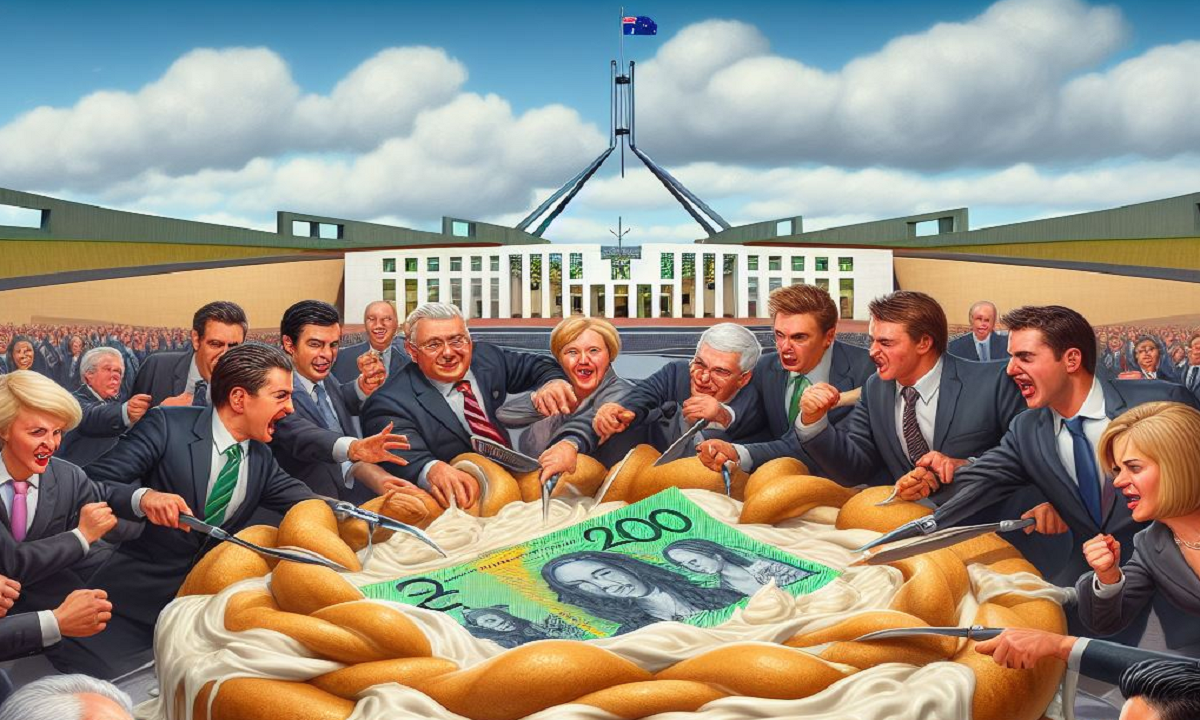
CANBERRA — Australia's premier public policy think tank has proposed a comprehensive restructuring of the national consumption tax, recommending an increase in the Goods and Services Tax (GST) rate from 10 percent to 15 percent to counter deteriorating state balance sheets and structural revenue shortfalls. According to reporting by the financial commentary outlet Unconventional Economist, the Melbourne-based Grattan Institute warned that the flagship tax mechanism, introduced more than two decades ago to underwrite state public services, is steadily diminishing relative to the broader economy, leaving sub-national governments increasingly ill-equipped to service historic debt burdens.
Key facts
What happened
In a detailed evaluation of Australia's federal-state fiscal architecture, the Grattan Institute concluded that structural defects within the taxation framework are jeopardizing the solvency and public service provision of state administrations. Reporting by Unconventional Economist outlines how the think tank presented an overhaul centered on raising the headline GST rate to 15 percent, moving the levy closer to standards observed across other developed economies.
The core of the think tank's critique rests on the divergence between state expenditure obligations and autonomous state revenue streams. While state governments bear direct operational responsibility for high-cost, high-inflation sectors—primarily public hospitals, primary and secondary schooling, police services, and regional road and rail networks—their independent taxation levers remain limited, largely confined to payroll levies, stamp duties on property transfers, land taxes, and motor vehicle registrations.
The GST was expressly designed to resolve this vertical fiscal imbalance. However, the Grattan Institute observed that the relative contribution of the tax has progressively weakened. Because household consumption patterns have pivoted toward exempt sectors, such as healthcare, education, and international digital subscriptions, the tax take has shrunk relative to total national economic activity. Coupled with sharply higher interest expenses on debt accumulated over successive capital programs, state treasuries face structural deficits that existing state-level revenue streams cannot close without distorting economic growth.
Why it matters
An adjustment of the GST rate would represent the most consequential shift in Australian macroeconomic policy since the tax was introduced a quarter of a century ago. For everyday consumers, moving the rate from 10 percent to 15 percent would apply immediate upward pressure to the retail price of millions of goods and commercial services, landing directly on household budgets that have navigated elevated cost-of-living conditions and restrictive monetary settings.
Because value-added and consumption taxes consume a larger share of disposable income from low- and middle-income earners than from wealthy households, any uncompensated increase in the GST is fundamentally regressive. If enacted, such a policy would demand an expansive, multibillion-dollar package of targeted income tax offsets, pension indexation adjustments, and heightened welfare payments to prevent lower-income households from sliding deeper into poverty.
From a macroeconomic perspective, however, tax economists frequently view consumption taxes as significantly less damaging to productivity and investment than corporate or progressive personal income taxes. Australia's federal budget remains heavily reliant on personal income tax receipts, a vulnerability exacerbated by bracket creep that penalizes labor force participation. A higher GST yield, if channeled properly, could enable state governments to phase out highly volatile and economically damaging transactions taxes—most notably stamp duty on real estate, which discourages residential mobility and constrains national housing supply. Furthermore, an expanded GST pool would grant state treasuries the fiscal breathing room required to maintain hospital systems facing demographic aging pressures without continually seeking discretionary emergency bailouts from the Commonwealth.
The background
Australia's Goods and Services Tax took effect on July 1, 2000, under the Coalition government of Prime Minister John Howard, established via the A New Tax System (Goods and Services Tax) Act 1999. The tax replaced a labyrinthine, inefficient system of wholesale sales taxes and abolished a series of minor state duties, introducing a flat 10 percent charge on most goods, services, and other consumed items.
To pass the legislation through the Australian Senate, the Howard government entered an agreement with the Australian Democrats that carved substantial exemptions into the tax base. Most notably, basic fresh food, medical supplies, hospital services, schooling, university tuition, childcare, and water services were placed outside the net. In 2000, these exempt categories represented a manageable fraction of consumer spending. Over the ensuing two and a half decades, however, spending on healthcare, specialized services, and education expanded much faster than discretionary consumer purchases of taxed retail goods. As an inevitable consequence, GST revenue fell from roughly 3.8 percent of gross domestic product in the mid-2000s to around 3.2 percent in recent years.
The administrative architecture of the GST is governed by the Intergovernmental Agreement on Federal Financial Relations. Under this arrangement, the Australian Taxation Office collects the revenue on behalf of the states, and the entirety of net receipts is disbursed to the states and territories. Distributions are calculated using horizontal fiscal equalisation principles overseen by the Commonwealth Grants Commission, an independent agency tasked with ensuring each jurisdiction possesses the financial capacity to provide public services of an equivalent standard.
In 2018, the federal government amended this distribution formula, legislating a minimum floor to ensure no state received less than 70 cents—later rising to 75 cents—for every dollar of GST generated within its borders, accompanied by temporary federal transitional payments known as the "no-worse-off" guarantee. As these guarantee arrangements approach scheduled expiration deadlines, state budgets face severe revenue cliffs, particularly in populous states such as Victoria and New South Wales where infrastructure debt burdens have climbed to historic highs.
Internationally, Australia’s 10 percent rate sits well below peer economies. The member average for the Organisation for Economic Co-operation and Development (OECD) is approximately 19 percent. Regional neighbors such as New Zealand enforce a comprehensive 15 percent GST with virtually no exemptions, while the United Kingdom and much of the European Union levy standard value-added taxes of 20 percent or higher.
Reaction
Proposals to elevate the GST typically meet intense political resistance across the Australian political spectrum, and the Grattan Institute's blueprint enters a deeply sensitive policy landscape. While formal ministerial statements directly addressing the think tank's latest paper have not yet been released, the political hurdles facing GST reform are structurally entrenched.
Federal governments of both major parties have traditionally treated changes to the GST as an electoral hazard. The federal Australian Labor Party has maintained a longstanding policy against increasing the GST rate or broadening its base to cover basic essentials, emphasizing the disproportionate impact on low-income earners. The Coalition, while historically more open to consumption tax debates, has similarly steered clear of endorsing headline rate increases since returning to opposition in 2022, citing widespread voter sensitivity to household living costs.
At the state level, reactions among treasurers are historically divided. Treasuries facing elevated infrastructure debt and operating deficits, such as Victoria and New South Wales, have periodically indicated openness to broad-based tax overhauls provided the reform is coupled with the abolition of other taxes or accompanied by ironclad compensation guarantees. Conversely, smaller states and resource-rich jurisdictions remain wary of any reform process that could reopen contentious battles over the distribution of the national pool.
Non-governmental organizations are expected to mobilize familiar arguments. Social welfare peak bodies, including the Australian Council of Social Service (ACOSS), routinely reject consumption tax hikes unless ironclad, fully indexed compensation packages are enacted into permanent law. Business lobbies, such as the Business Council of Australia, have previously advocated for broader consumption tax bases, provided the resulting windfalls are directly linked to reductions in corporate and personal marginal income tax rates.
What we don't know yet
Critical technical and strategic elements of the Grattan Institute's full proposal remain unclarified in available summaries. Most notably, the reporting does not delineate whether the think tank advocates for a simple rate hike from 10 to 15 percent while preserving existing exemptions, or if it simultaneously recommends expanding the base to encompass previously protected categories such as basic groceries, healthcare services, and education.
Additionally, the precise architecture of the social safety net adjustments proposed by Grattan has not been detailed. How many billions of dollars would need to be carved out of gross new receipts to fund income tax cuts and pension increases remains an open question, directly impacting the net revenue that would actually reach state balance sheets.
Finally, the political pathway for the proposal remains undefined. Under current statutory conventions, changing the GST requires the unanimous agreement of all six state governments, both territory chief ministers, and majorities in both the House of Representatives and the Senate. Whether the think tank proposes a mechanism to circumvent this institutional paralysis or assumes a cooperative federal summit has not been established.
What to watch
The trajectory of the Grattan proposal will depend heavily on the formal calendar of federal-state ministerial meetings. The primary venue for any structural fiscal dialogue is the Council on Federal Financial Relations (CFFR), which convenes the federal Treasurer alongside all state and territory treasurers. Any sign that state leaders are willing to place long-term GST reform on the CFFR agenda would signal a rare break from historical political caution.
Upcoming state and federal budget updates will also serve as key pressure points. As credit rating agencies scrutinize state balance sheets and the cost of servicing infrastructure loans continues to climb, state treasuries will face mounting pressure to identify new non-debt funding sources. Furthermore, the scheduled expiration of the Commonwealth's "no-worse-off" funding guarantee on GST distributions in late 2026 presents a hard legislative deadline, forcing Canberra and the states into negotiations that could catalyze broader discussions regarding the nation's baseline tax framework.
This article is based on reporting and commentary originally published by Unconventional Economist.
How this story was produced
This report was written by The Global Wire newsroom from reporting first published by Unconventional Economist. We verify the core facts against the original report, write our own account, and add the background and consequences a short wire item leaves out. Drafting is AI-assisted inside an editor-supervised pipeline, and every story is checked for accuracy of attribution, structure and duplication before it appears — full detail in our AI and funding disclosure.
Spotted an error? Tell us at corrections@horizonglobalnews.com and read our corrections policy or editorial standards.




Reader comments
Loading comments…