

Casio Expands G-SHOCK Line With Full-Analog GMC-2500 Series
The Japanese electronics manufacturer is bringing analog dial architecture to its heritage shock-resistant platform in a continued push toward premium watchmaking.
By The Global Wire Newsroom · Reported from CASIO COMPUTER CO; LTD
Link preview · horizonglobalnews.com
Casio Expands G-SHOCK Line With Full-Analog GMC-2500 Series
The Japanese electronics manufacturer is bringing analog dial architecture to its heritage shock-resistant platform in a continued push toward premium watchmaking.
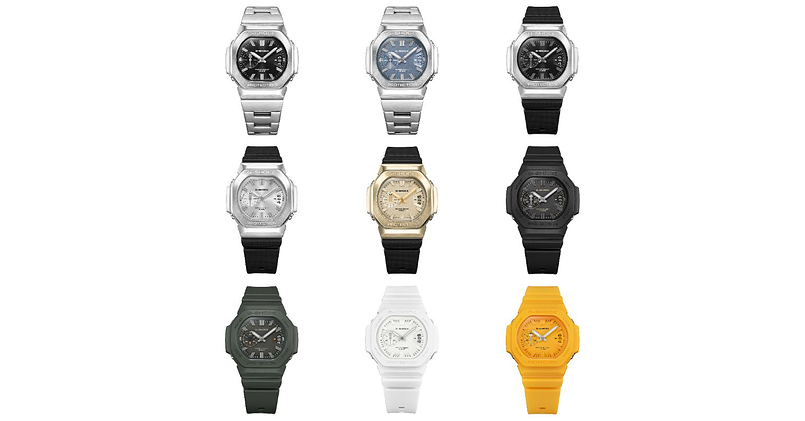
Tokyo-based consumer electronics manufacturer Casio Computer Co., Ltd. announced on Oct. 22, 2026, the introduction of the GMC-2500, the latest addition to its long-running G-SHOCK product catalog. Disclosed through official corporate channels, the release establishes a new full-analog configuration designed to translate the design language and functional characteristics of the brand's foundational digital models into an analog format. The announcement marks the latest iteration in the company's multi-year effort to diversify its shock-resistant timepiece lineup by blending legacy utilitarian silhouettes with higher-grade construction and traditional multi-hand dial arrangements.
Key facts
What happened
Casio Computer Co., Ltd. formally unveiled the GMC-2500 series on Oct. 22, 2026, issuing corporate disclosures via PR Newswire outlining the arrival of the new model within its flagship G-SHOCK shock-resistant portfolio. According to reporting by CASIO COMPUTER CO; LTD, the release is centered around translating the utilitarian profile and functional geometry of the brand's pioneering digital watches into an analog display framework.
The commercial release follows an established pattern of product announcements from Casio's timepiece division, which operates out of Shibuya, Tokyo. Rather than positioning the GMC-2500 as an entirely divorced novelty or a minimalist lifestyle spin-off, the company anchored the product's identity in the historic functional form of its foundational models. The initial press notice outlined the broad concept of the watch, presenting the unit as an evolution of the brand's core engineering values that nevertheless departs from standard digital liquid crystal displays in favor of a gear-driven, multi-hand analog face.
Corporate filings and press releases surrounding the Oct. 22 announcement focused primarily on the aesthetic continuity and structural design lineage of the new timepiece. However, the initial communication was concise, omitting specific technical schematics, exact case dimensions, material metallurgies, and detailed production volumes. Casio indicated that the GMC-2500 represents an ongoing commitment to reinterpreting established industrial silhouettes through modern manufacturing techniques, expanding the brand's analog presence while retaining core shock-mitigation capabilities.
Why it matters
The launch of the GMC-2500 represents an important operational step in Casio's ongoing repositioning within the global horological marketplace. For decades, the G-SHOCK brand was synonymous with affordable, utilitarian resin digital watches that retailed well below luxury price thresholds. Over the past decade, however, traditional watchmakers across Japan and Switzerland have faced shifting consumer demographics, the rise of connected wearables like the Apple Watch, and rising material costs. In response, Casio has aggressively cultivated an upscale migration of its product line, engineering metal-cased, solar-powered, and analog-driven references that can compete at mid-tier and entry-luxury price brackets ranging from $400 to well over $1,500.
For consumers and watch collectors, the analog translation of classic digital designs offers an alternative for environments where digital quartz faces are traditionally perceived as too casual. Analog layouts provide visual depth, physical movement, and dimensional complexity that appeal to traditional horology enthusiasts who might otherwise bypass digital tool watches. By engineering an analog model rooted in its original digital proportions, Casio is attempting to capture the lucrative enthusiast market that values both mechanical-style dials and the extreme durability of quartz shock resistance.
From a competitive standpoint, the GMC-2500 reinforces Casio's presence against domestic Japanese rivals Citizen Watch Co. and Seiko Group Corporation, both of which maintain deep catalogs of mid-tier sports watches. As supply chain constraints and fluctuating retail demand continue to pressure global consumer electronics, product lines that command resilient brand loyalty and higher average selling prices provide critical margin support for Casio's corporate timepiece division.
The background
To understand the significance of the GMC-2500, it is necessary to examine the foundational history of the G-SHOCK product line and Casio's strategic evolution over more than four decades. Established in Tokyo in 1946 by engineer Tadao Kashio, Casio initially built its corporate reputation on electronic calculators, relay computing units, and digital desktop equipment. The company entered the consumer wristwatch business in 1974 with the Casiotron, the world's first digital watch featuring an automatic calendar.
In 1981, Casio engineer Kikuo Ibe established an internal development initiative known as Project Team Tough. Driven by the goal of creating an unbreakable watch, Ibe formulated the famous "Triple 10" development benchmark: a watch capable of surviving a 10-meter drop, resisting 10 bars (100 meters) of atmospheric water pressure, and sustaining a 10-year operational battery lifespan. After extensive testing involving dropping prototypes from third-story bathroom windows at the company's Hamura R&D facility, Casio debuted the original G-SHOCK reference DW-5000C in April 1983. The watch utilized a floating quartz module isolated within a multi-layered hollow resin case with omnidirectional protective bumpers.
While the 1983 DW-5000C was strictly digital, Casio gradually experimented with analog-digital hybrid displays throughout the 1990s and 2000s, such as the AW-500 series. In August 2017, Casio reached the milestone of 100 million total G-SHOCK units shipped worldwide. Following that achievement, the company launched an ambitious metal-focused renaissance. In 2018, Casio introduced the full-metal GMW-B5000 series to celebrate its 35th anniversary, translating the classic square digital case into polished stainless steel. The release was an unexpected commercial sensation, proving that consumers were willing to purchase heritage G-SHOCK silhouettes constructed from premium materials at higher price points.
This strategy accelerated in 2019 with the debut of the GA-2100 series, an octagonal analog-digital watch colloquially dubbed the "CasiOak" by collectors due to its resemblance to classic luxury sports watches. The 2100 platform became one of Casio's best-selling watches of the 21st century, eventually spawning full-metal iterations such as the GM-B2100 in 2022. The new GMC-2500 builds directly upon this structural trajectory, reflecting the company's corporate realization that analog and metal configurations can command substantial retail premiums while honoring the design language established in 1983.
Reaction
Because the initial rollout of the GMC-2500 came directly from a brief corporate announcement by Casio Computer Co., Ltd., formal public statements from independent watch industry analysts, major international retail partners, and horological publications remain limited. Industry observers expect commentary to emerge primarily through specialized horological media platforms, including watch blogs, specialized YouTube review channels, and enthusiast forums such as WatchUSeek and G-Central, where technical breakdowns of bezel finishes, hand alignment, and module functionality are routinely scrutinized.
Within international collector circles, early anticipation has centered on how faithfully Casio has translated the proportions of its classic digital platform into a functional analog dial without creating visual clutter or compromising legible timekeeping. Retailers in key distribution territories, including North America, Europe, and East Asia, are expected to monitor consumer appetite closely, particularly regarding whether the model features solar charging, Bluetooth smartphone link capabilities, or Casio's Multiband 6 radio-wave time synchronization.
What we don't know yet
Despite the corporate disclosure on Oct. 22, several fundamental operational and technical details regarding the GMC-2500 remain unaddressed in the available reporting. Most critically, Casio has not yet released complete technical specifications detailing the internal quartz module powering the watch. It remains unconfirmed whether the GMC-2500 is driven by Casio's proprietary Tough Solar system, a conventional lithium coin cell, or whether it includes Bluetooth connectivity for automated network time correction.
Additionally, the manufacturer has not provided verified retail pricing, specific launch dates across regional markets, or details on case construction materials—such as whether the chassis uses stainless steel, titanium, or Casio's Carbon Core Guard structure. Gaps also persist regarding water resistance depth ratings, weight specifications, and whether the model will be issued as a permanent general-production staple or a restricted, numbered limited-edition release. These unknowns will significantly dictate the commercial appeal of the reference among utilitarian tool-watch buyers versus luxury-leaning collectors.
What to watch
Moving forward, several key milestones will clarify the operational rollout and commercial impact of the GMC-2500. Interested buyers and market watchers should look for detailed product spec-sheets from Casio's regional regional divisions, including Casio America and Casio Europe, which typically disclose regional pricing and release dates several weeks after Tokyo headquarters issues preliminary global notices.
Furthermore, industry observers will watch Casio Computer Co., Ltd.'s upcoming quarterly investor briefings for performance data from the Timepiece division. Analysts will monitor whether the introduction of new analog references like the GMC-2500 succeeds in driving up operating profit margins and average selling prices across overseas distribution channels. Finally, technical evaluations from independent horology reviewers upon hands-on delivery will reveal whether the analog movement maintains the benchmark durability and drop resistance that have defined the G-SHOCK catalog since 1983.
This account is based on corporate product announcements and reporting issued by CASIO COMPUTER CO; LTD.
How this story was produced
This report was written by The Global Wire newsroom from reporting first published by CASIO COMPUTER CO; LTD. We verify the core facts against the original report, write our own account, and add the background and consequences a short wire item leaves out. Drafting is AI-assisted inside an editor-supervised pipeline, and every story is checked for accuracy of attribution, structure and duplication before it appears — full detail in our AI and funding disclosure.
Spotted an error? Tell us at corrections@horizonglobalnews.com and read our corrections policy or editorial standards.






Reader comments
Loading comments…