

South Africa Prepares Mid-Term Budget as Revenue Gains Clash With Spending Demands
A tax windfall offers South Africa room to narrow its deficit, but rising fuel costs and municipal election pressures complicate the path back to an investment-grade rating.
By The Global Wire Newsroom · Reported from Reuters
Link preview · horizonglobalnews.com
South Africa Prepares Mid-Term Budget as Revenue Gains Clash With Spending Demands
A tax windfall offers South Africa room to narrow its deficit, but rising fuel costs and municipal election pressures complicate the path back to an investment-grade rating.
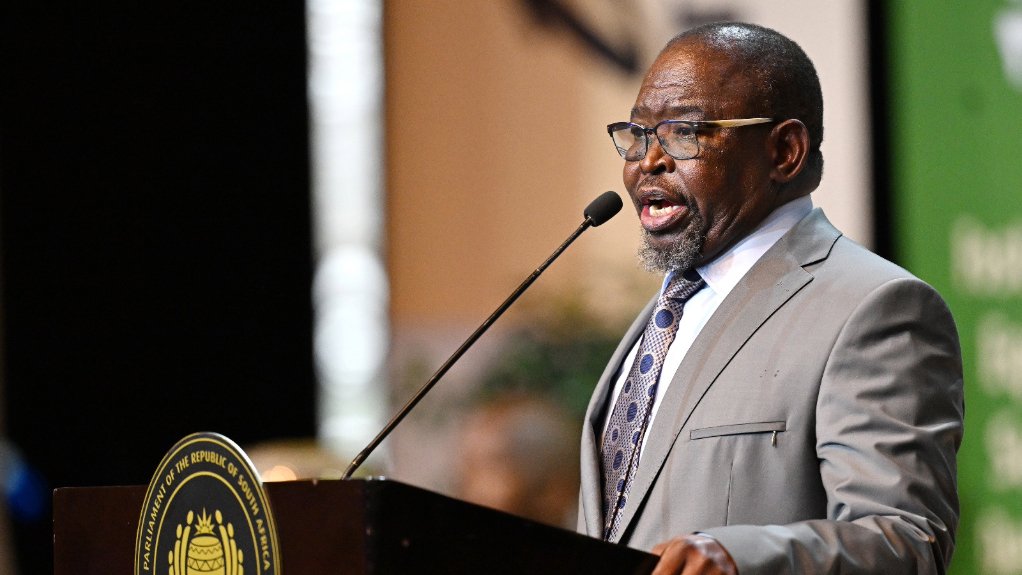
South Africa's National Treasury is preparing to deliver an upgraded fiscal trajectory in its forthcoming Medium Term Budget Policy Statement on Wednesday, buoyed by unexpected tax collections that have temporarily eased pressure on the national balance sheet. The revision arrives as the finance ministry seeks to demonstrate fiscal restraint and steer the country back toward an investment-grade sovereign credit rating. However, the positive momentum faces immediate headwinds from record domestic fuel prices, persistently sluggish economic growth, and intense political pressure to expand public spending ahead of municipal elections scheduled for November 4.
Key facts
What happened
According to reporting by Reuters, South Africa's finance minister is positioned to present a noticeably brighter fiscal outlook during Wednesday's mid-term budget presentation, capitalizing on higher-than-expected revenue receipts. The Medium Term Budget Policy Statement, presented annually to parliament in Cape Town, sets the macro-fiscal framework, expenditure ceilings, and division of revenue for the three years ahead, serving as the critical precursor to the full national budget tabled each February.
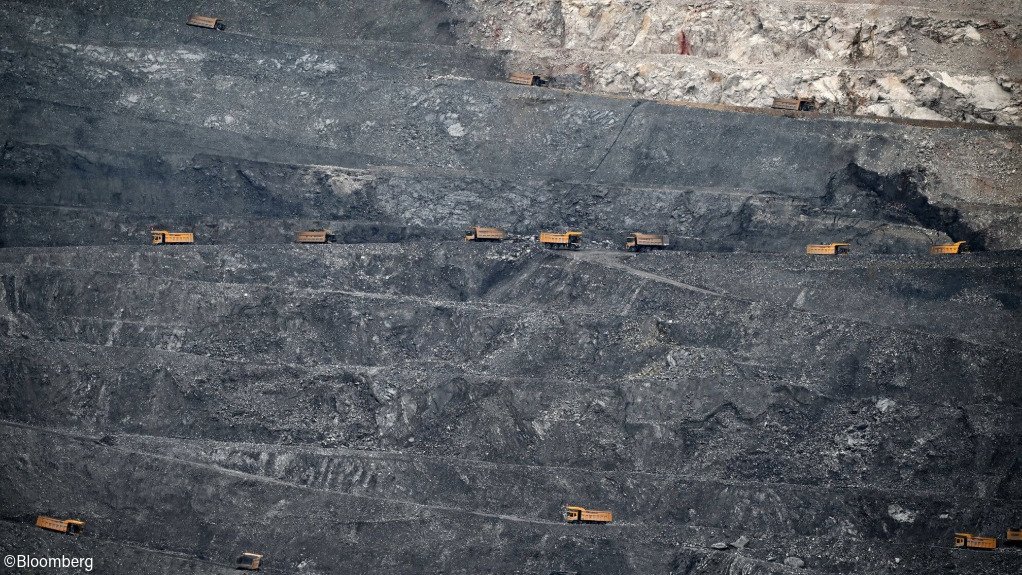
For months, South African public finances have operated under severe strain, compounded by structural unemployment and post-pandemic economic recovery bottlenecks. However, elevated corporate tax receipts—particularly from mining companies benefiting from elevated global prices for platinum group metals, coal, and iron ore—have delivered a substantial cash cushion to the South African Revenue Service. This unexpected windfall has enabled the National Treasury to project a narrower fiscal deficit for the current fiscal year than originally forecast in the previous budget cycle.
Treasury officials intend to use this cyclical windfall to show progress toward fiscal consolidation. By slowing the pace of debt accumulation and trimming the sovereign borrowing requirement, the government hopes to convince credit rating agencies and global bond investors that South Africa is on a credible path toward debt stabilization.
Yet the timing of the budget presentation creates an acute policy dilemma. While fiscal hawks within the National Treasury advocate for allocating surplus revenues toward debt redemption and deficit reduction, the broader political and economic environment is pulling in the opposite direction. South Africans are currently confronting record retail fuel prices, which feed directly into logistics, food production, and commuter transport costs. Simultaneously, the country's local government elections on November 4 have intensified calls from political parties, labor unions, and civil society for immediate relief measures, including expanded social grants and municipal infrastructure bailouts.
Why it matters
South Africa's fiscal trajectory carries deep consequences for international capital markets, sovereign borrowing costs, and domestic living standards. When major credit rating agencies—S&P Global Ratings, Moody's Investors Service, and Fitch Ratings—downgraded South Africa's sovereign debt to sub-investment grade status, commonly referred to as "junk" status, the country was excluded from influential global benchmark indices such as the FTSE World Government Bond Index. That exclusion triggered forced capital outflows by institutional investors whose mandates restrict them to investment-grade debt, driving domestic bond yields higher and increasing the state's cost of servicing debt.
Today, debt service costs represent one of the fastest-growing expenditure line items in South Africa's national budget, consuming funds that would otherwise be directed toward basic service delivery, healthcare, public education, and municipal water and sanitation infrastructure. An improved fiscal projection on Wednesday matters directly to international investors holding South African government bonds denominated in rands and foreign currencies. If the National Treasury can convincingly demonstrate that the primary budget balance—the fiscal balance excluding debt interest payments—is closing in on a surplus, bond yields could decline, lowering debt service pressures and stabilizing the local currency.
For domestic businesses and households, the stakes are equally immediate. With fuel prices reaching historic highs, inflation expectations have hardened, placing the South African Reserve Bank under pressure to maintain tighter monetary policy. If the mid-term budget relies on transient tax receipts to fund permanent recurring expenditures, credit analysts warn that long-term fiscal stability will be jeopardized once commodity prices normalize. Conversely, aggressive fiscal austerity ahead of local elections risks deepening social hardship in communities where unemployment exceeds 30 percent, illustrating the delicate line the finance minister must navigate.
The background
South Africa's fiscal framework is governed by the Public Finance Management Act of 1999 and overseen by the National Treasury. The Medium Term Budget Policy Statement was introduced in the late 1990s as a mechanism to improve fiscal transparency, allowing parliament and the public to debate expenditure priorities three months before the comprehensive National Budget is finalized. Under this system, Treasury sets multi-year expenditure ceilings that bind government departments across national, provincial, and local spheres.
Over the past decade, South Africa's fiscal position has systematically deteriorated. Sluggish gross domestic product growth, which has averaged below 2 percent for much of the post-2010 era, has failed to keep pace with population growth and social demands. At the same time, severe operational and financial crises across major state-owned enterprises—most notably power utility Eskom and rail operator Transnet—have repeatedly forced the central government to extend debt guarantees and direct cash bailouts, converting contingent liabilities into direct sovereign debt burdens.
By 2020, South Africa had lost its last remaining investment-grade rating from Moody's, cementing its sub-investment status across all three primary international agencies. The onset of the COVID-19 pandemic severely compounded these vulnerabilities, causing tax revenues to collapse while demanding emergency healthcare allocations and the introduction of a temporary Social Relief of Distress grant for unemployed citizens.
What altered the trajectory in the subsequent period was an extraordinary global commodity boom. Strong demand and elevated prices for South Africa's primary raw export commodities generated record corporate profits for domestic mining houses, funneling billions of rands in unexpected company income taxes and mining royalties into the South African Revenue Service. While this windfall dramatically improved short-term cash flows, National Treasury leadership has consistently characterized commodity-driven revenue as cyclical and impermanent, warning against using temporary windfalls to fund recurring structural commitments such as public sector wage increases or permanent basic income grants.
Reaction
While formal political and market responses will follow the finance minister's address to the National Assembly on Wednesday, preliminary positioning has already emerged across key institutional sectors.
International and domestic fixed-income investors have expressed cautious optimism regarding the anticipated reduction in government borrowing requirements. Financial market analysts have noted that a lower debt-to-GDP trajectory could ease pressure on South African sovereign risk premiums, although portfolio managers remain watchful for any signs that fiscal discipline might buckle under political pressure.
Trade unions representing the country's public servants, including teachers, healthcare staff, and police officers, have consistently rejected proposals for multi-year wage freezes, demanding adjustments that match or exceed prevailing headline inflation. Labor federations, such as the Congress of South African Trade Unions, are expected to scrutinize the statement closely to see whether the revenue windfall is used to protect real public-sector pay and expand public employment initiatives.
Opposition political parties and municipal advocacy groups are likewise preparing to challenge the budget framework ahead of the November 4 polls. Political leadership in struggling municipalities has repeatedly petitioned the National Treasury for increases to the local government equitable share—the unconditional grant transferred from national revenue to local councils—pointing to mounting municipal debt, collapsing water networks, and unpaid bulk utility bills.
What we don't know yet
Several fundamental fiscal parameters remain unresolved ahead of Wednesday's speech. Chief among them is the exact magnitude of the tax windfall and how the National Treasury will formally allocate it between sovereign debt reduction, contingent liability reserves, and discretionary social spending. The reporting does not specify the precise revised budget deficit target for the current fiscal year, nor does it detail the updated peak debt-to-GDP projection.
Another significant unknown is the government's definitive policy on the future of the Social Relief of Distress grant. The mid-term budget must provide clarity on whether this lifeline will be allowed to expire, extended for an additional period, or transformed into a permanent basic income structure, an outcome that would introduce permanent annual expenditure obligations running into tens of billions of rands.
Furthermore, the policy statement leaves open the question of how the state intends to manage the financial distress of state-owned entities. Without explicit terms regarding potential balance-sheet interventions for state utilities, credit rating agencies may view any reported fiscal improvements as temporary accounting reprieves rather than lasting structural consolidation.
What to watch
The immediate benchmark to track is the primary budget balance target presented on Wednesday. Financial analysts will examine whether the National Treasury brings forward the timeline for achieving a primary budget surplus, which represents the critical threshold where sovereign revenue covers all state spending except interest charges.
The municipal elections on November 4 represent the next major political milestone. The outcome of these local government votes will determine whether the governing African National Congress faces intensified internal and coalition pressure to shift toward more expansionary social spending in the run-up to the comprehensive February budget.
Market participants should also monitor subsequent reviews by sovereign credit rating agencies. Following the tabling of the Medium Term Budget Policy Statement, agencies including S&P, Moody's, and Fitch typically update their sovereign risk assessments. Any revision in credit outlooks—shifting from negative to stable, or from stable to positive—would provide an objective gauge of whether international institutions view South Africa's fiscal repair as credible, marking the first tangible step toward eventually regaining an investment-grade sovereign profile.
This article is based on reporting by Reuters.
How this story was produced
This report was written by The Global Wire newsroom from reporting first published by Reuters. We verify the core facts against the original report, write our own account, and add the background and consequences a short wire item leaves out. Drafting is AI-assisted inside an editor-supervised pipeline, and every story is checked for accuracy of attribution, structure and duplication before it appears — full detail in our AI and funding disclosure.
Spotted an error? Tell us at corrections@horizonglobalnews.com and read our corrections policy or editorial standards.



Reader comments
Loading comments…