

Indonesia Stock Exchange to Remove 80 Closely Held Equities From Benchmark
The Jakarta Composite Index will exclude tightly held equities making up nearly a fifth of its weighting to bolster transparency and curb distortion.
By The Global Wire Newsroom · Reported from thestar.com.my
Link preview · horizonglobalnews.com
Indonesia Stock Exchange to Remove 80 Closely Held Equities From Benchmark
The Jakarta Composite Index will exclude tightly held equities making up nearly a fifth of its weighting to bolster transparency and curb distortion.
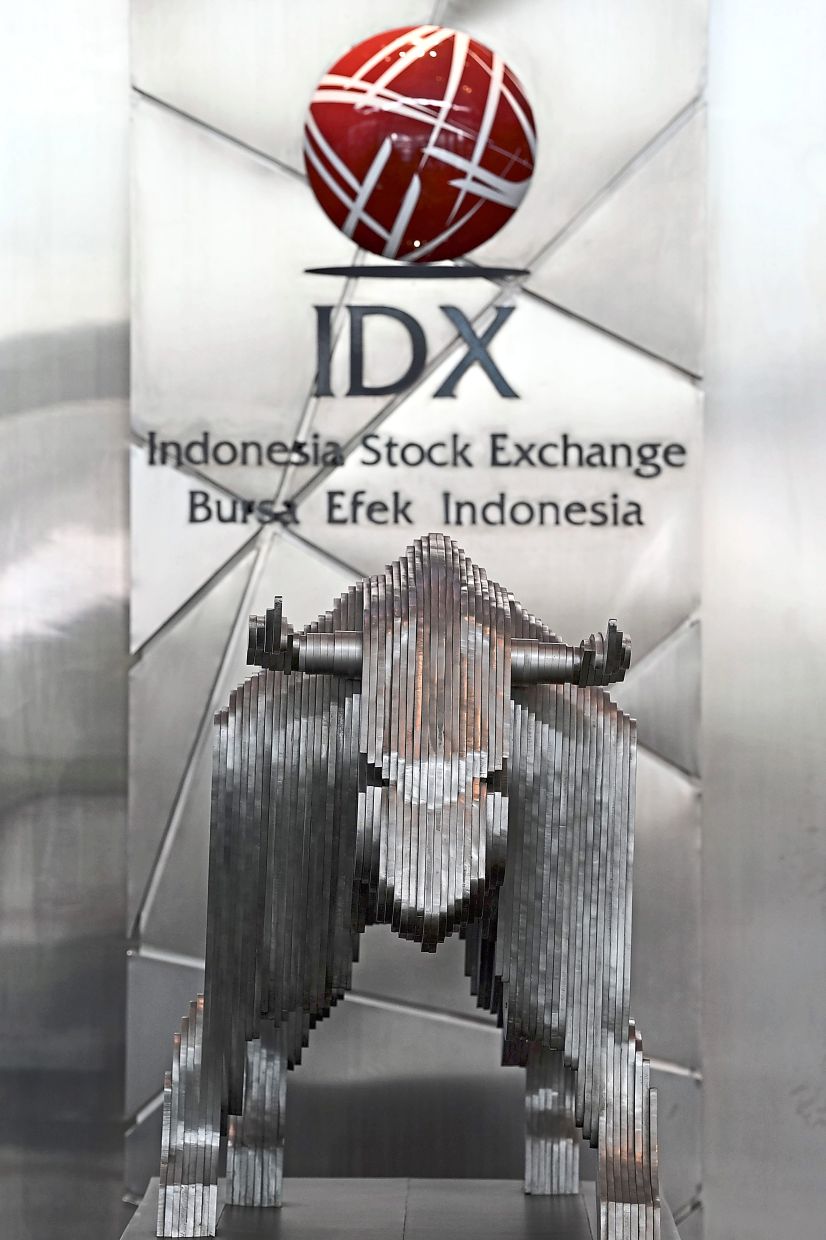
The Indonesia Stock Exchange is preparing to eliminate 80 listed companies characterized by highly concentrated share ownership from its benchmark Jakarta Composite Index, in a major structural overhaul designed to elevate market transparency and strengthen price integrity across Southeast Asia’s largest equity market. The equities targeted for removal collectively represent approximately 18 percent of the aggregate weighting of the gauge, known locally as the Indeks Harga Saham Gabungan, according to reporting by the Malaysian news organization The Star. The initiative marks one of the most aggressive steps taken by bourse authorities in Jakarta to align domestic index architecture with international governance standards and reduce distortion caused by illiquid, tightly held securities.
Key facts
What happened
Bourse administrators in Jakarta revealed plans to revise the eligibility criteria for the Jakarta Composite Index (JCI), focusing on listed firms where ownership is concentrated in the hands of a small circle of controlling entities or founding families, according to reporting by The Star. Under the planned reforms, 80 individual equities that exhibit extreme ownership concentration will be stripped of their membership in the flagship index.
Although individual components were not immediately named in the initial disclosure, the cumulative footprint of the targeted group is substantial. Together, the 80 companies constitute roughly 18 percent of the JCI’s entire market capitalization weighting. In a conventional index environment, removing nearly a fifth of total weighting represents a profound recalculation of the benchmark, directly affecting how market performance is calculated and monitored.
The regulatory motivation behind the decision centers on institutional governance and trading health. By winnowing out stocks whose public float is constrained by dominant controlling stakes, exchange leaders aim to prevent artificial valuation swings, suppress opportunities for cornering thinly traded share registers, and provide international and domestic investors with an index that more accurately mirrors freely tradable capital across the Indonesian corporate landscape.
Why it matters
The planned excision of 80 heavily concentrated listings carries immediate and wide-ranging implications for institutional portfolio managers, mutual fund operators, and listed companies across Indonesia. For decades, broad market benchmarks in emerging economies have grappled with the distortionary effects of "paper value"—instances where a company achieves a multi-billion-dollar market capitalization on paper while floating only a tiny fraction of its issued shares to the public. In such circumstances, relatively small transaction volumes can trigger disproportionate movements in share prices, which in turn skew the performance of the broader index.
By shedding roughly 18 percent of the JCI’s current composition, the exchange is undertaking a controlled reset. Passive investment funds, exchange-traded products, and active managers who benchmark their performance against the JCI will inevitably be required to rebalance their portfolios once the adjustments take effect. While purely passive trackers in Indonesia frequently replicate narrower, more liquid sub-indices—such as the IDX30 or the LQ45—the JCI remains the definitive barometer of national economic health and foreign investor sentiment. A sudden divergence between total listed market capitalization and the performance of the benchmark will alter baseline calculations for macroeconomic risk premiums, country-allocation models, and derivative hedging instruments.
Furthermore, for the 80 corporate issuers facing exclusion, losing benchmark status carries tangible commercial consequences. Removal from a primary national index typically leads to diminished coverage by equity research desks, lower visibility among foreign institutional allocators, and reduced trading liquidity. It may also increase the cost of future equity capital raises, incentivizing companies to re-evaluate their capital structures and potentially release additional shares into the open market to regain index eligibility.
The background
Established in its modern unified form in late 2007 through the merger of the Jakarta Stock Exchange and the Surabaya Stock Exchange, the Indonesia Stock Exchange (PT Bursa Efek Indonesia, or IDX) has grown into a linchpin of Southeast Asian capital markets. Operating under the statutory oversight of the Financial Services Authority (Otoritas Jasa Keuangan, or OJK), the bourse lists hundreds of domestic enterprises spanning commodities, banking, telecommunications, infrastructure, and manufacturing.
The Jakarta Composite Index, first calculated in 1982, historically operated under an inclusive philosophy: virtually every equity listed on the exchange’s Main Board and Development Board was automatically included in the composite calculation. While this provided a comprehensive tally of all registered corporate equity value in Indonesia, it created vulnerabilities that sophisticated global capital managers frequently criticized.
Chief among these vulnerabilities has been the persistence of low free floats. In many Indonesian conglomerates, founding families, state-owned parent holding entities, or tight consortia of insiders retain between 80 percent and 95 percent of outstanding equity. In past market cycles, several fast-rising enterprises entered the upper tiers of total market valuation despite trading only marginal volumes on a daily basis. When global benchmark index providers, such as MSCI Inc. and FTSE Russell, evaluate emerging markets for inclusion and weightings, they apply stringent free-float adjustment methodologies and minimum liquidity screens. In contrast, domestic headline indices that retain concentrated stocks often exhibit wide tracking disparities against international benchmarks, complicating cross-border capital allocations.
Over the past several years, the IDX and OJK have incrementally introduced measures to address float deficits, including minimum public float thresholds of 7.5 percent for listed firms and the rollout of free-float adjusted calculation methods for selected domestic gauges. The decision to purge 80 heavily concentrated firms from the primary composite index represents the culmination of this multi-year shift toward institutionalizing market discipline and addressing structural bottlenecks in domestic price discovery.
Reaction
Official market reaction within Indonesia is anticipated to emerge as formal circulars and implementation guidelines are issued by the exchange executive board and the OJK. Domestic institutional investors, including pension funds such as BPJS Ketenagakerjaan and state-backed asset management arms, are expected to examine the operational mechanics of the index revision during upcoming industry consultations and regulatory briefings.
Brokerage houses, domestic securities firms, and foreign investment bank desks operating in Jakarta are also expected to focus on the liquidity transition. Trading desks will closely monitor whether the exclusion of these 80 names will spark short-term selling pressure from retail or institutional holders who prefer not to maintain positions in non-benchmark equities. Analysts and market governance advocates have historically favored reforms that penalize illiquid and closely held listings, viewing enhanced free-float enforcement as the only sustainable avenue for Indonesia to compete effectively with regional peer exchanges in Singapore, Malaysia, and Thailand for global institutional flows.
What we don't know yet
Significant operational details regarding the exchange’s plan remain undisclosed. Most notably, the IDX has not yet made public the formal list of the 80 specific companies designated for removal. Without that roster, market participants cannot definitively evaluate which industrial sectors will experience the greatest reduction in benchmark representation, nor can they determine whether major conglomerate-affiliated entities or recent market debutantes are among those affected.
Additionally, the reporting does not delineate the specific mathematical criteria used to define "highly concentrated ownership" for this regulatory exercise. It remains unconfirmed whether the exclusion threshold is pegged to a specific free-float percentage, a ceiling on insider holdings, a minimum daily average trading volume, or a combination of multiple liquidity factors.
Crucially, the implementation schedule and transition protocol are not yet known. Exchange authorities have not indicated whether the 80 exclusions will occur in a single comprehensive rebalancing event or whether the removals will be phased over several quarters to mitigate market volatility and allow fund managers adequate time to adjust their positions.
What to watch
Market observers should watch for several critical operational milestones in the weeks ahead. First will be the formal issuance of a regulatory decree or technical guidance note from the IDX and the OJK, which should set forth the full methodology, the exact definitions of concentrated ownership, and the calendar dates for portfolio rebalancing.
Second, market participants will watch for any transitional grace periods granted to affected issuers. If the exchange establishes a cure period, some of the 80 companies may attempt secondary public offerings, rights issues, or private placements to dilute controlling stakes and lift their public float above the regulatory line before formal exclusion.
Third, observers should monitor trading volumes and price action across mid- and large-cap Indonesian equities as institutional research houses begin circulating speculative candidate lists for exclusion. Finally, the broader regional response will warrant attention: whether international index aggregators such as MSCI and FTSE respond to the domestic cleanup by adjusting Indonesia's sovereign weighting or investability scores in future annual country classifications.
This article incorporates reporting originally published by The Star.
How this story was produced
This report was written by The Global Wire newsroom from reporting first published by thestar.com.my. We verify the core facts against the original report, write our own account, and add the background and consequences a short wire item leaves out. Drafting is AI-assisted inside an editor-supervised pipeline, and every story is checked for accuracy of attribution, structure and duplication before it appears — full detail in our AI and funding disclosure.
Spotted an error? Tell us at corrections@horizonglobalnews.com and read our corrections policy or editorial standards.






Reader comments
Loading comments…