

UN Monitors Call for Inquiry Into Force Used by Indian Police Against Protesters
United Nations human rights experts have urged New Delhi to halt excessive force against demonstrators and establish an independent investigation into reports of injuries and mistreatment.
By The Global Wire Newsroom · Reported from Kanishka Singh
Link preview · horizonglobalnews.com
UN Monitors Call for Inquiry Into Force Used by Indian Police Against Protesters
United Nations human rights experts have urged New Delhi to halt excessive force against demonstrators and establish an independent investigation into reports of injuries and mistreatment.
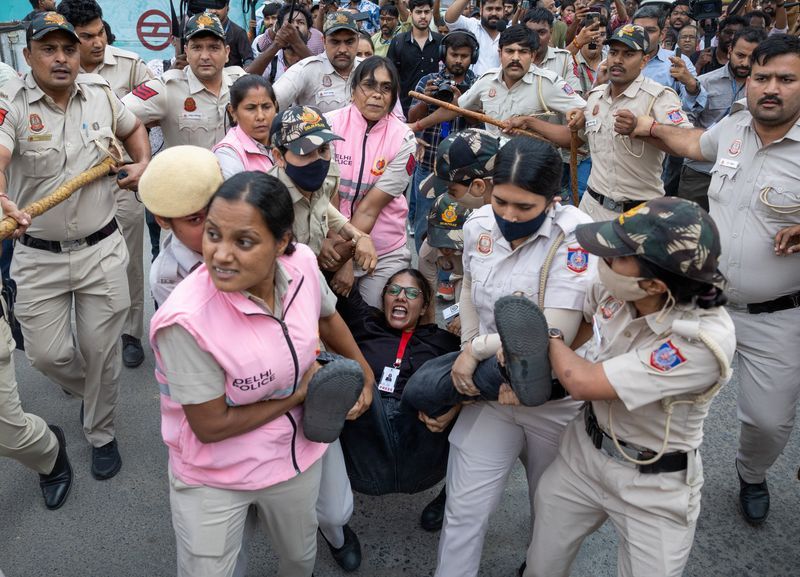
Independent human rights experts affiliated with the United Nations have called on Indian authorities to immediately halt the use of disproportionate force against demonstrators and open an impartial inquiry into recent police conduct, citing credible allegations that participants sustained severe injuries and experienced mistreatment during official crackdowns on civil protests. The appeal, issued on Tuesday from Washington and Geneva, underscores growing scrutiny from international legal monitors over law enforcement methods deployed against public assemblies across the world's most populous democracy.
Key facts
What happened
According to reporting by Reuters, the appeal followed a sequence of clashes in which state security personnel reportedly employed hardline dispersion methods against demonstrator gatherings, resulting in physical casualties and formal complaints of custodial and street-level abuse. United Nations human rights mandate holders—independent specialists appointed under the auspices of the UN Human Rights Council in Geneva—reviewed evidence highlighting instances where law enforcement interventions exceeded the thresholds established by global policing norms.
In their joint intervention, the experts expressed grave concern over the volume of injuries inflicted on nonviolent assemblies. While specific geographical sites and regional jurisdictions were not individually itemized in the preliminary release, the monitors emphasized that law enforcement agencies had repeatedly resorted to physical force rather than de-escalation protocols. Eyewitness accounts and observer dossiers cited by the experts pointed to the use of heavy-handed physical dispersals, including the deployment of blunt-force instruments, non-lethal projectiles, and tear gas under circumstances that did not warrant extreme tactical measures.
Furthermore, the UN specialists emphasized that individuals detained in connection with these assemblies reported being subjected to cruel, inhuman, or degrading treatment while under state control. Calling the state's response unacceptable, the experts insisted that Indian authorities must institute a prompt, transparent, and independent judicial or administrative inquiry to establish accountability, assess institutional culpability, and ensure remedies for injured citizens.
Why it matters
The intervention by United Nations special procedures carries substantial diplomatic, constitutional, and governance ramifications. At its core, the issue tests whether domestic law enforcement practices in India align with the fundamental rights guaranteed by the Indian Constitution. Under Article 19(1)(a) and Article 19(1)(b) of the Constitution of India, citizens are guaranteed the basic freedoms of speech and expression, as well as the right to assemble peacefully and without arms. When security personnel routinely suppress street protests through punitive measures, these foundational constitutional protections are fundamentally undermined, chilling civic participation across trade unions, student organizations, agrarian coalitions, and regional minority groups.
For international observers and investors, the assessment touches directly on political stability, institutional predictability, and the health of civil society. In recent years, international governance indices—such as the V-Dem Institute rankings and Freedom House surveys—have downgraded India's status, pointing to tightening curbs on public dissent, civic associations, and press operations. Sustained friction between state authorities and independent UN mechanisms risks complicating New Delhi’s strategic relationships with Western partners, including the United States and the European Union, which frequently navigate bilateral engagements alongside public commitments to human rights benchmarks.
Beyond external diplomacy, the issue impacts millions of ordinary citizens seeking redress for socioeconomic or policy grievances. In developing economies, peaceful public demonstration remains an indispensable tool for marginalized populations—ranging from rural farmers and environmental activists to caste and religious minorities—to register dissent before municipal and national parliaments. If law enforcement agencies operate under a presumption of impunity during crowd-control actions, the social compact governing civilian-police relations fractures, increasing the likelihood of broader civil unrest.
The background
Tensions between international human rights bodies and the Indian government over the policing of demonstrations follow a well-established institutional pattern. India ratified the International Covenant on Civil and Political Rights (ICCPR) in April 1979, binding the state to protect peaceful assembly under Article 21 and safeguard liberty and security of the person under Article 9. Furthermore, the global standards governing police conduct are delineated by the United Nations Basic Principles on the Use of Force and Firearms by Law Enforcement Officials, adopted in Havana in 1990. These guidelines mandate that authorities must use non-violent means before resorting to force, exercise restraint, minimize damage and injury, and respect human life under all operational circumstances.
Domestically, Indian crowd management has historically operated under the Code of Criminal Procedure of 1973—recently replaced in July 2024 by the Bharatiya Nagarik Suraksha Sanhita (BNSS). Under these statutory frameworks, police officers and executive magistrates possess broad discretion to prohibit assemblies of five or more persons by invoking Section 144 orders to prevent perceived breaches of public order. In practice, rights advocates have long argued that executive authorities deploy these restrictive orders preemptively to forestall legitimate protests rather than manage immediate public safety emergencies.
Over the past decade, several mass protest movements in India have encountered heavy police intervention, attracting intense global attention. During the 2019 and 2020 demonstrations against the Citizenship Amendment Act (CAA), human rights watchdogs documented extensive baton charges, tear gas firing into educational facilities such as Jamia Millia Islamia in New Delhi, and thousands of preventive detentions. Similarly, during the yearlong agrarian protests in 2020 and 2021 against deregulatory agricultural reform bills, federal and state security forces erected concrete barricades, dug trenches across national highways, and deployed water cannons against advancing convoys of farmers.
Historically, the Ministry of External Affairs in New Delhi has rejected critical commentary from UN mandate holders, categorizing foreign statements as unwarranted interference in domestic affairs. Indian diplomats regularly contend that the nation’s robust judiciary, independent media, and democratic parliamentary apparatus provide comprehensive mechanisms to redress domestic grievances without overseas oversight. In earlier dialogues before the UN Human Rights Council during Universal Periodic Review cycles, Indian delegations have insisted that security officers act within strict legal boundaries to preserve national stability, territorial integrity, and communal harmony.
Reaction
The immediate call for an inquiry has put renewed pressure on executive ministries in New Delhi, although formal public rebuttals from the Ministry of External Affairs and the Ministry of Home Affairs had not been published at the time of the initial Reuters reporting. Historically, the Indian diplomatic corps responds to communications from UN Special Rapporteurs through formal notes verbales, routinely questioning the methodologies, source materials, and impartiality of mandate holders who comment on internal public order matters.
Domestic civil liberty coalitions, human rights attorneys, and public interest groups within India are expected to cite the UN findings in ongoing petitions before state High Courts and the Supreme Court of India. Legal advocacy groups have previously leveraged international norms to demand strict adherence to domestic police accountability guidelines, such as the binding directions issued by the Supreme Court in the landmark 2006 Prakash Singh case on police reform and the 1997 D.K. Basu guidelines governing arrest and custodial detention.
International nongovernmental organizations, including Amnesty International and Human Rights Watch, have consistently echoed the mandate holders' assessments, urging democratic partners of India to raise the issue of police overreach in bilateral dialogues. Conversely, nationalist policy commentators and pro-government political figures regularly dismiss such international statements, portraying UN-affiliated experts as detached from the real-world operational complexities of preserving security across densely populated Indian urban centers.
What we don't know yet
Several substantive details remain unclear following the initial disclosure of the UN experts' findings. The initial reporting does not specify which exact regional protests, municipalities, or dates triggered the experts' intervention, leaving open whether the scrutiny addresses localized agrarian marches, student demonstrations in metropolitan university districts, or community protests in border regions. Consequently, the precise jurisdictional breakdown between central paramilitary personnel—such as the Central Reserve Police Force—and state-controlled police forces remains unspecified.
Additionally, the reporting does not disclose the verified tally of injured demonstrators, the proportion of hospitalized casualties, or the exact number of participants currently held in pre-trial detention. Official casualty registers and medical assessments have not been made public alongside the experts' statements. Furthermore, it remains unknown whether the UN mandate holders have received formal replies from Indian state representatives through the confidential communication channels that typically precede public joint statements.
What to watch
Moving forward, several key benchmarks will indicate whether the UN appeal influences state action or alters diplomatic trajectories. The primary event to monitor is the formal rejoinder from the Ministry of External Affairs, which typically clarifies whether New Delhi will engage with the specific allegations or dismiss the communiqué as biased commentary.
Attention will also turn to the Supreme Court of India, which retains constitutional jurisdiction under Article 32 to initiate suo motu public interest litigation or hear petitions concerning systemic police misconduct and custodial safeguards. Observers will track whether any state high courts order magisterial or judicial inquiries into specific local dispersals referenced in the human rights dossiers.
Finally, observers should watch upcoming sessions of the United Nations Human Rights Council in Geneva. Scheduled dialogues with Special Rapporteurs on the rights to freedom of peaceful assembly and of association, extrajudicial executions, or torture provide formal arenas where member states, including India and international delegations, will present formal statements regarding domestic law enforcement compliance with treaty standards.
This article includes reporting based on disclosures originally published by Reuters.
How this story was produced
This report was written by The Global Wire newsroom from reporting first published by Kanishka Singh. We verify the core facts against the original report, write our own account, and add the background and consequences a short wire item leaves out. Drafting is AI-assisted inside an editor-supervised pipeline, and every story is checked for accuracy of attribution, structure and duplication before it appears — full detail in our AI and funding disclosure.
Spotted an error? Tell us at corrections@horizonglobalnews.com and read our corrections policy or editorial standards.



Reader comments
Loading comments…