

Tesla and SpaceX Form Special Board Committees to Evaluate Potential Merger
Elon Musk says boards have set up independent panels to explore combining the automaker and aerospace firm as SpaceX plans weekly Starship flights.
By The Global Wire Newsroom · Reported from SECTIONS SpaceX CEO Elon Musk says Co; Tesla have formed special committees
Link preview · horizonglobalnews.com
Tesla and SpaceX Form Special Board Committees to Evaluate Potential Merger
Elon Musk says boards have set up independent panels to explore combining the automaker and aerospace firm as SpaceX plans weekly Starship flights.
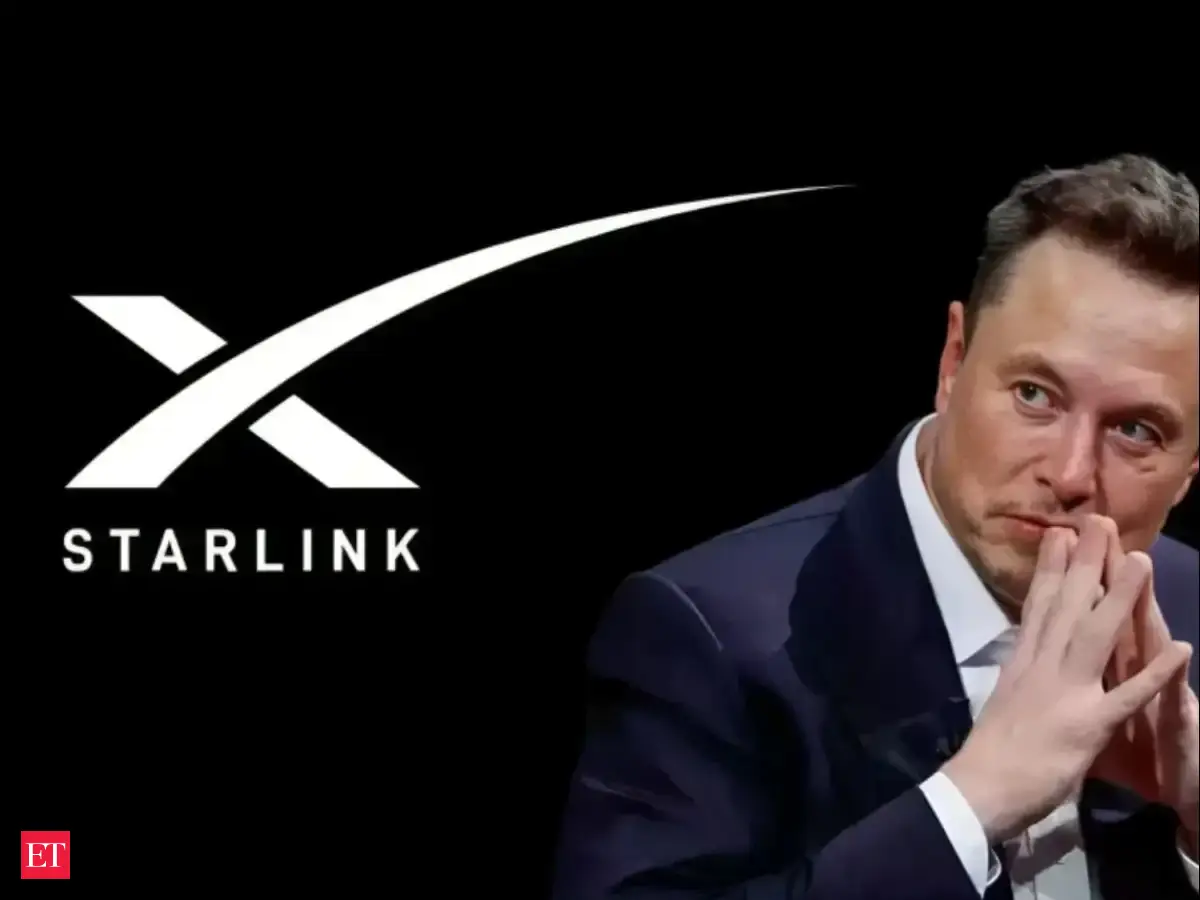
Elon Musk announced that electric vehicle manufacturer Tesla Inc. and private aerospace contractor Space Exploration Technologies Corp. have established dedicated board committees to explore a potential corporate merger, according to reporting by SECTIONS. The disclosure, which points toward an unprecedented consolidation of two of the world's most valuable technology and manufacturing enterprises, was accompanied by aggressive operational projections for SpaceX's deep-space transportation architecture. Musk indicated that the company expects its Starship launch vehicle to achieve an operational cadence of one flight per week early next year, scaling to two flights per week later in the cycle, amid internal projections of rapid annual recurring revenue growth.
Key facts
What happened
According to reporting by SECTIONS, Musk disclosed that both Tesla and SpaceX have initiated formal preliminary steps toward a potential transaction by setting up special committees. Within corporate governance frameworks, the formation of such committees is the standard legal mechanism employed when affiliated companies consider cross-ownership deals, buyouts, or statutory mergers involving common executive leadership and overlapping ownership interests.
Concurrent with the revelation regarding merger discussions, Musk detailed substantial operational milestones anticipated for SpaceX's primary aerospace programs. The company is positioning its Starship vehicle—the stainless-steel, fully reusable heavy-lift launch system currently undergoing orbital test flights from Starbase in Cameron County, Texas—to shift from an experimental testing phase into high-frequency commercial service. Musk projected that Starship will conduct flights at an initial pace of once per week early next year, with the operational objective of doubling that frequency to twice per week later in the calendar year. In parallel with the launch schedule projections, SpaceX outlined expectations for major top-line commercial growth, targeting significant annual recurring revenue gains driven by launch contracts and satellite services, though exact monetary thresholds were not fully detailed in the initial announcement.
Why it matters
A merger between Tesla and SpaceX would constitute one of the most complex corporate consolidations in modern financial history, uniting a publicly traded automotive and clean-energy conglomerate with a privately held defense contractor and satellite operator. For Tesla shareholders, combining with SpaceX would instantly diversify the automaker beyond electric vehicles, stationary energy storage batteries, and consumer robotics into commercial spaceflight, defense rocketry, and global orbital telecommunications. However, it would also introduce immense capital expenditure requirements, technical execution risks, and national security constraints into Tesla's financial reporting.
For SpaceX, a transaction could provide direct access to public capital markets and Tesla's liquid balance sheet without pursuing an independent initial public offering, while offering Tesla manufacturing, materials engineering, and software synergies. At the same time, the regulatory exposure would be profound. SpaceX serves as a critical mission partner to the United States government, holding billions of dollars in launch contracts with the National Aeronautics and Space Administration and the Department of Defense. Subjecting SpaceX’s strategic operations to the scrutiny and market volatility of a publicly traded automotive company could trigger extensive review by national security officials, the Securities and Exchange Commission, and international trade regulators. For the broader aerospace industry, achieving a flight rate of once or twice weekly for a super-heavy orbital rocket would fundamentally disrupt commercial payload pricing, satellite deployment timelines, and competitor economics across the globe.
The background
Tesla, founded in 2003 and taken public on the NASDAQ exchange in 2010, transformed the automotive landscape before navigating sustained price pressure, slowing electric vehicle adoption rates, and heightened competition from domestic and Chinese manufacturers. The company has increasingly repositioned its identity around artificial intelligence, autonomous driving software, and humanoid robotics. SpaceX, established by Musk in 2002, evolved from an unproven launch startup into the dominant commercial launch operator in the world, responsible for carrying the vast majority of commercial and military orbital mass through its Falcon 9 and Falcon Heavy rockets, alongside its Starlink satellite broadband network.
Cross-company entanglements are not unprecedented within Musk's portfolio. In 2016, Tesla acquired SolarCity, a solar-panel installer where Musk served as chairman and primary shareholder, for approximately $2.6 billion in stock. That transaction prompted extensive shareholder derivative litigation in the Delaware Court of Chancery, where institutional investors alleged that the acquisition constituted a bailout of an affiliated firm executed at the expense of Tesla’s public investors. While Delaware courts ultimately ruled in Musk's favor under the "entire fairness" standard following years of litigation, the episode established intense sensitivity around transactions involving common ownership.
Under modern corporate law, particularly following judicial standards governing controlling-shareholder transactions, companies seeking to execute conflicted deals routinely utilize independent special committees advised by separate legal counsel and independent investment bankers. These mechanisms, alongside requirements for an uncoerced majority-of-the-minority shareholder vote, are designed to insulate directors from liability and ensure minority stockholders receive equitable terms. Furthermore, both companies recently reincorporated from Delaware to Texas following legal disputes regarding executive compensation, placing any prospective merger under the emerging jurisdiction of Texas business courts and statutory corporate codes.
Reaction
Neither the leadership of Tesla nor SpaceX has issued public transcripts detailing the committee mandates, and standard market responses are expected across Wall Street research desks and corporate governance watchdog organizations. Institutional investors in Tesla, who have historically expressed varied views regarding executive attention across multiple operational ventures, are expected to scrutinize the valuation parity, capital allocation strategy, and regulatory implications in upcoming investor communications.
Governance advocates and legal scholars are anticipated to closely examine the operational independence of the appointed special committee members, looking for historical ties to executive leadership. In Washington, aerospace regulators at the Federal Aviation Administration and contracting authorities at NASA and the Department of Defense are expected to evaluate how a potential change in corporate structure might influence existing multi-billion-dollar government programs, including the Artemis lunar exploration contracts that rely on Starship as a human landing system.
What we don't know yet
Significant structural and financial ambiguities remain unresolved following the preliminary disclosure reported by SECTIONS. The specific financial figure intended for SpaceX’s annual recurring revenue projection was omitted or cut short in initial materials, leaving open questions regarding the current scale and profitability of Starlink and government launch services.
Crucially, it is unknown whether the special committees are assessing an outright corporate merger, an equity exchange, an asset acquisition, or a joint venture structure. The relative valuation assigned to SpaceX—which has traded in private secondary markets at valuations exceeding $180 billion—relative to Tesla's fluctuating public market capitalization has not been defined. It is also unclear who sits on each board's special committee, whether financial advisors have been formally retained, or what definitive timeline has been established for presenting recommendations to the respective full boards of directors.
What to watch
Market observers, regulators, and investors will look for official regulatory filings, specifically Form 8-K submissions from Tesla with the U.S. Securities and Exchange Commission, which would formally confirm the creation, composition, and legal charter of the special committee. Attention will also turn to upcoming quarterly earnings conference calls, where Tesla executive management will face pointed inquiries regarding deal logic, capital commitments, and structural timelines.
On the operational side, tracking upcoming integrated test flights of Starship from the Starbase facility in Texas will provide empirical evidence of whether the projected cadence of weekly and twice-weekly launches is technically viable. Those milestones depend heavily on Federal Aviation Administration launch license modifications, booster recovery reliability, and orbital propellant transfer demonstrations required for deep-space and lunar missions.
This account is based on reporting published by SECTIONS.
How this story was produced
This report was written by The Global Wire newsroom from reporting first published by SECTIONS SpaceX CEO Elon Musk says Co; Tesla have formed special committees. We verify the core facts against the original report, write our own account, and add the background and consequences a short wire item leaves out. Drafting is AI-assisted inside an editor-supervised pipeline, and every story is checked for accuracy of attribution, structure and duplication before it appears — full detail in our AI and funding disclosure.
Spotted an error? Tell us at corrections@horizonglobalnews.com and read our corrections policy or editorial standards.



Reader comments
Loading comments…