

Alberta Ballots Put Province's Constitutional Ties to Canada to the Test
Voters in Alberta cast ballots on whether to stay in confederation or begin a path toward an independence vote.
By The Global Wire Newsroom · Reported from Sheena Rossiter
Link preview · horizonglobalnews.com
Alberta Ballots Put Province's Constitutional Ties to Canada to the Test
Voters in Alberta cast ballots on whether to stay in confederation or begin a path toward an independence vote.

Voters across Alberta participated in a provincial referendum on Monday, Oct. 19, 2026, confronting a direct ballot question on whether the western province should remain within the Canadian confederation or initiate formal preliminary steps toward a potential future referendum on outright independence. The vote follows years of mounting friction between provincial leadership and the federal government in Ottawa over resource governance, fiscal federalism, and jurisdictional autonomy. By presenting electors with an explicit choice between maintaining the constitutional status quo and pursuing a formal track toward national sovereignty, the plebiscite marks the most serious institutional challenge to Canadian unity from western Canada since the foundation of the province in 1905, according to reporting by Sheena Rossiter.
Key facts
What happened
Electors across Alberta took part in a scheduled plebiscite on Monday to resolve whether the province should remain an integrated part of Canada or initiate a formal procedural track toward an eventual vote on national sovereignty, according to reporting by Sheena Rossiter. The ballot presented a fundamental constitutional question directly to the provincial electorate, compelling voters to register their position on the long-term viability of the Canadian federal pact.
While the reporting by Sheena Rossiter did not publish precinct-level return figures or project an outcome at the time of initial filing, the execution of the vote represents the culmination of escalating institutional confrontation between provincial authorities and the federal establishment in Ottawa. Rather than framing the ballot as an immediate, unilateral declaration of separation, the measure asked voters whether to reaffirm Alberta's place within Canada or approve an initial mandate that would lay the procedural groundwork for a future, definitive referendum on complete independence.
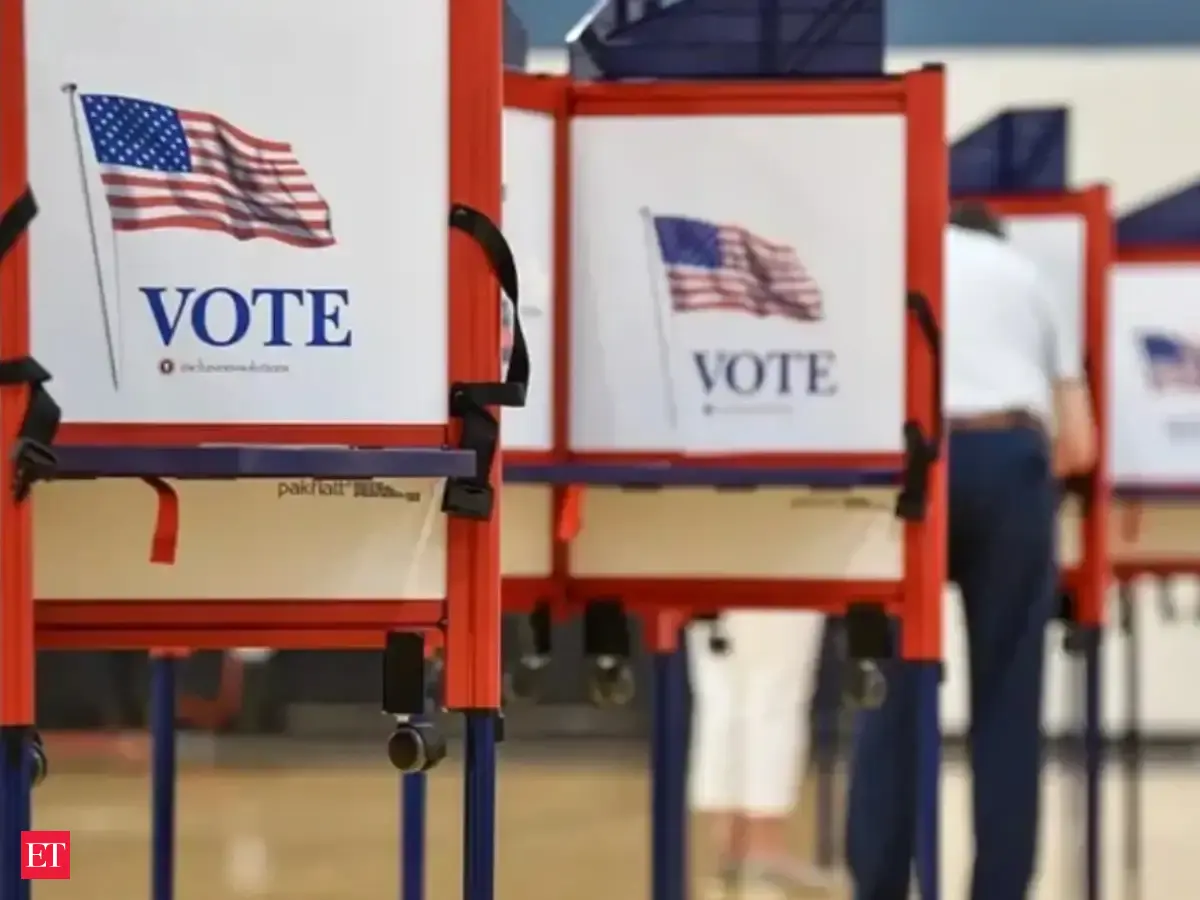
Provincial polling stations operated across urban centres including Calgary and Edmonton, as well as throughout the resource-dependent rural ridings that have historically formed the political heartland of western conservative and autonomy movements. The logistical administration of the vote fell under the statutory authority of provincial electoral machinery, following legislative preparations aimed at gauging public appetite for a structural rupture with the rest of the country.
Why it matters
The economic, legal, and geopolitical ramifications of the referendum reach far beyond Alberta's borders. Alberta represents the economic anchor of western Canada and constitutes the primary engine of the country's energy trade. The province possesses the world's third-largest proven crude oil reserves, primarily situated in the Athabasca, Cold Lake, and Peace River oil sands deposits. Energy exports from Alberta generate tens of billions of dollars annually in foreign exchange, underpin the Canadian dollar's international valuation, and provide crucial royalty revenues that sustain public spending across multiple tiers of government.
For financial markets, any tangible step toward provincial secession introduces systemic sovereign risk to Canadian debt and capital markets. Investors pricing Canadian sovereign bonds, provincial debt issuances, and corporate debt across the oil, banking, and pipeline sectors face structural uncertainty regarding currency stability, debt apportionment, and market access. If a mandate to pursue separation advances, the division of Canada's national debt—which exceeds 1.2 trillion Canadian dollars at the federal level—would emerge as a contentious negotiating issue. Under standard international practice and historical fiscal models, Alberta would be expected to assume a per capita or gross domestic product-weighted share of that federal liability, creating immediate fiscal pressures on a newly sovereign administration.
Furthermore, the landlocked geographic reality of Alberta poses severe logistical complexities. The province relies entirely on interprovincial infrastructure—including railways and export pipelines such as the Trans Mountain expansion and the Enbridge Mainline system—to deliver heavy crude, refined petroleum, petrochemicals, agricultural grains, and cattle to tidewater terminals in British Columbia or export corridors into the United States. A separation trajectory would leave Alberta dependent on treaty agreements with a sovereign Canada to guarantee corridor access under international transit conventions, giving federal and coastal authorities significant leverage in bilateral talks.
The background
Regional friction between Alberta and central Canada has deep historical roots dating back to the creation of the province from the North-West Territories under the Alberta Act of 1905. Unlike the original four provinces that founded Canada under the British North America Act of 1867, Alberta and neighboring Saskatchewan were initially denied ownership and administrative control over their natural resources, with the federal government retaining those rights until the Natural Resources Acts of 1930 granted parity with other provinces.
Modern western grievance solidified during the early 1980s following the introduction of the National Energy Program by the federal Liberal government of Prime Minister Pierre Trudeau. The program imposed federal price controls, domestic supply mandates, and export taxes on crude oil, resulting in severe capital flight, bankruptcies, and real estate deflation across Alberta. The legacy of that intervention catalyzed the formation of the Reform Party of Canada in 1987 under the slogan "The West Wants In," fundamentally reshaping national conservative politics.
Tensions flared again over the past decade in response to federal regulatory frameworks enacted by Ottawa, including federal carbon pricing benchmarks, the passage of Bill C-69 altering environmental assessment protocols for major infrastructure, and Bill C-48, which banned crude oil tankers along northern British Columbia's coastline. In response, Alberta held an equalization referendum in October 2021, wherein 61.7 percent of participating provincial voters supported stripping the principle of federal equalization payments from Section 36(2) of the Constitution Act, 1982. In late 2022, the Alberta Legislative Assembly passed the Alberta Sovereignty Within a United Canada Act, a statutory measure designed to allow provincial ministries to refuse enforcement of federal legislation deemed harmful to provincial interests or unconstitutional.
From a legal standpoint, the constitutional framework governing secession in Canada is governed by the landmark 1998 Supreme Court of Canada decision, Reference re Secession of Quebec. In that unanimous advisory opinion, the court ruled that neither domestic constitutional law nor international law confers a right of unilateral secession upon a Canadian province. However, the justices held that if a clear majority of a province's population votes in favor of separation on a clear question, the federal government and other provinces are bound by constitutional principles of democracy and federalism to negotiate terms of departure in good faith. In response to that ruling, the federal parliament enacted the Clarity Act in 2000, which reserves to the House of Commons the authority to determine whether a referendum question is sufficiently clear and whether a voting result constitutes a clear majority before Ottawa enters into secession negotiations.
Reaction
While Sheena Rossiter's reporting did not capture immediate public statements from elected officials at the close of voting, formal responses are expected from key political, indigenous, and commercial stakeholders across the country.
The federal government in Ottawa, through the Prime Minister's Office and the Department of Justice, is anticipated to address the vote by emphasizing the supremacy of Canadian constitutional law, the binding precedents of the Supreme Court's 1998 secession reference, and the provisions of the federal Clarity Act. Historically, federal administrations of both major parties have maintained that unilateral attempts to alter the federation undermine national economic stability and run counter to constitutional order.
Provincial premier offices across western Canada, particularly in British Columbia, Saskatchewan, and Manitoba, are expected to monitor the outcome closely. Neighboring jurisdictions share extensive commercial and supply-chain linkages with Alberta, but coastal British Columbia has consistently opposed unconstrained pipeline expansion through its territory, setting the stage for interprovincial friction.
Critical responses are also expected from First Nations leadership across the province. Alberta's territory is entirely encompassed by historic numbered treaties—specifically Treaty 6, Treaty 7, and Treaty 8—signed between sovereign Indigenous nations and the British Crown. Treaty Chiefs and Indigenous legal authorities have consistently stated that their historic treaties were struck with the Crown in right of Canada, not the provincial government. First Nations organizations have repeatedly made clear that Alberta cannot unilaterally alter its constitutional relationship or claim jurisdiction over traditional treaty territories without Indigenous consent, a dynamic that introduces legal impediments to any provincial independence roadmap.
What we don't know yet
Several crucial elements of the vote and its operational consequences remain undefined in the reporting currently available. First, neither the exact overall voter turnout nor the final percentage breakdown between those choosing to remain in Canada and those endorsing an independence track has been certified. Turnout figures are critical: under both the legal principles outlined in the 1998 Supreme Court reference and the statutory criteria of the federal Clarity Act, the legitimacy of any secession process depends on demonstrating an undeniable mandate, which a narrow result on low participation would fail to provide.
Second, the specific threshold that provincial authorities plan to apply to interpret the result as an actionable mandate remains unclarified. It is unclear whether the provincial executive intends to treat a simple majority of 50 percent plus one as sufficient to initiate independence preparations, or whether higher supermajority benchmarks would be considered.
Third, the precise legal mechanism and timeline for the prospective "second vote" referenced on the ballot have not been published. The reporting does not detail what formal milestones, constitutional challenges, or negotiations would take place before Albertans would be summoned to vote in a final, binding independence referendum.
What to watch
The trajectory of the province's constitutional confrontation will hinge on several quantifiable developments in the days and weeks ahead. First, the official tabulation of ballots by provincial election authorities will provide the certified vote count and demographic breakdown across metropolitan and rural ridings. The size of the margin will determine whether provincial leaders claim a decisive mandate or face domestic political division.
Second, observers should watch for an emergency sitting of the Alberta Legislative Assembly to formally debate the referendum's outcome and draft follow-on legislation detailing the mandate for autonomy or independence planning.
Third, attention will turn to the House of Commons in Ottawa, where federal parliamentarians must decide whether to invoke the Clarity Act to evaluate the wording of the ballot and the validity of the result. Any formal motion introduced by the federal government challenging the referendum's procedural legitimacy will establish the parameters of subsequent legal battles.
Finally, market indicators—particularly the yield spreads on Alberta provincial bonds relative to benchmark Government of Canada bonds, capital expenditure announcements by energy operators, and public legal filings by Treaty First Nations—will serve as early barometers of the economic and constitutional fallout.
This report incorporates news reporting published by Sheena Rossiter.
How this story was produced
This report was written by The Global Wire newsroom from reporting first published by Sheena Rossiter. We verify the core facts against the original report, write our own account, and add the background and consequences a short wire item leaves out. Drafting is AI-assisted inside an editor-supervised pipeline, and every story is checked for accuracy of attribution, structure and duplication before it appears — full detail in our AI and funding disclosure.
Spotted an error? Tell us at corrections@horizonglobalnews.com and read our corrections policy or editorial standards.





Reader comments
Loading comments…