

Proposed Summit Linking Trump, Putin, and Xi Draws Sharp Bipartisan Backlash
A Wall Street Journal report revealing talks to include Donald Trump in a summit with Vladimir Putin and Xi Jinping has ignited fierce debate over diplomacy and constitutional norms.
By The Global Wire Newsroom · Reported from Robert Davis
Link preview · horizonglobalnews.com
Proposed Summit Linking Trump, Putin, and Xi Draws Sharp Bipartisan Backlash
A Wall Street Journal report revealing talks to include Donald Trump in a summit with Vladimir Putin and Xi Jinping has ignited fierce debate over diplomacy and constitutional norms.
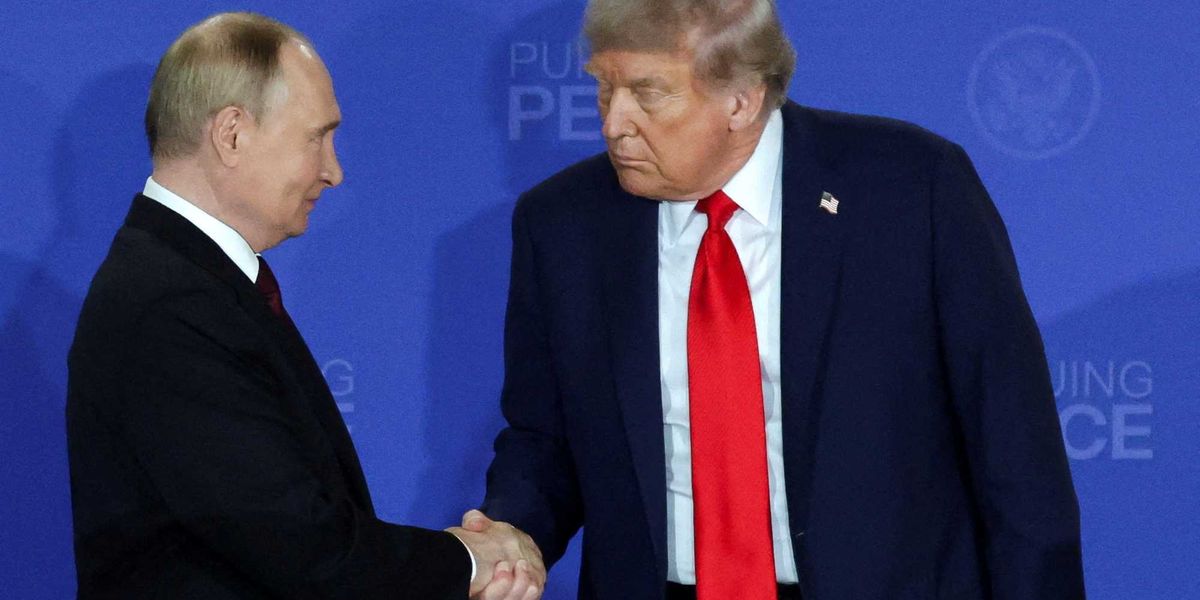
Proposals for former United States President Donald Trump to participate in a trilateral summit alongside Russian President Vladimir Putin and Chinese President Xi Jinping have ignited fierce political controversy across Washington and international diplomatic circles. The prospect of the meeting, initially reported by The Wall Street Journal on a Sunday, centers on an initiative floated by a foreign adversary to convene the three figures to negotiate a resolution to an ongoing international conflict. The revelation immediately sparked sharp condemnation from domestic political observers and foreign policy specialists, with critics characterizing the proposed gathering as an alarming subversion of standard statecraft, highlighting the deep structural tensions surrounding direct, unofficial engagement between prominent American political figures and the nation's primary geopolitical adversaries.
Key facts
What happened
According to reporting by The Wall Street Journal and subsequent analysis by Robert Davis, discussions regarding an unprecedented trilateral meeting emerged after a foreign adversary floated Donald Trump as a prospective attendee alongside Vladimir Putin and Xi Jinping. The core premise of the proposed summit, as outlined in the initial reporting, was to create a venue in which the three leaders could directly broker a settlement to an ongoing international conflict.
Rather than moving through formal bilateral mechanisms managed by the United States Department of State or standard diplomatic envoys, the idea surfaced as an external proposal. News of the prospective invitation circulated rapidly through political and media spheres, generating immediate concern among national security analysts and political figures who viewed the suggestion as an attempt by foreign powers to bypass sitting diplomatic authorities. Critics seized upon the initiative, characterizing it as an effort to align American leadership with an authoritarian axis and condemning the concept in stark political terms.
While the concept was introduced into public debate, the reporting did not confirm that formal diplomatic credentials had been issued, nor did it verify that a concrete itinerary or physical venue had been agreed upon by the governments in Moscow, Beijing, or Washington. Nonetheless, the mere floating of Trump’s name alongside two of the United States’ most formidable adversaries catalyzed significant debate over the propriety and legality of shadow diplomacy in high-stakes international negotiations.
Why it matters
The prospect of an American political figure participating in direct, high-level negotiations with Vladimir Putin and Xi Jinping carries profound implications for global security architecture, international alliances, and domestic constitutional governance. In the realm of international diplomacy, summits between heads of state require months of rigorous staff-level preparation, policy coordination, and interagency alignment to ensure national interests are protected. Introducing an informal or non-executive participant into trilateral talks with Russia and China risks confusing foreign governments about who speaks authoritatively for the United States, potentially undermining active policies and negotiations led by the sitting administration.
For North Atlantic Treaty Organization (NATO) allies and partners across the Indo-Pacific, such as Japan and South Korea, any trilateral framework that seeks to broker peace terms outside multilateral institutions raises urgent concerns about sovereignty and collective security. European governments have consistently maintained that negotiations concerning European borders—particularly regarding the defense of Ukraine following the February 24, 2022 Russian invasion—must adhere to the principle of "nothing about us without us." An ad-hoc summit involving Beijing, Moscow, and a non-sitting American leader risks creating the perception of great-power sphere-of-influence bargaining, echoing historical agreements like the 1945 Yalta Conference, which smaller nations feared compromised their territorial integrity.
Economically, global commodity and financial markets respond acutely to perceived shifts in international alignments. The relationship between Washington, Beijing, and Moscow touches trillions of dollars in trade, energy routes through the Black Sea and Eurasian landmass, and complex sanctions regimes enforced by the United States Department of the Treasury. Unsanctioned or unexpected diplomatic initiatives introduce severe volatility into global energy and defense markets, leaving investors and policymakers uncertain about the future enforcement of export controls, secondary sanctions, and trade tariffs.
The background
The controversy surrounding the floated summit is rooted in long-standing legal statutes, constitutional principles, and the complex personal diplomacy that characterized Donald Trump's presidency. Under Article II, Section 2 of the United States Constitution, the executive power to conduct foreign relations, negotiate treaties, and appoint ambassadors resides exclusively with the sitting President, subject to the advice and consent of the Senate. This authority is further reinforced by the Logan Act of 1799, codified at 18 U.S.C. § 953, which explicitly forbids private American citizens from engaging in unauthorized correspondence or negotiations with foreign governments regarding disputes with the United States.
Throughout his political career, Trump has frequently advocated for direct, leader-to-leader diplomacy, breaking with standard diplomatic protocols. Notable precedents include his July 16, 2018 bilateral summit with Vladimir Putin in Helsinki, Finland, where his public remarks at a joint press conference questioning the findings of United States intelligence agencies prompted extensive bipartisan criticism in Washington. Similarly, Trump conducted three unprecedented in-person meetings with North Korean leader Kim Jong Un between 2018 and 2019, emphasizing direct personal rapport over structured bureaucratic processes.
Simultaneously, the geopolitical partnership between Moscow and Beijing has solidified significantly. On February 4, 2022, just weeks before Russia launched its full-scale invasion of Ukraine, Putin and Xi signed a comprehensive joint statement in Beijing proclaiming a "no limits" partnership aimed at countering what both nations described as Western hegemony. Since that declaration, bilateral trade between Russia and China has expanded beyond $240 billion annually, with Beijing providing crucial diplomatic and economic backing to Moscow amid sweeping Western sanctions. In this environment, any proposed diplomatic forum uniting Moscow and Beijing with an American political figure touches the core fault lines of twenty-first-century global power competition.
Reaction
The public disclosure of the summit proposal has prompted immediate and sharp reactions across the political spectrum. Political commentators and foreign policy analysts cited in initial coverage reacted with fierce condemnation, warning that participating in such an engagement would project weakness and legitimize authoritarian leaders accused of violating international law.
While formal responses from executive agencies remain limited, official statements are anticipated from congressional leadership and key committees. Members of the Senate Foreign Relations Committee and the House Committee on Foreign Affairs routinely review unauthorized foreign engagements to determine whether they conflict with official state policy or violate federal statutes. Lawmakers aligned with traditional foreign policy orthodoxy are expected to question whether any such meeting could bypass the Department of State or compromise sensitive intelligence and diplomatic strategies.
From allied capitals, particularly within the European Union and NATO headquarters in Brussels, diplomats typically urge caution and adherence to collective security commitments when reports of unconventional diplomatic channels surface. International observers also expect responses from the Russian Ministry of Foreign Affairs and China's Ministry of Foreign Affairs, both of which regularly field questions during routine press briefings regarding potential multilateral summits involving head-of-state representatives.
What we don't know yet
Significant questions remain unanswered concerning the origin, viability, and operational reality of the proposed summit. First, the reporting does not identify the specific foreign adversary that floated Trump's participation, leaving unclear whether the proposal emanated directly from official channels in Moscow or Beijing, or through an intermediary third party seeking diplomatic leverage.
Second, it remains unknown whether an official, written invitation has been drafted or extended to Donald Trump or his representatives, and whether his team has formally accepted, considered, or rejected the concept. Trump's campaign and representatives have not released a verified record indicating whether contact regarding such an event occurred.
Third, the practical parameters of the gathering—including the intended geographic location, agenda, and procedural framework—have not been disclosed. Because any head-of-state summit requires extensive host-nation security, diplomatic immunity considerations, and complex multilateral protocols, the lack of logistical details leaves it uncertain whether the proposal represents a serious diplomatic initiative or merely a calculated trial balloon intended to test political reactions in Washington.
What to watch
Developments in the coming days will depend heavily on public clarifications from the figures and governments named in the reports. A critical checkable indicator will be formal statements issued by Donald Trump or his official spokespersons clarifying whether any communication regarding the proposed meeting took place and outlining their position on participating in such discussions.
Concurrently, regular press briefings by the United States Department of State and the White House National Security Council will provide insight into how the current administration views the report and whether federal officials intend to caution private citizens against engaging in unauthorized diplomatic negotiations.
Observers should also monitor official communications from the Kremlin and the Chinese Foreign Ministry in Beijing for any acknowledgment of the proposal. Finally, congressional committees may schedule hearings or submit formal inquiries to intelligence agencies regarding foreign efforts to influence American diplomatic posture through non-traditional channels, establishing an official record of the episode.
This account is based on original reporting by The Wall Street Journal and supplementary reporting compiled by Robert Davis.
How this story was produced
This report was written by The Global Wire newsroom from reporting first published by Robert Davis. We verify the core facts against the original report, write our own account, and add the background and consequences a short wire item leaves out. Drafting is AI-assisted inside an editor-supervised pipeline, and every story is checked for accuracy of attribution, structure and duplication before it appears — full detail in our AI and funding disclosure.
Spotted an error? Tell us at corrections@horizonglobalnews.com and read our corrections policy or editorial standards.

Reader comments
Loading comments…