

Japan Retracts Erroneous Magnitude 9.9 Earthquake Warning After False Alarm
A technical miscalculation by Japan's weather agency triggered nationwide mobile phone alarms warning of a catastrophic magnitude 9.9 tremor that never occurred.
By The Global Wire Newsroom · Reported from CNA
Link preview · horizonglobalnews.com
Japan Retracts Erroneous Magnitude 9.9 Earthquake Warning After False Alarm
A technical miscalculation by Japan's weather agency triggered nationwide mobile phone alarms warning of a catastrophic magnitude 9.9 tremor that never occurred.
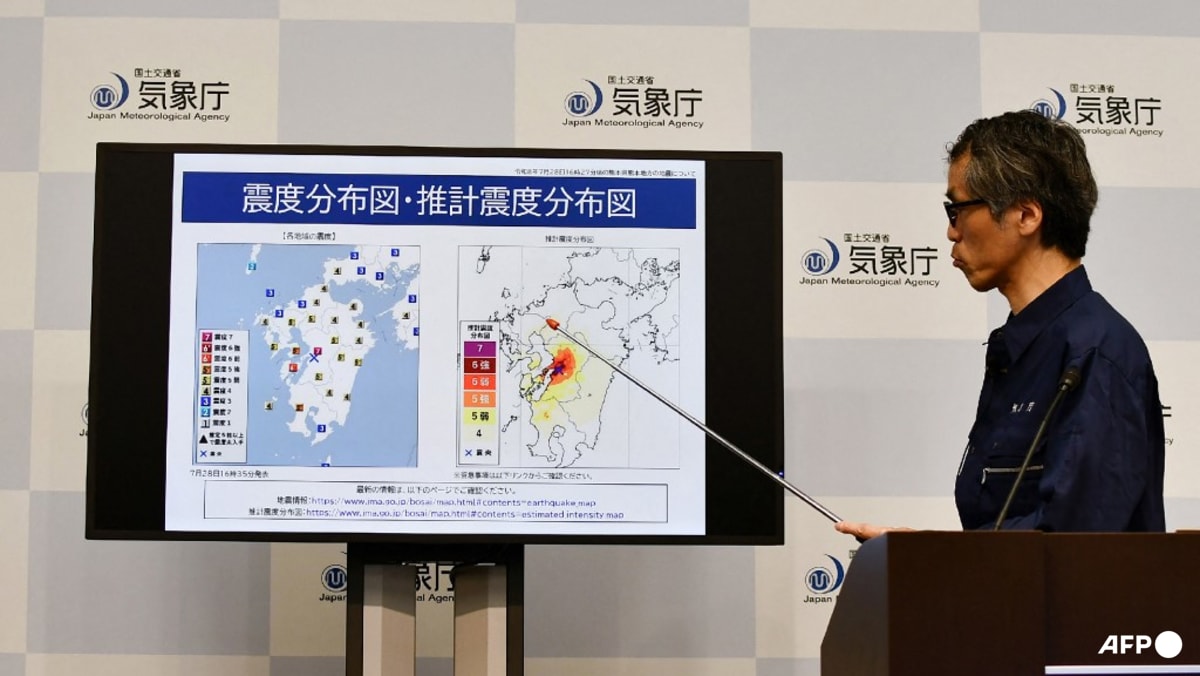
Japan's national weather agency retracted a catastrophic earthquake warning on Saturday after an automated system mistakenly projected a magnitude 9.9 tremor, sending piercing emergency sirens blaring across millions of mobile devices nationwide. The alarm, which warned of one of the most powerful seismic events in recorded human history, was triggered by an actual deep-sea earthquake located hundreds of kilometers away off the coast of Russia's Kamchatka Peninsula. Officials with the Japan Meteorological Agency later clarified that the actual tremor registered at a magnitude of 6.9 at an intermediate depth of roughly 160 kilometers, presenting no widespread destructive threat to the Japanese archipelago.
Key facts
What happened
On the morning of October 17, mobile phones across Japan erupted simultaneously with the distinctive, high-pitched chimes of the country's public disaster notification network. Screen notifications alerted residents that an unprecedented seismic rupture measuring magnitude 9.9 had been detected, urging immediate self-preservation maneuvers such as ducking under durable furniture, staying clear of falling objects, and preparing for extreme ground motion.
For several tense minutes, the alert prompted widespread alarm in metropolitan centers and regional prefectures alike. Transportation authorities, high-speed rail operators, and automated industrial facilities regularly program automated safety stops when alerts cross critical intensity thresholds, making any emergency transmission an event with immediate physical consequences on the ground.
However, expected violent surface vibrations failed to materialize across Japanese cities. Shortly after the initial broadcast, the Japan Meteorological Agency updated its assessment and retracted the catastrophic warning. The agency determined that the automated early warning system had severely miscalculated data originating from a real, distant seismic event: a magnitude 6.9 earthquake centered off the eastern coast of Russia's Kamchatka Peninsula. Because that temblor occurred at a significant focal depth of 160 kilometers (100 miles), its surface energy was heavily attenuated by the time seismic waves propagated southwest toward Hokkaido and the main island of Honshu. Agency technicians confirmed that the alert was unfounded, apologizing for the public distress caused by the automated malfunction.
Why it matters
False alarms of this magnitude carry immediate societal, economic, and operational hazards in a nation engineered to respond instantly to seismic warnings. The Japanese early warning architecture is designed to buy citizens, emergency personnel, and industrial systems critical seconds before damaging shear waves, or S-waves, reach populated areas. When an alert of severe intensity is broadcast, automated protocols often trigger the immediate braking of Shinkansen bullet trains traveling at speeds exceeding 300 kilometers per hour, halt elevators at the nearest floor, trip circuit breakers in chemical and nuclear plants, and prompt surgeons to pause delicate medical operations. A mistaken alert of magnitude 9.9—a force stronger than the catastrophic March 11, 2011 Tohoku earthquake, which was a magnitude 9.0—creates an immediate risk of secondary accidents, sudden panics in dense transit hubs, and economic disruption.
Beyond immediate physical risks, incidents of this nature threaten to erode public trust in disaster communication systems. The phenomenon of alert fatigue or skepticism poses a direct threat to public safety in earthquake-prone countries. If citizens come to believe that emergency broadcasts are prone to catastrophic overestimation, compliance with standard protective behaviors during genuine emergencies diminishes. In a country that sits atop the intersection of four major tectonic plates—the Pacific, Philippine Sea, Eurasian, and North American plates—the margin for error in disaster communication is vanishingly small. Maintaining absolute public faith in early warning triggers is a primary pillar of Japanese civil defense doctrine.
The background
Japan introduced its nationwide Earthquake Early Warning (EEW) system to the general public in October 2007, becoming the first country in the world to operationalize an automated seismic alert framework aimed at civilian populations. Developed by the Japan Meteorological Agency in partnership with the National Research Institute for Earth Science and Disaster Resilience (NIED), the network relies on more than 1,000 onshore seismometers and advanced seafloor observation cable networks, including the DONET and S-net underwater sensor arrays.
The system functions by exploiting the physical difference in velocity between primary seismic waves (P-waves), which travel through the Earth's crust at speeds of roughly 5 to 7 kilometers per second, and secondary seismic waves (S-waves), which move at approximately 3 to 4 kilometers per second. P-waves compress rock in the direction of travel and rarely cause severe structural damage, while slower S-waves carry the bulk of destructive shearing force. When initial P-wave pulses are recorded by sensors near an epicenter, automated computer algorithms estimate the hypocenter, the origin time, the magnitude, and the expected seismic intensity on Japan's 1-to-7 "shindo" scale. If the estimated intensity reaches level 5-lower or above on the shindo scale, an emergency alert is pushed via cell broadcast channels and television networks within seconds.
While the system has saved thousands of lives since its inception, algorithm miscalculations have occurred during past events. On August 1, 2016, the agency accidentally triggered an internal advisory projecting a magnitude 9.1 tremor near Tokyo after electrical noise on a seabed seismograph was misinterpreted by software as a massive crustal displacement; that warning was caught before triggering mass public mobile sirens, though some transit apps broadcast it. In January 2018, the agency issued an inaccurate alert predicting severe shaking across central Japan because the system conflated two separate minor tremors that occurred almost simultaneously in different regions into a single, large hypothetical rupture.
The Kamchatka Peninsula region, where Saturday's underlying event took place, is one of the most seismically active zones in the northern Pacific, forming the northern terminus of the Kuril-Kamchatka Trench. Deep-focus earthquakes occurring at depths between 100 and 600 kilometers in this subduction zone present unique challenges for rapid estimation models, as initial wave signatures can propagate along high-velocity slab paths, occasionally confusing algorithms tuned primarily for shallow, near-shore subduction earthquakes.
Reaction
While public officials and municipal authorities moved rapidly to confirm that local infrastructure remained unaffected, the mistaken alert prompted immediate scrutiny of automated early warning parameters. Operational command centers at utility providers, transportation ministries, and municipal fire departments across northern and central Japan conducted swift status checks following the cancellation, verifying that no derailments, injuries, or infrastructural shutdowns were caused by sudden braking or evacuation attempts.
Historically, events of this nature prompt formal inquiries within the Ministry of Land, Infrastructure, Transport and Tourism, which oversees the meteorological agency. Technical oversight committees are typically convened following major false alarms to evaluate the algorithmic processing steps that led to the error. Japan's major telecommunications carriers—including NTT Docomo, KDDI, and SoftBank—which distribute the government's cell broadcast alerts via standardized protocols, maintained normal operations throughout the event and forwarded the agency's subsequent retraction notices across their customer networks.
What we don't know yet
The precise programmatic failure that inflated a magnitude 6.9 intermediate tremor off Russia into an unprecedented magnitude 9.9 alert remains unexplained in initial operational bulletins. Agency officials have not yet disclosed whether the error stemmed from an algorithm misreading multi-station P-wave arrival times, an erroneous synthetic sensor readout from an offshore cable node, or a data-packet corruption issue during inter-agency telemetry exchange.
Furthermore, the exact domestic reach of the mobile broadcast remains unquantified. While the alert sounded on millions of handsets, the specific geographic boundaries of the transmission and whether certain regional sub-networks suppressed the alert based on secondary threshold filters have not been detailed. The degree to which automated infrastructure, such as industrial gas mains or high-speed rail segments, enacted automatic shutdown protocols during the brief window before the retraction is also subject to ongoing review.
What to watch
In the coming days, the Japan Meteorological Agency is expected to deliver a detailed technical briefing outlining the root cause of the calculation error and the specific sensor readings that triggered the warning. Observers will be monitoring whether the agency announces immediate adjustments to its software filtering rules, particularly concerning how its algorithms process deep-focus seismic events originating outside Japan's exclusive economic zone.
Regulatory and parliamentary scrutiny is also likely to follow. Legislative oversight committees regularly review disaster prevention protocols following system failures, and officials will face questions regarding measures to prevent phantom megaquake alerts from recurring. Observers will also track whether international seismic monitoring agencies that interface with Japanese data streams revise their own automated correlation parameters for Far East subduction earthquakes.
Reporting for this dispatch was informed by wire coverage from CNA.
How this story was produced
This report was written by The Global Wire newsroom from reporting first published by CNA. We verify the core facts against the original report, write our own account, and add the background and consequences a short wire item leaves out. Drafting is AI-assisted inside an editor-supervised pipeline, and every story is checked for accuracy of attribution, structure and duplication before it appears — full detail in our AI and funding disclosure.
Spotted an error? Tell us at corrections@horizonglobalnews.com and read our corrections policy or editorial standards.





Reader comments
Loading comments…