

Members of Congress Urge Federal Probe Following Thwarted Plot on Illinois Hindu Temple
U.S. lawmakers are pressing federal law enforcement to investigate an interrupted attack on an Illinois temple, citing rising security worries among Hindu and Indian American communities.
By The Global Wire Newsroom · Reported from Rohit Sharma
Link preview · horizonglobalnews.com
Members of Congress Urge Federal Probe Following Thwarted Plot on Illinois Hindu Temple
U.S. lawmakers are pressing federal law enforcement to investigate an interrupted attack on an Illinois temple, citing rising security worries among Hindu and Indian American communities.
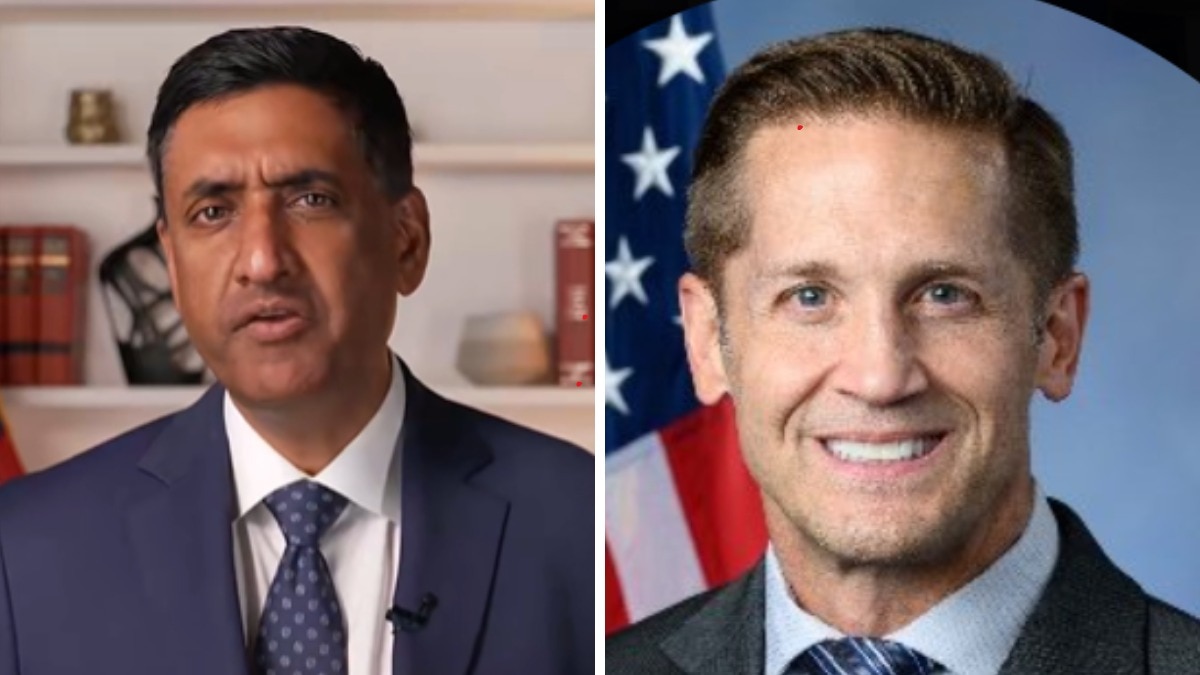
WASHINGTON — A coalition of United States lawmakers has formally petitioned federal authorities to open a comprehensive investigation into an interrupted attack targeting a Hindu temple in Illinois, pressing the Department of Justice and domestic security agencies to address an intensifying climate of fear among religious minorities. The congressional initiative follows disclosures that an alleged plot against the house of worship was detected and disrupted before any physical assault or casualties occurred. In pressing for immediate intervention by federal investigators, elected officials warned that the incident reflects a broader pattern of escalating security threats facing Hindu, Indian American, and other minority faith communities across the United States, demanding a coordinated response between state, local, and national law enforcement bodies.
Key facts
What happened
Federal and congressional attention focused on Illinois following reports that an orchestrated effort to strike an established Hindu temple had been intercepted by security and law enforcement mechanisms. According to initial disclosures reported by Rohit Sharma, details emerged showing that individuals had formulated plans to target the religious facility, prompting rapid intervention that nullified the immediate threat prior to execution.
Following the disruption of the plot, members of the U.S. House of Representatives and Senate moved to mobilize executive branch resources, submitting inquiries to federal authorities to secure an expansive inquiry into the origins, motivations, and operational network behind the conspiracy. Lawmakers stressed that an attack against a house of worship demands federal engagement beyond routine local police assessments, citing the statutory threshold for federal hate crime reviews and potential domestic violent extremism nexus points.
The legislative push seeks to establish whether the plotters operated autonomously or possessed links to organized extremist networks, hate groups, or ideologically motivated movements that target religious and ethnic minorities. In their communications with federal agencies, lawmakers highlighted the psychological toll and immediate vulnerability experienced by temple congregants, urging investigators to ensure that all individuals associated with the planning phase face comprehensive scrutiny under federal law.
Why it matters
The demand for a federal inquiry in Illinois marks a pivotal moment in the domestic oversight of bias-motivated threats, reflecting heightened institutional sensitivity to attacks targeting Asian American and non-Abrahamic religious institutions. For decades, federal hate crime tracking and protective assistance programs developed primarily around historical domestic patterns of antisemitism, anti-Black racism, and attacks on traditional Western religious institutions. The documented disruption of a plot against an Illinois Hindu temple demonstrates that the perimeter of violent extremism in the United States continues to evolve, requiring security services to broaden their threat matrix.
From a public safety and policy standpoint, the intervention by lawmakers highlights the operational burden now resting on federal bodies such as the Department of Justice’s Civil Rights Division and the Federal Bureau of Investigation’s Domestic Terrorism Operations Section. When local or regional plots emerge against minority religious sites, the invocation of federal authority is essential for identifying interstate connections, digital coordination, or broader radicalization pipelines that municipal police departments lack the statutory jurisdiction or technical resources to unravel.
Furthermore, for the estimated 4.5 million Indian Americans and more than 2.5 million practicing Hindus nationwide, such incidents undermine the fundamental presumption of safety within sacred spaces. Illinois houses one of the largest and most established South Asian communities in the United States, concentrated across the greater Chicago metropolitan area and surrounding suburban counties. When a central place of worship is targeted for ideological or bias-fueled violence, the chilling effect extends across educational institutions, cultural centers, and community gatherings, creating an urgent demand for tangible federal protection, enhanced surveillance capabilities, and sustained administrative vigilance.
The background
Federal jurisdiction over attacks on houses of worship is anchored in specific statutory frameworks created by Congress to confront targeted violence. Primary among these is the Church Arson Prevention Act of 1996, codified at 18 U.S.C. § 247, which makes it a federal crime to intentionally deface, damage, or destroy religious real property because of the religious character of that property, or to intentionally obstruct by force or threat of force any person in the enjoyment of that person’s free exercise of religious beliefs. Complementing this statute is the Matthew Shepard and James Byrd Jr. Hate Crimes Prevention Act of 2009, codified at 18 U.S.C. § 249, which empowers federal agents to investigate and prosecute violent crimes motivated by actual or perceived race, color, religion, or national origin.
Over the past several years, Hindu institutions across North America have experienced an uptick in hostile incidents, ranging from coordinated property defacement and the spray-painting of hateful slurs to direct threats directed at leadership councils and congregation members. Previous episodes in California, New York, and parts of Canada have targeted temples with political and xenophobic rhetoric, prompting recurrent calls from community advocacy groups for standardized tracking mechanisms by the FBI’s Uniform Crime Reporting program.
In response to elevated threat environments across the country, Congress has expanded the Nonprofit Security Grant Program, administered through the Federal Emergency Management Agency within the Department of Homeland Security. This program distributes federal funds to high-risk non-profit institutions, including places of worship, to install physical security enhancements such as perimeter fencing, reinforced entryways, advanced surveillance systems, and dedicated security personnel. However, representatives of Asian American and minority religious groups have frequently testified before congressional committees that awareness of and access to these grant streams remain uneven, leaving newer or immigrant-led congregations at a disadvantage in securing facility-hardening resources.
Reaction
The disclosures surrounding the Illinois plot triggered immediate concern across community leadership councils, civil liberties organizations, and national advocacy groups. While administrative procedures restrict law enforcement agencies from detailing ongoing investigative measures, community leaders expressed profound relief that the operational plan was dismantled before reaching fruition, while simultaneously demanding transparent accountability from judicial bodies.
Elected officials spearheading the appeal to federal law enforcement emphasized that religious freedom is inextricably bound to the physical safety of worshippers. In their statements, legislators underscored that intimidation directed at Hindu or Indian American citizens represents an assault on the core civil rights protections guaranteed under the United States Constitution. Community leaders are expected to convene town halls and briefings with federal civil rights liaisons to evaluate immediate protective needs, while national civil rights organizations that track bias crimes against minority faiths have signaled plans to file formal monitoring petitions with both the Justice Department and relevant state attorney general divisions.
What we don't know yet
Significant operational and factual details remain undisclosed following the initial public revelations. Federal and state law enforcement agencies have not publicly released the specific identity or geographic location of the targeted Illinois temple, nor have authorities detailed the precise timetable of the operation or the specific manner in which intelligence units uncovered the scheme. It remains unconfirmed whether any suspects have been formally taken into federal or state custody, what formal charges have been filed, or whether court dockets regarding the conspiracy remain sealed under judicial order.
Crucially, the ideological motivations driving the plot have not yet been clarified by official investigative sources. It is currently unknown whether the plan originated from domestic white supremacist organizations, anti-immigrant extremist networks, geopolitical grievances transplanted from abroad, or an isolated, radicalized individual operating without external direction. The absence of these definitive details leaves critical questions unresolved concerning whether the threat was purely local or indicative of a wider, multi-jurisdictional network.
What to watch
The trajectory of this case will hinge on specific legal, institutional, and legislative milestones in the coming days and weeks. Observers should watch for official press statements or unsealed indictments from the U.S. Attorney’s Offices in Illinois—specifically the Northern, Central, or Southern Districts—which would formally delineate the criminal statutes invoked, ranging from federal conspiracy charges to civil rights violations under 18 U.S.C. § 247.
Simultaneously, the Department of Homeland Security’s Office of Intelligence and Analysis may issue an updated threat assessment bulletin regarding houses of worship, particularly as religious festivals and major cultural gatherings approach. On Capitol Hill, lawmakers are likely to use upcoming homeland security and judicial appropriations hearings to interrogate agency leadership regarding the distribution of Nonprofit Security Grant Program funding to minority institutions, potentially introducing legislative amendments to streamline application processes for non-traditional and immigrant-majority congregations. Regional law enforcement agencies across the Midwest are also expected to adjust patrol visibility and liaise directly with temple administrators to ensure preventive safeguards remain active.
This account is based on original reporting by Rohit Sharma regarding the congressional appeal for a federal investigation into the thwarted plot against an Illinois Hindu temple.
How this story was produced
This report was written by The Global Wire newsroom from reporting first published by Rohit Sharma. We verify the core facts against the original report, write our own account, and add the background and consequences a short wire item leaves out. Drafting is AI-assisted inside an editor-supervised pipeline, and every story is checked for accuracy of attribution, structure and duplication before it appears — full detail in our AI and funding disclosure.
Spotted an error? Tell us at corrections@horizonglobalnews.com and read our corrections policy or editorial standards.





Reader comments
Loading comments…