

DOJ Warns California Election Workers of Criminal Exposure Over Ballots in Midterms
Federal prosecutors caution county officials against counting votes from suspected noncitizens, intensifying a high-stakes clash over election administration.
By The Global Wire Newsroom · Reported from pbs.org
Link preview · horizonglobalnews.com
DOJ Warns California Election Workers of Criminal Exposure Over Ballots in Midterms
Federal prosecutors caution county officials against counting votes from suspected noncitizens, intensifying a high-stakes clash over election administration.
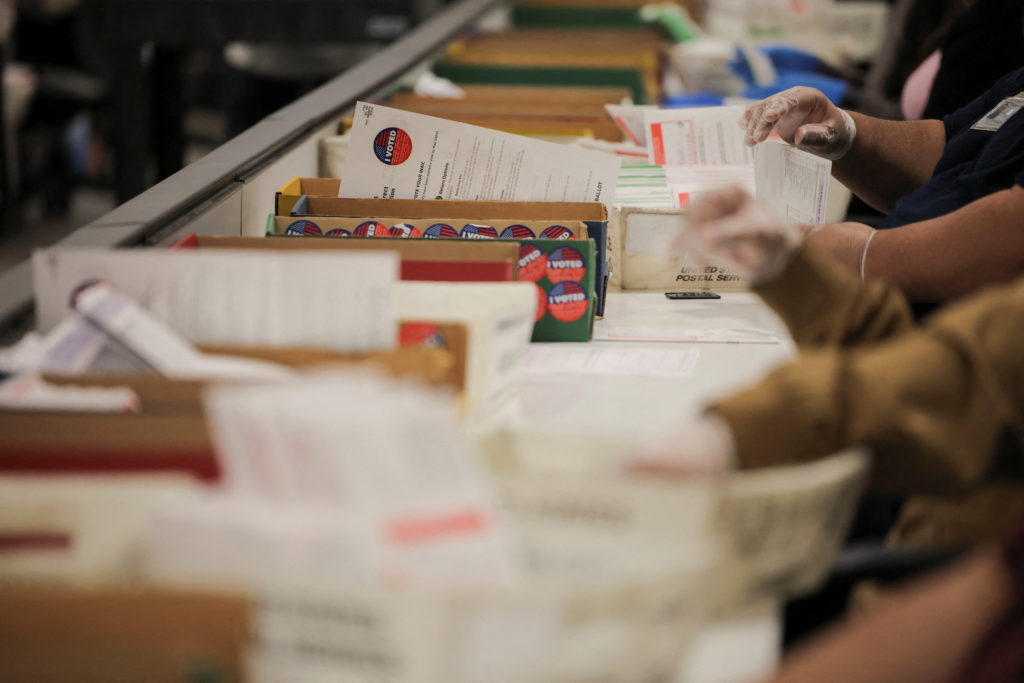
WASHINGTON — The United States Department of Justice has cautioned local election officials across California that processing or tabulating ballots cast by individuals suspected of lacking citizenship could expose administrators to federal criminal investigations and prosecution. The warning, delivered weeks ahead of the November midterm elections, marks a significant escalation in the federal government's ongoing conflict with state authorities over voter eligibility verification and the administration of federal contests. By directly targeting municipal and county election workers rather than individual voters, federal authorities have introduced an unprecedented layer of legal jeopardy into the routine mechanics of canvassing and certifying election results.
Key facts
What happened
Federal justice officials signaled an aggressive enforcement posture directed at local election administration infrastructure across California, according to reporting by PBS. In communications directed toward state and county election apparatuses, federal authorities asserted that election workers who knowingly advance, process, or certify ballots submitted by individuals whose citizenship status remains unresolved or contested could be subject to federal criminal inquiry.
Under standard operating procedures, county registrars of voters and local canvassing boards oversee the receipt, signature verification, and scanning of ballots returned by mail, drop box, or in person at vote centers. The federal warning specifically targets the stage of election administration where ballots are reviewed and moved into tabulation streams. By framing the processing of challenged ballots as potential participation in an unlawful act, the Department of Justice has altered the traditional boundary between routine civil election administration and criminal conspiracy enforcement.
California election officials, who operate under a decentralized system across 58 counties, are legally mandated by the state election code to process every regular and provisional ballot that meets statutory signature and deadline requirements. County clerks do not maintain independent access to federal immigration databases during the standard canvassing window, nor do state statutes authorize municipal election boards to summarily disqualify voters based on external suspicion without established administrative challenge procedures. The federal notice has effectively confronted these workers with a conflict between state statutory duties and potential federal prosecution.
Why it matters
The Department of Justice's warning introduces structural friction into the administration of American elections by focusing criminal enforcement mechanisms directly on career civil servants and temporary poll workers. For decades, the enforcement of federal voting statutes has focused almost exclusively on individual voters who knowingly cast unlawful ballots, or on systemic voter suppression and civil rights violations investigated under the Voting Rights Act of 1965. Diverting that investigative focus toward frontline election workers risks disrupting the administrative apparatus required to certify timely, orderly election outcomes.
At a practical level, election workers facing the prospect of federal subpoena, grand jury scrutiny, or felony indictment may alter how they handle provisional ballots or registrations flagged by private activist groups. If local canvassers hesitate to count valid ballots out of concern for their personal legal liability, significant numbers of legally eligible citizens could face disenfranchisement. Conversely, if election workers reject federal warnings and follow state mandates, the post-election period could be dominated by federal subpoenas, court battles, and delays in the certification of closely contested congressional districts in California that often determine the majority in the U.S. House of Representatives. Moreover, the threat of prosecution creates an immediate recruitment and retention crisis for local election offices, which already face widespread staffing shortages and persistent threats of political harassment.
The background
Voting by noncitizens in federal elections has been explicitly prohibited under federal statute since 1996, when Congress enacted the Illegal Immigration Reform and Immigrant Responsibility Act. Codified at 18 U.S.C. § 611, the law makes it a federal crime for any alien to vote in an election held for the purpose of choosing a presidential elector, senator, or representative, carrying penalties of fines and up to one year in prison, as well as automatic deportation and inadmissibility under immigration law. Parallel provisions in the National Voter Registration Act of 1993 (NVRA) require voter registration applicants across the country to sign an attestation under penalty of perjury declaring that they are United States citizens.
Despite these long-standing legal restrictions, debates over the integrity of voter rolls have intensified nationwide in recent years. In California, state policy has moved consistently toward expanding access to registration and voting. Under Assembly Bill 60, enacted in 2013, the state allows undocumented residents to obtain specialized driver's licenses, while the California New Motor Voter Program, implemented in 2018, automatically registers eligible citizens who obtain or renew their licenses through the Department of Motor Vehicles. Although state officials have repeatedly emphasized that noncitizen license holders are strictly segregated from automatic registration databases, conservative advocacy groups and federal critics have persistently argued that state safeguards are inadequate.
Numerous academic studies, state audits, and investigative reviews conducted by nonpartisan organizations, including the Brennan Center for Justice and the Government Accountability Office, have consistently shown that noncitizen voting in federal elections is vanishingly rare. Instances where noncitizens register typically stem from clerical misunderstandings on registration forms rather than coordinated fraud. Nevertheless, federal political leaders have increasingly focused on noncitizen participation as a central point of contention, seeking broader authority to scrutinize state registration rolls and penalize election administrators who resist federal oversight.
Reaction
The warning generated immediate concern across legal, administrative, and political circles. While federal prosecutors have defended the initiative as a necessary application of federal authority to preserve election integrity and deter unlawful votes, election law scholars and civil liberties organizations have characterized the measure as an attempt to intimidate local election workers.
California state leaders, including the Secretary of State and the State Attorney General, have historically resisted federal encroachments on the state's constitutionally protected authority to administer elections. State election authorities are expected to issue formal guidance reassuring county registrars that performing statutory duties under California law remains mandatory and legally protected. In previous jurisdictional conflicts, state officials have argued that the Tenth Amendment and Article I, Section 4 of the U.S. Constitution grant states the primary power to prescribe the times, places, and manner of holding elections, precluding federal agencies from dictating the mechanical processing of individual ballots without definitive statutory authorization.
Professional associations representing county registrars, clerks, and election officials have also raised alarms regarding worker protection. Administrators have pointed out that county workers are trained to follow statutory verification checks, such as signature matching and death record purges, but lack the tools, legal authority, and training to adjudicate federal immigration status at the precinct or canvassing level.
What we don't know yet
Critical legal and operational details surrounding the Justice Department's directive remain unverified. The federal government has not publicly defined what specific criteria or evidentiary thresholds constitute a "suspected noncitizen." It remains unclear whether federal prosecutors intend to supply county clerks with specific lists of flagged individuals compiled from federal databases, such as the Department of Homeland Security's Systematic Alien Verification for Entitlements (SAVE) program, or whether the warning relies on external challenges submitted by third-party political groups.
Furthermore, the precise criminal statutes the Department of Justice intends to invoke against election workers remain ambiguous. Legal observers question whether prosecutors would rely on general conspiracy statutes, such as 18 U.S.C. § 371, or attempt to apply aiding-and-abetting theories under 18 U.S.C. § 2. Until federal prosecutors file formal court motions or issue detailed legal memoranda, the extent to which the government intends to pursue criminal charges against workers who are merely complying with state canvassing deadlines remains a significant unanswered question.
What to watch
In the immediate lead-up to the election, observers should watch for potential emergency litigation. California state officials or county governments may file preemptive lawsuits in federal district court seeking temporary restraining orders or declaratory judgments to block the Department of Justice from enforcing its warnings against election administrators.
Attention will also focus on how individual county registrars in large jurisdictions, such as Los Angeles, Orange, and San Diego counties, instruct their staff to handle challenged or provisional ballots. Any internal guidance memoranda distributed to canvassing boards will provide insight into whether local agencies intend to alter their tabulation timelines or challenge protocols.
Finally, the post-election canvass period, which in California extends for 30 days after election day to ensure all mail ballots are counted, will serve as the primary testing ground. If the Department of Justice deploys federal election monitors or issues grand jury subpoenas to seize uncounted ballots or registration files during that 30-day window, a direct constitutional conflict between federal law enforcement and state election administration will unfold.
This report is based on original reporting by PBS.
How this story was produced
This report was written by The Global Wire newsroom from reporting first published by pbs.org. We verify the core facts against the original report, write our own account, and add the background and consequences a short wire item leaves out. Drafting is AI-assisted inside an editor-supervised pipeline, and every story is checked for accuracy of attribution, structure and duplication before it appears — full detail in our AI and funding disclosure.
Spotted an error? Tell us at corrections@horizonglobalnews.com and read our corrections policy or editorial standards.


Reader comments
Loading comments…