

Rubio Presses Lebanon Over Seized Explosives and Urges Talks With Israel
The U.S. secretary of state urged Lebanese President Joseph Aoun to retain confiscated munitions and maintain cross-border military communication with Israel.
By The Global Wire Newsroom · Reported from SECTIONS Rubio urges Lebanon
Link preview · horizonglobalnews.com
Rubio Presses Lebanon Over Seized Explosives and Urges Talks With Israel
The U.S. secretary of state urged Lebanese President Joseph Aoun to retain confiscated munitions and maintain cross-border military communication with Israel.
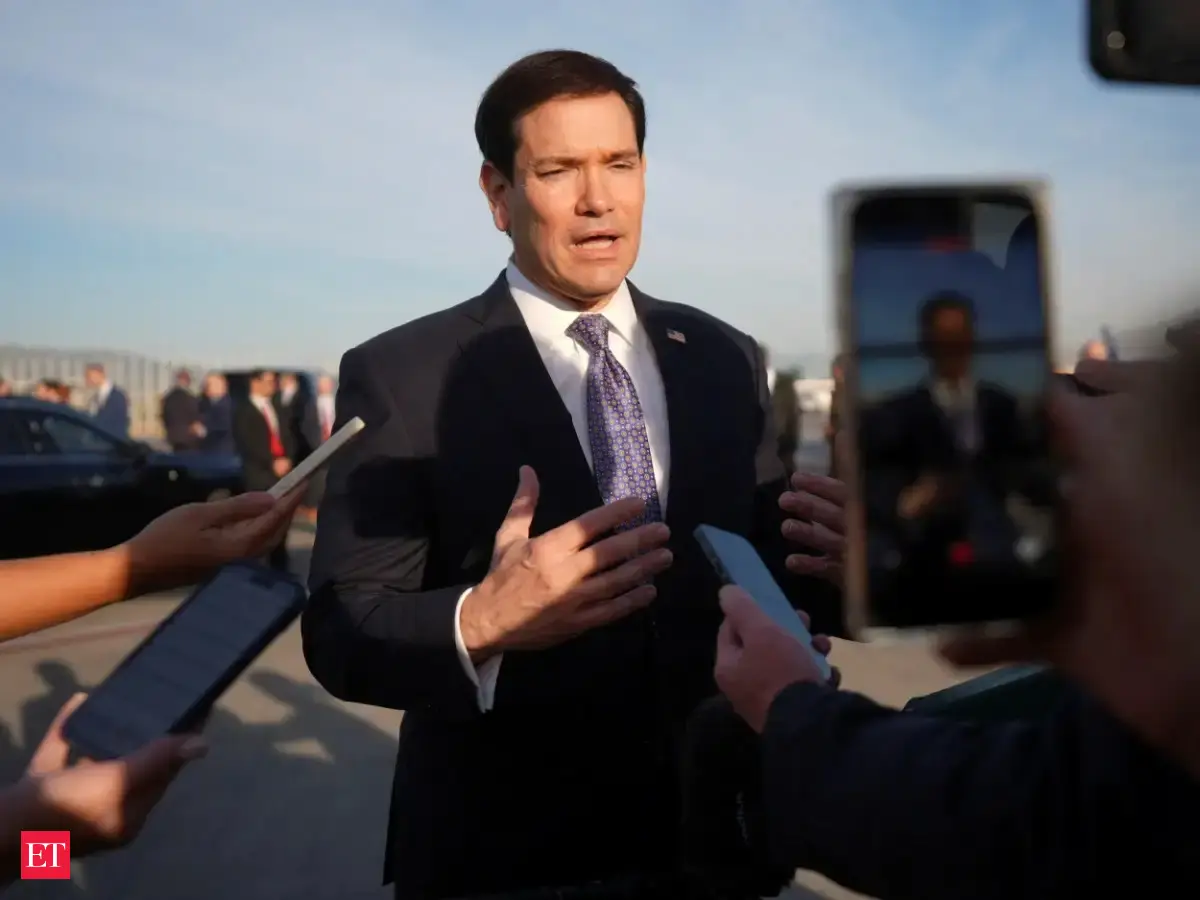
WASHINGTON — United States Secretary of State Marco Rubio has called on the Lebanese government to retain confiscated explosives rather than returning them to Hezbollah, pressing Beirut to enforce state authority over armed groups and maintain direct or indirect military coordination with Israel, according to accounts from a U.S. official.
During a high-level diplomatic call between Washington and Beirut, Rubio spoke directly with Lebanese President Joseph Aoun regarding the chain of custody for weapons recently seized by state security forces. The exchange centered on the imperative of preventing illicit armaments from cycling back into the inventory of the Iran-backed political and militant faction. Aoun, who previously commanded the Lebanese Armed Forces before assuming the presidency, told his American counterpart that the national military remains steadfast in its mandate to shut down public displays of weaponry and impound unauthorized arsenals across the country.
Key facts
What happened
According to accounts provided by an American official, the discussion between Rubio and Aoun centered on the disposition of significant explosive stockpiles recently intercepted by Lebanese security services. Rubio emphasized that the credibility of the Lebanese state depends on ensuring that confiscated military materiel is neither quietly restored to Hezbollah cadres nor diverted through parallel networks.
In response to the American admonition, President Aoun reaffirmed the operational doctrine of the Lebanese military. Aoun indicated that state forces would not tolerate armed parades or visible weapons displays by non-state factions, insisting that units on the ground are instructed to confiscate illicit arms in accordance with domestic law and sovereign security priorities.
Beyond the immediate issue of the seized explosives, the American diplomatic push included a direct request for Beirut to pursue military-to-military communication channels with Israel. While Lebanon and Israel have remained formally in a state of war since 1948 and do not maintain regular diplomatic relations, past operational deconfliction has functioned primarily through tripartite military forums hosted by the United Nations Interim Force in Lebanon (UNIFIL) at the border town of Naqoura. Rubio’s appeal sought to reinforce and expand those technical security mechanisms to prevent tactical misunderstandings from cascading into larger regional fighting.
Why it matters
The custody of seized munitions in Lebanon is not merely a bureaucratic dispute; it is a test of sovereignty that directly influences the calculus of regional deterrence. For years, Western donors led by the United States have poured billions of dollars in training and equipment into the Lebanese Armed Forces with the explicit objective of cultivating an institutional counterweight to Hezbollah. If the Lebanese state were to seize armaments only to restore them to the militant organization under domestic political duress, that outcome would compromise the military's standing in Washington and jeopardize future congressional appropriations for foreign military financing.
From a security standpoint, weapons caches containing advanced industrial explosives or missile components pose an immediate risk to border stability. When non-state actors retain unrestricted access to unmonitored ordnance, the threshold for cross-border skirmishes drops substantially. Conversely, a state security apparatus that actively impounds and destroys such stockpiles limits the operational flexibility of irregular factions. Furthermore, establishing resilient, functional military communication pathways between Beirut and Tel Aviv—even when conducted strictly through third-party liaisons—provides a critical shock absorber during moments of heightened friction, reducing the probability that an accidental detonation or local cross-border exchange will trigger an uncontainable escalation across the Levant.
The background
Lebanon's modern security architecture has been shaped by the legacy of its 1975–1990 civil war and the subsequent Taif Agreement, which mandated the disbanding of all Lebanese and non-Lebanese militias. While most civil war factions surrendered their heavy weapons to the central government, Hezbollah retained its arsenal under the pretext of leading a national resistance against the Israeli occupation of southern Lebanon, which ended with Israel’s withdrawal in May 2000.
The framework governing the security sector was restructured following the 34-day conflict between Israel and Hezbollah in the summer of 2006. In August of that year, the United Nations Security Council unanimously adopted Resolution 1701, which called for a full cessation of hostilities, the deployment of the Lebanese army alongside UNIFIL troops across the south, and the total disarmament of all armed groups so that there would be no weapons or authority in Lebanon other than that of the Lebanese state. In practice, however, Hezbollah built an extensive subterranean military infrastructure south of the Litani River, amassing an estimated arsenal of well over 100,000 rockets, precision-guided missiles, and anti-tank munitions supplied primarily by Iran via overland and aerial transit routes across Syria.
The Lebanese Armed Forces have consistently operated in an uneasy environment, striving to maintain national cohesion while avoiding direct, destabilizing confrontations with Hezbollah's heavily armed apparatus. The United States has provided more than $3 billion in security assistance to the Lebanese military since 2006, viewing the force as the sole legitimate guarantor of Lebanese territorial integrity. Yet periodic discoveries of weapons shipments and explosive materials at Beirut’s port, along transit corridors in the Bekaa Valley, and across southern municipalities have periodically triggered political crises, highlighting the persistent tug-of-war between the formal state authority and Hezbollah’s armed infrastructure.
Reaction
Neither Hezbollah nor the Israeli government issued formal, immediate statements responding directly to the private diplomatic exchange disclosed by the American official. However, political factions within Lebanon are expected to scrutinize the call along established partisan lines. Lebanon's parliamentary opposition, which has long advocated for the total disarming of non-state actors, routinely demands that all intercepted munitions be neutralized under strict judicial supervision.
In Washington, congressional defense committees have repeatedly signaled that continued American financial and material underwriting of the Lebanese Armed Forces hinges on tangible steps toward arms interdiction and adherence to UN resolutions. In Israel, defense officials have maintained that any failure by the Lebanese state to permanently disable Hezbollah’s weapons stores legitimizes preemptive military action against those targets, underscoring the severe operational stakes surrounding the seized materials.
What we don't know yet
Key factual parameters regarding the seized explosives remain unconfirmed in public records. The official accounts did not disclose the precise tonnage, chemical composition, or intended destination of the confiscated material, nor did they specify exactly where inside Lebanon the interdiction took place. It also remains unclear which specific Lebanese security organ—such as military intelligence, the internal security forces, or general customs—executed the operation, and whether criminal proceedings have been formally initiated against the individuals who were transporting or housing the ordnance.
Additionally, the exact architecture proposed by Rubio for Lebanese-Israeli military communication has not been detailed. It remains unverified whether the United States is seeking an expansion of the existing tripartite mechanism under UNIFIL auspices at Naqoura or pushing for an entirely separate, back-channel liaison arrangement coordinated directly through American intermediaries. How President Aoun intends to reconcile his commitments with the acute domestic political pressures exerted by Hezbollah and its allies remains similarly unresolved.
What to watch
The trajectory of this diplomatic engagement will become clearer through several imminent indicators. First, observers will look for confirmation that the seized explosives have been formally cataloged, rendered inert, or transferred into verified military storage facilities monitored by international oversight bodies, rather than remaining in insecure holding facilities where materials can be quietly reclaimed. Second, parliamentary and cabinet deliberations in Beirut will reveal whether the political executive is willing to back Aoun’s pledge with enforceable administrative decrees.
Internationally, the next scheduled reporting cycle on the implementation of UN Security Council Resolution 1701 will provide an official audit of weapons interdiction in southern Lebanon. Finally, any adjustment in the frequency or format of the tripartite military committee meetings along the Blue Line will serve as a bellwether for whether the cross-border communication urged by Washington translates into functional crisis-management practices on the ground.
This report is based on original reporting by SECTIONS Rubio urges Lebanon.
How this story was produced
This report was written by The Global Wire newsroom from reporting first published by SECTIONS Rubio urges Lebanon. We verify the core facts against the original report, write our own account, and add the background and consequences a short wire item leaves out. Drafting is AI-assisted inside an editor-supervised pipeline, and every story is checked for accuracy of attribution, structure and duplication before it appears — full detail in our AI and funding disclosure.
Spotted an error? Tell us at corrections@horizonglobalnews.com and read our corrections policy or editorial standards.





Reader comments
Loading comments…