

Zelensky Expresses Frustration Over Trump Stance as Musk Cites U.S. Rules for Starlink
Ukrainian President Volodymyr Zelensky criticized Donald Trump during a broadcast interview, while Elon Musk attributed Starlink restrictions in Ukraine to United States government directives.
By The Global Wire Newsroom · Reported from Namita Singh; Adam Withnall; Alex Croft; Bryony Gooch
Link preview · horizonglobalnews.com
Zelensky Expresses Frustration Over Trump Stance as Musk Cites U.S. Rules for Starlink
Ukrainian President Volodymyr Zelensky criticized Donald Trump during a broadcast interview, while Elon Musk attributed Starlink restrictions in Ukraine to United States government directives.

Ukrainian President Volodymyr Zelensky has voiced intense frustration and described a profound sense of betrayal regarding former U.S. President Donald Trump's political stance on the ongoing Russia-Ukraine war during an interview with television host Piers Morgan. The comments coincided with renewed international scrutiny over frontline military communications, following assertions by billionaire entrepreneur Elon Musk that recent operational restrictions placed on the Starlink satellite network within Ukraine were mandated by the United States government. The remarks, broadcast on an episode of "Piers Morgan Uncensored" on Wednesday evening, October 15, 2026, underscore growing friction between Kyiv's leadership, key American political figures, and commercial defense providers whose technology remains vital to Ukraine's national defense.
Key facts
What happened
During an extended sit-down broadcast on the interview program "Piers Morgan Uncensored" on Wednesday night, Ukrainian President Volodymyr Zelensky offered a sharp assessment of international political backing for his nation's resistance against Russian aggression. Speaking directly to host Piers Morgan, Zelensky detailed his growing frustration with former U.S. President Donald Trump, characterizing political rhetoric and shifts regarding American aid as a betrayal of the Ukrainian people and their ongoing military struggle.
According to reporting by journalists Namita Singh, Adam Withnall, Alex Croft, and Bryony Gooch, Zelensky's public airing of grievances coincides with critical operational challenges on the battlefield. At the same time, technology executive Elon Musk publicly addressed mounting questions regarding service disruptions and geographical limitations affecting the Starlink satellite system across Ukraine. Musk asserted that the operational restrictions imposed on Starlink terminals operating in combat zones were not unilateral corporate decisions by SpaceX, but were executed directly in compliance with guidelines established by the United States government.
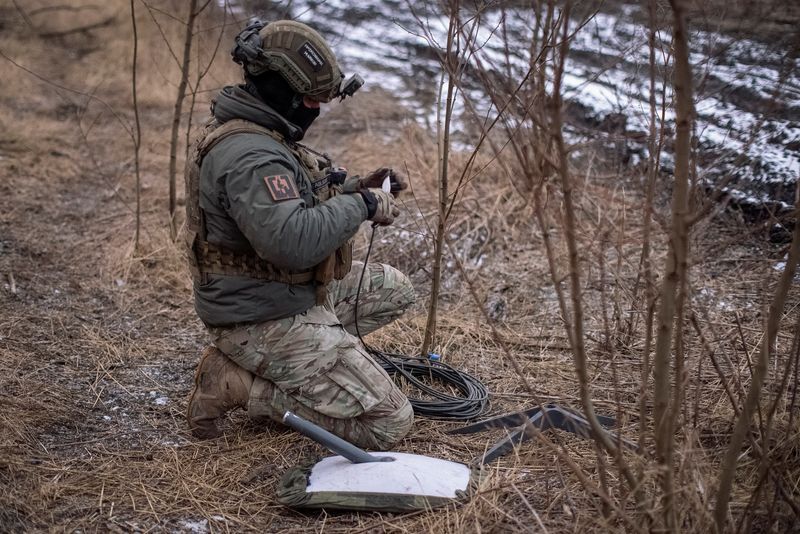
Starlink terminals have served as an essential tactical communications mechanism for the Ukrainian Armed Forces since the early weeks of the 2022 invasion. They facilitate real-time battlefield management, secure voice communications, video feeds from reconnaissance unmanned aerial vehicles (UAVs), and rapid artillery targeting data. Musk's declaration that service constraints stem from federal policy places the onus for technical restrictions back onto American national security regulators and defense officials.
The convergence of Zelensky's public criticism of Trump's political posture and Musk's statements regarding federal satellite policy highlights an increasingly complex interaction between private military contractors, U.S. domestic politics, and Kyiv's strategic planning.
Why it matters
The public revelation of tension between Kyiv, American political figures, and private defense providers carries immediate strategic implications for both battlefield operations and international diplomacy.
From a tactical perspective, Starlink is not merely a utility; it is the fundamental framework of modern Ukrainian command-and-control capabilities. Ukrainian forces rely heavily on decentralized network warfare, where front-line infantry, drone operators, and rear-area artillery batteries communicate over high-speed encrypted satellite connections. Any policy-mandated restriction, geofencing limitation, or bandwidth throttling directly impairs Ukraine's ability to detect Russian troop movements, conduct targeted counter-drone operations, and coordinate defensive maneuvers. If these operational restrictions are governed directly by U.S. policy directives, as Musk claims, it demonstrates that Washington possesses direct operational levers over Ukraine's daily tactical effectiveness on the ground.
From a geopolitical perspective, Zelensky's explicit language of betrayal reflects deep-seated anxiety in Kyiv regarding the durability of American security commitments. With U.S. political debates continuing to influence foreign military financing, direct public criticism of prominent political figures like Donald Trump carries significant political risk. However, it also signals that Ukrainian leadership feels compelled to address what it views as dangerous shifts in Western resolve publicly. For European NATO allies, this dynamic underscores the vulnerability of relying heavily on U.S. commercial and governmental infrastructure for European continental security, potentially accelerating calls for European strategic autonomy in military space systems.
The background
The reliance of Ukraine's defense apparatus on Western technology companies and U.S. government backing originated in the initial phase of Russia's full-scale invasion in February 2022. During the opening hours of the attack, Russian state-backed cyber units executed a major cyberattack against Viasat's KA-SAT satellite network, disabling communications across Ukrainian military units and civilian infrastructure. To restore command capability, SpaceX rapidly deployed thousands of Starlink dishes to Ukraine, backed by funding from private donors, the U.S. Agency for International Development (USAID), and European allies.
Over the subsequent four years of conflict, the management of Starlink has repeatedly sparked controversy. In late 2022 and early 2023, reports emerged that SpaceX had restricted Starlink functionality over Russian-occupied territories, including Crimea, to prevent the terminals from being utilized in offensive maritime drone attacks against Russian naval assets. Elon Musk argued at the time that Starlink was designed for civilian and defensive use rather than offensive weaponization, expressing concerns over escalating the conflict into a direct confrontation between nuclear powers.
To resolve governance issues and secure reliable service, the U.S. Department of Defense negotiated a formal contract with SpaceX in mid-2023 to purchase Starlink terminals and services dedicated to the Ukrainian military, bringing the system under federal procurement oversight. However, questions regarding regulatory jurisdiction, operational boundaries, and corporate control have persisted.
Concurrently, political dynamics within the United States have played a decisive role in shaping the war's trajectory. Donald Trump and several conservative lawmakers have repeatedly questioned the scope of U.S. financial assistance to Ukraine, calling for detailed audits of military aid and demanding that European nations increase their defense contributions. Trump has repeatedly asserted that he could bring about a swift negotiated settlement to end the war within 24 hours of taking office. Ukrainian leadership has consistently pushed back against proposals that would involve territorial concessions to the Russian Federation, arguing that any premature settlement without robust security guarantees would invite further Russian aggression in Eastern Europe.
Reaction
The statements made by President Zelensky during his appearance on "Piers Morgan Uncensored" have sparked widespread discussion among international political observers and national security analysts. While immediate formal responses from the political organization of Donald Trump were not detailed in the original reporting, figures aligned with his political platform have routinely maintained that American foreign policy must prioritize domestic interests and seek a diplomatic resolution to the conflict in Eastern Europe.
The reporting by Namita Singh, Adam Withnall, Alex Croft, and Bryony Gooch noted that the U.S. Department of Defense and the White House did not immediately issue public clarification regarding Elon Musk's claims about Starlink operational restrictions. U.S. national security agencies traditionally refrain from publicly commenting on sensitive export controls, intelligence-sharing frameworks, or operational directives governing defense contractors operating in active combat zones.
Within Kyiv, government and military leaders have historically sought to balance public expressions of gratitude for U.S. aid with firm advocacy for uninterrupted military support. Ukrainian military commentators and defense analysts are expected to monitor official channels closely for clarification on whether reported Starlink restrictions represent temporary technical parameters or broader policy adjustments from Washington.
What we don't know yet
Despite the significant implications of the developments reported by Namita Singh, Adam Withnall, Alex Croft, and Bryony Gooch, several critical details remain unverified and require further clarification:
First, the exact technical parameters of the Starlink restrictions mentioned by Elon Musk remain unspecified. It is not currently clear whether these limitations involve physical geographic geofencing along front lines, specific operational bans on long-range unmanned systems, or bandwidth caps during specific military operations.
Second, the specific U.S. government entity that issued the alleged restrictions—whether the Department of Defense, the State Department's Directorate of Defense Trade Controls, or the National Security Council—has not been identified.
Third, the degree to which Zelensky's public comments on "Piers Morgan Uncensored" reflect a broader breakdown in private diplomatic communications between Kyiv and American political leaders remains uncertain. It is unclear whether the Ukrainian presidency intends to adjust its diplomatic engagement strategy with U.S. political factions ahead of upcoming legislative and executive decisions in Washington.
What to watch
Several concrete indicators will determine how this diplomatic and technological friction unfolds in the near term:
This report is based on original news coverage detailed by Namita Singh, Adam Withnall, Alex Croft, and Bryony Gooch.
How this story was produced
This report was written by The Global Wire newsroom from reporting first published by Namita Singh; Adam Withnall; Alex Croft; Bryony Gooch. We verify the core facts against the original report, write our own account, and add the background and consequences a short wire item leaves out. Drafting is AI-assisted inside an editor-supervised pipeline, and every story is checked for accuracy of attribution, structure and duplication before it appears — full detail in our AI and funding disclosure.
Spotted an error? Tell us at corrections@horizonglobalnews.com and read our corrections policy or editorial standards.




Reader comments
Loading comments…