

French Navy Chief Downplays Risk to U.S. Electromagnetic Catapults for Next Aircraft Carrier
France’s naval commander says Washington has not finalized any shift away from EMALS tech, despite recent U.S. presidential directives to restore steam catapults.
By The Global Wire Newsroom · Reported from Florence Loeve
Link preview · horizonglobalnews.com
French Navy Chief Downplays Risk to U.S. Electromagnetic Catapults for Next Aircraft Carrier
France’s naval commander says Washington has not finalized any shift away from EMALS tech, despite recent U.S. presidential directives to restore steam catapults.
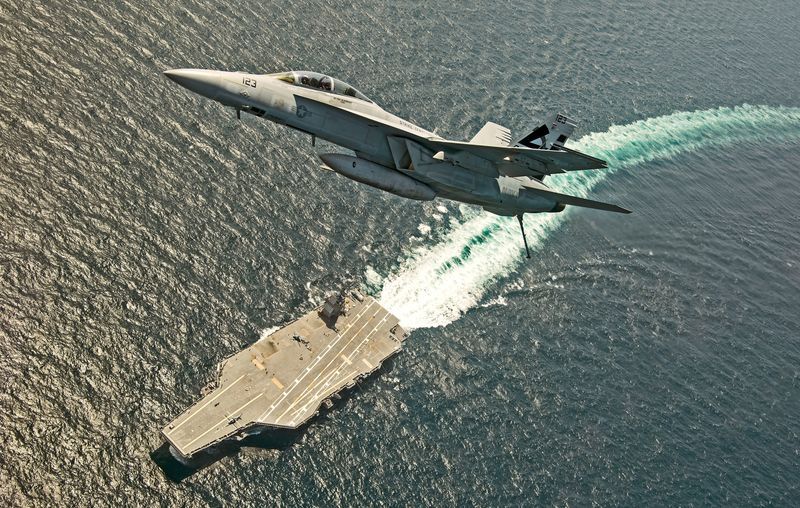
PARIS — France’s top naval officer stated on Oct. 14 that the United States government has not made a definitive determination to scrap its electromagnetic aircraft launch technology, reassuring defense planners in Paris who have slated the American system for France’s next-generation aircraft carrier. Speaking two months after U.S. President Donald Trump publicly commanded the U.S. Navy to drop the advanced technology in favor of legacy steam catapults, the chief of staff of the French Navy indicated that formal administrative and procurement decisions in Washington remain unfinalized. The clarification addresses rising concerns over foreign military procurement for France’s flagship defense initiative, as the French military relies entirely on U.S. defense contractors for the specialized catapult systems required to launch fixed-wing combat jets from warship decks.
Key facts
What happened
Addressing defense officials and legislative observers in Paris on Wednesday, Oct. 14, the head of the French Navy presented an update on the status of American aircraft launch technology. The statements came eight weeks after a high-profile executive decree from U.S. President Donald Trump ordering the U.S. Navy to abandon the Electromagnetic Aircraft Launch System (EMALS) and revert to standard steam-driven mechanisms across its carrier fleet.
According to the French navy chief, despite the political directives articulated in Washington, the U.S. Department of Defense and the U.S. Navy have not formally altered their official acquisition programs or canceled contract frameworks surrounding EMALS. French military planners have been closely monitoring executive statements from the United States because the design architecture of France's future flagship depends directly on hardware sourced from American defense manufacturer General Atomics.
The comments aimed to inject technical clarity into a policy debate that had raised questions about whether France would be forced to redesign its future warship or seek alternative launch mechanisms. The French chief of staff signaled confidence that foreign military sales agreements and industrial production schedules for the launch technology remain structurally intact while American defense institutions navigate internal decision-making processes.
Why it matters
The operational future of France’s naval air wing hinges on choices made within the U.S. military procurement pipeline. Unlike nations that utilize short takeoff and vertical landing configurations or ski-jump ramps—such as the United Kingdom’s Queen Elizabeth-class carriers or China’s earlier vessels—France operates full-deck CATOBAR (Catapult Assisted Take-Off But Arrested Recovery) carriers. This operating model requires high-powered catapults to launch heavy, weapon-laden fighter aircraft such as the Rafale M, as well as airborne early warning and control aircraft like the Northrop Grumman E-2D Advanced Hawkeye.
Because France does not maintain a domestic industrial base capable of producing steam or electromagnetic carrier catapults, it remains reliant on U.S. hardware. If the U.S. Navy were to completely terminate the EMALS program, the industrial line managed by General Atomics could face severe disruption, driving up unit costs exponentially or forcing a total shutdown of manufacturing capabilities dedicated to electromagnetic systems.
Furthermore, aircraft carrier design is a multi-decade engineering commitment. Incorporating EMALS requires fundamentally different hull internal layouts, electrical generation systems, and structural framing compared to steam catapults. Steam systems require extensive piping, high-pressure boilers, and dedicated water desalination infrastructure, whereas electromagnetic systems rely on high-capacity energy storage, linear induction motors, and advanced power distribution electronics. A sudden shift in hardware selection would require French naval architects to undertake costly engineering redesigns, threatening both project budgets and the targeted operational deployment date for the new carrier.
The background
The reliance of the French Navy on American launch mechanisms dates back several decades. France’s current aircraft carrier, the nuclear-powered Charles de Gaulle (R91), commissioned in May 2001, uses two C13-3 steam catapults measuring 75 meters in length, imported directly from the United States. These systems were built by American defense industrial suppliers under standard government-to-government sales agreements.
In December 2020, French President Emmanuel Macron formally launched the Porte-avions de nouvelle génération (PANG) program, designed to produce a nuclear-powered supercarrier to succeed the Charles de Gaulle when it reaches the end of its operational service life around 2038. The planned French vessel is projected to displace approximately 75,000 metric tons, significantly larger than the 42,500-ton Charles de Gaulle. To equip the vessel, Paris designated the General Atomics EMALS and the associated Advanced Arresting Gear (AAG) as its baseline launch-and-recovery suite.
The U.S. Navy developed EMALS to replace legacy C13 steam catapults on its Gerald R. Ford-class aircraft carriers, starting with USS Gerald R. Ford (CVN-78), which was commissioned in July 2017. EMALS offers distinct operational advantages over steam: it allows finer control of acceleration forces, reducing structural stress on airframes; enables the launch of lighter uncrewed aerial vehicles alongside heavy strike fighters; requires fewer onboard crew members for maintenance; and recharges faster between launches.
However, the technology faced prolonged development hurdles, software glitches, and lower initial mean cycles between failures during its early sea trials, drawing sharp criticism from politicians in Washington. President Donald Trump publicly criticized the technology on multiple occasions, repeatedly arguing that steam catapults provided superior reliability and lower operational complexity, culminating in his executive directive ordering the U.S. Navy to return to steam-driven launch systems.
Reaction
Within international defense circles, naval analysts and procurement specialists have watched the friction between executive directives and defense program baselines with acute interest. Congressional committees in the U.S. responsible for military oversight have consistently examined the financial and technical trade-offs of catapult systems, noting that retrofitting active or under-construction Ford-class hulls—such as the future USS John F. Kennedy (CVN-79) and USS Enterprise (CVN-80)—back to steam would cost billions of dollars and cause multi-year delays.
In France, defense officials have maintained a posture of calm, publicly underscoring that formal government-to-government agreements remain in force. While French lawmakers have inquired about risk-mitigation strategies during parliamentary committee hearings on military planning budgets, the French Ministry of Armed Forces has reaffirmed its commitment to the EMALS procurement pipeline.
Neither the U.S. Department of Defense nor General Atomics has announced a shutdown of the EMALS production line or an alteration to export clearance agreements already granted to international partners. Naval analysts expect U.S. defense leadership to address carrier catapult requirements in upcoming budget testimony before Congress, where military officials will likely present technical assessments of system reliability.
What we don't know yet
Several critical technical and policy questions remain unresolved surrounding the future of electromagnetic catapult supply lines:
What to watch
In the coming months, several key milestones will clarify whether France’s carrier project faces systemic procurement risk:
This report is based on original reporting published by Reuters reporter Florence Loeve in Paris on Oct. 14, 2026.
How this story was produced
This report was written by The Global Wire newsroom from reporting first published by Florence Loeve. We verify the core facts against the original report, write our own account, and add the background and consequences a short wire item leaves out. Drafting is AI-assisted inside an editor-supervised pipeline, and every story is checked for accuracy of attribution, structure and duplication before it appears — full detail in our AI and funding disclosure.
Spotted an error? Tell us at corrections@horizonglobalnews.com and read our corrections policy or editorial standards.




Reader comments
Loading comments…