

Severe Flooding Forces Closure of Thailand's Historic Siam Amazing Park
Rising floodwaters have damaged rides and rendered large areas of Thailand's oldest amusement park inaccessible, forcing an emergency shutdown.
By The Global Wire Newsroom · Reported from Oliver Holmes
Link preview · horizonglobalnews.com
Severe Flooding Forces Closure of Thailand's Historic Siam Amazing Park
Rising floodwaters have damaged rides and rendered large areas of Thailand's oldest amusement park inaccessible, forcing an emergency shutdown.
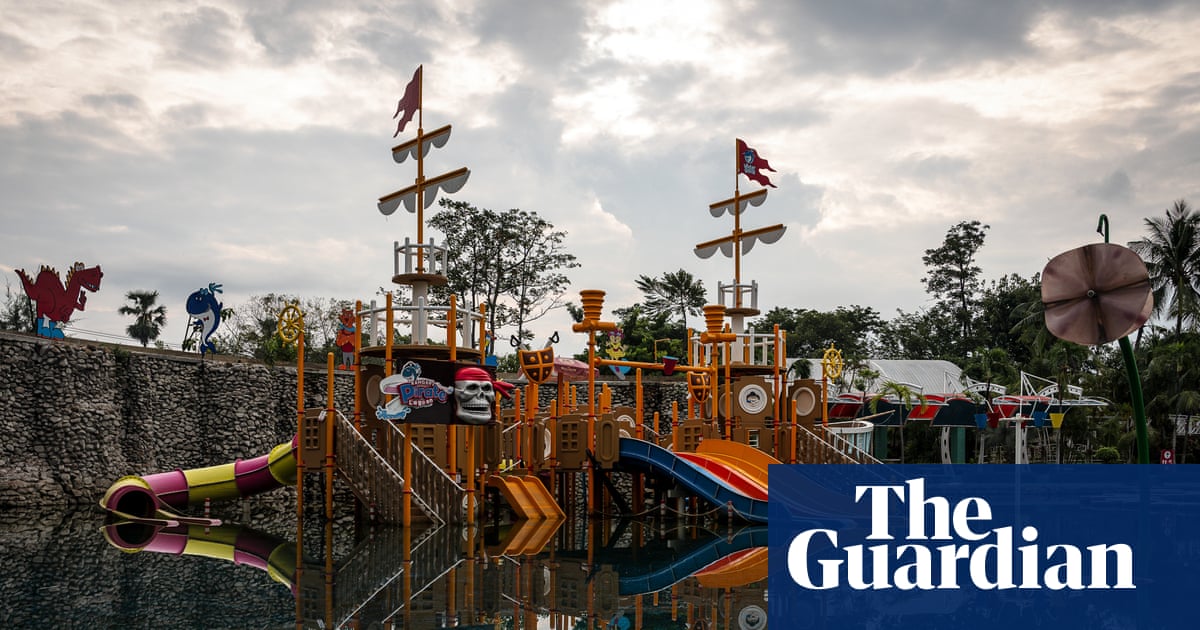
BANGKOK — Thailand’s oldest amusement and water park, Siam Amazing Park, has been forced to suspend operations and close its gates after severe floodwaters inundated the venue, damaging mechanical rides and leaving vast portions of the complex completely inaccessible. According to reporting by journalist Oliver Holmes, the rising waters swept through the sprawling entertainment complex in outer Bangkok, stranding major attractions in deep water and halting all public activities. The emergency shutdown highlights the persistent vulnerability of low-lying commercial infrastructure in the Thai capital during periods of intense seasonal weather and regional drainage pressure.
Key facts
What happened
floodwaters invaded the grounds of Siam Amazing Park, transforming the usually bustling leisure site into a submerged, vacant facility. According to reporting by Oliver Holmes, water levels rose rapidly across the property, covering low-lying walkways, customer plazas, and access roads. The sheer volume of water made major sections of the venue completely inaccessible, preventing maintenance teams from navigating the grounds through standard means.
As the water spread throughout the complex, it engulfed the lower assemblies of several mechanical rides and seasonal attractions. Electrical housing units, subterranean pump networks, and mechanical drive bases were submerged as the floodwaters crested across the park's low-lying topography. Operating personnel were forced to enact emergency protocols, shutting down electrical grids to prevent short-circuiting and structural hazards, and barring entry to visitors as safety conditions deteriorated.
The resulting scene left large amusement structures—including major roller coasters and fairground rides—standing motionless over expansive bodies of standing water. With the internal road network inundated and critical infrastructure compromised, management suspended all commercial operations indefinitely while water management personnel and emergency crews assessed the extent of the site's isolation.
Why it matters
The closure of Siam Amazing Park carries immediate commercial, structural, and operational implications for Thailand's domestic leisure sector and municipal flood management systems. As a long-standing landmark in Bangkok's tourism ecosystem, the park's sudden shutdown interrupts key revenue streams during peak seasonal periods, impacting hundreds of facility employees, independent concession vendors, and regional service contractors who rely on the park's daily foot traffic.
From an engineering and safety standpoint, flooding presents severe, prolonged challenges for amusement park infrastructure. Submerged mechanical components face immediate risks of corrosion, electrical damage, and bearing contamination. Industrial ride systems rely on intricate high-voltage control networks, hydraulic systems, and sensitive computerized safety sensors, many of which are housed near ground level or in subterranean vaults. Exposure to floodwaters can degrade structural concrete foundations and cause soil erosion beneath heavy ride footings, requiring extensive non-destructive testing, full electrical re-wiring, and international safety re-certifications before public operations can legally resume.
Furthermore, the incident emphasizes the broader macroeconomic risks facing low-lying enterprise zones in urban Southeast Asia. When public drainage channels fail to divert excess water during heavy precipitation events, private commercial hubs are left to absorb substantial structural losses, driving up property insurance premiums and requiring costly municipal interventions to secure local supply lines.
The background
Originally opened in November 1980 under the name Siam Park City, the facility is widely regarded as the pioneer of the modern amusement park industry in Thailand. Sprawling across more than 100 acres in the Khan Na Yao district of eastern Bangkok, the complex was established to provide a combined water park and mechanical theme park experience for both domestic families and foreign tourists. Over the decades, it earned international recognition, notably securing a Guinness World Record for its massive artificial wave pool, which covers thousands of square meters and remains one of the largest installations of its kind globally. The facility rebranded as Siam Amazing Park in recent years following extensive renovations to its theme zones.
Bangkok's geographic position makes large infrastructure facilities particularly vulnerable to water management crisis. The city is constructed on an alluvial floodplain within the Chao Phraya River basin, with an average elevation of less than 1.5 meters above sea level. Thailand's annual weather pattern is dominated by the southwest monsoon, which typically brings prolonged rainfall from May through October. During periods of heavy precipitation, high tides in the Gulf of Thailand and water runoff from the northern provinces combine to place intense pressure on Bangkok's network of canals, retention basins, and pumping stations.
The region has a long history of severe flood disasters. The most catastrophic in recent memory occurred during the 2011 monsoon season, when persistent rainfall flooded northern and central Thailand, eventually submerging large swathes of outer Bangkok for several months. That event resulted in over $45 billion in economic losses nationwide, crippling major industrial estates, flooding suburban residential developments, and forcing prolonged commercial shutdowns across the capital's eastern perimeter.
Reaction
While primary reporting by Oliver Holmes documented the immediate physical abandonment and environmental impact at the park, formal responses from public and private stakeholders are expected as damage assessments unfold. Management at Siam Amazing Park is anticipated to release detailed operational updates to address ticket cancellations, safety protocols, and estimated remediation timelines for affected attractions.
Municipal authorities, including the Bangkok Metropolitan Administration (BMA) and local district offices in Khan Na Yao, face ongoing inquiries regarding regional canal capacities and pump station deployments in the surrounding catchment area. Local business associations and tourism industry bodies typically monitor such shutdowns closely, given the spillover effects on local transport networks, hospitality providers, and seasonal employment.
What we don't know yet
Several key operational and financial details remain unconfirmed in the immediate aftermath of the flooding reported by Oliver Holmes. The precise financial value of the damage sustained by the park's mechanical rides, electrical power stations, and filtration facilities has not yet been quantified. It is currently unclear whether sensitive electronic control modules and heavy machinery suffered total losses or if they can be restored through technical servicing.
Additionally, the reporting leaves open the exact timeline for clearing standing floodwaters from the site. Because the park sits in a low-lying zone, natural drainage can be extremely slow without continuous, high-capacity mechanical pumping. The specific date when safety engineers can safely access submerged ride bases to perform structural integrity checks remains unknown, making an official reopening schedule impossible to determine at this stage. It is also unverified whether insurance policies will fully cover the prolonged loss of operational income and physical remediation costs resulting from the flood.
What to watch
In the coming days and weeks, several specific indicators will determine the trajectory of Siam Amazing Park's recovery. Key factors to observe include:
*This report is based on original news reporting by Oliver Holmes.*
How this story was produced
This report was written by The Global Wire newsroom from reporting first published by Oliver Holmes. We verify the core facts against the original report, write our own account, and add the background and consequences a short wire item leaves out. Drafting is AI-assisted inside an editor-supervised pipeline, and every story is checked for accuracy of attribution, structure and duplication before it appears — full detail in our AI and funding disclosure.
Spotted an error? Tell us at corrections@horizonglobalnews.com and read our corrections policy or editorial standards.



Reader comments
Loading comments…