

Saudi Arabia Vows Response After Fatal Houthi Strike Forces Airport Closure in Major City
A lethal cross-border attack by Yemeni Houthi rebels has grounded flights in a major Saudi Arabian city, prompting vows of a serious response from officials in Riyadh.
By The Global Wire Newsroom · Reported from Aya Batrawy
Link preview · horizonglobalnews.com
Saudi Arabia Vows Response After Fatal Houthi Strike Forces Airport Closure in Major City
A lethal cross-border attack by Yemeni Houthi rebels has grounded flights in a major Saudi Arabian city, prompting vows of a serious response from officials in Riyadh.

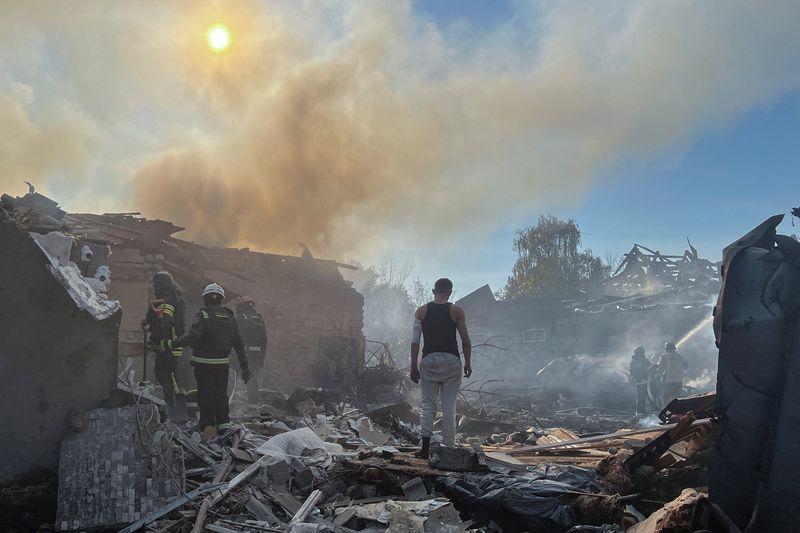
RIYADH — Saudi Arabian authorities have vowed to deliver a serious response after fatal cross-border attacks launched by Yemen’s Iranian-backed Houthi movement forced the closure of the commercial airport serving Saudi Arabia’s largest city. The aerial strikes, reported by journalist Aya Batrawy, marked a severe escalation in the long-running conflict across the kingdom's southern border, resulting in deaths and disrupting commercial aviation in a key Middle Eastern transit hub. Saudi officials confirmed that air defense systems engaged incoming targets as civil aviation regulators suspended flight arrivals and departures to secure civilian airspace.
Key facts
What happened
The attack occurred when Houthi forces launched a targeted aerial offensive against transport infrastructure in Saudi Arabia's largest metropolitan center, according to reporting by Aya Batrawy. Incoming projectiles penetrated regional defenses, causing fatalities and threatening civil aviation safety, which compelled authorities to halt airport operations.
Upon detecting the threat, civil aviation regulators initiated emergency procedures, redirecting incoming international and domestic flights to alternate airfields across Saudi Arabia while holding departing aircraft on the ground. Passengers inside terminal facilities were directed to secure zones while airport security teams conducted sweeps of the perimeter. The suspension disrupted hundreds of scheduled flights, stranding thousands of passengers and temporarily severing an international flight corridor connecting the Arabian Peninsula to global destinations.
Following the strikes, Saudi defense forces initiated assessments of the affected facilities and surrounding areas. Initial reports confirmed that the strikes caused fatalities, though details concerning the exact weapons deployed—such as ballistic missiles, land-attack cruise missiles, or uncrewed aerial vehicles—and the precise number of casualties remained under investigation by defense officials.
In response, Saudi government representatives pledged a firm reaction against Houthi forces responsible for authorizing the attack. Air defense units across the kingdom were placed on elevated alert, with mobile missile defense systems deployed around major urban areas and strategic infrastructure.
Why it matters
The forced shutdown of a major Saudi international airport carries significant implications for civil aviation security, regional commercial trade, and broader energy stability. Global aviation guidelines require commercial air corridors to remain isolated from active military hostilities; the direct interruption of operations at a primary urban airport highlights the growing reach and precision of non-state military forces in the region.
Economically, Saudi Arabia’s primary aviation hubs are essential elements of its Vision 2030 initiative, a multi-billion-dollar state strategy designed to diversify the national economy away from crude oil dependence by developing international logistics, tourism, and transit hub capabilities. Interruptions of this scale introduce commercial volatility, raise marine and aviation war-risk insurance premiums, and create operational complexities for international airlines traversing regional airspace.
Politically, the lethal nature of the assault places immediate pressure on Saudi Arabia's defense establishment to reinforce national deterrence. A successful strike against high-profile municipal infrastructure tests the reliability of air defense networks and threatens to disrupt delicate diplomatic arrangements designed to maintain regional calm. Re-ignition of wide-scale hostilities also risks complicating international naval efforts to guarantee safe passage through the Red Sea and the Bab al-Mandab Strait, where global trade flows remain highly sensitive to regional conflicts.
The background
The ongoing conflict between Saudi Arabia and the Houthi movement originated during the political unrest of the 2011 Arab Spring, which ended the decades-long rule of Yemeni President Ali Abdullah Saleh. His successor, Abdrabbuh Mansur Hadi, struggled against political fragmentation, economic decline, and security threats. In late 2014, the Zaidi Shia Houthi movement—officially named Ansar Allah—advanced from its northern base in Saada to capture the Yemeni capital, Sanaa, eventually driving Hadi's government into exile in early 2015.
In March 2015, Saudi Arabia formed a coalition of Sunni Arab nations, supported by Western intelligence and logistics, to launch Operation Decisive Storm. The coalition aimed to halt Houthi expansion and restore Hadi's administration. The conflict evolved into a prolonged war of attrition, resulting in a severe humanitarian crisis that left millions of Yemenis dependent on international assistance.
Throughout the war, Houthi forces acquired an inventory of long-range strike capabilities, including ballistic missiles, cruise missiles, and loitering munitions such as Qasef and Samad drones. Houthi units have repeatedly targeted Saudi civilian and industrial infrastructure. In September 2019, aerial strikes hit Saudi Aramco facilities in Abqaiq and Khurais, temporarily knocking out over five million barrels per day of crude oil production—roughly half of Saudi Arabia's daily output. Subsequent attacks targeted Abha International Airport, Jizan Regional Airport, and oil distribution depots in Jeddah.
Diplomatic efforts yielded a breakthrough in April 2022 when the United Nations brokered a nationwide truce. Although the formal agreement expired in October 2022, major hostilities remained largely muted, enabling direct talks mediated by Oman between Saudi and Houthi representatives. However, regional volatility has continued to strain these fragile diplomatic channels.
Reaction
Following the fatal strike, Saudi Arabian authorities announced that the kingdom would take a serious stance to defend its population and sovereign facilities. Officials stated that Houthi command structures would face consequences for attacking civilian transport links, emphasizing that defense systems remain on high alert.
While formal international responses continue to emerge, global aviation bodies and foreign governments are expected to condemn attacks targeting civil aviation assets. The United Nations Special Envoy for Yemen has repeatedly called on all parties to refrain from actions that risk escalating the conflict or damaging civilian infrastructure, emphasizing that such attacks undermine ongoing diplomatic initiatives.
Western allies, including the United States and European nations, typically respond to strikes on Saudi territory by reaffirming support for the kingdom's defense while urging diplomatic resolution to the Yemen crisis. Regional analysts will also watch for official statements from Iran, which provides political and military backing to the Houthi movement, as well as joint responses from members of the Gulf Cooperation Council whose shared commercial airspace is directly affected.
What we don't know yet
Key details surrounding the strike remain unconfirmed by military and aviation authorities. First, the total casualty count—including the exact numbers of deceased and injured individuals, as well as their identities and nationalities—has not been fully detailed in public briefings.
Second, defense officials have not specified the exact types or quantities of weapons used in the strike. It remains unclear whether the attack involved high-altitude ballistic missiles, low-flying cruise missiles, or uncrewed aerial vehicles, or how many incoming projectiles were destroyed by Saudi air defense batteries prior to impact.
Third, the full extent of physical damage to the airport's runways, passenger terminals, navigation systems, and fuel facilities has not been publicly released. Civil aviation regulators have yet to provide a definitive schedule for when full commercial flight operations will safely resume.
What to watch
Several factors will determine the course of events following this attack:
This report is based on original reporting by Aya Batrawy.
How this story was produced
This report was written by The Global Wire newsroom from reporting first published by Aya Batrawy. We verify the core facts against the original report, write our own account, and add the background and consequences a short wire item leaves out. Drafting is AI-assisted inside an editor-supervised pipeline, and every story is checked for accuracy of attribution, structure and duplication before it appears — full detail in our AI and funding disclosure.
Spotted an error? Tell us at corrections@horizonglobalnews.com and read our corrections policy or editorial standards.





Reader comments
Loading comments…