

UK Welfare Spending Outpaced Capital Investment by £1.1 Trillion Over 20 Years
A study by the Centre for Social Justice reveals British spending on social security exceeded infrastructure, housing, and tech investments by £1.1 trillion over two decades.
By The Global Wire Newsroom · Reported from Christopher McKeon
Link preview · horizonglobalnews.com
UK Welfare Spending Outpaced Capital Investment by £1.1 Trillion Over 20 Years
A study by the Centre for Social Justice reveals British spending on social security exceeded infrastructure, housing, and tech investments by £1.1 trillion over two decades.
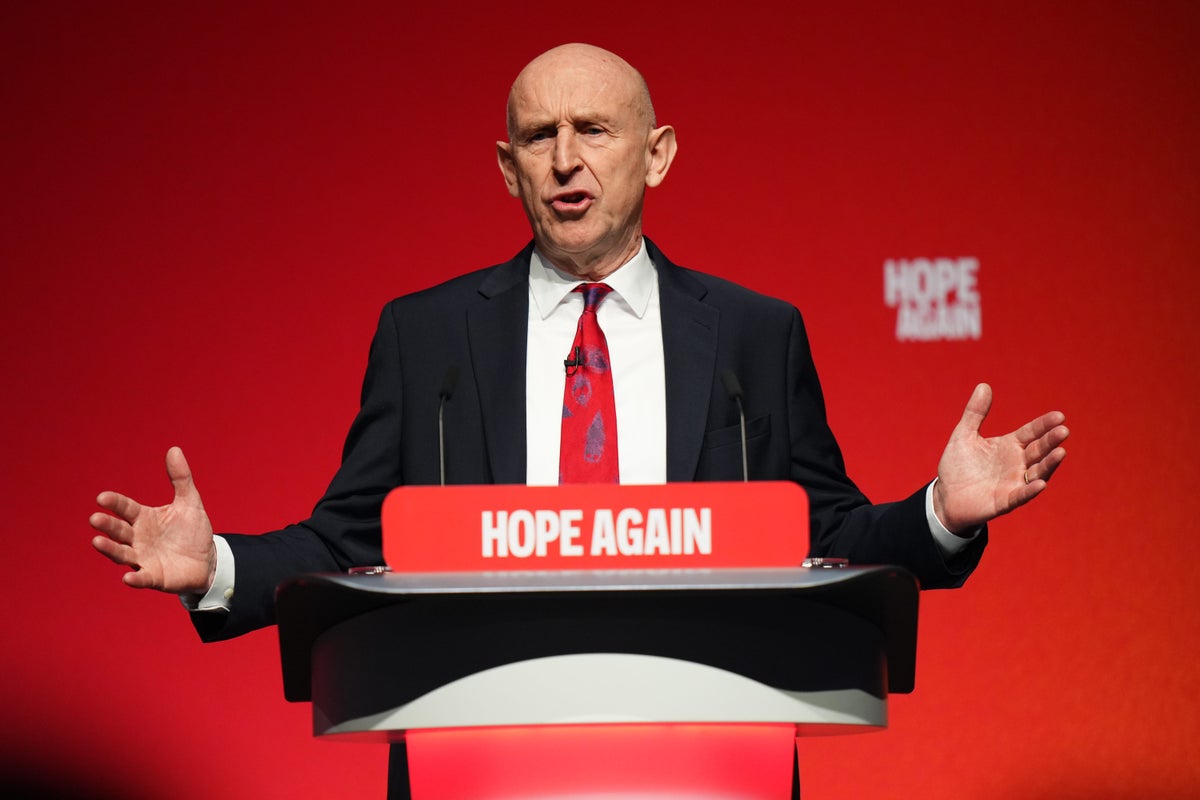
A report published by the Centre for Social Justice reveals that United Kingdom public expenditure on welfare payments exceeded total public investment in infrastructure, housing, and technology by £1.1 trillion over the past two decades. According to reporting by Christopher McKeon, the London-based think tank argued that state benefit spending has functioning as an "anaesthetic" cushioning economically depressed areas while masking underlying structural stagnation across the British economy. The analysis highlights a persistent fiscal dilemma in UK governance, where expanding transfer payments to support low-income households, retirees, and individuals with health conditions have consistently outpaced capital spending designed to generate long-term economic growth.
Key facts
What happened
The findings, detailed in an analysis by the Centre for Social Justice (CSJ), evaluate the allocation of UK public resources over two decades, comparing resource spending on welfare benefits directly against capital investments in physical and technological infrastructure. The study calculated that the cumulative spending gap between social security transfers and investments in transport networks, homebuilding, and technological advancement reached £1.1 trillion over the period.
According to reporting by Christopher McKeon, the CSJ asserted that this imbalance reflects a systemic policy failure. Rather than fostering productivity improvements through modernized transport links, affordable housing stock, and digital networks, successive administrations relied heavily on benefit payments to maintain living standards in stagnant regional economies. The think tank argued that this financial model provided a short-term buffer against deprivation but ultimately served as an "anaesthetic" that dulled the impetus for structural economic reforms.
The research examines how state budgets have drifted toward consumption spending at the expense of capital generation. In the UK budget framework managed by HM Treasury, public spending is divided between departmental operational budgets, Annually Managed Expenditure—which includes demand-led welfare outlays—and capital investment limits. The CSJ's analysis underscores how automatic social security commitments have systematically expanded, taking up fiscal space that might otherwise have been directed toward capital investments capable of raising long-term economic output.
Why it matters
The £1.1 trillion spending gap highlights fundamental structural challenges confronting British fiscal management, tax policy, and regional development strategies. In modern macroeconomic management, capital investment in transport, green infrastructure, housing, and technology is regarded as the primary driver of productivity growth. Higher productivity raises wages and expands the tax base, creating sustainable public revenues. Conversely, welfare transfers redistribute existing wealth to prevent poverty but do not, on their own, expand the economy's productive capacity.
When public resources prioritize safety-net spending over capital investments, regional economic disparities often persist. In the UK, post-industrial towns and former industrial regions have experienced decades of underinvestment in physical connectivity and localized employment opportunities. While benefit payments prevent extreme deprivation, they do not replace lost industries or create skilled employment opportunities. Consequently, these regions risk falling into a cycle of permanent economic dependency, where low productivity necessitates high benefit spending, which in turn consumes government revenue that could otherwise build essential infrastructure.
Furthermore, the imbalance poses acute challenges for HM Treasury as it seeks to adhere to strict fiscal rules governing public debt. With health-related benefits and state pensions projected to rise due to demographic aging and increased long-term sickness, welfare commitments threaten to crowd out capital budgets further, forcing difficult trade-offs between raising taxes, cutting public services, or reducing benefit levels.
The background
The Centre for Social Justice was established in 2004 by former Conservative Party leader Iain Duncan Smith to address social breakdown and poverty in Britain. The think tank played a central role in designing Universal Credit, the landmark welfare reform introduced during the 2010–2015 Coalition government to consolidate working-age benefits into a single monthly payment and sharpen work incentives.
Over the past two decades, British economic policy has been shaped by major external and domestic disruptions. The 2008 global financial crisis caused a deep recession, prompting fiscal consolidation policies in 2010. During this era, capital investment spending was repeatedly curtailed to meet deficit-reduction targets, while statutory entitlements like the State Pension remained protected under mechanisms such as the "triple lock"—which guarantees annual pension increases aligned with inflation, average earnings growth, or 2.5 percent, whichever is highest.
Subsequent shocks, including the UK’s exit from the European Union, the COVID-19 pandemic, and the 2022 energy price spike, placed further strain on public finances. Following the pandemic, the UK experienced a notable increase in economic inactivity among working-age adults, driven largely by long-term sickness and mental health conditions, pushing up spending on disability benefits such as the Personal Independence Payment.
Data from the OECD indicates that gross fixed capital formation by the UK public sector has consistently averaged lower than that of other G7 nations over the past 30 years. This persistent low level of capital investment has coincided with an extended period of subdued labor productivity growth in the UK economy.
Reaction
The CSJ report arrives during an ongoing national debate over economic growth strategies and welfare reform. While the study’s authors emphasize that welfare state reform must be combined with aggressive investment in infrastructure, political parties and economic analysts hold differing perspectives on how to resolve the funding imbalance.
Conservative analysts and free-market commentators frequently cite the growing welfare bill as evidence of an expanding state that disincentivizes work and strains government borrowing. They argue that tightening eligibility criteria for sickness and disability payments is essential to control entitlement spending and free up capital for public investment.
Conversely, anti-poverty advocacy groups, trade unions, and social policy scholars argue that framing welfare spending as opposition to infrastructure investment presents a false dichotomy. They contend that benefit payments are essential to cushion vulnerable households against high housing costs, low wage growth, and underfunded public health services. Organizations such as the Joseph Rowntree Foundation have noted that poverty exerts a heavy burden on public services, and reducing social support without addressing low pay risks expanding hardship.
HM Treasury faces pressure from both sides. Ministers stress the importance of driving economic growth through capital projects, but fiscal institutions like the Office for Budget Responsibility highlight that demographic pressures will continue to exert upward momentum on welfare spending, limiting available capital funds.
What we don't know yet
While the £1.1 trillion figure cited by the Centre for Social Justice illustrates a stark cumulative differential, several analytical details remain unquantified in initial reporting. The precise year-by-year spending breakdown and the exact mathematical methodology used by the CSJ to categorize capital versus resource spending across government departments have not been fully itemized in public summaries.
Additionally, it remains unclear how much of the spending gap resulted from mandatory statutory increases—such as index-linked state pension rises—versus discretionary welfare policy decisions. It is also unknown whether the CSJ's analysis models a counterfactual scenario demonstrating how much higher UK economic productivity would be today had a specific portion of that £1.1 trillion been redirected into housing, transport, and technology over the past 20 years.
Crucially, the report does not detail how future governments could practically reallocate expenditure from social security to infrastructure without breaching existing statutory commitments or causing immediate financial hardship to benefit recipients dependent on state transfers.
What to watch
To assess how policy makers address the fiscal priorities identified in the CSJ report, several key developments should be tracked:
This report is based on original reporting by Christopher McKeon.
How this story was produced
This report was written by The Global Wire newsroom from reporting first published by Christopher McKeon. We verify the core facts against the original report, write our own account, and add the background and consequences a short wire item leaves out. Drafting is AI-assisted inside an editor-supervised pipeline, and every story is checked for accuracy of attribution, structure and duplication before it appears — full detail in our AI and funding disclosure.
Spotted an error? Tell us at corrections@horizonglobalnews.com and read our corrections policy or editorial standards.






Reader comments
Loading comments…