

New York Mayor Demands ICE Exit City After Agents Shoot Driver With Child in Car
Mayor Mamdani condemned federal immigration agents as looking like 'mass shooters' after a vehicle gunfire incident in New York City left a driver wounded.
By The Global Wire Newsroom · Reported from Keely Aouga
Link preview · horizonglobalnews.com
New York Mayor Demands ICE Exit City After Agents Shoot Driver With Child in Car
Mayor Mamdani condemned federal immigration agents as looking like 'mass shooters' after a vehicle gunfire incident in New York City left a driver wounded.
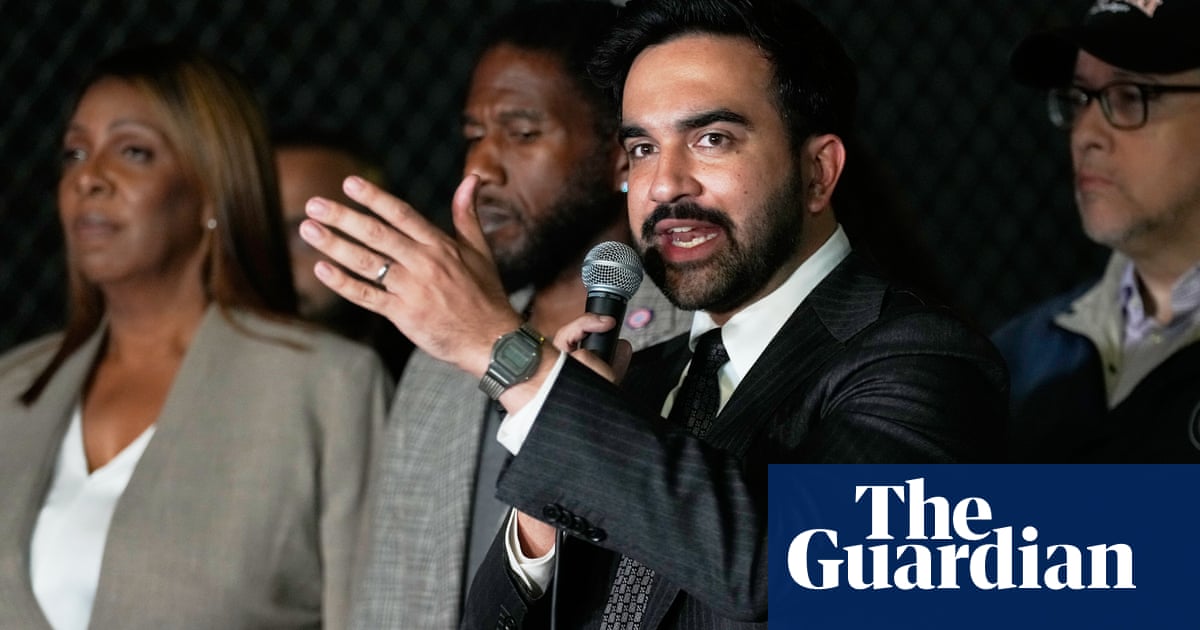
New York City Mayor Mamdani issued a sharp public condemnation of federal law enforcement on Oct. 12, 2026, demanding an immediate halt to all operations by U.S. Immigration and Customs Enforcement within the municipal borders of New York City. The mayor's statement followed an incident in which federal agents opened fire on a vehicle containing an adult driver and a five-year-old child, leaving the driver wounded. Characterizing the tactical appearance and conduct of the federal agents as resembling "mass shooters," municipal leadership renewed calls to bar federal immigration enforcement from operating inside city boundaries, escalating a high-stakes standoff between municipal officials and federal authority.
Key facts
What happened
According to reporting by Keely Aouga, federal officers affiliated with U.S. Immigration and Customs Enforcement were engaged in an operational action in New York City when they confronted a vehicle. During the encounter, agents discharged their firearms into the automobile.
Inside the targeted vehicle at the time of the shooting were an adult driver and a five-year-old child. The gunfire struck the driver, inflicting physical injuries, though the immediate severity of the wounds was not specified in initial reporting. The five-year-old child was present in the vehicle throughout the discharge of weapons by the federal agents.
Following the violent confrontation, Mayor Mamdani delivered a scathing public assessment of the federal agency's presence and tactics. The mayor stated that the heavily armed federal agents, through their attire, equipment, and field actions, appeared akin to "mass shooters" on city streets. Mamdani asserted that such operations pose a severe threat to public safety and urban residents, demanding that ICE immediately cease all operational activities within New York City.
Why it matters
The discharge of firearms by federal law enforcement officers in a dense metropolitan area—particularly with a young child inside the target vehicle—raises immediate public safety, legal, and operational concerns. When federal officers execute tactical interventions in urban jurisdictions without close coordination with local police departments, the risk of violent escalation occurring near civilian bystanders increases substantially.
The incident severely intensifies the ongoing jurisdictional dispute between local municipal leadership and the federal government over immigration enforcement. Under American constitutional principles, federal authorities derive their power to enforce immigration law from federal statute, while municipal governments retain police powers under the Tenth Amendment to determine how local resources and law enforcement personnel are deployed. When municipal executives publicly compare federal officers to violent assailants, it indicates a breakdown in interagency communication and mutual recognition of authority.
For community members and city residents, high-visibility tactical enforcement involving gunfire can undermine public trust in law enforcement generally. If residents perceive law enforcement activities—whether municipal or federal—as unpredictable or hazardous to children and bystanders, willingness to report local crimes, cooperate with investigations, or interact with public emergency services drops significantly across municipal neighborhoods.
The background
U.S. Immigration and Customs Enforcement was created in 2003 under the Homeland Security Act of 2002, following the structural reorganization of federal law enforcement after the Sept. 11, 2001 terrorist attacks. The agency's Enforcement and Removal Operations (ERO) division is tasked with identifying, apprehending, and removing non-citizens who are subject to deportation orders or deemed inadmissable under federal immigration law.
New York City has maintained a formal legal and policy framework as a sanctuary city for several decades, beginning with Executive Order 124 issued by Mayor Edward I. Koch in 1989. That policy restricted municipal agencies and local police from disclosing an individual's immigration status to federal authorities unless required by federal law or in connection with criminal investigations. Subsequent city administrations and the New York City Council codified and expanded these protections through local laws, restricting the New York City Police Department and the Department of Correction from honoring ICE civil detainer requests unless accompanied by a warrant signed by a federal judge.
Tensions between municipal leaders and federal immigration authorities have historically flared during periods of heightened federal enforcement activity in major urban centers. Federal agencies maintain that their statutory authority under Title 8 of the United States Code grants officers nationwide authority to enforce federal immigration law, regardless of local executive orders or city ordinances. Federal agents often operate in plainclothes or specialized tactical gear when executing arrests or intercepting vehicles, a practice that local officials and civil rights organizations have repeatedly criticized for causing panic among the public.
Reaction
Mayor Mamdani's direct public statement comparing ICE agents to mass shooters represents one of the most severe executive condemnations of federal law enforcement by a New York City mayoral administration in recent history. By demanding the complete withdrawal of ICE operations from the city, the mayor's office positioned the municipal government in direct opposition to federal enforcement practices on local soil.
Following major enforcement incidents involving weapon discharges, standard institutional responses typically follow predictable legal and administrative channels. The Department of Homeland Security's Office of Professional Responsibility and internal oversight divisions generally face calls to initiate formal reviews of officer conduct and use-of-force protocols. Federal agencies involved in vehicular stops that result in gunfire usually issue statements asserting that officers responded to perceived threats, though official statements from federal representatives regarding this specific event were not available at the time of initial reporting.
Civil rights organizations, community legal defense groups, and immigration advocacy coalitions in New York City are expected to issue formal calls for independent investigations by state or federal civil rights prosecutors, while pressing the New York City Council to hold public hearings on the matter.
What we don't know yet
Critical factual elements regarding the shooting incident remain unconfirmed in the available reporting. The precise medical condition of the wounded driver, the nature of his injuries, and whether the five-year-old child suffered any physical harm or required medical treatment have not been detailed.
Additionally, the specific legal justification or operational target of the ICE intervention has not been disclosed. It remains unknown whether federal officers were attempting to execute a criminal arrest warrant, a civil deportation warrant, or conducting a traffic intercept based on surveillance. The exact neighborhood or street location in New York City where the shooting took place has not been specified, nor has it been made public whether municipal police officers were present prior to or immediately following the discharge of weapons.
It is also unknown whether body-worn cameras or vehicle dashcams recorded the encounter, or whether independent bystander footage exists that could clarify the sequence of events leading up to the agents opening fire.
What to watch
In the coming days, several key developments will determine the political and legal trajectory of this conflict:
First, monitor whether the U.S. Department of Homeland Security or ICE leadership issues a formal press statement or operational reconstruction of the event, particularly concerning officer safety claims or vehicle movements during the stop.
Second, observe whether the New York City Council or municipal legal authorities initiate formal inquiry proceedings, public hearings, or legal filings seeking injunctive relief against federal tactical operations conducted within city limits.
Third, watch for statements from local district attorneys or the New York State Attorney General's Office regarding whether state law enforcement authorities intend to open an independent criminal investigation into the discharge of firearms by federal agents on municipal streets.
Finally, keep track of scheduled public demonstrations or rallies organized by community groups across New York City's five boroughs in response to the mayor's call to halt federal operations.
This report is based on original reporting published by Keely Aouga.
How this story was produced
This report was written by The Global Wire newsroom from reporting first published by Keely Aouga. We verify the core facts against the original report, write our own account, and add the background and consequences a short wire item leaves out. Drafting is AI-assisted inside an editor-supervised pipeline, and every story is checked for accuracy of attribution, structure and duplication before it appears — full detail in our AI and funding disclosure.
Spotted an error? Tell us at corrections@horizonglobalnews.com and read our corrections policy or editorial standards.



Reader comments
Loading comments…