

Brazilian Presidential Candidates Rally in Sao Paulo Ahead of October 25 Runoff
Candidates in Brazil's polarized presidential race converged on Sao Paulo to secure endorsements and mobilize voters as the election enters its final two weeks.
By The Global Wire Newsroom · Reported from Isabel Teles; Luciana Magalhaes
Link preview · horizonglobalnews.com
Brazilian Presidential Candidates Rally in Sao Paulo Ahead of October 25 Runoff
Candidates in Brazil's polarized presidential race converged on Sao Paulo to secure endorsements and mobilize voters as the election enters its final two weeks.
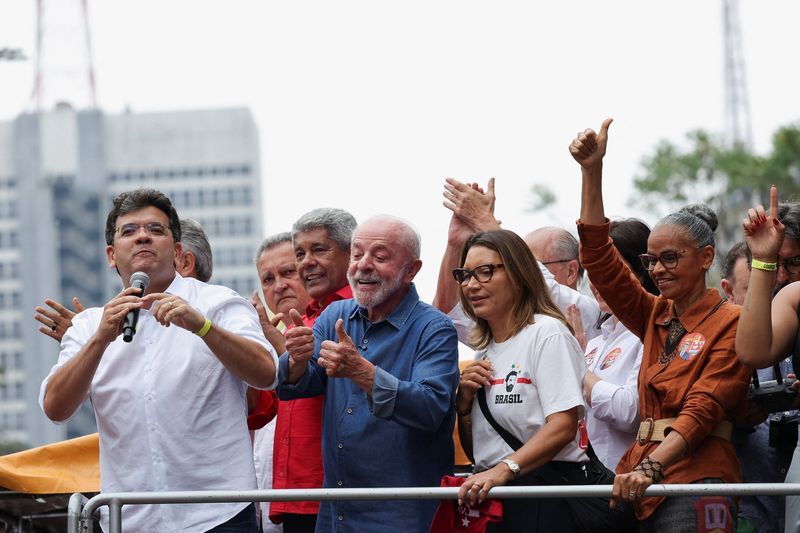
SAO PAULO — Presidential candidates in Brazil concentrated their campaign machinery in Sao Paulo on Sunday, Oct. 11, holding public rallies and courting vital political endorsements as South America's largest democracy entered the final stretch of a highly polarized election. With the runoff vote scheduled for Oct. 25, the competing campaigns converged on the country’s financial powerhouse and most populous city to mobilize supporters, solidify coalitions, and target undecided voters in what political analysts view as the primary battleground of the race.
Key facts
What happened
Candidates seeking the presidency of Brazil brought their campaign operations directly to the streets and political venues of Sao Paulo on Oct. 11, according to reporting by Reuters. The coordinated rallies and events marked the start of the two-week final push before citizens cast their ballots in the Oct. 25 runoff election.
In Sao Paulo, campaign teams organized public gatherings aimed at demonstrating grassroots momentum while simultaneously engaging with local party leaders, municipal officials, and regional political figures. The city, which serves as Brazil's commercial and industrial capital, became the focus of national political activity as competing campaign organizations sought to leverage local political networks to boost voter turnout and win over uncommitted electors.
According to Reuters, the Sunday rallies served a dual purpose: energizing core candidate bases through public appearances and securing commitments of support from influential political figures who control local patron-client networks. In Brazil’s multi-party political system, winning over local mayors, state deputies, and municipal council members is considered vital for organizing ground-level get-out-the-vote operations on election day.
The push in Sao Paulo highlights the tactical pivot required in second-round campaigning. Following a first round that narrowed the candidate field, the remaining contenders must rapidly adapt their messaging to appeal to a broader electorate, seeking alliances with previously competing political factions while attempting to sustain the enthusiasm of their original supporters.
Why it matters
The convergence of presidential campaigns on Sao Paulo highlights the state and city's crucial role in determining the outcome of Brazilian national elections. Sao Paulo state represents Brazil's single largest electorate, containing more than 34 million registered voters—roughly 22 percent of the nation's total voting body. The municipal city of Sao Paulo alone accounts for nearly 9 million registered voters, making it the largest single municipal voter block in the country.
Because Brazilian presidential elections are decided by direct national popular vote under a two-round system, winning heavy margins or narrowing losses in Sao Paulo state can frequently decide the presidency. Historically, the state has acted as a critical swing battleground where shifted margins of a few percentage points translate into millions of individual votes.
Furthermore, economic issues dominate the national debate, and Sao Paulo serves as the main driver of Brazil's economy. The state generates approximately 30 percent of the gross domestic product of South America's largest economic power. Political messaging delivered in Sao Paulo—focusing on fiscal management, industrial development, employment, public safety, and infrastructure—resonates directly with business leadership, organized labor, and urban working-class households alike.
The high level of political polarization surrounding the election adds urgency to these campaign efforts. In deeply divided electoral environments, turnout efficiency and swing-voter persuasion in high-density urban corridors become decisive. A candidate’s ability to secure prominent endorsements from local mayors and municipal councils across the Greater Sao Paulo metropolitan area can provide the ground-level infrastructure needed to transport voters to polling stations and counter opposition messaging.
The background
Brazil's presidential electoral framework is established under the 1988 Federal Constitution, which created a democratic system centered on direct, universal suffrage for citizens aged 16 and older, with voting mandatory for literate citizens between 18 and 70. Under constitutional rules, if no presidential candidate achieves an absolute majority of valid votes—excluding blank and spoiled ballots—in the first round held on the first Sunday of October, a second-round runoff is triggered on the last Sunday of October between the top two vote-getters.
The runoff mechanism forces political consolidation. In the first round, voters often split their ballots among a broad field representing left, center-left, center-right, and right-wing political parties. Once the field is reduced to two contenders, the remaining candidates must form coalitions to absorb the voting blocs of eliminated candidates.
Historically, political geography in Brazil displays distinct regional patterns. The Northeast region has frequently served as a strong base for left-leaning candidates, while the South and Center-West regions have tended to lean toward conservative and agribusiness-aligned candidates. The Southeast region—dominated by the heavily populated states of Sao Paulo, Minas Gerais, and Rio de Janeiro—functions as the decisive swing zone where national elections are typically won or lost.
Within this regional landscape, Sao Paulo has occupied a unique place in Brazilian political history. For decades following the restoration of democracy in the late 1980s, Sao Paulo was the home base for major national parties, including the Brazilian Social Democracy Party (PSDB) and the Workers' Party (PT), both of which were founded in the state. Over recent electoral cycles, however, the political landscape in Sao Paulo has fractured, giving rise to new conservative movements, right-wing populist coalitions, and evangelical political networks.
This shifting environment has made endorsement hunting in Sao Paulo both complex and vital. Candidates running in the second round must navigate a complex landscape of local party leaders, municipal mayors, and business associations to ensure their campaign messages reach voters across the state's 645 municipalities.
Reaction
As candidates rallied across Sao Paulo on Sunday, political observers, market analysts, and civic leaders prepared for an intense two weeks of final campaigning ahead of the Oct. 25 vote.
While specific candidate statements were not detailed in initial dispatches, political parties across the spectrum signaled an aggressive ramp-up in media appearances, television broadcasts, and local organizing. In Brazil, second-round campaigns trigger a dedicated political advertising period on free-to-air television and radio networks—known as the Horário Político Eleitoral Gratuito—which allows candidates equal time to present their arguments directly to tens of millions of viewers daily.
Financial markets in Sao Paulo and Brasilia are closely monitoring candidate statements delivered during major urban rallies. The Ibovespa stock index and the exchange rate of the Brazilian real traditionally experience heightened volatility during the final weeks of presidential runoffs, as investors evaluate candidate positions on fiscal policy, public spending caps, tax reforms, central bank independence, and state-owned enterprise governance.
Civic organizations and election monitoring bodies, including the Superior Electoral Court (Tribunal Superior Eleitoral, or TSE), have emphasized the need for orderly campaigning and strict adherence to electoral law as polarization intensifies. The TSE plays a central role in managing the electronic voting system and enforcing regulations against election disinformation and illegal campaign finance.
What we don't know yet
Several critical variables remain unresolved as the runoff approaches:
First, exact polling figures and vote margin trends in the immediate wake of the Oct. 11 rallies remain subject to upcoming survey releases from major polling agencies such as Datafolha and IPEC. How effectively each candidate consolidates voters who supported third-party candidates in the first round remains an open question.
Second, the full extent of political endorsements from key municipal figures in Sao Paulo state has not been fully finalized. The explicit backing of local mayors across the populous ABC industrial region and the inner municipalities of Sao Paulo state could provide significant operational advantages that are not yet quantified.
Third, voter abstention rates pose a major uncertainty. In Brazilian runoffs, turnout can fluctuate depending on voter enthusiasm and regional weather conditions on polling day. How effectively campaign rallies in Sao Paulo translate into voter turnout on Oct. 25 will determine whether candidate mobilization strategies succeed.
What to watch
In the days leading to the Oct. 25 runoff election, several key events and indicators will determine the trajectory of the race:
This report is based on wire coverage from Reuters by reporters Isabel Teles and Luciana Magalhaes.
How this story was produced
This report was written by The Global Wire newsroom from reporting first published by Isabel Teles; Luciana Magalhaes. We verify the core facts against the original report, write our own account, and add the background and consequences a short wire item leaves out. Drafting is AI-assisted inside an editor-supervised pipeline, and every story is checked for accuracy of attribution, structure and duplication before it appears — full detail in our AI and funding disclosure.
Spotted an error? Tell us at corrections@horizonglobalnews.com and read our corrections policy or editorial standards.




Reader comments
Loading comments…