

Flash Flood Sweeps Through Nepal’s Gorkha District, Destroying Homes and Bridges
Emergency responders in central Nepal have rescued dozens of residents and launched searches for missing persons after unexpected floodwaters tore through riverside communities in Gorkha.
By The Global Wire Newsroom · Reported from SECTIONS Flash flood sweeps away houses; Bridges
Link preview · horizonglobalnews.com
Flash Flood Sweeps Through Nepal’s Gorkha District, Destroying Homes and Bridges
Emergency responders in central Nepal have rescued dozens of residents and launched searches for missing persons after unexpected floodwaters tore through riverside communities in Gorkha.
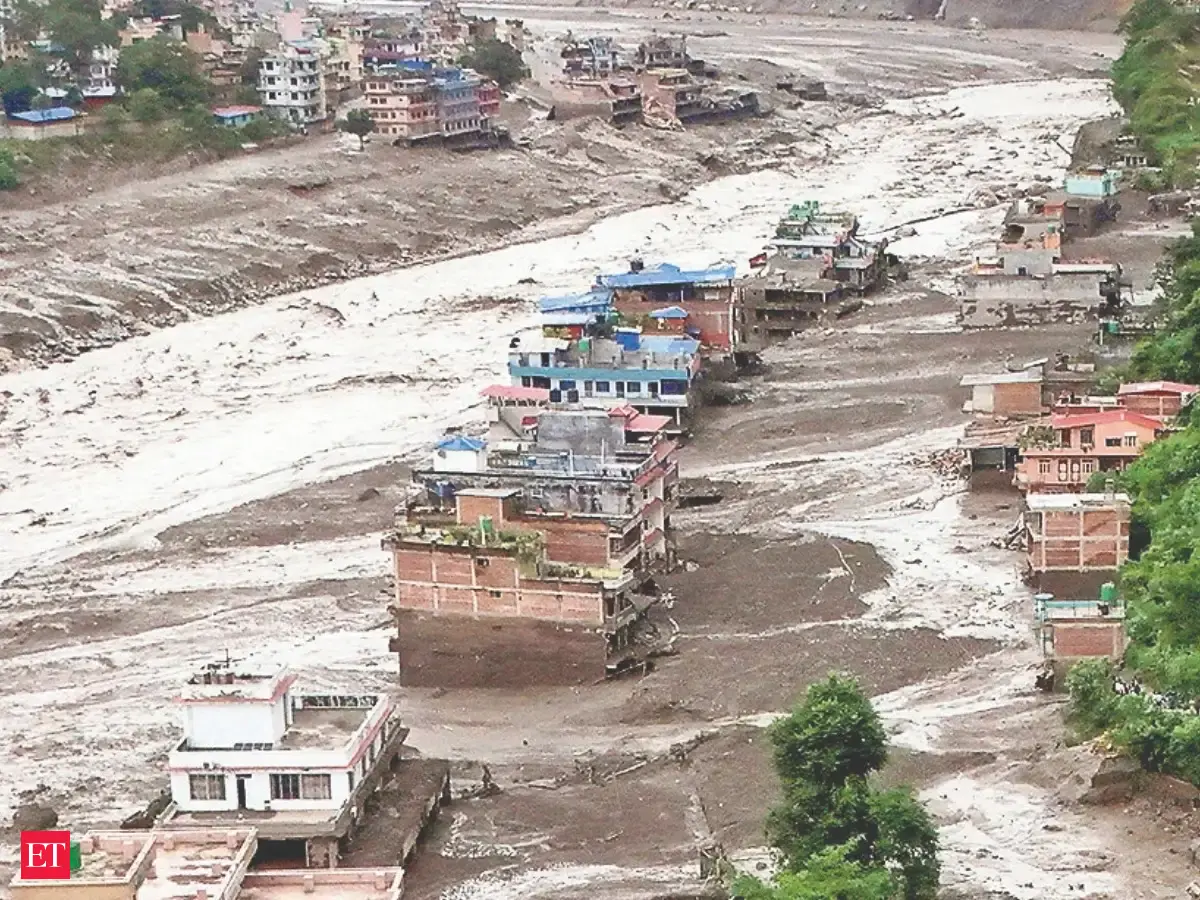
A sudden flash flood inundated settlements across Gorkha district in central Nepal, sweeping away homes and critical bridge infrastructure while leaving roughly 10 people missing and triggering urgent evacuation orders along swollen riverbanks. Emergency response teams mobilized in the mountainous region to rescue nearly 50 trapped residents as water levels surged without advance warning. Local authorities instructed citizens in downstream areas to move to higher ground immediately as rescue operations got underway in difficult terrain.
Key facts
What happened
A rapid and unseasonal surge of floodwater swept through river settlements in Gorkha district, catching local populations off guard as waters rose precipitously within hours. The flood destroyed multiple residential buildings constructed along the riverways and severed essential pedestrian suspension bridges that serve as primary lifelines for rural communities in the Himalayan foothills.
Authorities immediately deployed search and rescue personnel, including local police units and security forces, into the affected zones. Rescue operations successfully extracted nearly 50 individuals who were stranded on isolated land patches or trapped in compromised structures. However, around 10 residents remain unaccounted for, prompting search crews to scour damaged riverbanks and downstream debris fields under challenging operational conditions.
Officials issued urgent public warnings across Gorkha district, directing residents living along river channels to immediately evacuate their homes and head toward higher terrain. Preliminary reports indicate that the unexpected volume of water washed away several domestic houses, agricultural plots, and trail bridges, severely disrupting transport and communication links between remote villages in the district.
Why it matters
The disaster in Gorkha district underscores the extreme vulnerability of Himalayan infrastructure and remote mountain communities to localized hydrological hazards. In rural Nepal, pedestrian suspension bridges and footpaths are not merely local convenience structures; they represent the sole transportation corridors linking isolated agricultural hamlets to healthcare facilities, markets, and educational institutions. When floodwaters destroy these crossings, entire villages can become instantly isolated, halting the flow of food, medical supplies, and emergency humanitarian assistance.
The financial burden of rebuilding swept-away housing and infrastructure falls heavily on a country where rural municipalities operate with constrained budgets and limited technical resources. For individual households in Gorkha, the loss of a home typically entails the destruction of life savings, livestock, stored grain, and land rights documents, plunging affected families into acute poverty and long-term displacement.
Furthermore, flash floods in steep terrain pose systemic challenges to disaster warning mechanisms. Unlike major riverine flooding during the height of the summer monsoon, localized flash floods—often triggered by intense cloudbursts, landslide dam breaches, or high-altitude glacial lake disturbances—develop with extreme rapidity. The short lead time severely limits the efficacy of conventional emergency alerts, forcing residents and local responders to react in real time to fast-moving torrents.
The background
Gorkha district, situated in Nepal's Gandaki Province, features dramatic topographical variations ranging from sub-tropical river valleys to high Himalayan peaks, including Mount Manaslu, the world's eighth-highest mountain. The district is drained by major river systems, most notably the Budhi Gandaki River and its tributaries, which transport glacial melt water and heavy precipitation down steep gradients toward the southern plains.
Nepal is exceptionally prone to water-induced disasters due to its rugged mountain geology, steep slopes, active tectonic fault lines, and intense weather patterns. Monsoon rainfall, which typically spans from June through September, accounts for upwards of 80 percent of the nation's annual precipitation. During this window and in the shoulder transition periods, heavy rainfall frequently triggers landslides and flash floods across the country's central and eastern hill districts.
In recent years, Nepal has suffered repeated catastrophic flooding events. Major disasters in late 2024 caused widespread loss of life, destroyed hydroelectric projects, washed away highways, and damaged scores of bridges across the Kathmandu Valley and eastern Nepal. The frequency and intensity of extreme hydrological events across the Hindu Kush Himalaya region have escalated, a trend climate scientists and disaster management experts attribute to atmospheric warming, changing precipitation patterns, and altered monsoonal dynamics.
Nepal's National Disaster Risk Reduction and Management Authority (NDRRMA), operating alongside the Nepal Army, Armed Police Force, and Nepal Police, serves as the primary state agency responsible for coordinating search, rescue, and relief operations. However, physical access to mountain districts like Gorkha remains a persistent bottleneck during natural disasters. High-altitude topographies, unstable terrain, and vulnerable road networks regularly impede heavy machinery and search teams from reaching remote strike zones in a timely manner.
Reaction
Following the sudden flood in Gorkha district, municipal authorities and district security agencies focused their immediate efforts on executing life-saving rescues and establishing temporary emergency shelters for displaced residents. Local administrators dispatched warnings across public address systems and regional radio broadcasts, urging individuals residing near river channels to remain vigilant and avoid proximity to unstable banks.
National disaster response agencies and provincial ministries in Gandaki Province are expected to coordinate additional logistics, clear debris, and assess structural damage to bridges and public utilities once water levels recede. Humanitarian relief organizations, including the Nepal Red Cross Society and local community groups, typically mobilize to supply emergency rations, clean drinking water, water purification tablets, tarpaulins, and temporary shelter kits to affected households.
Public officials and community leaders in mountain districts continue to advocate for enhanced early-warning systems, weather radar installations, and reinforced bank protection infrastructure. Local representatives frequently highlight that rural municipalities require direct financial and technical support from central authorities to construct flood-resilient bridges and implement effective slope stabilization projects along vulnerable river valleys.
What we don't know yet
Several critical details regarding the cause and extent of the Gorkha flood remain unconfirmed in early reporting. The precise hydrological trigger of the sudden surge—whether caused by a localized cloudburst in upper mountain catchments, a temporary landslide dam outburst upstream, or abnormal high-altitude runoff—has not been conclusively established by meteorological authorities.
The exact number of casualties and damaged structures remains fluid as search teams continue navigating difficult terrain. While nearly 50 people have been safely rescued, the condition and locations of the approximately 10 missing individuals remain unknown. Additionally, the full extent of bridge destructions and the exact number of villages cut off from road access have yet to be comprehensively mapped by district engineers.
It also remains unclear how rapidly government agencies will deploy emergency relief materials to affected settlements, given the destruction of regional pedestrian bridges and potential landslip blockages along access roads.
What to watch
In the coming days, several key developments will determine the recovery trajectory in Gorkha district:
This report is based on coverage provided by SECTIONS Flash flood sweeps away houses; Bridges.
How this story was produced
This report was written by The Global Wire newsroom from reporting first published by SECTIONS Flash flood sweeps away houses; Bridges. We verify the core facts against the original report, write our own account, and add the background and consequences a short wire item leaves out. Drafting is AI-assisted inside an editor-supervised pipeline, and every story is checked for accuracy of attribution, structure and duplication before it appears — full detail in our AI and funding disclosure.
Spotted an error? Tell us at corrections@horizonglobalnews.com and read our corrections policy or editorial standards.






Reader comments
Loading comments…