

Trump Agrees to Import Russian Diesel Following Tariff Threats Against India
The U.S. has reached a deal to import Russian diesel fuel after threatening India with heavy tariffs for purchasing Moscow's energy products.
By The Global Wire Newsroom · Reported from Abhishek De
Link preview · horizonglobalnews.com
Trump Agrees to Import Russian Diesel Following Tariff Threats Against India
The U.S. has reached a deal to import Russian diesel fuel after threatening India with heavy tariffs for purchasing Moscow's energy products.
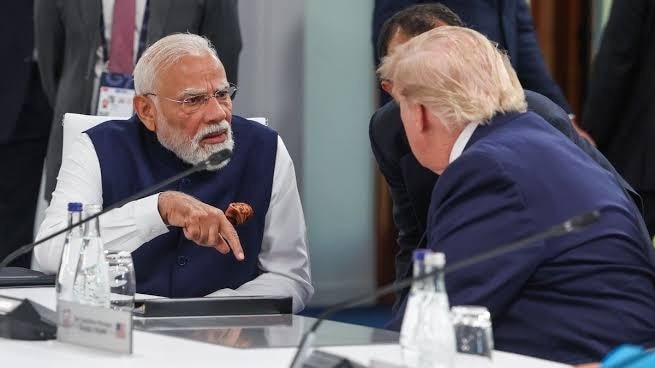
United States President Donald Trump has concluded an agreement with Russian President Vladimir Putin to secure imports of Russian diesel fuel for the American market, according to reporting by Abhishek De. The bilateral transaction follows a period of heightened trade tensions during which Washington imposed heavy tariffs on Indian exports and threatened punitive levies of up to 100 percent against New Delhi for purchasing Russian petroleum products. The arrangement marks an unexpected development in international energy policy and trade enforcement, drawing scrutiny over the consistent application of Western economic sanctions designed to restrict Moscow's energy revenues.
Key facts
What happened
The United States government executed a trade arrangement directly with the Kremlin to import Russian refined diesel fuel into American ports, according to reporting by Abhishek De. The development represents a notable shift in executive trade strategy, coming after months of public warnings and policy measures aimed at curtailing third-country reliance on Russian energy supplies.
Prior to the agreement, the Trump administration had taken a strict stance against foreign nations maintaining energy ties with Moscow. In particular, Washington directed severe trade warnings toward New Delhi, threatening to hit Indian goods entering the U.S. market with punitive tariffs reaching up to 100 percent if India continued to import Russian crude oil and refined petroleum products. The U.S. had already enacted a series of elevated tariffs on specified categories of Indian imports as leverage to discourage New Delhi from maintaining its high-volume energy trade with Russian state energy enterprises.
However, the administration subsequently entered direct negotiations with Russian leadership, yielding an agreement to purchase and transport Russian-refined diesel directly into the United States, Abhishek De reported. The move directly contradicts the restrictive trade posture previously enforced against allied and partner nations trading with Moscow.
Why it matters
The bilateral diesel arrangement carries immediate implications for international diplomatic relations, global trade governance, and foreign energy markets. By procuring Russian fuel directly while penalizing foreign partners for similar commercial activities, the U.S. administration risks eroding diplomatic trust with key international partners, particularly India. New Delhi has consistently defended its energy purchases as a non-aligned economic necessity designed to shield its domestic population of 1.4 billion people from global inflation and energy poverty.
From a market perspective, direct U.S. purchases of Russian diesel complicate the global enforcement of Western energy sanctions. The European Union, the United States, and G7 members spent years establishing regulatory regimes intended to choke off financial flows to the Kremlin while maintaining global oil supply stability. A direct purchasing agreement by the head of the United States executive branch signals to global trading houses, maritime insurers, and international refineries that sanctions boundaries are flexible under domestic economic pressures.
For domestic American consumers and commercial sectors, diesel availability is directly linked to freight shipping costs, agricultural production expenses, and regional heating prices. However, achieving lower domestic fuel prices through direct commercial contracts with Moscow undermines the geopolitical objective of isolating Russia's state-dominated energy sector. The policy shift also exposes Western coalition partners in Europe to internal political pressure, as European governments have enforced strict prohibitions on direct imports of Russian refined fuels at considerable economic cost to their own domestic industrial bases.
The background
To understand the significance of the diesel import agreement, it is necessary to examine the broader history of international sanctions imposed on Russian energy following Moscow's full-scale invasion of Ukraine in February 2022.
In March 2022, the U.S. government enacted Executive Order 14066, which prohibited the importation of Russian crude oil, refined petroleum products, liquefied natural gas, and coal into the United States. Shortly thereafter, international partners established a broader regulatory framework. In December 2022, the G7 coalition, the European Union, and Australia implemented a price cap of $60 per barrel on seaborne Russian crude oil. In February 2023, the coalition extended the system to refined petroleum products, setting a price cap of $100 per barrel on premium distillates such as diesel and $45 per barrel on low-value fuel oils.
Under these rules, Western maritime service providers, insurers, and shipping lines were forbidden from handling Russian petroleum shipments globally unless the fuel was purchased at or below the designated price caps. While the European Union phased out direct imports of Russian seaborne crude and refined products entirely, third-party countries such as India and China dramatically expanded their purchases of discounted Russian crude.
India's crude oil imports from Russia rose from less than 2 percent of its total petroleum imports prior to February 2022 to over 35 percent by 2023. Major Indian refining complexes, including Reliance Industries' massive plant in Jamnagar, Gujarat, and Nayara Energy's refinery in Vadinar, processed large volumes of Russian heavy crude into refined fuels. Much of this refined diesel and jet fuel was subsequently exported to European and Asian markets, creating a legally permissible loophole within the G7 framework, as crude processed in third countries is legally treated under international customs rules as originating from the refining nation.
Despite the legal clarity under international customs standards, Washington repeatedly criticized New Delhi's refining and trading activities, framing them as indirect financial support for Moscow. President Trump amplified this pressure by proposing tariffs up to 100 percent on trading partners that failed to conform to U.S. economic priorities, culminating in direct tariff actions against Indian exports.
Reaction
The reporting by Abhishek De highlighted substantial international reaction regarding double standards and institutional hypocrisy in U.S. trade policy. Critics pointed out that threatening punitive trade measures against a strategic partner like India while simultaneously purchasing energy directly from Moscow compromises the internal coherence of U.S. foreign policy.
While formal diplomatic statements from foreign ministries remain pending following the initial report, India's Ministry of External Affairs and Ministry of Petroleum and Natural Gas have historically maintained that Indian energy procurement is guided strictly by domestic energy security and market pricing. Official responses are also anticipated from key Congressional committees in Washington, including the U.S. Senate Foreign Relations Committee and the House Committee on Foreign Affairs, where lawmakers have historically maintained strict oversight over executive branch compliance with statutory sanctions frameworks.
Additionally, European Union officials and G7 partners are expected to seek clarification regarding how the deal was executed and whether U.S. buyers utilized specialized licenses or broad executive waivers to conduct the transactions with Russian state-linked entities.
What we don't know yet
Several critical operational and legal details regarding the energy transaction remain unconfirmed in the available reporting.
First, the specific volumetric quantity of Russian diesel contracted for transport to the United States and the total financial value of the transaction have not been disclosed. It is also unknown whether the diesel is being delivered to specific commercial hubs, such as the U.S. East Coast (PADD 1) district, which historically faces distillate supply constraints during high-demand periods.
Second, the regulatory mechanisms used by the administration remain unclear. It has not been established whether the White House issued a formal executive order amending Executive Order 14066, or if the U.S. Department of the Treasury's Office of Foreign Assets Control (OFAC) issued general or specific licensing exceptions to bypass existing import bans.
Finally, it remains unconfirmed whether the U.S. government plans to maintain, reduce, or roll back the retaliatory tariffs currently levied on Indian goods, or whether the 100 percent tariff threats against New Delhi will remain active policy.
What to watch
In the coming days and weeks, several key indicators will reveal the legal and political trajectory of the U.S.-Russia diesel arrangement.
Official documentation from the U.S. Department of the Treasury's Office of Foreign Assets Control (OFAC) will provide regulatory clarity on whether administrative waivers were granted for the shipments. Observers will monitor published general licenses or regulatory amendments in the Federal Register.
Energy analysts will track maritime intelligence and vessel tracking data to identify specific tankers departing Russian Baltic or Black Sea ports, such as Primorsk or Tuapse, bound for discharge terminals along the U.S. Atlantic coastline.
Diplomatic proceedings between Washington and New Delhi will also be critical. Statements from India's Minister of External Affairs Subrahmanyam Jaishankar or representatives from the Indian Ministry of Commerce and Industry will indicate how India intends to respond to the perceived trade disparity. Finally, congressional hearings in Washington could force administration officials to testify regarding the national security rationale and economic justification behind direct fuel procurement from Moscow.
This report is based on original reporting published by Abhishek De.
How this story was produced
This report was written by The Global Wire newsroom from reporting first published by Abhishek De. We verify the core facts against the original report, write our own account, and add the background and consequences a short wire item leaves out. Drafting is AI-assisted inside an editor-supervised pipeline, and every story is checked for accuracy of attribution, structure and duplication before it appears — full detail in our AI and funding disclosure.
Spotted an error? Tell us at corrections@horizonglobalnews.com and read our corrections policy or editorial standards.




Reader comments
Loading comments…