

India Demands Global Governance Overhaul as UN Security Debate Triggers Clash With Pakistan
New Delhi's push for expanded multilateral representation coincided with sharp diplomatic exchanges over regional security during United Nations sessions in October 2026.
By The Global Wire Newsroom · Reported from India Today World Desk
Link preview · horizonglobalnews.com
India Demands Global Governance Overhaul as UN Security Debate Triggers Clash With Pakistan
New Delhi's push for expanded multilateral representation coincided with sharp diplomatic exchanges over regional security during United Nations sessions in October 2026.
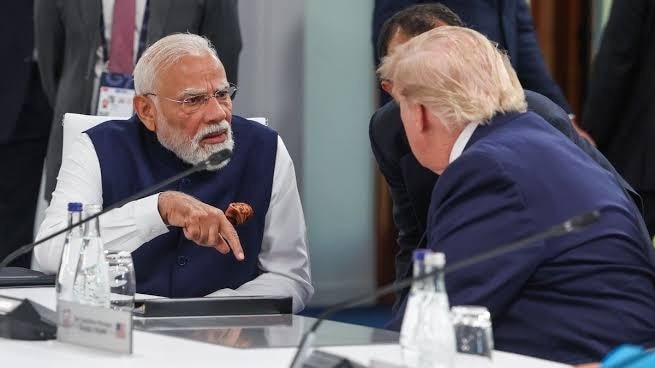
New Delhi has intensified its push for structural reform of international institutions at the United Nations, arguing that current global governance frameworks fail to reflect modern geopolitical realities, according to reporting by India Today World Desk published on October 10, 2026. The diplomatic campaign coincided with a sharp exchange of verbal broadsides between Indian and Pakistani delegates during UN proceedings, underlining persistent regional security frictions. The high-level discussions highlighted how emerging trade alliances, security rivalries, and long-standing territorial disputes continue to intersect within international diplomatic bodies, complicating broader efforts to modernize the multilateral system.
Key facts
What happened
During multilateral discussions at the United Nations headquarters in October 2026, Indian diplomats articulated a sustained critique of contemporary international decision-making structures, according to reporting by India Today World Desk. Indian representatives emphasized that institutions established in the middle of the 20th century no longer possess the structural capacity or institutional legitimacy required to address 21st-century global challenges, ranging from economic inequality to international security threats.
Simultaneously, the diplomatic sessions served as the stage for another round of sharp verbal confrontation between India and Pakistan. According to India Today World Desk, delegates from both South Asian nations traded counteraccusations regarding regional stability, cross-border security, and compliance with international norms. Pakistan's diplomatic delegation used the forum to raise concerns regarding regional security dynamics, while Indian representatives rejected Islamabad's assertions, reiterating New Delhi's long-standing position on sovereign integrity and state-sponsored terrorism.
The exchanges occurred against a broader backdrop of interrelated diplomatic, commercial, and security developments spanning several global regions. Beyond the bilateral friction, discussions encompassed wider multilateral priorities, including supply chain resilience, global trade rules, and the representation of developing economies in international financial and political bodies.
Why it matters
The diplomatic contest at the United Nations underscores a fundamental structural crisis in global governance. As economic and demographic weight shifts toward the Global South, international institutions designed in 1945 face growing calls for structural modernization. India, as the world's most populous nation and fifth-largest economy, considers its exclusion from permanent decision-making bodies like the UN Security Council an outdated anomaly that undermines the credibility of the multilateral framework.
For international financial and commodity markets, ongoing diplomatic polarization between nuclear-armed neighbors in South Asia introduces persistent geopolitical risk. South Asia remains a critical corridor for global commerce, maritime shipping, and energy transit. Prolonged political gridlock and diplomatic hostility between India and Pakistan restrict regional trade integration through bodies such as the South Asian Association for Regional Cooperation (SAARC), constraining potential economic growth across a region housing nearly two billion people.
Furthermore, the persistent impasse over UN Security Council reform reflects a broader paralysis in global conflict resolution. When major regional powers view multilateral forums primarily as arenas for rhetorical confrontation rather than binding dispute resolution, the capacity of the UN to enforce collective security measures or manage escalating crises worldwide is significantly weakened.
The background
The structural debate over United Nations reform dates back decades, rooted in the foundational architecture of the 1945 UN Charter. Following the conclusion of World War II, the victors established the UN Security Council with five permanent members—the United States, the Soviet Union (succeeded by the Russian Federation), the United Kingdom, France, and China—each endowed with absolute veto power over substantive resolutions. An additional ten non-permanent members are elected for two-year terms without veto capability.
Over the past three decades, calls to expand both permanent and non-permanent categories of the Security Council have mounted. In 2004, India joined Brazil, Germany, and Japan to form the G4 alliance, a coalition mutually supporting each member's bid for permanent Security Council seats. Opposing the G4 is the "Uniting for Consensus" group, led by nations such as Pakistan, Italy, Mexico, and South Korea, which advocates expanding only non-permanent seats to prevent creating new centers of permanent diplomatic privilege.
Bilateral friction between India and Pakistan at the UN is similarly long-standing, dating to the 1947 partition of British India and the subsequent dispute over Jammu and Kashmir. Following the 1947–1948 conflict, the UN Security Council passed Resolution 47 in April 1948, recommending a plebiscite under specific demilitarization conditions that were never fully implemented. Over subsequent decades, the two nations fought major wars in 1965 and 1971, as well as a limited military conflict in Kargil in 1999. In recent years, diplomatic exchanges at the UN General Assembly have routinely featured sharp right-of-reply statements addressing terrorism, territorial sovereignty, and regional security protocols.
Reaction
While specific transcripts of the October 2026 statements were not detailed in the available reporting by India Today World Desk, standard diplomatic protocols dictate the positions taken by major international actors. The permanent members of the Security Council maintain varied stances on reform: the United States, France, and the United Kingdom have expressed conditional support for expanding permanent seats, including for India, though consensus on veto rights remains elusive. Russia and China have offered general statements favoring increased representation for developing nations while remaining cautious regarding structural changes that could alter voting mechanics.
Following high-level diplomatic altercations of this nature, third-party nations, including regional partners and major trade blocs, typically advocate for bilateral restraint and dialogue. Multi-national forums such as the G20 and the BRICS coalition regularly issue joint statements emphasizing multilateral reform, though internal geopolitical divergent interests often prevent unified action on Security Council expansion.
What we don't know yet
Several critical elements of the October 2026 developments remain unconfirmed in available reports. The precise diplomatic text of the statements delivered by Indian and Pakistani representatives at the UN was not specified by India Today World Desk, leaving open questions regarding whether new policy positions or specific draft resolutions were formally tabled.
It also remains unclear whether India's renewed demand for global governance reform gained explicit backing from other G4 members or key non-aligned nations during these specific sessions. Additionally, the extent to which trade and security negotiations mentioned alongside the diplomatic exchanges will yield concrete bilateral agreements or policy shifts across participating nations remains to be seen.
What to watch
The trajectory of UN reform and South Asian regional stability will depend on several key upcoming benchmarks:
This report is based on coverage provided by India Today World Desk.
How this story was produced
This report was written by The Global Wire newsroom from reporting first published by India Today World Desk. We verify the core facts against the original report, write our own account, and add the background and consequences a short wire item leaves out. Drafting is AI-assisted inside an editor-supervised pipeline, and every story is checked for accuracy of attribution, structure and duplication before it appears — full detail in our AI and funding disclosure.
Spotted an error? Tell us at corrections@horizonglobalnews.com and read our corrections policy or editorial standards.





Reader comments
Loading comments…