

Riyadh Airport Hit by Second Projectile Strike Following Deadly Houthi Attack
A fresh projectile strike ignited a fire at King Khalid International Airport on Sunday, one day after a fatal attack killed 12 people and prompted Houthi warnings against commercial airlines.
By The Global Wire Newsroom · Reported from Monica Singh
Link preview · horizonglobalnews.com
Riyadh Airport Hit by Second Projectile Strike Following Deadly Houthi Attack
A fresh projectile strike ignited a fire at King Khalid International Airport on Sunday, one day after a fatal attack killed 12 people and prompted Houthi warnings against commercial airlines.
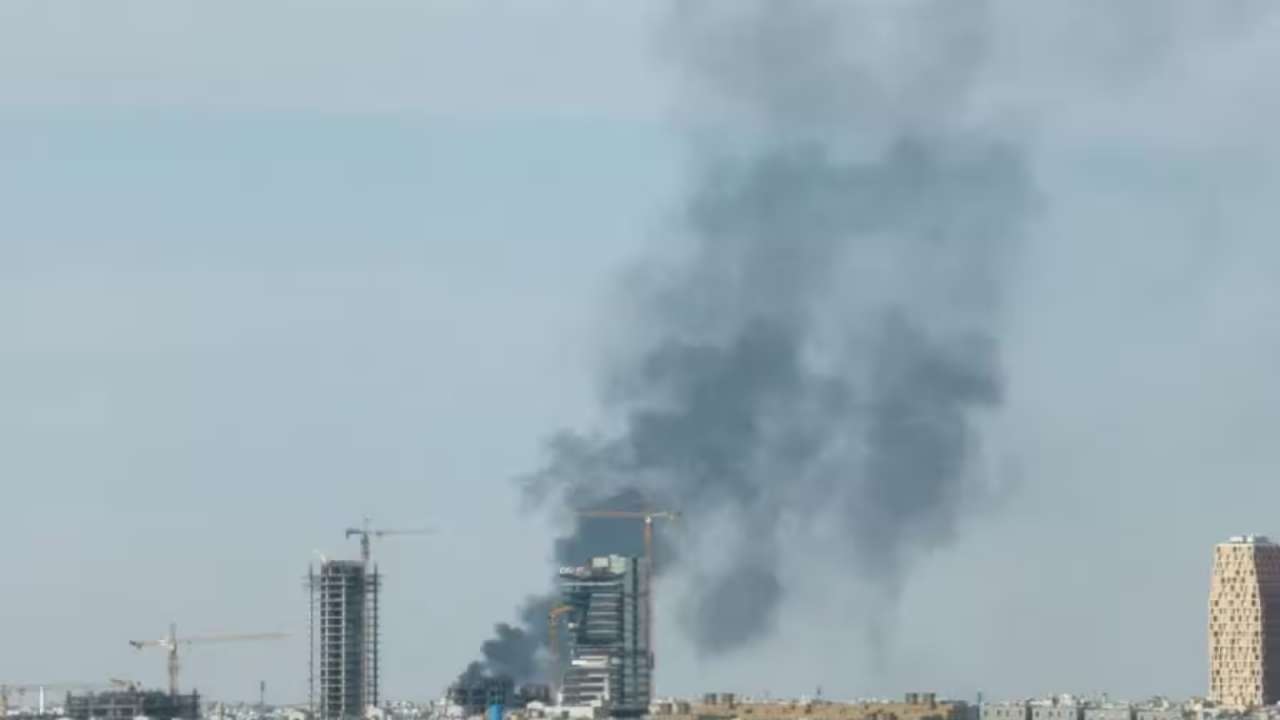
A second aerial attack in two days targeted King Khalid International Airport in Riyadh on Oct. 11, 2026, igniting a fire at Saudi Arabia's primary capital gateway just 24 hours after a deadly assault killed 12 people and forced the facility to shut down. The Saudi-led military coalition confirmed that an unidentified projectile struck the airport compound on Sunday afternoon following explicit warnings from Houthi forces in Yemen advising commercial airlines to avoid Saudi airspace and aviation hubs. The back-to-back incidents mark one of the most severe direct disruptions to Saudi civil aviation infrastructure in recent years, escalating security concerns across the Arabian Peninsula and threatening commercial flight operations throughout the Persian Gulf.
Key facts
What happened
The aerial strikes against King Khalid International Airport unfolded across two consecutive days in early October 2026, rapidly escalating into a major security crisis for Saudi civil aviation authorities. On Saturday, Oct. 10, an initial strike hit the airport complex north of Riyadh, resulting in 12 confirmed fatalities. The severity of the loss of life prompted immediate emergency measures, including the complete suspension of flight operations and the temporary closure of the airport to clear debris, assess structural damage, and secure the perimeter.
Following the initial lethal strike, Houthi authorities in Sanaa issued a public warning targeting international and domestic commercial carriers, demanding that airlines immediately cease flights to and from Saudi airports. The warning signaled that aviation facilities across the kingdom were being classified as operational targets within the broader scope of cross-border hostilities.
Despite heightened air defense readiness across the capital region, reporting by Monica Singh indicates that a second projectile struck the airport grounds on Sunday, Oct. 11. According to official announcements from the Saudi-led military coalition, an unidentified aerial weapon targeted the airport precinct, sparking a fire. Firefighting crews and emergency response units were deployed to contain the blaze, while military authorities initiated technical investigations to identify the precise origin, trajectory, and type of projectile used in the attack.
The consecutive strikes forced air traffic control authorities to divert incoming flights to regional airports and manage extensive ground stoppages. Flight tracking platforms recorded multiple reroutings as international airlines evaluated safety directives, pending further security assessments from aviation regulators and security services in the region.
Why it matters
The targeting of King Khalid International Airport carries significant operational, economic, and geopolitical consequences for Saudi Arabia and the broader international aviation sector. As the chief air transport portal for the Saudi capital, King Khalid International Airport processes millions of passengers annually and serves as a vital logistics node connecting Europe, Asia, and the Middle East. Repeated strikes on such high-profile civilian infrastructure undermine the kingdom's efforts to position itself as a global logistics and tourism hub under its long-term economic diversification initiatives.
From an operational perspective, back-to-back attacks that breach capital air defenses create severe disruptions for global air transport networks. Commercial airlines operating in the Persian Gulf routinely adjust flight paths and evaluate risk advisories when regional conflict escalates. A sustained security threat around Riyadh's primary airport could force foreign aviation authorities to issue stringent flight prohibitions, leading to elevated war-risk insurance premiums for carriers operating in Saudi airspace, increased fuel costs due to mandatory flight diversions, and widespread schedule cancellations.
The human toll of 12 deaths reported in the Saturday strike highlights the acute safety risks posed to airport workers, passengers, and ground personnel. Targeting civil aviation infrastructure raises critical regulatory questions for international civil aviation bodies, including the International Civil Aviation Organization, regarding conflict zone safety management and emergency airspace protocols. Furthermore, the explicit warning issued to airlines demonstrates a deliberate intent to maximize economic and psychological disruption by treating civilian transportation corridors as active combat zones.
The background
The escalation at King Khalid International Airport occurs against the backdrop of the long-running conflict in Yemen, which intensified significantly following the Saudi-led coalition's intervention in March 2015. The military campaign was launched to support Yemen's internationally recognized government after Houthi forces seized control of the capital, Sanaa, and vast swathes of northern Yemen in late 2014. Since the outbreak of hostilities, the conflict has generated deep regional instability and repeatedly spilled over Saudi Arabia's southern border.
Over the course of the multi-year war, Houthi forces have developed and deployed an array of long-range aerial capabilities, including ballistic missiles, land-attack cruise missiles, and loitering munitions. These weapons systems have frequently been launched from northern Yemen toward targets deep inside Saudi territory. While southern regional airports—such as those in Abha, Jizan, and Najran—have historically faced the most frequent cross-border attacks, long-range systems have periodically targeted major infrastructure in central and eastern Saudi Arabia.
Previous high-profile long-range strikes have targeted critical energy and transport installations, including the major Aramco oil processing facilities at Abqaiq and Khurais in September 2019, which temporarily disrupted a substantial portion of global crude production capacity, as well as periodic missile and drone launches aimed at military bases and infrastructure surrounding Riyadh.
Saudi Arabia relies on a multi-layered air defense network, prominently featuring US-manufactured MIM-104 Patriot missile batteries and Terminal High Altitude Area Defense (THAAD) systems, alongside short- and medium-range point-defense units. Despite high intercept success rates reported by coalition forces over the years, the saturation of defense systems through coordinated drone swarms or low-altitude cruise missiles presents continuous technical challenges for military planners protecting expansive civilian infrastructure across the kingdom.
Reaction
Official reactions to the weekend attacks quickly focused on military readiness, civil aviation safety, and crisis management. The Saudi-led military coalition publicly confirmed the details of the Sunday projectile strike and the resulting fire, emphasizing that defense systems and emergency services were actively responding to the threat. Coalition leadership is expected to issue further operational statements outlining retaliatory measures or countermeasures aimed at neutralizing launch sites within Yemen.
International aviation organizations and commercial air carriers are closely reviewing the safety situation. Flight safety regulators, including the European Union Aviation Safety Agency and the US Federal Aviation Administration, typically issue updated Conflict Zone Information Bulletins or Notices to Air Missions when civil airports sustain direct hits. Commercial airlines operating routes into Riyadh are expected to hold emergency risk-assessment meetings to determine whether to temporarily suspend flights, re-route schedules, or implement overnight ground bans.
Diplomatic entities and international bodies, including the United Nations Special Envoy for Yemen, are anticipated to call for an immediate de-escalation of hostilities, reiterating that attacks on civilian infrastructure violate international humanitarian law. Regional diplomatic partners across the Gulf Cooperation Council are also expected to offer solidarity statements supporting Saudi Arabia's security measures.
What we don't know yet
Several critical details regarding the dual attacks on King Khalid International Airport remain unverified or unconfirmed by independent investigators. First, the exact type of projectile used in the Sunday attack—whether a loitering munition, a land-attack cruise missile, or a short-range ballistic missile—has not been publicly specified by the Saudi-led coalition or independent defense analysts. Identifying the specific weapon system is essential for evaluating how the projectile evaded local air defense coverage.
Second, full details regarding the extent of structural damage from Sunday's fire, as well as the exact location of impact within the airport complex, have not been released. It remains unclear whether the fire affected passenger terminals, cargo hangars, fuel storage facilities, or airfield runways.
Third, while 12 fatalities were reported following Saturday's initial strike, the nationalities and identities of the victims, as well as the exact number of injured persons, have not been comprehensively published by health or airport authorities. Finally, the precise duration of the airport's operational shutdown and the timeline for a full resumption of international passenger flights remain uncertain while safety assessments continue.
What to watch
In the coming days, several key indicators will determine the operational and geopolitical trajectory of this crisis. First, watch for official aviation notices issued by the Saudi General Authority of Civil Aviation and global regulatory bodies regarding the operational status of King Khalid International Airport and safety advisories for Saudi airspace.
Second, monitor responses from major international airlines, including European, Asian, and regional Middle Eastern carriers, to see whether flight suspensions to Riyadh are extended or expanded to other Saudi hubs such as Jeddah or Dammam.
Third, observe military developments in the region, particularly any retaliatory airstrikes launched by the Saudi-led coalition against missile and drone launch facilities or command centers in Houthi-controlled regions of Yemen.
Fourth, keep track of international diplomatic statements from the UN Security Council and key foreign capitals, which will indicate the degree of international political pressure applied to halt attacks on commercial aviation targets. Finally, monitor global energy and financial markets for potential fluctuations in crude oil prices and regional shipping insurance rates in response to heightened regional instability.
This report is based on original news coverage by Monica Singh.
How this story was produced
This report was written by The Global Wire newsroom from reporting first published by Monica Singh. We verify the core facts against the original report, write our own account, and add the background and consequences a short wire item leaves out. Drafting is AI-assisted inside an editor-supervised pipeline, and every story is checked for accuracy of attribution, structure and duplication before it appears — full detail in our AI and funding disclosure.
Spotted an error? Tell us at corrections@horizonglobalnews.com and read our corrections policy or editorial standards.






Reader comments
Loading comments…