

Russian Aerial Bombardments Kill Six in Ukrainian Urban Centers, Damaging Commercial Sites
Attacks targeting civilian areas in northeastern Ukraine leave at least six dead and dozens wounded as strikes hit a busy grocery store in Kharkiv.
By The Global Wire Newsroom · Reported from thestar.com.my
Link preview · horizonglobalnews.com
Russian Aerial Bombardments Kill Six in Ukrainian Urban Centers, Damaging Commercial Sites
Attacks targeting civilian areas in northeastern Ukraine leave at least six dead and dozens wounded as strikes hit a busy grocery store in Kharkiv.
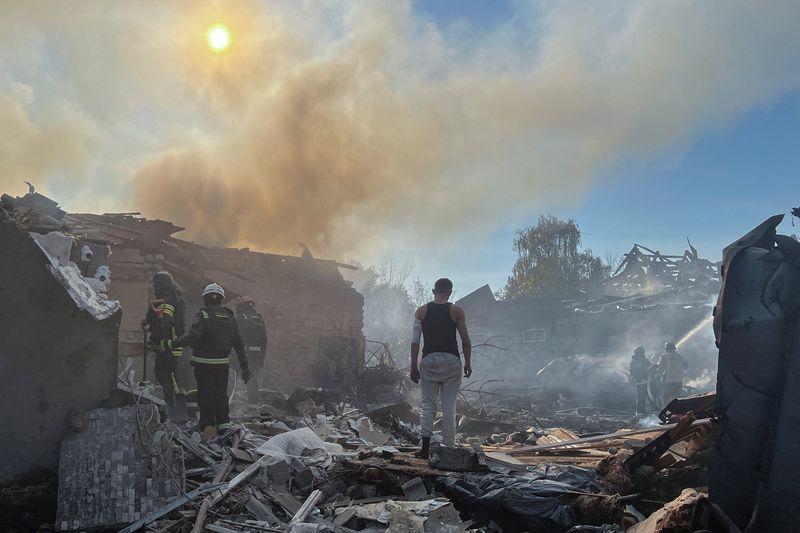
A series of Russian military strikes directed at urban areas in Ukraine killed at least six people across two cities on Oct. 11, according to local officials and emergency services cited in reporting by Reuters. Among the hardest-hit locations was Kharkiv, Ukraine's second-largest city, where a strike struck a commercial grocery store during operational hours. The blast in Kharkiv resulted in three civilian fatalities and left 20 others suffering from varied injuries, highlighting the ongoing vulnerability of civilian infrastructure situated within range of Russian stand-off weaponry.
Key facts
What happened
On Oct. 11, Russian forces executed targeted strikes against civilian population centers in eastern Ukraine. In Kharkiv, a metropolitan center located in the northeastern quadrant of the country, ordnance detonated at a functioning grocery store. The facility, which was populated with shoppers and retail employees at the time of the impact, suffered extensive structural damage. Detonations ripped through the building, triggering fires, shattering concrete, and trapping multiple occupants beneath debris.
First responders from the State Emergency Service of Ukraine, alongside local police and municipal medical teams, arrived at the Kharkiv site shortly after the impact. Emergency crews worked to suppress flames, stabilize weakened structural elements, and perform emergency triage. Search teams pulled injured survivors and deceased individuals from the wreckage. Officials confirmed that three people lost their lives inside or immediately adjacent to the retail site, while 20 others were transported to regional medical facilities with injuries ranging from shrapnel wounds and severe burns to blast trauma.
Simultaneously, secondary strikes were executed against a second Ukrainian city on the same day. Those impacts resulted in three additional civilian fatalities, bringing the total single-day death toll from the reported actions to six. Local authorities executed containment operations across both affected municipal locations to clear unexploded remnants and secure municipal transport corridors.
Why it matters
The targeted bombardment of non-military facilities, such as food markets and grocery hubs, carries acute humanitarian, operational, and legal consequences for Ukraine. From an operational perspective, strikes against basic commercial locations disrupt essential supply chains in urban centers that are already operating under wartime constraints. When civilian points of access for basic necessities become direct risk zones, local populations face heightened displacement pressure, accelerating domestic migration away from frontline regions toward western provinces or neighboring European states.
From a public healthcare standpoint, sudden mass-casualty events strain regional medical networks. Hospitals in cities like Kharkiv must maintain constant emergency readiness, diverting personnel, blood supplies, and surgical resources from routine care to stabilize blast victims. The presence of 20 injured civilians from a single commercial site stresses intensive care capacity and specialized trauma services.
Furthermore, attacks on non-military targets remain central to international legal scrutiny. Under the Geneva Conventions and Additional Protocol I, the principles of distinction and proportionality strictly forbid intentional or reckless targeting of civilian infrastructure. Detonations inside commercial retail spaces provide further material evidence for ongoing investigations led by Ukrainian prosecutors and international bodies, such as the International Criminal Court (ICC), into potential war crimes committed during the conflict.
The background
Kharkiv, located roughly 30 kilometers (18 miles) from the border with the Russian Federation, has remained one of the most consistently targeted urban centers since Moscow launched its full-scale invasion of Ukraine in February 2022. During the opening months of the war, Russian ground forces attempted to encircle the city, subjecting it to relentless artillery, rocket, and mortar fire. Although a swift Ukrainian counteroffensive in autumn 2022 pushed Russian ground units back toward the international border, the city's geographical proximity to Russian territory leaves it uniquely exposed to short-range vector strikes.
Throughout late 2023 and into mid-2024, Russian military tactics shifted heavily toward the employment of heavy guided aerial bombs—known as KABs—alongside S-300 surface-to-air missiles modified for land-attack roles, ballistic Iskander systems, and long-range Shahed-type loitering munitions. Because guided aerial bombs are released from aircraft operating inside Russian airspace, Ukrainian air defense systems face significant tactical hurdles in intercepting the munitions before impact.
While Kyiv, the national capital, is protected by a multi-layered air defense network incorporating sophisticated Western platforms such as the MIM-104 Patriot, NASAMS, and SAMP/T systems, regional cities like Kharkiv face persistent shortages of point-defense interceptors. Russian operational planners have routinely targeted energy grids, transportation junctions, and urban commercial pockets across Kharkiv, Sumy, and Zaporizhzhia, aiming to erode civilian morale and strain local governance structures.
Reaction
Ukrainian local and regional officials condemned the strikes, characterizing the targeting of a crowded retail space as a deliberate act of intimidation against non-combatants. Regional governors and municipal mayors in the impacted territories reiterated urgent requests to international partners for additional air defense systems, specialized radar units, and ammunition to intercept incoming vector threats before they reach municipal airspace.
While the Russian Ministry of Defense typically does not issue specific public commentary on individual civilian strike sites, standard official communications from Moscow consistently assert that Russian forces conduct strikes strictly against military installations, energy infrastructure supporting the defense industrial complex, or points of troop concentration. Russian officials routinely attribute civilian damages to deflected Ukrainian air defense missiles or faulty interceptors—claims that Ukrainian authorities and international independent monitors consistently dispute based on crater analysis, fragment recovery, and radar tracking telemetry.
Humanitarian organizations and international observers are expected to log the Oct. 11 events into formal monitoring databases tracking civilian casualties in armed conflicts, which inform ongoing diplomatic debates at the United Nations General Assembly and Security Council.
What we don't know yet
Several key parameters surrounding the Oct. 11 attacks remain unconfirmed in initial reporting. The precise type of weapon system used in the Kharkiv grocery store strike—whether a glide bomb, ground-launched missile, or loitering munition—has not been publicly specified by technical experts. Identifying the weapon system is critical for determining the launch origin and assessing whether the munition possessed precision-guidance capabilities.
Additionally, the identity and precise location of the second Ukrainian city affected by the day's strikes were not detailed in the initial wire summaries. The medical conditions of the 20 injured individuals in Kharkiv also remain unquantified; changes in their health status could alter the overall death toll. Finally, it remains unclear whether structural assessments will allow the targeted commercial site and surrounding facilities to be repaired or if the damage requires full demolition.
What to watch
In the coming days, several critical indicators will reveal the operational and diplomatic fallout of these strikes. Ukrainian military spokespersons and municipal forensic teams are expected to release technical assessments identifying the specific ordinance fragments recovered from the grocery store rubble. These findings will inform official legal filings by the Prosecutor General's Office of Ukraine.
Monitors should also watch for strategic shifts in Ukrainian air defense deployments. The ongoing vulnerability of eastern urban centers remains a central focal point in international defense minister meetings, such as the Ukraine Defense Contact Group. Observers will track whether Western allies expedite the delivery of short-to-medium-range defense batteries or lift restrictions on the employment of foreign-supplied precision weapons against launch platforms operating inside Russian borders.
Finally, regional authorities in Kharkiv will likely issue updated public safety protocols, adjusting municipal emergency alert systems and business operations guidelines to mitigate civilian gathering risks in commercial districts.
This news report relies on factual details and updates initially gathered and reported by Reuters, as published by The Star.
How this story was produced
This report was written by The Global Wire newsroom from reporting first published by thestar.com.my. We verify the core facts against the original report, write our own account, and add the background and consequences a short wire item leaves out. Drafting is AI-assisted inside an editor-supervised pipeline, and every story is checked for accuracy of attribution, structure and duplication before it appears — full detail in our AI and funding disclosure.
Spotted an error? Tell us at corrections@horizonglobalnews.com and read our corrections policy or editorial standards.





Reader comments
Loading comments…