

Ukraine Reports SpaceX Starlink Limits Disrupting Drone Operations Amid Strained US Ties
Ukrainian forces report Starlink satellite restrictions hampering drone strikes and air defenses as diplomatic relations between Kyiv and Washington worsen.
By The Global Wire Newsroom · Reported from Yuliia Dysa; Dan Peleschuk
Link preview · horizonglobalnews.com
Ukraine Reports SpaceX Starlink Limits Disrupting Drone Operations Amid Strained US Ties
Ukrainian forces report Starlink satellite restrictions hampering drone strikes and air defenses as diplomatic relations between Kyiv and Washington worsen.
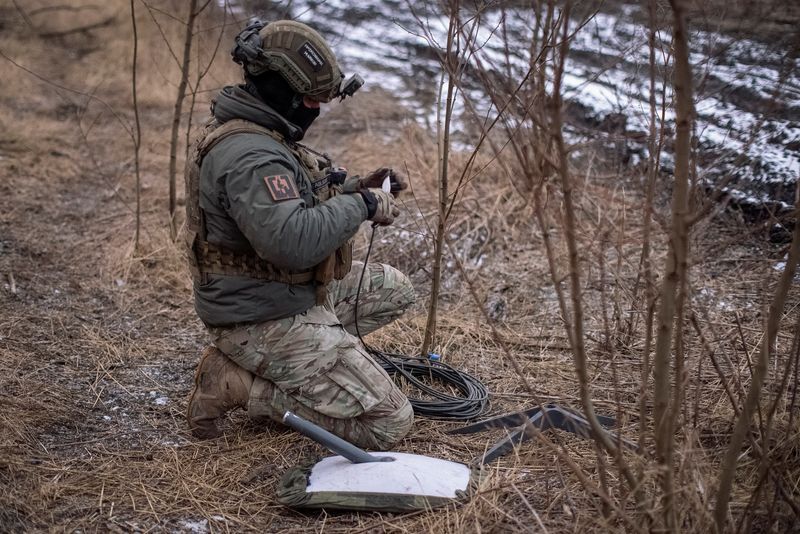
Kyiv reported on Wednesday that commercial satellite provider SpaceX has limited its Starlink internet services across active operational zones, creating severe disruption for Ukrainian drone operations involved in frontline combat and air defense missions. The service restrictions coincide with a sharp deterioration in diplomatic relations between Ukraine and the United States, raising critical questions regarding the security of essential military communications infrastructure dependent on private commercial entities. The operational throttling directly affects Ukrainian military units that rely on low-Earth orbit satellite connections to transmit battlefield telemetry, pilot unmanned aerial vehicles, and maintain early-warning coverage against incoming Russian air strikes.
Key facts
What happened
According to reporting by Reuters, Ukrainian government authorities reported that SpaceX curtailed access to its Starlink satellite broadband network, impairing key unmanned systems deployed for defense and tactical offense. The limits directly hindered the operational capacity of Ukrainian unmanned aerial vehicle (UAV) units, which rely on stable, low-latency satellite links to navigate, execute precision strikes on enemy assets, and provide reconnaissance for mobile air defense batteries.
Military operations along the front line depend heavily on continuous data transmission. Ukrainian drone crews operate remotely piloted platforms that stream real-time high-definition video feeds back to command bunkers and artillery units. When satellite connections are throttled, geofenced, or suddenly interrupted, ground operators experience signal degradation or complete loss of control over the aircraft. This disruption limits the operational radius of suicide drones and target-identification craft, leaving them exposed to enemy electronic warfare counter-measures or forcing them to abort critical combat missions.
The reported restrictions took effect while frontline units were actively engaged in counter-offensive maneuvers and defensive screen operations. While SpaceX did not immediately issue a detailed technical explanation regarding the precise nature of the service modification, past interventions by the corporation have involved geofencing—restricting satellite signal coverage over specific geographic coordinates—or disabling terminal connectivity when devices exceed operational speeds or travel beyond predetermined frontline boundaries.
Why it matters
The integration of commercial satellite technology into modern state warfare has transformed combat operations while introducing significant strategic vulnerabilities. In the ongoing war in Ukraine, low-cost unmanned aerial systems have become central to tactical strategy, replacing or supplementing conventional artillery and reconnaissance aviation. SpaceX's Starlink network, powered by thousands of low-Earth orbit satellites, offers high-bandwidth, low-latency connectivity that traditional geostationary military satellites cannot match. This capability has enabled Ukrainian forces to maintain operational command and overcome Russian electronic warfare systems designed to jam standard radio frequencies.
When a private commercial vendor alters access parameters during active combat, the operational balance on the ground is immediately affected. For air defense crews tasked with protecting population centers and critical infrastructure, loss of continuous network connectivity reduces warning lead times and degrades target tracking capabilities against incoming cruise missiles and loitering munitions. For drone strike squadrons, connectivity limits reduce the accuracy and reach of precision attacks against enemy armor, supply lines, and artillery positions.
Beyond immediate frontline consequences, the incident highlights the geopolitical risks associated with defense dependence on corporate actors. Sovereign states typically maintain direct legal and operational control over their military communication infrastructure. Relying on commercial vendors whose internal corporate policies or executive decisions can restrict service during wartime creates profound policy dilemmas for defense planners worldwide. This event is likely to accelerate efforts by Western nations to establish sovereign military low-Earth orbit constellations governed by statutory military contracts rather than commercial end-user agreements.
The background
Understanding the friction between Kyiv, SpaceX, and political leadership in Washington requires reviewing the evolution of Starlink's role in the war. Immediately following Russia's full-scale invasion of Ukraine in February 2022, Ukrainian government ministers issued urgent public appeals to Elon Musk for satellite internet hardware to replace terrestrial communications destroyed by Russian missile bombardments and cyber operations. SpaceX responded rapidly, shipping tens of thousands of Starlink dishes to Ukraine funded through corporate donations, private fundraising, USAID grants, and European allied governments.
Starlink quickly established itself as the indispensable backbone of Ukraine's battlefield telecommunications network, supporting emergency services, civil infrastructure, mobile command posts, and frontline combat troops. However, friction between SpaceX management and Ukrainian military leaders surfaced as the conflict progressed. In late 2022 and early 2023, reports revealed that SpaceX had restricted Starlink service along disputed frontline areas and near the Crimean peninsula. Musk publicly argued that Starlink terms of service prohibited the commercial technology from being utilized for long-range offensive strike operations, specifically maritime suicide drones targeting the Russian Black Sea Fleet, asserting a desire to prevent escalation into wider global conflict.
To formalize access and remove uncertainty over operational terms, the United States Department of Defense finalized a contract with SpaceX in mid-2023 to procure dedicated Starshield satellite services for the Ukrainian military. This agreement was designed to ensure stable, government-funded connectivity dedicated to defense requirements. Despite this contractual framework, ongoing political debates within the United States Congress regarding supplemental defense funding, diplomatic strategy, and foreign aid allocations have periodically heightened tension between Kyiv and Washington. The latest operational disruption occurs amidst broader diplomatic friction regarding long-term security guarantees, weapons delivery schedules, and strategic alignment between the United States and Ukrainian leadership.
Reaction
Official responses to the reported Starlink service limits remain limited. Neither SpaceX executive leadership nor officials at the U.S. Department of Defense immediately published technical statements confirming or explaining the specific parameters of the network adjustment reported by Kyiv. In prior disputes over service restrictions, SpaceX executives maintained that commercial satellite contracts were intended for defensive logistics, humanitarian aid, and routine broadband access rather than direct offensive weaponization or fire-control integration.
Ukrainian military analysts and defense commentators expressed deep frustration over the disruptions, emphasizing that restricting drone capabilities during active military engagements puts frontline personnel and civilian infrastructure at increased risk. Within international policy circles, defense analysts in Europe and North America are monitoring the situation closely, anticipating discussions in parliamentary committees and defense policy forums regarding corporate governance of military-critical dual-use technologies. National security experts are expected to push for clearer regulatory frameworks governing commercial space providers serving foreign defense partners under U.S. government oversight.
What we don't know yet
Several critical technical and political questions remain unanswered following the initial reports from Ukrainian authorities:
What to watch
Key events and technical indicators in the coming days and weeks will clarify the resolution and long-term consequences of this incident:
This report is based on original reporting published by Reuters journalists Yuliia Dysa and Dan Peleschuk.
How this story was produced
This report was written by The Global Wire newsroom from reporting first published by Yuliia Dysa; Dan Peleschuk. We verify the core facts against the original report, write our own account, and add the background and consequences a short wire item leaves out. Drafting is AI-assisted inside an editor-supervised pipeline, and every story is checked for accuracy of attribution, structure and duplication before it appears — full detail in our AI and funding disclosure.
Spotted an error? Tell us at corrections@horizonglobalnews.com and read our corrections policy or editorial standards.



Reader comments
Loading comments…