

Georgia Theme Park Fatality Ignites Scrutiny Over Roller Coaster Safety Laws
A fatal ejection at a Six Flags park in Georgia has exposed regulatory gaps in fixed-site amusement ride oversight and raised questions about restraint mechanism safety.
By The Global Wire Newsroom · Reported from Jaimie Ding
Link preview · horizonglobalnews.com
Georgia Theme Park Fatality Ignites Scrutiny Over Roller Coaster Safety Laws
A fatal ejection at a Six Flags park in Georgia has exposed regulatory gaps in fixed-site amusement ride oversight and raised questions about restraint mechanism safety.
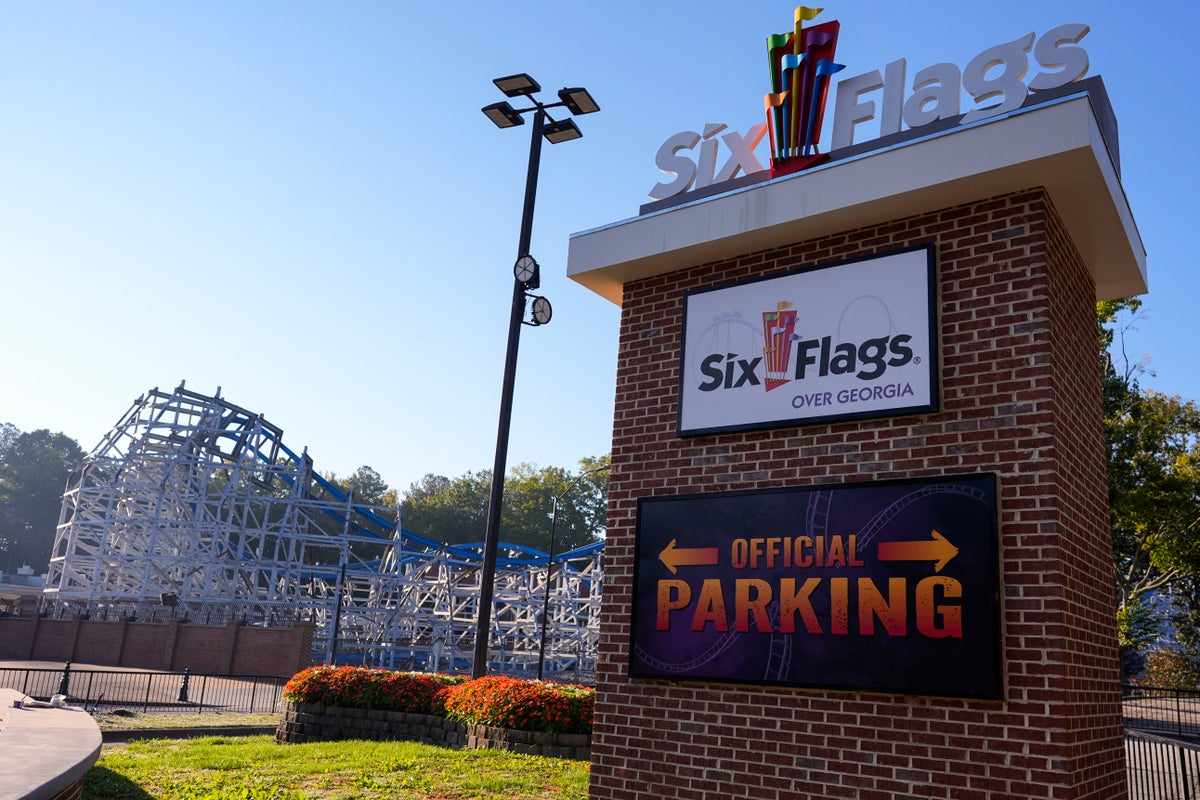
A fatal accident at a Six Flags theme park in Georgia, in which a male guest was thrown to his death from a roller coaster, has renewed intense scrutiny over safety protocols, restraint systems, and regulatory exemptions in the United States amusement park industry. The incident has drawn attention to regulatory loopholes that govern fixed-site thrill rides, where inspection standards and safety enforcement vary across state lines without centralized federal oversight. Authorities and engineering experts have launched investigations to determine how the passenger became dislodged from the vehicle during the ride cycle, while industry observers assess the broader statutory frameworks that govern fixed-site attractions.
Key facts
What happened
The fatal incident occurred when a male rider was ejected from a roller coaster operating at a Six Flags theme park in Georgia, according to reporting by Jaimie Ding. The passenger was thrown from the moving train during the ride cycle, sustaining injuries that proved fatal. Emergency responders and park emergency staff arrived at the scene, but the victim could not be saved.
Following the fatality, park operations on the affected roller coaster were immediately suspended as law enforcement, local emergency management personnel, and state ride safety officials secured the site. Investigators began documenting the scene, reviewing operational dispatch logs, examining mechanical components, and inspecting the ride's physical restraint mechanisms.
Initial efforts focused on evaluating whether the restraint system remained locked during the ride cycle, whether secondary safety devices such as seat belts were engaged, and whether automated electronic sensors functioned correctly prior to dispatch. Engineers and state inspectors were tasked with reviewing the ride's routine maintenance records, recent daily operational checklists, and technician sign-offs to identify any potential mechanical or electrical anomalies prior to the accident.
Why it matters
The fatal ejection strikes at the core of public trust in the amusement park industry, which relies heavily on consumer confidence in engineered safety systems. High-speed roller coasters generate complex physical forces, including positive gravitational loads, negative vertical accelerations (commonly called airtime), and lateral friction forces. To safely contain passengers under these conditions, modern thrill rides utilize engineered restraints—such as hydraulic lap bars, over-the-shoulder harnesses, and secondary lap belts—complemented by computer-monitored sensor arrays that prevent train dispatch unless all restraints register as fully latched.
When a rider is ejected from a coaster train, it indicates a catastrophic breach in the multi-layered safety barrier, whether through mechanical design failure, latch disengagement, electrical sensor fault, improper operator loading procedure, or physical incompatibility between the rider and the restraint envelope.
The event also highlights the legal and economic vulnerabilities facing major regional theme park operators. Operators face substantial financial risk from operational downtime, potential civil litigation, elevated insurance premiums, and reduced attendance following fatal accidents. Beyond the immediate economic consequences for the operator, the incident accentuates the ongoing debate over the lack of uniform national safety standards for permanent thrill rides, exposing how state-by-state regulatory disparities can lead to uneven safety verification procedures across the country.
The background
The governance of amusement park safety in the United States is defined by a historical divide between traveling carnivals and permanent, fixed-site theme parks. Prior to 1981, the Consumer Product Safety Commission (CPSC) exercised broad jurisdiction over all amusement rides. However, in 1981, Congress enacted an amendment to the Consumer Product Safety Act that stripped the CPSC of its authority to inspect or regulate fixed-site rides at permanent amusement parks. This statutory division—frequently referred to by consumer safety advocates as the "roller coaster loophole"—left the CPSC with regulatory authority only over mobile rides used in traveling carnivals and county fairs.
As a result of the 1981 amendment, oversight of permanent theme parks fell entirely to state and municipal governments. This has produced a complex statutory landscape across the United States:
In Georgia, fixed-site amusement park rides are subject to state regulatory codes governed under state labor and safety divisions, which mandate annual inspections and immediate accident reporting for severe injuries or fatalities.
Technical safety standards for the global ride industry are primarily published by ASTM International through its Committee F24 on Amusement Rides and Devices. ASTM F24 standards establish voluntary consensus guidelines for ride design, manufacturing, maintenance, operational procedures, and restraint criteria based on rider acceleration limits. However, ASTM standards only carry legal force when explicitly adopted into state law by individual state legislatures or regulatory boards.
Historical roller coaster ejections in North America have consistently triggered widespread design modifications and operational changes across the industry. For example, following a fatal ejection on a steel roller coaster at Six Flags Over Texas in 2013, the industry saw widespread implementation of redesigned lap bar restraint pads, mandatory secondary seatbelts, strict maximum chest-depth and physical size gauges, and revised operator restraint verification protocols. Similarly, earlier incidents involving ejection hazards led many manufacturers to transition from purely mechanical ratchet lap bars to continuous hydraulic locking systems equipped with redundant dual-cylinder locking pins.
Reaction
Fatal incidents at major amusement parks elicit swift responses from regulatory agencies, industry safety groups, and park management, while placing pressure on political leaders to re-examine existing statutory frameworks.
Following major ride accidents, theme park operators typically issue administrative holds on identical or structurally similar attractions across their regional park portfolios. Management teams coordinate with ride manufacturers—such as major European and American roller coaster engineering firms—to conduct comprehensive structural, electrical, and mechanical audits before re-opening comparable equipment to the public.
Consumer safety advocates and victims' advocacy organizations regularly respond to such tragedies by renewing calls for federal legislation to repeal the 1981 CPSC exemption. Advocates argue that a centralized federal registry for ride-related injuries and mandatory national safety reporting would improve transparency and allow regulators to identify recurring mechanical defects or design flaws across state lines faster.
Industry trade organizations, including the International Association of Amusement Parks and Attractions (IAAPA), emphasize that fixed-site thrill rides remain statistically among the safest forms of public recreation, noting that hundreds of millions of safe rides are taken annually across North America. IAAPA and park operators maintain that state-level regulation combined with ASTM International consensus standards provides flexible, rigorous oversight tailored to technical advancements in ride engineering.
What we don't know yet
Several critical facts surrounding the Georgia incident remain unconfirmed in available public records and early reporting:
Determining these missing elements will require formal forensic teardowns of the ride train, analysis of automated control system event logs, and official investigative findings from state inspectors and independent engineering consultants.
What to watch
In the coming days and months, several key developments will determine the regulatory, legal, and operational outcomes of the incident:
This report incorporates information originally reported by Jaimie Ding.
How this story was produced
This report was written by The Global Wire newsroom from reporting first published by Jaimie Ding. We verify the core facts against the original report, write our own account, and add the background and consequences a short wire item leaves out. Drafting is AI-assisted inside an editor-supervised pipeline, and every story is checked for accuracy of attribution, structure and duplication before it appears — full detail in our AI and funding disclosure.
Spotted an error? Tell us at corrections@horizonglobalnews.com and read our corrections policy or editorial standards.






Reader comments
Loading comments…