

Saudi Organizers Reaffirm 2027 Asian Cup Timelines Following Security Concerns
Preparations for the flagship continental football tournament remain on track across three host cities despite regional drone and missile attacks, organizers confirmed.
By The Global Wire Newsroom · Reported from SECTIONS Saudi organisers say
Link preview · horizonglobalnews.com
Saudi Organizers Reaffirm 2027 Asian Cup Timelines Following Security Concerns
Preparations for the flagship continental football tournament remain on track across three host cities despite regional drone and missile attacks, organizers confirmed.
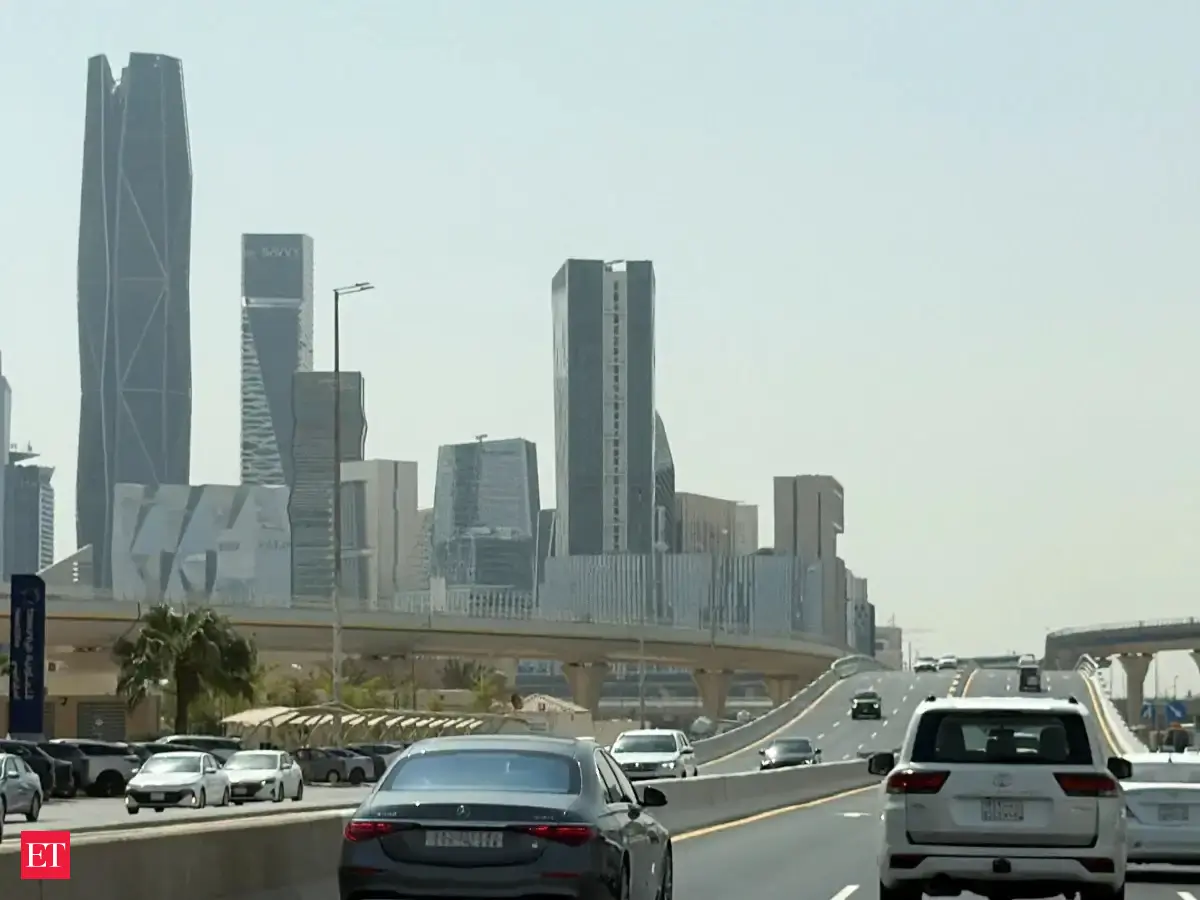
RIYADH — Organizers for the 2027 AFC Asian Cup confirmed on Friday that tournament infrastructure and operational preparations remain firmly on schedule across Saudi Arabia, moving to reassure international football stakeholders following recent cross-border attacks launched by Yemen's Houthi movement. The continental tournament, awarded by the Asian Football Confederation to the kingdom for the first time in its history, is scheduled to stage matches in Riyadh, Jeddah, and Al Khobar in January 2027, serving as a critical operational benchmark for Saudi Arabia's expanding portfolio of global sporting events.
Key facts
What happened
Statements from tournament authorities emerged following renewed cross-border hostilities launched by Yemen-based Houthi militants toward Saudi territory, raising scrutiny over safety protocols for upcoming multinational events. The local organizing committee tasked with delivering the 2027 Asian Cup issued an assessment indicating that core planning cycles, engineering timelines, and administrative milestones have absorbed no delays, according to reporting by SECTIONS.
The reassurance addresses concerns from participating national member associations, logistics partners, and commercial sponsors who have tracked security fluctuations across the Arabian Peninsula. Competition fixtures are slated across three distinct regional corridors: Riyadh in the central Najd region, Jeddah on the western Red Sea coast, and Al Khobar along the Arabian Gulf in the Eastern Province. Each cluster involves dedicated transit links, fan accommodation zones, and training complexes that require rigorous multi-agency coordination between civilian tournament planners and state security forces.
The leadership of the Asian Football Confederation, headed by President Sheikh Salman bin Ibrahim Al Khalifa, has monitored operational readiness closely alongside the Saudi Arabian Football Federation. Officials confirmed that organizational planning continues under established technical working groups, maintaining the target delivery dates for newly built and extensively renovated stadiums without alterations to match dates or venue selections.
Why it matters
Maintaining the timeline and operational integrity of the 2027 Asian Cup carries vast geopolitical, financial, and regulatory implications for Saudi Arabia. The tournament functions as a linchpin in the kingdom’s broader sports governance strategy under the Vision 2030 economic diversification program. Beyond crowning the men's champion of Asia, the competition serves as a full-scale operational rehearsal for Saudi Arabia’s hosting of the FIFA World Cup in 2034, which was awarded following an uncontested bidding process ratified by FIFA’s member associations.
For international sports governing bodies, any disruption or security compromise surrounding a premier tournament shakes institutional confidence in venue safety guarantees. International travel insurance packages, commercial broadcast agreements, and corporate hospitality sales depend directly on predictable physical security environments. When hostilities in Yemen threaten to spill over into sovereign airspace or civilian commercial centers, sovereign host committees face intense pressure from foreign ministries and athletic delegations to demonstrate robust layered defenses.
Furthermore, for the Asian Football Confederation and its 47 member associations, the Asian Cup is the primary revenue-generating competition on the continental calendar. Television distribution rights, commercial tier sponsorships, and gate receipts from the tournament finance continental development programs for the subsequent four-year cycle. Delays, venue reassignments, or lingering travel advisories could depress attendance figures, escalate venue operational insurance premiums, and compress preparation windows for national squads competing in high-profile qualifiers.
The background
Saudi Arabia was formally chosen to host the 2027 Asian Cup at the 33rd AFC Congress held in Manama, Bahrain, in February 2023, after rival bids from India, Iran, Qatar, and Uzbekistan were withdrawn or eliminated during the evaluation process. Although the Saudi national team has won the continental title three times—in 1984, 1988, and 1996—the kingdom had never previously hosted the tournament. The 2019 edition took place in the United Arab Emirates, while the 2023 tournament was relocated to Qatar in early 2024 following China's relinquishment of hosting rights under zero-COVID policy constraints.
To meet AFC hosting criteria, Saudi organizers committed to an expansive venue plan featuring at least eight tournament-grade stadiums across the three host hubs. In Riyadh, infrastructure investments center on the comprehensive refurbishment of the King Fahd International Stadium into an enclosed arena, alongside upgrades to Prince Faisal bin Fahd Sports City and newly commissioned arenas designed to host subsequent major events. In Jeddah, the King Abdullah Sports City complex anchors western fixtures, while Al Khobar in the Eastern Province is slated to feature modernized facilities engineered to accommodate international delegations and corporate hospitality.
However, regional security dynamics have posed a recurring challenge since the escalation of the Yemeni civil war in 2015, when a Saudi-led coalition intervened against Ansar Allah, commonly known as the Houthi movement. In subsequent years, cross-border strikes utilizing ballistic missiles, land-attack cruise missiles, and loitering munitions targeted civilian airports in Abha and Jizan, industrial processing facilities operated by state oil firm Saudi Aramco in Jeddah and Ras Tanura, and military sites in central Riyadh. While a United Nations-brokered truce in April 2022 significantly reduced cross-border operations and led to sustained bilateral talks between Saudi diplomats and Houthi representatives, regional friction linked to wider Middle Eastern conflicts has periodically revived security alerts across vital commercial and maritime transit routes.
Reaction
Diplomatic and sporting bodies in the Gulf region have consistently endorsed Saudi Arabia’s capacity to host major global gatherings despite persistent neighborhood frictions. Officials linked to the organizing apparatus emphasized that Saudi defense systems, reinforced through sovereign airspace monitoring and inter-agency crisis command structures, provide comprehensive protection for civilian infrastructure.
Participating national federations across Asia have refrained from public criticism, opting to maintain dialogue through standard AFC technical committees. Delegations from East Asia, Central Asia, and the ASEAN region typically rely on security briefings compiled by their respective national ministries of foreign affairs alongside periodic AFC inspection reports before issuing logistics directives for traveling staff and athlete delegations. Private commercial underwriters operating in London and Singapore are expected to re-evaluate host risk assessments, adjusting contingent underwriting frameworks based on the intensity of regional defense engagements.
What we don't know yet
The full operational scope of the recent Houthi attacks remains partially unspecified in public disclosures, including precise geographic coordinates, the specific ordnance deployed, and whether defensive interceptions resulted in civilian or commercial property debris near tournament host corridors. The wire reports did not quantify the volume of incoming projectiles nor identify the explicit military or commercial targets involved in the strikes.
It is also unclear whether any member associations have privately formally petitioned the Asian Football Confederation for enhanced sovereign security guarantees, or if independent foreign travel advisories will undergo modifications that could affect fan travel packages. Furthermore, organizers have not detailed whether emergency contingency venues in neighboring Gulf Cooperation Council member states—such as Qatar or the United Arab Emirates—have been established as reserve options should regional airspace disruptions escalate closer to tournament operational phases.
What to watch
Key checkpoints over the coming months will reveal the resilience of the 2027 Asian Cup preparations. The completion schedule for venue construction and major stadium modernizations in Riyadh and Al Khobar will face scheduled physical site inspections from AFC venue operations inspectors, providing public milestones on readiness.
Diplomatic developments surrounding United Nations-mediated talks involving Yemen and regional partners will also demand close observation. Any sustained breakdown in informal de-escalation arrangements between Riyadh and Sanaa could trigger intensified air defense operations, influencing international security alerts. Additionally, the AFC’s executive committee calendar, which includes scheduled delegate gatherings and competition drawing ceremonies, will provide the primary platform for continental officials to formally ratify host security blueprints and confirm final venue allocations.
This report is based on coverage provided by SECTIONS.
How this story was produced
This report was written by The Global Wire newsroom from reporting first published by SECTIONS Saudi organisers say. We verify the core facts against the original report, write our own account, and add the background and consequences a short wire item leaves out. Drafting is AI-assisted inside an editor-supervised pipeline, and every story is checked for accuracy of attribution, structure and duplication before it appears — full detail in our AI and funding disclosure.
Spotted an error? Tell us at corrections@horizonglobalnews.com and read our corrections policy or editorial standards.




Reader comments
Loading comments…