

Brent Crude Hits $110 Threshold as Middle East Risks and Fuel Supply Constraints Mount
Global benchmark crude oil recorded its highest settlement since May, pushed upward by escalating Middle East hostilities and persistent uncertainties surrounding Russian refined fuel exports.
By The Global Wire Newsroom · Reported from en.mercopress.com
Link preview · horizonglobalnews.com
Brent Crude Hits $110 Threshold as Middle East Risks and Fuel Supply Constraints Mount
Global benchmark crude oil recorded its highest settlement since May, pushed upward by escalating Middle East hostilities and persistent uncertainties surrounding Russian refined fuel exports.
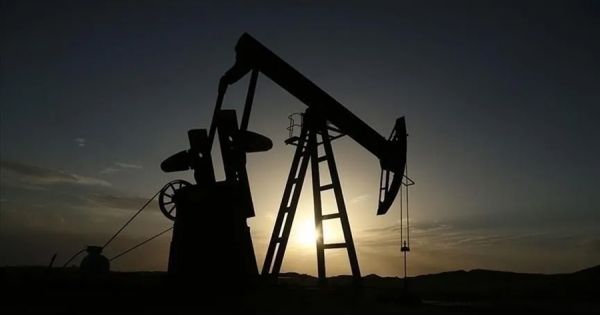
Global crude oil prices crossed a significant psychological and economic threshold at the close of the trading week, as international benchmark Brent briefly hit $110 per barrel before settling at its highest level in nearly five months. The surge, recorded during Friday trade, was driven by growing investor alarm over regional military friction in the Middle East and parallel anxiety concerning the volume of refined petroleum products, particularly diesel, available from Russian export terminals. Brent crude futures settled up 3.7 percent to close at $109.86 per barrel, marking the most expensive settlement price for the international contract since May 19, according to reporting by MercoPress.
Key facts
What happened
Trading desks witnessed an aggressive wave of buying as petroleum contracts opened on Friday, accelerating as morning sessions gave way to afternoon trade in London and New York. The benchmark Brent contract, which serves as the pricing basis for roughly two-thirds of the world's internationally traded physical crude, broke through technical resistance levels to briefly trade at $110 per barrel. By the settlement bell, contracts for Brent crude had advanced by 3.7 percent to settle at $109.86, representing its most elevated closing price since mid-May, according to reporting by MercoPress.
The sharp run-up reflected two intersecting supply anxieties. In the Middle East, an intensification of geopolitical posturing and military confrontations raised concerns that key maritime chokepoints—such as the Strait of Hormuz and the Bab el-Mandeb strait—could face navigational interdictions, or that regional infrastructure could be pulled into wider conflict. Historically, even the perception of elevated risk in these narrow shipping corridors prompts maritime insurers to impose steep war-risk surcharges on oil tankers, raising freight rates and effectively tightening physical availability.
Compounding the primary upstream crude concerns were supply bottlenecks in the refined fuels complex, particularly middle distillates. Energy traders monitored shifting export flows out of the Russian Federation, where operational constraints, domestic supply mandates, and refinery maintenance schedules have introduced significant unpredictability regarding how much finished diesel fuel can reach external maritime markets. Because modern logistics chains and heavy industrial sectors rely heavily on diesel, supply tightness in refined distillates quickly translates into elevated run rates and heavier bidding for the physical crude barrels required by complex merchant refiners.
Why it matters
The return of international crude prices to the $110 neighborhood carries immediate and systemic consequences for the global economy, arriving at a time when monetary authorities in major industrialized economies are attempting to engineer durable reductions in headline inflation. Energy commodities sit upstream of nearly all commercial activity. When crude prices rise, the cost of maritime shipping, freight trucking, agricultural machinery operation, petrochemical synthesis, and domestic passenger transport ascends in lockstep. Sustained prices near $110 per barrel threaten to undo months of disinflationary progress, potentially forcing central banks—including the United States Federal Reserve, the European Central Bank, and the Bank of England—to prolong restrictive monetary policy or pause anticipated benchmark interest rate reductions.
For consuming nations, particularly import-reliant economies across Europe, South Asia, and East Asia, higher petroleum costs directly widen current account deficits and place downward pressure on domestic currencies relative to the United States dollar, the currency in which oil transactions are overwhelmingly denominated. A weakening local currency exacerbates the shock, making dollar-denominated fuel purchases even more expensive in terms of domestic purchasing power. Furthermore, the specific bottleneck surrounding diesel creates localized industrial pain. Diesel is the fundamental fuel of global commerce, powering long-haul freight railways, intercity trucking networks, maritime vessels, and backup electrical generation. In regions where power grids are fragile or natural gas prices remain volatile, a lack of affordable diesel cascades through supply chains, increasing final consumer shelf prices on food, construction materials, and manufactured goods.
The background
To understand the vulnerability of modern energy markets to geopolitical sparks, one must examine the delicate structural balance that has characterized the post-pandemic petroleum trade. Physical oil balances operate on thin margins: global demand hovers near 102 to 103 million barrels per day, meaning an unexpected disruption of even one to two million barrels per day—one to two percent of aggregate world supply—can cause disproportionately large price spikes if global spare production capacity is tight.
Much of the world's swing production capacity resides within the Organization of the Petroleum Exporting Countries and its broader alliance partners, collectively designated as OPEC+. Led by Saudi Arabia and Russia, the alliance has maintained varying degrees of production quotas and voluntary output curbs designed to support pricing and manage inventory levels. When OPEC+ restricts output, it shifts structural control to marginal supply from non-OPEC producers, led predominantly by United States shale fields, alongside expanding offshore developments in Guyana and Brazil. However, while non-OPEC output has continued to expand, United States shale producers have remained under strict investor mandates to emphasize capital discipline, debt repayment, and shareholder returns over aggressive, debt-fueled drilling expansion.
Meanwhile, the refining sector has faced its own structural crunch. Following the realignment of trade flows precipitated by Western sanctions on Russian seaborne petroleum in 2022 and 2023, traditional trade routes were redrawn. Russian crude began flowing in greater volumes toward refiners in India and China, while Europe increasingly turned to imports of refined distillates and crude from the United States, the Middle East, and Asia. Yet refining capacity itself remains constrained globally after years of underinvestment, environmental regulatory closures in North America and Western Europe, and periodic unplanned refinery outages. When Russia imposes domestic export restrictions to cap internal fuel prices or when Russian processing hubs face logistical disruptions, international diesel markets immediately experience heightened spread volatility.
Reaction
While formal policy responses from importing governments were not immediately announced following the Friday close, the rapid ascent of Brent crude past $109.86 per barrel is expected to trigger urgent internal reviews within key ministries and international organizations. In Washington, energy officials and members of the National Economic Council monitor benchmark prices closely, as domestic retail gasoline and diesel prices correlate strongly with global crude benchmarks. When crude trades above $100 per barrel, consumer fuel prices inevitably climb, creating domestic political friction and renewing public debates over domestic drilling permissions, pipeline infrastructure, and the possible deployment of emergency barrels from the Strategic Petroleum Reserve.
Within the broader OPEC+ alliance, leading Gulf producers are expected to face renewed calls from major consuming nations—including India, Japan, and European Union member states—to loosen voluntary production curbs and inject additional physical supply into the commercial market to prevent severe economic deceleration. However, OPEC+ representatives have historically maintained that market surges driven by acute geopolitical premiums do not necessarily reflect structural deficits in physical supply, often preferring to wait for sustained trends before altering collective quota baselines. Airline operators, maritime shipping consortiums, and national trucking associations are similarly expected to recalibrate their operational fuel surcharges in response to the closing price, passing higher operational input costs downstream to commercial freight forwarders and consumers.
What we don't know yet
Several crucial factual elements remain unresolved in the wake of Friday's price move, leaving trading desks and policy analysts with significant blind spots. First, the exact duration and severity of the geopolitical tension in the Middle East cannot be definitively forecast. The reporting confirms that regional escalation is driving supply fears, but it remains unclear whether the frictions will directly impair physical extraction facilities, pipeline networks, or maritime traffic through the Strait of Hormuz, or whether the current movement is purely a geopolitical risk premium factored into futures contracts by financial market participants.
Second, the specific operational status of Russian diesel exports remains opaque. While market participants are reacting to doubts over Russian export capabilities, official data regarding domestic refinery utilization rates, seasonal turnaround timetables, and precise maritime export quotas from Russian ports such as Primorsk and Novorossiysk remain difficult to verify independently due to reduced transparency in official Russian state reporting. Finally, the extent to which physical end-users are experiencing actual delivery shortages, rather than anticipatory price inflation on derivative exchanges, has not yet been demonstrated in reported commercial inventory draws.
What to watch
In the coming trading sessions, several critical indicators and scheduled milestones will signal whether Brent will consolidate above $110 or retrace its recent gains. Market observers will scrutinize daily commercial shipping transit data through regional waterways, watching for any sign of merchant vessel diversions, raised maritime insurance risk premiums, or military interdictions that would confirm physical transit bottlenecks. Any announcement from naval authorities or private maritime security agencies regarding escort operations will provide an immediate read on the physical threat environment.
Concurrently, analysts will monitor official weekly inventory releases from the United States Energy Information Administration and European storage hubs in Amsterdam, Rotterdam, and Antwerp. If commercial crude and distillate inventories register steeper-than-anticipated draws, it will substantiate fears that physical consumption is outpacing available supply. On the policy front, statements from upcoming OPEC+ ministerial committee meetings will serve as a bellwether for institutional willingness to stabilize prices. Investors will also look to Russian government decree announcements regarding fuel export bans, export licenses, and refinery quotas to clarify the true extent of diesel availability in the global market heading into the next fiscal quarter.
Sources
This report is based on original news coverage published by MercoPress detailing Friday's commodity trading session, regional geopolitical escalation in the Middle East, and supply dynamics surrounding Russian diesel exports.
How this story was produced
This report was written by The Global Wire newsroom from reporting first published by en.mercopress.com. We verify the core facts against the original report, write our own account, and add the background and consequences a short wire item leaves out. Drafting is AI-assisted inside an editor-supervised pipeline, and every story is checked for accuracy of attribution, structure and duplication before it appears — full detail in our AI and funding disclosure.
Spotted an error? Tell us at corrections@horizonglobalnews.com and read our corrections policy or editorial standards.





Reader comments
Loading comments…