

Trump Weighs Russian Sanctions Relief in 60-Day Review Amid Surging Energy Costs
Secretary of State Marco Rubio said the White House has initiated a two-month review while temporarily waiving penalties on Russian exports to counter energy market shocks.
By The Global Wire Newsroom · Reported from SECTIONS Marco Rubio says Trump
Link preview · horizonglobalnews.com
Trump Weighs Russian Sanctions Relief in 60-Day Review Amid Surging Energy Costs
Secretary of State Marco Rubio said the White House has initiated a two-month review while temporarily waiving penalties on Russian exports to counter energy market shocks.
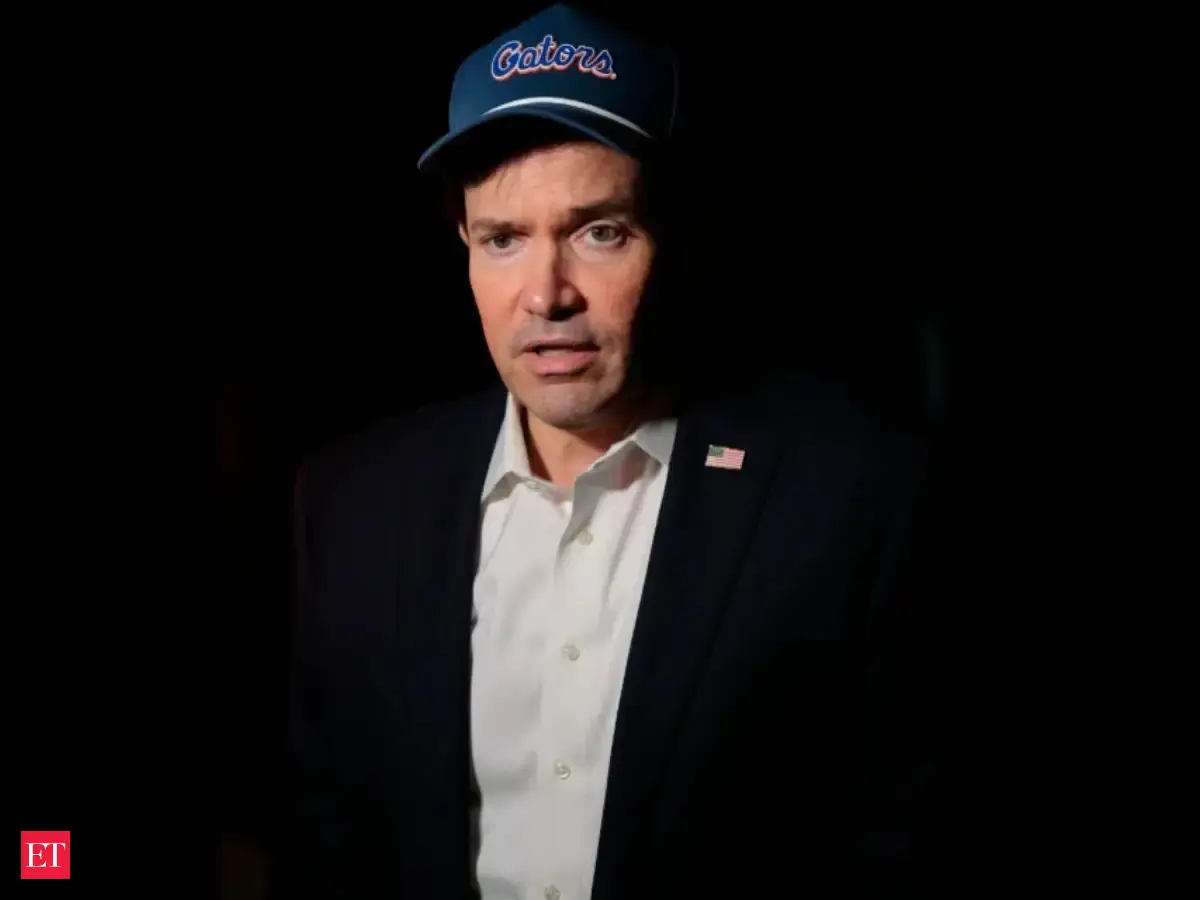
WASHINGTON — The United States has initiated a temporary suspension of certain sanctions and trade tariffs imposed on Russian exports, opening a 60-day evaluation window to measure the domestic and international economic fallout of the penalties, according to statements by Secretary of State Marco Rubio. The policy shift, ordered by President Donald Trump, comes as international crude oil and fuel markets face mounting strain from escalating military conflict involving Iran, creating acute supply pressures that have reverberated through consumer energy prices. The administration's move establishes an interim pause while federal agencies conduct a comprehensive review of existing trade restrictions and national security measures targeting Moscow.
Key facts
What happened
According to reporting by SECTIONS, the Trump administration moved to enact an immediate, short-term suspension of measures that had restricted Russian export goods from accessing global and Western commercial channels. The announcement grants temporary regulatory flexibility on penalties that had accumulated across multiple presidential administrations, particularly following the full-scale escalation of hostilities between Russia and Ukraine.
Addressing the administration's strategic posture, Secretary of State Marco Rubio disclosed that federal authorities will use a period of up to 60 days to conduct a line-by-line examination of how existing sanctions and punitive import tariffs affect market liquidity, supply lines, and domestic inflation. Rubio indicated that the administration seeks clear data on whether these economic tools have achieved their primary national security objectives or whether their secondary market effects have imposed disproportionate costs on American households and industrial supply chains.
Under the directive, federal trade and revenue authorities are instructed to hold enforcement actions on select tariff schedules and cross-border commercial barriers during the evaluation window. The review process is structured to pull assessments from the Department of State, the Department of the Treasury's Office of Foreign Assets Control, the Department of Commerce, and the Department of Energy. Together, these agencies will compile findings on export volumes, trade re-routing through neutral intermediaries, and the domestic economic exposure created by sudden price movements in the petroleum and refining sectors.
Why it matters
The decision to soften measures against Russian commerce, even temporarily, represents a significant recalibration of United States economic statecraft with direct implications for global commodity pricing, commercial shipping, and geopolitical alliances. By introducing a waiver window, the administration is prioritizing immediate stabilization of consumer fuel prices over the continuous enforcement of maximum-pressure economic penalties. When energy prices climb rapidly due to disruptions in Middle Eastern transit corridors or Persian Gulf production facilities, refining margins widen, distribution costs rise across every sector of the freight economy, and central banks face renewed complications in managing headline inflation.
For commercial commodity traders, maritime shippers, and European import desks, the temporary waiver presents operational uncertainty. Multilateral trade rules have spent years adapting to strict compliance regimes designed to isolate Russian hydrocarbons, fertilizers, and base metals. If compliance desks receive temporary clearance to facilitate cargo clearance, transaction processing, and marine insurance underwriting for Russian shipments, the volume of crude and related products entering maritime lanes could rise significantly, tempering price volatility. However, financial institutions often hesitate to facilitate trade under temporary waivers because the legal architecture could revert once the 60-day review period expires, potentially exposing banks to severe regulatory penalties if transactions remain unsettled.
Furthermore, the policy divergence creates friction within the transatlantic alliance. European Union member states have committed to phased embargoes, price-cap mechanisms, and statutory bans on Russian hydrocarbons. An independent United States initiative that suspends tariff barriers or enforcement regimes threatens to disrupt cohesive Western sanctions enforcement, complicating diplomatic negotiations over collective defense obligations and trade policy.
The background
United States sanctions against the Russian Federation represent one of the most complex frameworks of legal restrictions, executive orders, and legislative mandates constructed since the Cold War. Following Russia's 2014 annexation of Crimea and subsequent support for separatist movements in eastern Ukraine, Washington instituted targeted asset freezes and sector-specific investment restrictions under the authority of the International Emergency Economic Powers Act and the National Emergencies Act. These programs were codified and expanded through the Countering America's Adversaries Through Sanctions Act of 2017, a statute passed by overwhelming bipartisan congressional majorities that restricted executive authority to unilaterally lift sanctions without legislative oversight.
Following Moscow's expanded invasion of Ukraine in February 2022, the United States, in coordination with the Group of Seven economies and the European Union, levied unprecedented restrictions. These included freezing approximately $300 billion in Russian central bank reserves held abroad, cutting major Russian lenders off from the SWIFT international messaging system, placing prohibitive tariffs on non-energy Russian goods, and implementing a multilateral $60-per-barrel price cap on seaborne Russian crude oil to curtail Kremlin revenues while keeping barrels moving through global markets.
Concurrently, instability across the Middle East has periodically generated severe counter-shocks to international fuel distribution. Iran sits alongside the Strait of Hormuz, an essential maritime chokepoint through which approximately one-fifth of global petroleum liquids consumption transits on daily tanker runs. When regional hostilities involve Iranian facilities or disrupt maritime safety in surrounding waterways, commercial insurance underwriters cancel war-risk coverage or raise premiums drastically, prompting immediate surges in international Brent and West Texas Intermediate futures benchmarks. Faced with domestic sensitivity to pump prices and broader industrial energy costs, White House administrations historically seek methods to elevate non-OPEC production or remove restrictions on alternative suppliers to prevent supply shocks from triggering economic stagnation.
Reaction
While formal public statements from Capitol Hill and foreign chancelleries were still developing at the time of the initial reports, the move is anticipated to provoke intense debate across multiple political and diplomatic forums. In Congress, lawmakers on the Senate Foreign Relations Committee and the House Foreign Affairs Committee have historically guarded legislative prerogatives regarding economic statecraft, with members of both parties previously resisting attempts to relax curbs on Moscow without verified security concessions in Eastern Europe.
Diplomatic counterparts across Europe, particularly in frontline Baltic states and Poland, are expected to seek immediate clarification through diplomatic channels regarding the precise legal scope of the waivers. European leaders have repeatedly maintained that weakening trade pressure on Russian state enterprises undercuts Ukrainian resistance and signals a fracture in multilateral resolve. Conversely, industrial associations and transport federations facing surging diesel and electricity costs have quietly lobbied Western capitals for targeted regulatory relief to keep energy-intensive manufacturing operations solvent during periods of heightened Middle Eastern instability.
Russian official entities had not issued a formal diplomatic response in the immediate wake of Rubio's remarks. Kremlin officials have routinely labeled Western sanctions illegal under international law while emphasizing their willingness to engage in commercial trade with any counterparty that lifts transactional barriers. Market participants in London, Singapore, and New York responded cautiously, with commodity brokers monitoring trade desks to determine whether clearinghouses will actively clear transactions under the interim terms.
What we don't know yet
Critical legal and operational details of the administration's waiver directive remain undisclosed. The available reporting does not itemize the exact list of export commodities, tariff lines, or corporate entities covered under the temporary suspension. It remains unclear whether the waiver applies solely to hydrocarbons such as crude oil and refined petroleum products, or whether it encompasses agricultural fertilizers, enriched uranium, raw metals like titanium and nickel, or maritime transit services that had faced secondary enforcement.
Additionally, the reporting does not clarify the specific statutory vehicle President Trump utilized to authorize the temporary pause. Bipartisan congressional statutes, particularly provisions embedded within the Countering America's Adversaries Through Sanctions Act, impose procedural hurdles on executive waiver authorities, often requiring a formal national security certification submitted directly to congressional committees. Whether the administration is utilizing national emergency authorities to bypass these provisions, or whether the waiver applies strictly to discretionary presidential tariffs rather than codified financial sanctions, remains an unverified legal question. Finally, the exact milestones and metrics that Rubio's interagency review will rely on to recommend a permanent course of action after the 60-day deadline have not been publicly detailed.
What to watch
The trajectory of the administration's policy will depend on several discrete decision points over the coming eight weeks. First, observers must watch for the publication of formal general licenses or interpretive guidance from the Department of the Treasury's Office of Foreign Assets Control and the Department of Commerce's Bureau of Industry and Security. These regulatory filings will provide the enforceable legal boundaries that corporate compliance officers require before executing trade contracts.
Second, Congressional committees are likely to schedule oversight hearings demanding testimony from Secretary Rubio and Treasury officials regarding the waiver's legality, its strategic impact on the war in Ukraine, and its compliance with federal statutes. Third, developments in the conflict involving Iran will serve as a primary external catalyst: any de-escalation that stabilizes regional shipping corridors could diminish the economic rationale for relaxing Russian measures, whereas widening conflict could prompt the administration to seek an extension beyond the initial 60-day review period. Observers should mark the conclusion of the 60-day window to evaluate whether the White House transitions from a temporary enforcement waiver to formal legislative proposals for lasting sanctions reform.
This account is based on original reporting published by SECTIONS.
How this story was produced
This report was written by The Global Wire newsroom from reporting first published by SECTIONS Marco Rubio says Trump. We verify the core facts against the original report, write our own account, and add the background and consequences a short wire item leaves out. Drafting is AI-assisted inside an editor-supervised pipeline, and every story is checked for accuracy of attribution, structure and duplication before it appears — full detail in our AI and funding disclosure.
Spotted an error? Tell us at corrections@horizonglobalnews.com and read our corrections policy or editorial standards.

Reader comments
Loading comments…