

Republican Nominees Soften Abortion Rhetoric Amid General Election Headwinds
Gubernatorial contenders across competitive states are recalibrating hardline anti-abortion positions as general election voters weigh reproductive policy alongside economic pressures.
By The Global Wire Newsroom · Reported from pbs.org
Link preview · horizonglobalnews.com
Republican Nominees Soften Abortion Rhetoric Amid General Election Headwinds
Gubernatorial contenders across competitive states are recalibrating hardline anti-abortion positions as general election voters weigh reproductive policy alongside economic pressures.
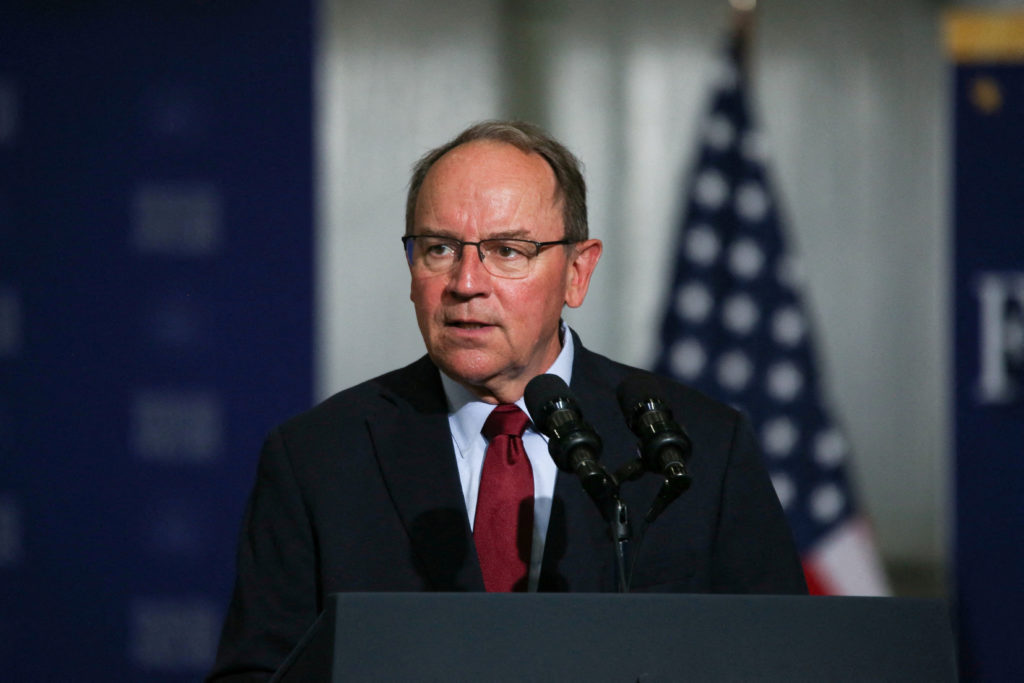
Republican contenders in high-stakes gubernatorial races are actively recalibrating their stances on reproductive rights, distancing themselves from earlier endorsements of near-total abortion bans as the general election season enters its decisive phase. According to reporting by PBS News, multiple conservative nominees have begun moderating their rhetoric or walking back previous pledges to enact stringent statutory prohibitions, signaling that the electoral liability of hardline abortion restrictions remains acute even in a political climate dominated by voter anxieties over inflation, housing costs, and the broader cost of living.
Key facts
What happened
In competitive gubernatorial campaigns nationwide, Republican nominees who initially courted social conservative primary voters with promises of strict reproductive bans are altering their approach for broader general election audiences. As detailed by PBS News, this strategic pivot manifests through several distinct tactics: some candidates have begun explicitly endorsing exceptions for rape, incest, and the life or health of the pregnant person, while others have publicly declared that current state restrictions are sufficient and that they have no intention of pursuing further prohibitions through the state legislature.
In several jurisdictions, nominees have shifted from actively framing abortion restrictions as a flagship policy priority to characterizing the issue as settled law or an matter best determined directly by citizens through state constitutional referendums. This reframing represents a marked contrast with the competitive primary phase of these contests, where candidates frequently sought endorsements from traditional anti-abortion advocacy organizations by pledging to eliminate exceptions or support statutory definitions of fetal personhood beginning at conception.
Democratic campaign operations have responded to this shift by publicizing audio and video recordings of earlier candidate forums, debates, and questionnaire responses. By circulating archival footage from the primary season, opposing strategists seek to convince moderate, suburban, and independent voters that the moderated stances represent tactical political repositioning rather than genuine policy evolution. Meanwhile, anti-abortion advocacy groups within the Republican base have watched these tactical adjustments warily, occasionally issuing public reminders that primary support was predicated on explicit legislative pledges to restrict termination procedures.
Why it matters
The strategic repositioning of gubernatorial candidates carries direct, tangible consequences for healthcare systems, clinical providers, legal practitioners, and millions of patients navigating state-level healthcare policy. Unlike federal legislators, governors possess executive and administrative mechanisms that immediately alter the operational reality of reproductive healthcare. A state governor signs or vetoes statutory bans passed by state assemblies, appoints the executive leadership of state departments of health and medical licensing boards, directs state law enforcement and prosecutorial priorities, and nominates judges to state supreme courts that evaluate state constitutional challenges.
When a gubernatorial candidate modifies a stated position from an outright ban to an endorsement of exceptions or a promise not to alter existing statutory frameworks, that pivot directly affects hospital legal risk assessments, medical training programs, and interstate healthcare networks. In states bordering jurisdictions with total prohibitions, an administration that halts further legislative restrictions provides stability for regional provider networks that are already managing elevated patient inflows from out-of-state clinics.
Furthermore, this strategic retreat carries systemic implications for electoral coalition building. Following the historic volatility of recent election cycles, national strategists from both major parties have treated the governor's mansion as the premier institutional redoubt for policy implementation. If conservative nominees in battleground and split-ticket states conclude that aggressive anti-abortion positions make general election victories unattainable, the broader legislative appetite for sweeping bans within statehouse caucuses may significantly diminish, creating friction between hardline grassroots factions and elected statewide executives.
The background
The current tactical tension traces directly to the U.S. Supreme Court's ruling on June 24, 2022, in Dobbs v. Jackson Women's Health Organization, which formally overturned the landmark precedents established in Roe v. Wade (1973) and Planned Parenthood v. Casey (1992). By eliminating fifty years of federal constitutional protection for abortion access, the high court returned the authority to regulate or prohibit the procedure entirely to individual states. The immediate outcome was a starkly fragmented legal landscape, as trigger bans enacted years earlier snapped into effect across approximately a dozen states, while other legislatures convened special sessions to establish six-week gestational limits or near-total bans.
However, the subsequent electoral outcomes between 2022 and 2025 demonstrated an unexpected divergence between party performance and direct policy referendums. In August 2022, Kansas voters rejected a constitutional amendment that would have removed abortion protections by a margin of 59 percent to 41 percent. Later that year, voters in California, Michigan, and Vermont approved constitutional amendments protecting reproductive autonomy, while Kentucky and Montana voters rejected measures that would have curbed access or penalized clinicians. In November 2023, Ohio voters approved an initiated constitutional amendment establishing an explicit right to make one's own reproductive decisions by a 57 percent majority, overcoming vocal opposition from state Republican officials.
These consistent popular-vote outcomes challenged conventional political assumptions. Prior to Dobbs, conservative candidates routinely relied on anti-abortion positions to turn out base voters during primaries without suffering disproportionate damage among general election moderates, as voters treated Roe v. Wade as an immovable backstop that insulated them from the actual enactment of total bans. With that constitutional backstop dismantled, state-level races assumed unprecedented stakes, converting abstract ideological declarations into concrete policy outcomes with measurable real-world effects.
At the same time, national macroeconomic conditions over recent years—defined by cumulative consumer price increases, elevated interest rates, and housing affordability bottlenecks—created a political cross-current. Polling aggregators consistently show that when voters are asked an unprompted, open-ended question regarding the most critical problem facing the nation, inflation, personal finances, and the economy outrank social issues by wide margins. Republican campaign strategists sought to harness this economic discontent to capture independent voters. However, as the latest gubernatorial races illustrate, the presence of severe economic concerns has not neutralized the salience of reproductive access when voters evaluate individual candidates.
Reaction
While reaction to these campaign shifts varies across jurisdictions, the tactical retreat has drawn scrutinized responses from multiple political sectors. Major Democratic campaign committees, including the Democratic Governors Association (DGA), have framed the walk-backs as disingenuous political maneuvering, deploying dedicated ad spending to emphasize candidates' initial, stricter public statements. Democratic strategists argue that any candidate who previously expressed support for uncompromising bans cannot be trusted to veto restrictive legislation once installed in the governor's office.
Conversely, traditional social conservative advocacy organizations, such as SBA Pro-Life America and state-level family policy councils, have expressed measured frustration over the retreat. Historically, these organizations have argued that Republican candidates win general elections not by downplaying their anti-abortion principles, but by directly defending them with articulate messaging that counters opposition advertising. While leadership within these advocacy groups typically avoids openly repudiating general election nominees for fear of aiding Democratic victories, their grassroots activists have raised concerns that candidate moderation dampens conservative volunteer enthusiasm and donor engagement.
Republican campaign strategists, speaking in analytical forums, have defended the adjustments as a pragmatic alignment with district realities. Strategists point out that a governor must govern an entire state rather than merely the conservative primary base, and that clarifying positions regarding exceptions and feasibility constitutes standard general election message discipline rather than a betrayal of fundamental values.
What we don't know yet
Significant uncertainties remain regarding how effectively these rhetorical recalibrations will insulate Republican gubernatorial candidates on election night. First, public polling presents conflicting signals regarding whether swing voters and suburban women—a demographic widely seen as critical in determining statewide outcomes—will find these revised platforms credible, or whether prior primary statements will remain permanently fixed in voter perceptions.
Second, the available reporting does not quantify the extent to which these modified positions might suppress grassroots turnout among the conservative evangelical base. If social conservative voters feel alienated by their party's nominees stepping back from signature commitments, depressed turnout in non-metropolitan precincts could offset any marginal gains made among moderate suburbanites.
Finally, it remains uncertain how these candidates would actually govern if elected alongside conservative legislative majorities that continue to prioritize anti-abortion measures. The reporting provides no assurances regarding whether a moderate campaign stance would translate into an executive veto against new legislative restrictions, or whether an elected governor would quietly acquiesce to bills passed by their own party's legislative leadership.
What to watch
Over the remaining weeks of the campaign calendar, several concrete developments will determine the ultimate impact of this strategic recalibration:
This account is based on original reporting and campaign analysis published by PBS News.
How this story was produced
This report was written by The Global Wire newsroom from reporting first published by pbs.org. We verify the core facts against the original report, write our own account, and add the background and consequences a short wire item leaves out. Drafting is AI-assisted inside an editor-supervised pipeline, and every story is checked for accuracy of attribution, structure and duplication before it appears — full detail in our AI and funding disclosure.
Spotted an error? Tell us at corrections@horizonglobalnews.com and read our corrections policy or editorial standards.





Reader comments
Loading comments…