

Trump Backs Netanyahu Reelection in Public Appeal to Israeli Voters
A direct endorsement posted to Truth Social triggers friction across the political spectrum as questions emerge over Middle East strategy and foreign policy alignments.
By The Global Wire Newsroom · Reported from David McAfee
Link preview · horizonglobalnews.com
Trump Backs Netanyahu Reelection in Public Appeal to Israeli Voters
A direct endorsement posted to Truth Social triggers friction across the political spectrum as questions emerge over Middle East strategy and foreign policy alignments.
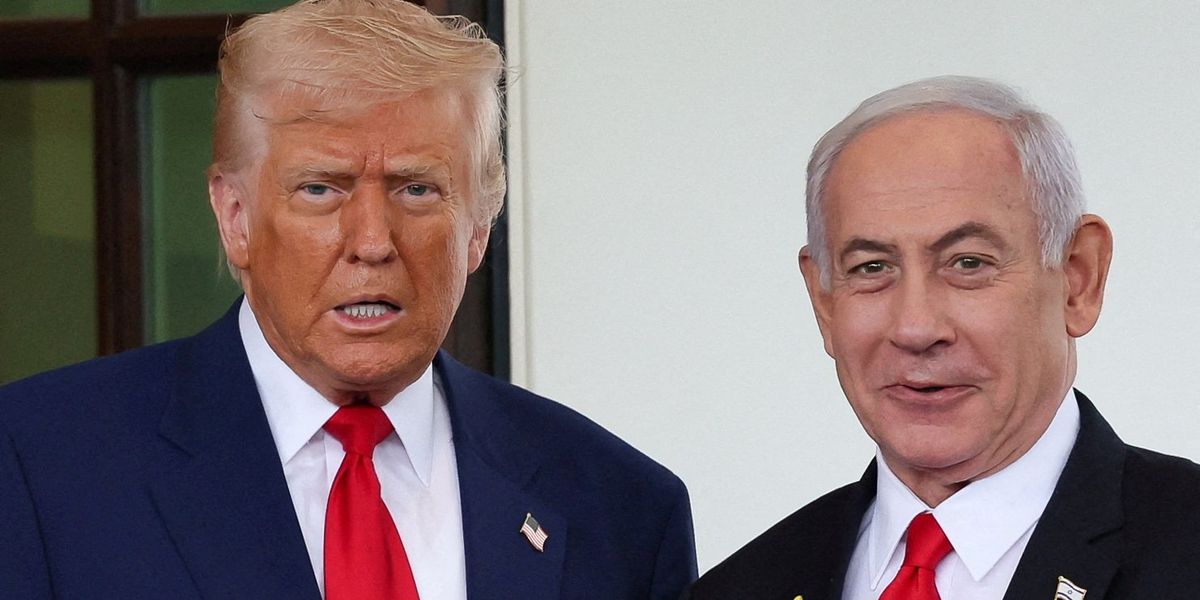
Former U.S. President Donald Trump has issued a formal political endorsement of Israeli Prime Minister Benjamin Netanyahu, publishing an open letter aimed directly at Israeli voters as the long-serving leader navigates domestic political pressure. The statement, released on Trump's social media platform Truth Social, addressed the electorate directly under the heading "To the Great People of Israel" and signaled unequivocal backing for Netanyahu's continued leadership, according to reporting by David McAfee. The overt intervention by a prominent American political figure into Israel's electoral dynamics immediately generated sharp criticism across the political spectrum in the United States, drawing pushback from progressive Democrats, foreign policy analysts, and non-interventionist factions within Trump's own political base.
Key facts
What happened
On Sunday, Trump utilized his Truth Social network to deliver an explicit endorsement of Benjamin Netanyahu, presenting his message in the form of a public epistle directed to the general Israeli public, according to reporting by David McAfee. In the message, framed as a communication "To the Great People of Israel," Trump praised the incumbent prime minister and urged the electorate to return him to office, breaking with traditional diplomatic conventions that generally discourage foreign leaders and presidential candidates from taking explicit sides in the internal democratic contests of allied nations.
While the text of the message published on the platform directly championed Netanyahu's leadership, the public release of the communication produced immediate political repercussions, McAfee reported. Observers and commentators responded with foreboding assessments regarding regional stability, with critics warning that overt political synchronization between Trump and Netanyahu could exacerbate military tensions in the Middle East and harden battle lines across the region. At the same time, the endorsement exposed ideological rifts within the American political landscape, drawing rebuke from progressive and liberal critics as well as skepticism from elements of Trump's own base who advocate for a restrained, non-interventionist foreign policy posture.
Details surrounding the precise timing of the post, any direct coordination between Trump's political team in the United States and Netanyahu's campaign apparatus in Jerusalem, and the full text beyond the initial excerpts remain limited in the initial reporting. Nonetheless, the public distribution of the message immediately reverberated through political circles in both Washington and Jerusalem, highlighting the unusual nature of a direct public endorsement delivered via a domestic social media feed into a foreign national contest.
Why it matters
The formal endorsement carries significant implications for American foreign policy, electoral politics in Israel, and the delicate coalition dynamics of the Middle East. For decades, the bilateral relationship between the United States and Israel was treated by leadership in both nations as a bipartisan consensus issue, shielded to the greatest extent possible from domestic partisan competition. However, direct alignments between specific American political leaders and individual foreign prime ministers risk cementing Israel as a polarizing wedge issue in American domestic politics.
By openly backing Netanyahu, Trump further ties his own political movement to the political survival and tactical decisions of the Likud leader. For voters and policymakers in the United States, this alignment sharpens the contrast between the foreign policy doctrines of mainstream internationalists, progressive Democrats, and the conservative populist wing of the Republican Party. Within the conservative movement itself, the move tests the internal coherence of the "America First" agenda. A vocal segment of Trump's coalition prioritizes military retrenchment, fiscal reduction, and an end to foreign entanglements, arguing that uncritical support for foreign governments contradicts national self-interest. For these voters, an unreserved endorsement of a foreign head of government engaged in complex regional confrontations represents an unwelcome continuation of traditional foreign policy commitments.
For Israel, foreign endorsements carry unpredictable domestic electoral weight. Under Israel's parliamentary system, governments are formed through coalition building among disparate factions in the 120-seat Knesset. While American support is broadly valued by the Israeli public across party lines, direct interventions by foreign figures can occasionally trigger domestic backlashes among centrist and undecided voters who resist external influence over their sovereign voting choices. Furthermore, by identifying closely with one American political pole, Israeli leadership risks alienating the alternative governing party in Washington, potentially complicating future legislative negotiations over annual military assistance, joint defense programs, and bilateral diplomatic coordination.
The background
The political relationship between Donald Trump and Benjamin Netanyahu spans more than a decade and has navigated both historic collaboration and notable personal friction. During Trump's tenure in the White House from 2017 to 2021, the administration enacted a series of major shifts in U.S. Middle East policy that aligned closely with Netanyahu's strategic objectives. On December 6, 2017, Trump recognized Jerusalem as Israel's capital, subsequently moving the U.S. Embassy from Tel Aviv to Jerusalem on May 14, 2018. In March 2019, the administration officially recognized Israeli sovereignty over the Golan Heights, reversing decades of established American diplomatic precedent.
These policy decisions culminated in the signing of the Abraham Accords in late 2020, which facilitated the normalization of diplomatic relations between Israel and several Arab nations, including the United Arab Emirates, Bahrain, Morocco, and Sudan. Throughout this period, Netanyahu frequently featured imagery of himself alongside Trump in domestic campaign billboards across Tel Aviv and Jerusalem to burnish his diplomatic standing among conservative Israeli voters.
However, relations between the two figures grew fraught following the November 2020 U.S. presidential election. Netanyahu released a video congratulating President Joe Biden on his victory, an action that drew public ire from Trump, who voiced frustration in subsequent media interviews regarding what he perceived as a lack of personal loyalty. Despite that period of estrangement, strategic realities and overlapping political constituencies have steadily drawn the two leaders back into public alignment. In July 2024, Netanyahu visited Trump at his Mar-a-Lago estate in Florida during an official visit to the United States, signaling a public rapprochement between their respective political circles.
Meanwhile, broader U.S. policy toward Israel continues to operate within established institutional frameworks, notably a ten-year Memorandum of Understanding signed under the Obama administration in 2016, which guarantees $3.8 billion in annual U.S. military aid through fiscal year 2028. How that aid is structured and monitored has become a central dispute in Congress, further heightening the sensitivity of executive-level political endorsements.
Reaction
The reaction to the Truth Social announcement materialized swiftly on multiple fronts, reflecting the polarized nature of contemporary foreign policy debates, according to David McAfee's reporting. Critics aligned with the Democratic Party condemned the endorsement as an inappropriate and destabilizing interference in a foreign election that risks further undermining regional diplomatic initiatives. Progressive commentators argued that reinforcing Netanyahu's political standing offers tacit approval to hardline policies that complicate long-term stability and conflict resolution across the Palestinian territories and the broader Levant.
Simultaneously, the announcement exposed notable resistance from within conservative and populist ranks. Commentators and activists associated with the "America First" foreign policy school expressed frustration with the overt focus on foreign leadership politics, according to the reporting. These voices, which advocate for reducing foreign commitments and redirecting national attention toward domestic infrastructure, border control, and domestic industrial renewal, viewed the endorsement as a departure from the doctrine of national non-interventionism.
Neither the official office of the Israeli prime minister nor Netanyahu's Likud Party released an immediate, detailed programmatic response to the Truth Social post in the initial hours following publication. Official diplomatic channels in Washington, including the U.S. Department of State, traditionally maintain that electoral outcomes in allied democracies remain the exclusive purview of their sovereign electorates, and formal administration officials are expected to face questions regarding the implications of the endorsement during upcoming press briefings.
What we don't know yet
Several substantive details remain unverified in the wake of the initial report. First, the available summaries of the post omit the full text of the letter beyond the greeting and initial praise, leaving unanswered whether the communication contained specific policy pledges, timelines, or conditions regarding regional security architecture, defense appropriations, or territorial governance.
Second, it remains unconfirmed whether the endorsement was coordinated directly with Netanyahu's political advisors or came as an unsolicited unilateral statement. The presence or absence of prior coordination is a critical distinction that dictates whether the message reflects a structured campaign strategy or an impromptu social media declaration.
Finally, the precise timeline of upcoming Israeli electoral milestones and how the endorsement interacts with potential parliamentary coalition negotiations cannot yet be determined from the available wire copy. Whether the statement will be embraced by Netanyahu's campaign advertising or downplayed by Israeli strategists wary of alienating American Democrats remains an open question that will unfold in the days ahead.
What to watch
In the immediate term, several clear indicators will clarify the political consequences of Trump's endorsement. Observers should watch for official statements or video releases from Prime Minister Netanyahu's Likud campaign apparatus to determine whether the endorsement is integrated into domestic campaign messaging, broadcast on social channels, or displayed on campaign materials throughout Israel.
Domestically in the United States, public responses from influential conservative thought leaders, prominent congressional figures, and political commentators will demonstrate the extent of pushback inside the "America First" movement. Specifically, statements from non-interventionist lawmakers and conservative media hosts will indicate whether the endorsement creates sustained tension within the party or fades into background rhetoric.
Finally, diplomatic reactions from key regional capitals—including Cairo, Amman, Riyadh, and Abu Dhabi—will serve as a barometer for how Middle Eastern governments interpret the evolving political dynamics between American political leadership and the Israeli government, particularly regarding the viability of future regional security frameworks and normalizations.
This report is based on original reporting published by David McAfee.
How this story was produced
This report was written by The Global Wire newsroom from reporting first published by David McAfee. We verify the core facts against the original report, write our own account, and add the background and consequences a short wire item leaves out. Drafting is AI-assisted inside an editor-supervised pipeline, and every story is checked for accuracy of attribution, structure and duplication before it appears — full detail in our AI and funding disclosure.
Spotted an error? Tell us at corrections@horizonglobalnews.com and read our corrections policy or editorial standards.


Reader comments
Loading comments…