

Texas Democrats Target Midterm Gains as Economic and Border Pressures Strain GOP
Democratic organizers in Texas are seeking to capitalize on voter frustration over economic stress and aggressive immigration enforcement ahead of key legislative and statewide contests.
By The Global Wire Newsroom · Reported from SECTIONS Texas Voting Democrats eye breakthrough as Republicans face voter anger AFP
Link preview · horizonglobalnews.com
Texas Democrats Target Midterm Gains as Economic and Border Pressures Strain GOP
Democratic organizers in Texas are seeking to capitalize on voter frustration over economic stress and aggressive immigration enforcement ahead of key legislative and statewide contests.
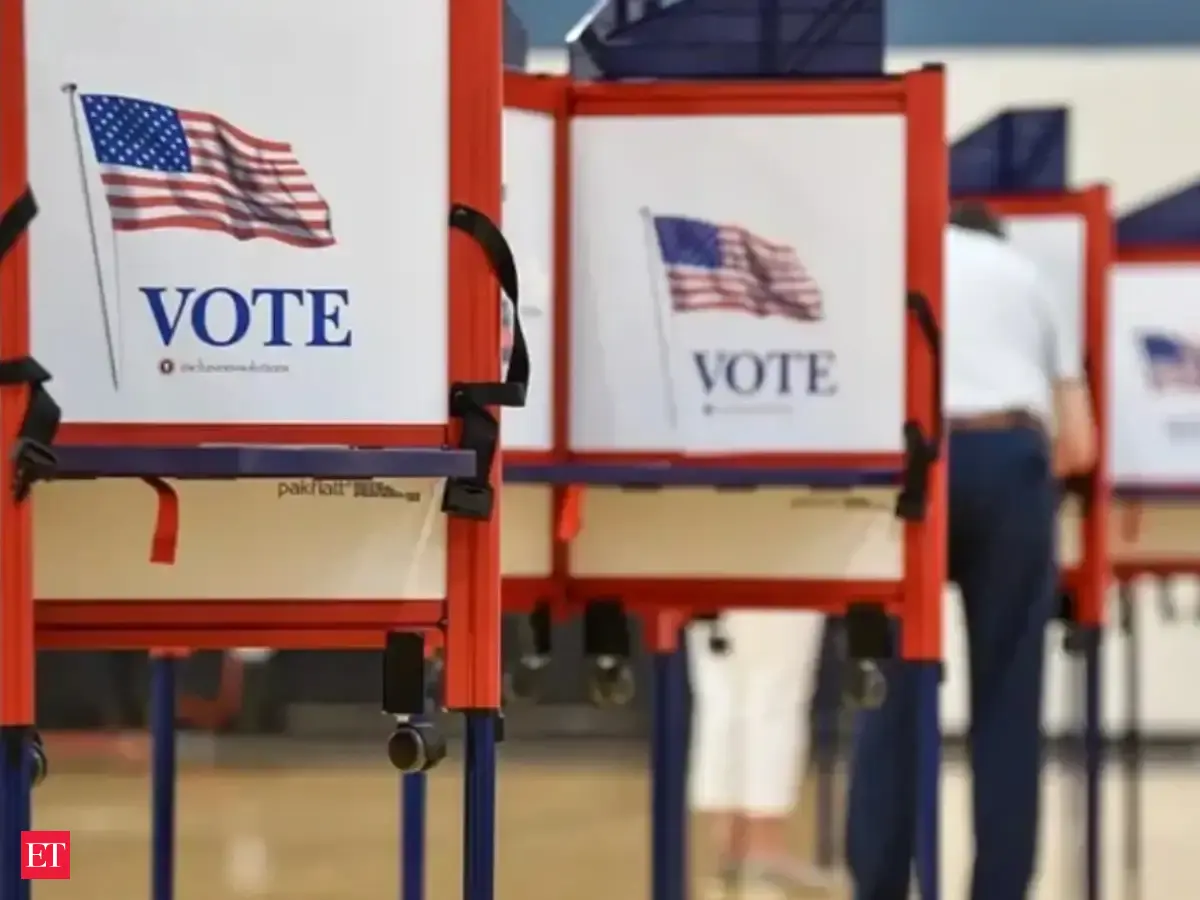
AUSTIN, Texas — Texas Democrats are mounting a coordinated effort to chip away at three decades of uninterrupted Republican control across the state, mobilizing around widespread voter frustration over escalating living costs and controversial state-level immigration policies. Campaign organizers and candidates are concentrating their outreach on key demographic groups, most notably Hispanic communities where shifting allegiances have redefined recent electoral cycles. Among the prominent figures leading this push is state Representative James Talarico, whose campaign approach combines populist economic messaging with calls for cross-party reconciliation, according to reporting by Agence France-Presse.
Key facts
What happened
Democratic organizers across Texas have launched an expanded field operation aimed at mobilizing uncommitted voters ahead of the midterm elections, seizing on what party leaders view as a rare opening to challenge entrenched Republican leadership. According to reporting by Agence France-Presse, the effort focuses intensely on public dissatisfaction with state and federal economic conditions as well as contentious border enforcement measures.
In recent election cycles, the Republican establishment in Austin, spearheaded by Governor Greg Abbott and Lieutenant Governor Dan Patrick, has made immigration enforcement the centerpiece of state governance. While these hardline policies have historically mobilized conservative primary voters, they have also created localized economic strain, civil rights disputes, and diplomatic tension along the international boundary. Field organizers report that working-class Hispanic voters, who bear the daily brunt of increased law enforcement presence alongside high utility rates, property taxes, and grocery bills, are expressing fatigue with partisan deadlock.
Representative James Talarico has stepped forward as a key messenger in this environment, advancing a platform designed to bridge traditional partisan and cultural divides. Talarico, who entered the Texas House of Representatives in 2018 after flipping a Republican-held suburban seat in Williamson County, has built a profile around public education funding, healthcare access, and an explicit rejection of divisive rhetoric. Rather than adopting standard national Democratic messaging, Talarico has framed his appeal around working-class economic relief and a civic vision rooted in community solidarity. His events have sought to attract both disaffected moderate independents and traditional Democratic constituencies who feel neglected by Austin's political establishment.
Why it matters
The political trajectory of Texas carries profound implications for the balance of power across the entire United States. With 40 seats in the U.S. House of Representatives and 40 electoral votes, Texas represents the single largest Republican stronghold in the nation. Any durable crack in that foundation fundamentally alters the arithmetic required to build majorities in Congress and the Electoral College.
Beyond national implications, legislative shifts within the Texas Capitol directly affect the economic and civil governance of 30 million residents. A more competitive legislature or a narrower Republican majority alters the fate of critical state policies, including the allocation of billions of dollars in public school funding, the potential implementation of private school tuition vouchers, infrastructure investments in the fragile state electric grid, and the scope of state-funded border operations. For businesses operating in Texas, state politics dictates regulatory oversight, corporate franchise taxes, and workforce development initiatives.
Furthermore, the voting behavior of Hispanic Texans serves as an essential bellwether for American politics. For decades, demographic projections anticipated that the rapid growth of the Latino population would automatically turn Texas into a competitive or Democratic-leaning battleground. However, significant Republican swings in South Texas and the Rio Grande Valley during recent presidential and midterm cycles upended those assumptions, demonstrating that Latino voters are economically driven and electorally fluid. If Democrats demonstrate that populist economic messaging can reverse those conservative gains, it will provide a strategic blueprint for campaigns across the American Southwest, including Arizona and Nevada.
The background
No Democrat has won a statewide election in Texas since 1994, when figures such as Lieutenant Governor Bob Bullock and Comptroller John Sharp secured reelection. Over the subsequent three decades, the Texas Republican Party consolidated unprecedented authority over the executive branch, both chambers of the Legislature, and every seat on both the Supreme Court of Texas and the Texas Court of Criminal Appeals. This unbroken hegemony has allowed Republican leadership to reshape the state's legal framework through extensive tort reform, strict voter identification statutes, aggressive legislative redistricting, and sweeping restrictions on reproductive healthcare.
Despite this dominance, changing demographics and rapid urbanization have repeatedly spurred Democratic hopes of a competitive resurgence. Substantive shifts occurred during the 2018 midterm cycle, when Beto O'Rourke came within three percentage points of unseating Republican Senator Ted Cruz. That same election saw Democrats capture a dozen state House seats in suburban enclaves surrounding Dallas, Fort Worth, Austin, and Houston, including Talarico's initial legislative victory in House District 52 before redistricting placed him in District 50.
In response to these suburban losses, Republican leadership pivoted to aggressive state-level initiatives designed to energize their rural and small-town base while making targeted inroads into South Texas. The most prominent of these initiatives, Operation Lone Star, was launched in 2021 by Governor Abbott. The multi-billion-dollar operation deployed thousands of Texas National Guard soldiers and Texas Department of Public Safety troopers to the southern border, erected miles of razor wire along the Rio Grande, and instituted state-level trespassing arrests for migrants.
While Operation Lone Star initially helped Republicans gain ground in historically Democratic border counties such as Zapata, Starr, and Cameron, the sustained financial and social costs have triggered pushback. The operation has cost Texas taxpayers more than $11 billion from state coffers, drawing funds away from municipal infrastructure, rural hospitals, and public education. Meanwhile, persistent post-pandemic inflation, escalating homeowners insurance premiums, and soaring property valuations have amplified economic stress across the state's major metropolitan corridors and agrarian regions alike.
Reaction
The Democratic messaging push has drawn predictable pushback from Republican leaders, who maintain that their policies are directly responsible for the state's economic expansion and job creation. Republican strategists routinely point to corporate relocations and business investments in Texas as proof that low-tax, deregulation-focused governance remains popular among voters of all backgrounds. Conservative party officials consistently frame Democratic proposals as out-of-step with the state's prevailing cultural values, predicting that border communities will continue to prioritize strict law enforcement and border security over progressive alternatives.
Democratic leaders and community advocacy organizations, by contrast, argue that Republican officials have grown complacent after thirty years of unchecked power, prioritizing ideological primary battles over the tangible needs of everyday Texans. Grassroots organizers focusing on voter registration in the Rio Grande Valley and the Interstate 35 urban corridor have emphasized that voters frequently express frustration with high energy bills and public school underfunding rather than culture-war grievances. Observers note that formal reactions will sharpen as primary winners finalize their general election campaigns and television advertising expenditures commence across major Texas media markets.
What we don't know yet
Substantial uncertainty surrounds the durability and reach of Democratic gains heading into the election. The reporting leaves several critical questions unanswered, beginning with the exact geographic scope of the Democratic offensive. It remains unclear whether the party has the financial infrastructure to run competitive operations simultaneously across suburban battlegrounds, rural communities, and the Rio Grande Valley, or if resources will be concentrated narrowly in a few vulnerable suburban legislative districts.
Another significant unknown is the precise degree of movement among Hispanic voters. While field reports indicate dissatisfaction with current economic conditions and hardline border enforcement, it is not yet established whether that frustration will translate into votes for Democratic candidates, result in higher abstention rates, or be outweighed by conservative messaging on public safety and cultural issues. Furthermore, the reporting does not quantify the fundraising totals or ground-game metrics of James Talarico's broader statewide outreach, leaving open the question of whether his populist model can be successfully exported outside of central Texas.
What to watch
The trajectory of the contest will depend on several concrete milestones over the coming months:
1. Campaign finance disclosures: Quarterly filings submitted to the Texas Ethics Commission will reveal whether Democratic candidates are securing the substantial capital necessary to compete on expensive broadcast airwaves in major media markets such as Houston, Dallas-Fort Worth, and San Antonio.
2. Legislative and judicial developments: Legal challenges concerning Texas voting procedures, local election administration, and state border statutes—particularly regarding Senate Bill 4, which permits local police to arrest suspected unauthorized border crossers—will dictate the operational environment for voter turnout.
3. Turnout metrics in early voting: Texas typically conducts a two-week early voting window before election day. Daily participation figures across urban counties like Harris, Travis, and Bexar, compared with turnout in rural red bastions and border counties, will offer the earliest quantitative signal of voter enthusiasm.
4. Economic indicators: The trajectory of statewide inflation, residential property tax burdens following legislative relief packages, and utility costs heading into the high-demand summer and winter months will heavily influence independent voters.
This account is based on reporting by Agence France-Presse.
How this story was produced
This report was written by The Global Wire newsroom from reporting first published by SECTIONS Texas Voting Democrats eye breakthrough as Republicans face voter anger AFP. We verify the core facts against the original report, write our own account, and add the background and consequences a short wire item leaves out. Drafting is AI-assisted inside an editor-supervised pipeline, and every story is checked for accuracy of attribution, structure and duplication before it appears — full detail in our AI and funding disclosure.
Spotted an error? Tell us at corrections@horizonglobalnews.com and read our corrections policy or editorial standards.



Reader comments
Loading comments…