

Melbourne Community Health Clinic to Close in St Kilda as Staff Warn of Impact
Staff at a long-standing St Kilda community health clinic have issued urgent warnings over patient welfare as the facility prepares to close its doors in Melbourne this week.
By The Global Wire Newsroom · Reported from Gemma Grant
Link preview · horizonglobalnews.com
Melbourne Community Health Clinic to Close in St Kilda as Staff Warn of Impact
Staff at a long-standing St Kilda community health clinic have issued urgent warnings over patient welfare as the facility prepares to close its doors in Melbourne this week.
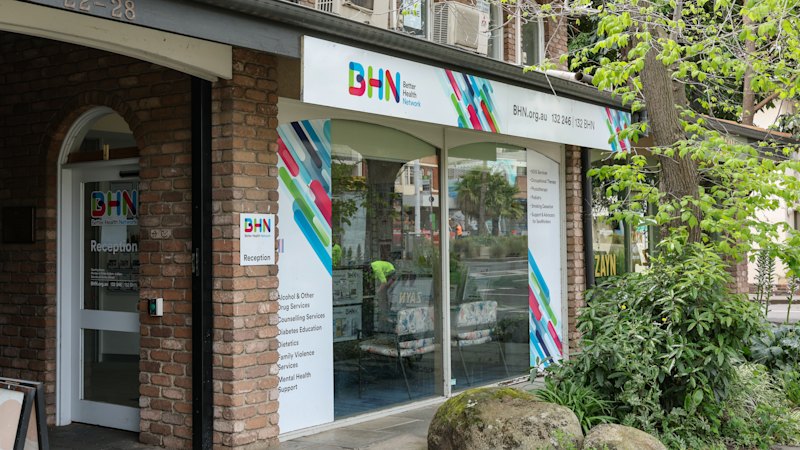
A long-standing community health clinic in the inner-Melbourne suburb of St Kilda is scheduled to shut its doors this week, triggering warnings from clinical personnel that vulnerable patients will be cut off from essential medical and social services. According to reporting published on Oct. 19, 2026, by journalist Gemma Grant, the impending shutdown involves a prominent, established local health and welfare provider that has operated in the neighbourhood for decades. Healthcare workers employed at the facility have expressed severe alarm over the planned cessation of operations, cautioning that the abrupt withdrawal of care risks unravelling long-cultivated clinical relationships in an area characterised by complex public health needs, high housing vulnerability, and entrenched socioeconomic disadvantage.
Key facts
What happened
The planned termination of services at the St Kilda clinic comes amid escalating pressure across Victoria's community health landscape, where primary medical care providers frequently operate on narrow margins while attending to populations with complex medical histories. According to reporting by Gemma Grant, the decision to shutter the facility will take effect within days of the mid-October announcement, leaving staff members and community advocates grappling with the rapid timeline of the closure.
Personnel working inside the St Kilda facility warned that the loss of the clinic threatens to disrupt vital continuity of care for individuals who frequently cannot navigate or afford commercial, private-billing general practice clinics. Staff characterised the move as an erosion of institutional credibility and stability, contending that terminating services dismantles decades of painstakingly established community trust. In primary healthcare settings that cater to marginalised populations, patient engagement relies heavily on sustained personal trust between clinicians and service users; staff raised alarms that patients denied access to their regular practitioners risk falling entirely out of the clinical safety net.
The available reporting notes that the closure is proceeding on a compressed timetable, with operations concluding during the week of Oct. 19, 2026. While the report highlights the acute distress and warnings articulated by frontline clinical staff, the operational documentation does not detail whether clinical records, chronic disease treatment plans, or ongoing pharmacotherapy programs will be directly transferred to neighbouring medical facilities, or whether staff will be redeployed within the organisation's broader service footprint.
Why it matters
The sudden loss of a community medical clinic carries immediate, compounding ramifications for patients, local hospital networks, and public health policy. In Australia's mixed healthcare system, community health centres function as the primary defence against avoidable emergency department presentations. When primary care clinics catering to socioeconomically disadvantaged cohorts close, patients managing unstable chronic ailments—such as type 2 diabetes, cardiovascular disease, severe asthma, and blood-borne viruses—routinely experience interruptions in maintenance medication and clinical monitoring. Without routine primary oversight, preventable decompensation often forces these patients into acute tertiary hospital emergency departments, such as The Alfred Hospital situated nearby on Commercial Road in Melbourne. Emergency presentations place significantly higher financial and logistical strain on Victoria's public hospital system than routine general practice consultations funded through Medicare and state community health grants.
Furthermore, community clinics in urban centres like St Kilda provide critical low-barrier services, including wound care, sexual health screening, mental health triage, and opioid pharmacotherapy dispensing or prescribing. Mainstream commercial general practices in Victoria increasingly operate under mixed-billing models, requiring patients to pay private out-of-pocket gap fees that commonly range between 30 and 50 Australian dollars above the standard Medicare rebate. For low-income individuals, pension recipients, unhoused residents, and people with substance dependencies, these financial barriers make mainstream private clinics inaccessible. Closing a dedicated community clinic effectively removes a bulk-billing access point, increasing the risk of unmanaged infections, untreated psychological crises, and preventable mortality in the surrounding municipality.
The background
Community health centres in Victoria trace their historical origin to the Whitlam federal government's Community Health Program, launched in 1973 to fund multidisciplinary, community-controlled health services across disadvantaged urban and regional areas. Over the subsequent half-century, Victoria developed an extensive network of registered community health organisations, distinctive in their governance and holistic delivery models compared to standard private general practices. Unlike conventional medical clinics that rely almost exclusively on fee-for-service billings through Medicare—which was introduced in 1984 under the Hawke federal government—Victorian community health centres historically combine commonwealth Medicare billing with direct block funding from the Victorian Department of Health. This dual funding stream was explicitly designed to support multidisciplinary care teams, encompassing general practitioners, community nurses, allied health specialists, alcohol and other drug counsellors, and social workers.
Geographically, St Kilda—situated within the City of Port Phillip local government area—occupies a unique place in Melbourne's social and public health history. Since the mid-twentieth century, the suburb has been home to a diverse demographic mix, alongside a visible population of individuals experiencing rough sleeping, rooming house tenancy, psychiatric illness, and substance addiction. The area was also Victoria's primary commercial street sex work precinct for decades prior to the enactment of the Sex Work Decriminalisation Act 2022, which transitioned sex work into standard occupational health and safety frameworks. In response to these complex social realities, dedicated welfare, harm reduction, and health entities established deep operational roots in St Kilda, including community health clinics, needle and syringe programs, and outreach medical vans.
In recent years, however, community health organisations across Victoria have encountered systemic financial strain. Operating costs, clinical wage awards, professional indemnity insurance, and medical overhead expenses have grown substantially faster than indexation rates for commonwealth Medicare rebates and state government program grants. Although the federal Albanese government implemented an expanded triple bulk-billing incentive in November 2023 for concession cardholders and children under 16, community health providers have continued to report acute balance sheet pressures. Mergers, consolidation, and service rationalisation have become widespread throughout metropolitan Melbourne, as non-profit boards seek operational scale to absorb escalating deficits. In some cases, structural reorganisations have resulted in the consolidation of smaller neighbourhood sites into larger regional hubs, often at the expense of local geographic accessibility.
Reaction
Reaction to the closure announcement has been characterised by sharp internal distress and severe warnings from clinical staff members on the ground. Personnel directly affiliated with the St Kilda clinic voiced strong condemnation of the decision, stressing that decades of institutional trust established with some of Melbourne's most vulnerable service users are being dismantled in a matter of days. Practitioners expressed particular concern that the unique cultural safety and relational bonds built within the clinic cannot be replicated by simply directing patients to generic external providers.
External institutional responses remain forthcoming. Community legal centres, local homelessness advocacy bodies, and health union representatives—such as the Australian Nursing and Midwifery Federation and the Victorian Allied Health Professionals Association—typically challenge abrupt clinic contractions, often calling on state health authorities to intervene with emergency bridge funding. Local municipal authorities in the City of Port Phillip have historically raised formal concerns when primary health services in the area face contraction, given the direct impact on council-supported homelessness and social inclusion initiatives. Formal statements from Victorian state parliamentarians representing the Albert Park and Southern Metropolitan electorates, as well as the Victorian Minister for Health, are expected as the full ramifications of the clinic's shutdown become public.
What we don't know yet
Significant operational and governance details surrounding the closure remain unaddressed in the available reporting. Gemma Grant's initial report identifies the facility as the St Kilda clinic of an established community organisation, but the formal corporate identity of the governing entity and the exact administrative rationale behind the decision have not been disclosed. It remains unknown whether the shutdown stems from an unresolvable operating deficit, the expiration or non-renewal of a property lease, severe clinical staffing shortages, or a broader organisational strategy to consolidate primary health services at an alternative campus outside the suburb.
Additionally, the reporting does not clarify the precise scope of patient services impacted, such as the total registered client caseload, the number of active general practitioners and nurses affected, or whether specialised clinical programs like opioid dependency pharmacotherapy and youth health clinics are included in the termination. Crucially, the mechanics of the transition plan—specifically where existing patient medical records will be transferred and whether alternative transport assistance or transitional outreach will be provided to vulnerable patients—remain completely unverified.
What to watch
In the immediate aftermath of the closure, observers should monitor whether the parent organisation or the Victorian Department of Health issues a comprehensive patient management protocol to ensure continuity of prescribing and medical care. A key indicator of whether the disruption can be mitigated will be whether nearby medical providers—such as adjacent bulk-billing community clinics, mobile outreach services, or regional health networks—receive emergency state funding allocations to absorb the displaced client volume.
Furthermore, community campaigns and potential industrial action represent critical milestones to watch. Healthcare unions and welfare advocacy coalitions frequently petition state and federal parliamentary representatives to prevent primary care closures, meaning parliamentary questions or budget inquiries could emerge in the Victorian Legislative Assembly. Finally, local public health surveillance and emergency presentation data from The Alfred Hospital will provide a tangible metric in the coming quarters to assess whether closing the St Kilda clinic drives an increase in avoidable hospital admissions and emergency department bottlenecks across inner-south Melbourne.
This account is based on original reporting published on Oct. 19, 2026, by Gemma Grant.
How this story was produced
This report was written by The Global Wire newsroom from reporting first published by Gemma Grant. We verify the core facts against the original report, write our own account, and add the background and consequences a short wire item leaves out. Drafting is AI-assisted inside an editor-supervised pipeline, and every story is checked for accuracy of attribution, structure and duplication before it appears — full detail in our AI and funding disclosure.
Spotted an error? Tell us at corrections@horizonglobalnews.com and read our corrections policy or editorial standards.






Reader comments
Loading comments…