

Russian Intelligence Claims US Investigating Alleged Ukraine-Cartel Drone Links
Russia's Foreign Intelligence Service asserts Washington is examining whether Mexican cartels sent operatives to Ukraine for unmanned aerial systems training.
By The Global Wire Newsroom · Reported from tass.com
Link preview · horizonglobalnews.com
Russian Intelligence Claims US Investigating Alleged Ukraine-Cartel Drone Links
Russia's Foreign Intelligence Service asserts Washington is examining whether Mexican cartels sent operatives to Ukraine for unmanned aerial systems training.

Russia's Foreign Intelligence Service announced that United States authorities have opened an inquiry into purported operational links between Ukraine and Mexican transnational narcotics cartels, claiming criminal syndicates deployed personnel to Ukrainian territory to gain tactical instruction in assembling and piloting combat drones. The allegation, made public by Moscow's external espionage agency without corroborating documentary material or confirmation from officials in Washington, Kyiv, or Mexico City, asserts that Mexican syndicates are actively leveraging the Eastern European battlefield to acquire advanced small-unmanned-aerial-system (UAS) capabilities for domestic criminal operations.
Key facts
What happened
According to an official communique issued by the Russian Foreign Intelligence Service, known by the Russian acronym SVR, United States intelligence and investigative agencies have initiated a review into alleged connections between Ukrainian entities and Mexican organized crime networks. The SVR asserted that Mexican criminal groups orchestrated trips for their operatives to travel to Ukraine, where they allegedly received direct field instruction in both the technical manufacturing of unmanned systems and their operational use on the battlefield.
As reported by Russian state news agency TASS, the intelligence agency contended that these operatives sought specialized training in modifying commercial drones for lethal operations, specifically the integration of improvised explosive devices, electronic counter-countermeasures, and first-person-view (FPV) flight profiles. Russian officials framed the purported American inquiry as an indication of growing alarm within Washington regarding the proliferation of tactical battlefield technologies outside the European theater.
The SVR statement did not specify the operational dates of these alleged training sessions, the flight transit routes through which operatives would have reached Ukraine during an active conflict where commercial airspace remains fully shut, nor which specific Ukrainian military, security, or private elements purportedly conducted the training. Similarly, the Russian agency did not name specific Mexican syndicates, though Mexican criminal enterprises have maintained active drone modification cells within Latin America for several years.
Neither the United States government nor Ukrainian officials confirmed the existence of any formal probe or cross-border network matching the SVR's description. Independent verification of the Russian intelligence release has not been established through third-party open-source intelligence or intergovernmental law enforcement channels.
Why it matters
Allegations linking the conflict in Ukraine to the Western Hemisphere's narcotics crisis strike at a particularly sensitive fault line in United States domestic and foreign policy. United States assistance to Ukraine has been an intense subject of legislative debate on Capitol Hill, where oversight bodies, including the Offices of the Inspector General for the Department of Defense, Department of State, and United States Agency for International Development (USAID), maintain strict monitoring protocols designed to prevent the diversion of US-supplied equipment and specialized technical know-how.
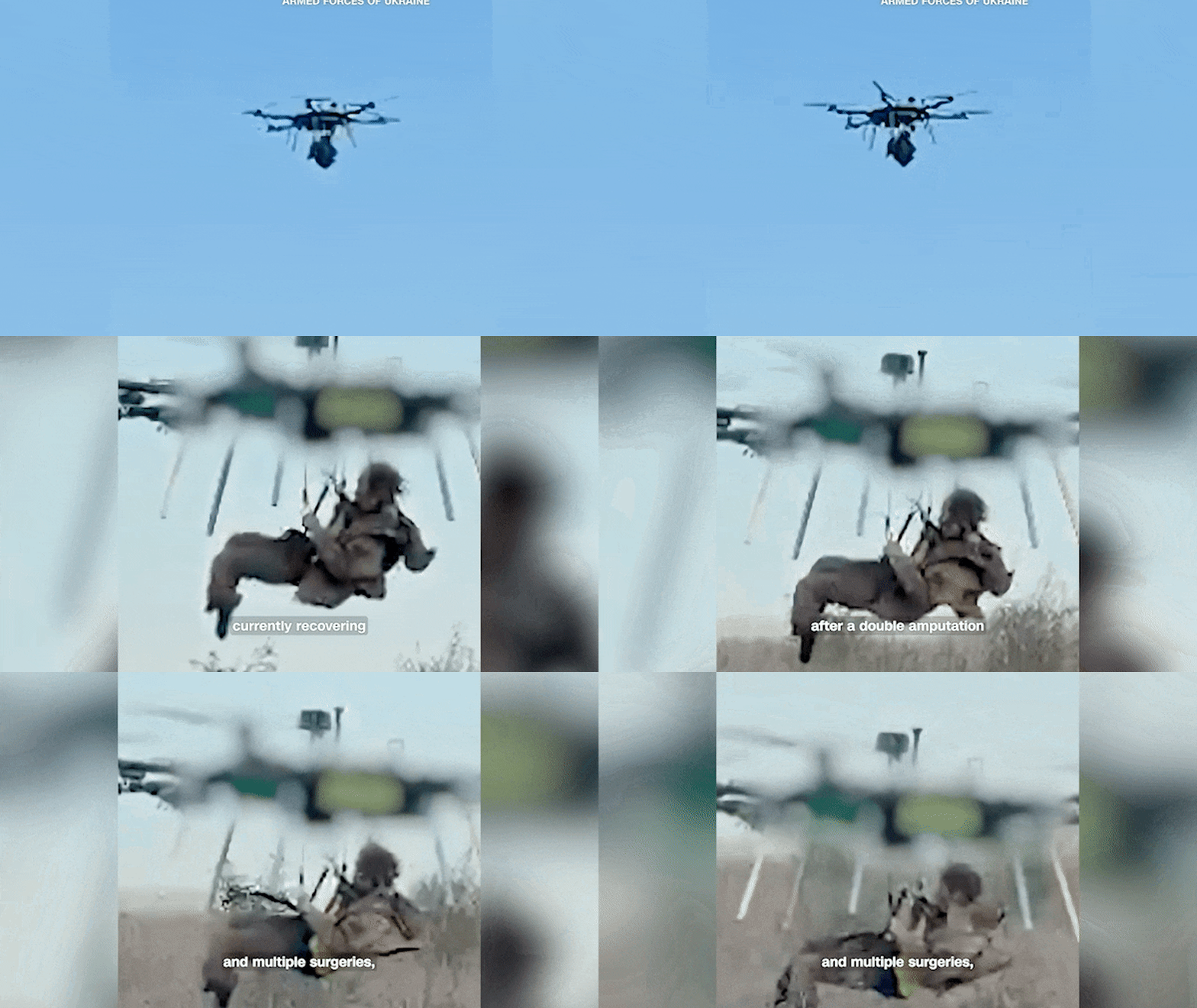
If transnational cartels were to access the rapid innovations in small-drone warfare developed along the 1,000-kilometer front line in Ukraine, the tactical consequences for North American security would be severe. Mexican law enforcement and military personnel in states such as Michoacán, Jalisco, and Guerrero have faced escalating threats from commercial quadcopters equipped with release mechanisms dropping improvised ordnance. However, the adoption of Ukrainian-style FPV kamikaze drones—which can maneuver at speeds exceeding 100 kilometers per hour into fortified vehicles or interior structures—would drastically alter the asymmetry between criminal syndicates and domestic security forces. By framing this threat as an active concern under US federal investigation, Russian external communications directly target Western public concerns regarding border security, cartel lethality, and accountability for foreign security aid.
Furthermore, assertions of this nature influence bilateral diplomacy between Washington and Mexico City. The bilateral security apparatus, formalized through frameworks such as the Bicentennial Framework for Security, Public Health, and Safe Communities established in 2021, already contends with deep friction over synthetic opioid interdiction and arms trafficking. Accusations that conflict-zone tactical expertise is filtering directly into Mexican cartel ranks compound institutional anxieties on both sides of the United States southern border.
The background
The Russian Foreign Intelligence Service, established in December 1991 following the dissolution of the Soviet KGB and headquartered in the Yasenevo District of Moscow, has systematically utilized public press statements to advance geopolitical objectives and counter Western narratives since Russia launched its full-scale invasion of Ukraine in February 2022. The agency, led by Director Sergey Naryshkin, frequently issues unclassified public bulletins alleging Western malfeasance, covert operations, or vulnerabilities in allied support for Ukraine. Western intelligence assessments, including those published by the US Director of National Intelligence and European cybersecurity entities, have categorized many of these public disclosures as components of Moscow's broader information operations apparatus designed to fracture allied consensus.
Concurrently, the rapid militarization of commercial drone technology has fundamentally altered modern combat. Since 2022, Ukrainian and Russian armed forces have pioneered the mass manufacture, algorithmic targeting, and low-cost adaptation of civilian FPV drones, deploying tens of thousands of units monthly. Ukrainian domestic production programs, supported by private tech ventures under government initiatives such as the "Army of Drones," have trained tens of thousands of drone operators across standardized military curricula. Western intelligence and defense analysts have monitored the risk that these technical skills, once widespread, could migrate into global illicit networks.
In Mexico, organized crime syndicates have developed indigenous drone capabilities entirely independent of European combat developments. Mexican federal authorities first documented cartel drone attacks in late 2017 in Salamanca, Guanajuato. By 2020, federal security forces recovered consumer drones modified with plastic explosives, shrapnel, and remote detonators operated by the Jalisco New Generation Cartel in clashes with rival groups and state forces in Michoacán. The Mexican armed forces (SEDENA) subsequently deployed dedicated anti-drone electronic jamming systems along critical corridors in western Mexico. Historically, cartels have recruited foreign military expertise—most notably the foundational members of Los Zetas, who deserted from Mexican elite special forces units in the late 1990s, as well as foreign mercenaries from Central and South America—making claims of foreign training tactically plausible to broad audiences, even when lacking verifiable substantiation.
Reaction
Official reaction to the Russian intelligence agency's announcement followed established diplomatic lines. While the SVR published the announcement via state-run domestic media, official government channels in the United States, including the Department of Justice, the Federal Bureau of Investigation, and the National Security Council, did not issue any formal acknowledgment or substantiation of the purported inquiry.
Ukrainian officials did not formally respond to the specific SVR release, consistent with Kyiv's policy of generally declining to comment directly on unsubstantiated statements released by Moscow's intelligence services. Historically, Ukrainian military spokespersons and the Ministry of Foreign Affairs have characterized similar claims—such as earlier Russian assertions that Western weapons delivered to Ukraine were being systematically resold to criminal cartels or Middle Eastern militants—as fabrications intended to obstruct foreign defense appropriations.
Mexican federal officials, including representatives from the Secretariat of National Defense (SEDENA) and the Office of the President, have historically avoided engaging with foreign intelligence statements regarding cartel overseas operations unless formal judicial notifications are transmitted through established diplomatic or Interpol channels.
What we don't know yet
Significant gaps remain surrounding the assertions put forward by the Russian Foreign Intelligence Service. The public release provided no verifiable details regarding the identities, numbers, or organizational affiliations of the alleged Mexican cartel operatives. Crucially, the statement did not establish the logistical mechanism by which individuals tied to Mexican narcotics syndicates would have entered Ukraine, a sovereign territory subjected to strict martial law, mandatory identity screening, and international border controls managed by Ukrainian State Border Guard services and neighboring European Union nations.
Moreover, the agency offered no evidence indicating which specific United States intelligence or law enforcement agencies—such as the Drug Enforcement Administration (DEA), Homeland Security Investigations (HSI), or the Central Intelligence Agency (CIA)—are conducting the alleged investigation, nor did it disclose the internal bureaucratic level at which such an inquiry exists. Without independent corroboration, documented travel itineraries, intercepted communications, or arrest records, it is impossible to verify whether the reported American inquiry represents an active federal case, an unvetted raw intelligence tip, or a narrative manufactured entirely for psychological and diplomatic leverage.
What to watch
The immediate focus will center on whether any United States executive branch official or congressional leader addresses the claim during open committee hearings. Key oversight bodies, such as the United States House Committee on Foreign Affairs, the Senate Foreign Relations Committee, and the House Permanent Select Committee on Intelligence, regularly interrogate agency officials regarding foreign weapons proliferation and oversight mechanisms; any mention of Mexican cartel links in these forums would provide the first Western corroboration of an active investigation.
Analysts will also observe cross-border security releases from the United States Northern Command (NORTHCOM) and Mexican federal security briefings for references to qualitative shifts in cartel drone tactics. Should law enforcement within Mexico recover consumer drones bearing assembly patterns, frequency-hopping hardware, or specialized munition release mechanisms distinctive to the Russo-Ukrainian theater, it would alter the credibility assessment of foreign technical transfer.
Finally, observers of international information warfare will track whether the narrative is amplified through state-affiliated media networks across Latin America and North America in subsequent diplomatic engagements, particularly surrounding international summits and debates over sovereign security assistance.
This account is based on original reporting by the Russian state news agency TASS.
How this story was produced
This report was written by The Global Wire newsroom from reporting first published by tass.com. We verify the core facts against the original report, write our own account, and add the background and consequences a short wire item leaves out. Drafting is AI-assisted inside an editor-supervised pipeline, and every story is checked for accuracy of attribution, structure and duplication before it appears — full detail in our AI and funding disclosure.
Spotted an error? Tell us at corrections@horizonglobalnews.com and read our corrections policy or editorial standards.



Reader comments
Loading comments…