

English Football Regulator Asserts Legal Authority to Force Club Sales
The head of England's independent football regulator says the body can compel club owners to sell, with potential oversight pending for Manchester City.
By The Global Wire Newsroom · Reported from Lori Ewing
Link preview · horizonglobalnews.com
English Football Regulator Asserts Legal Authority to Force Club Sales
The head of England's independent football regulator says the body can compel club owners to sell, with potential oversight pending for Manchester City.
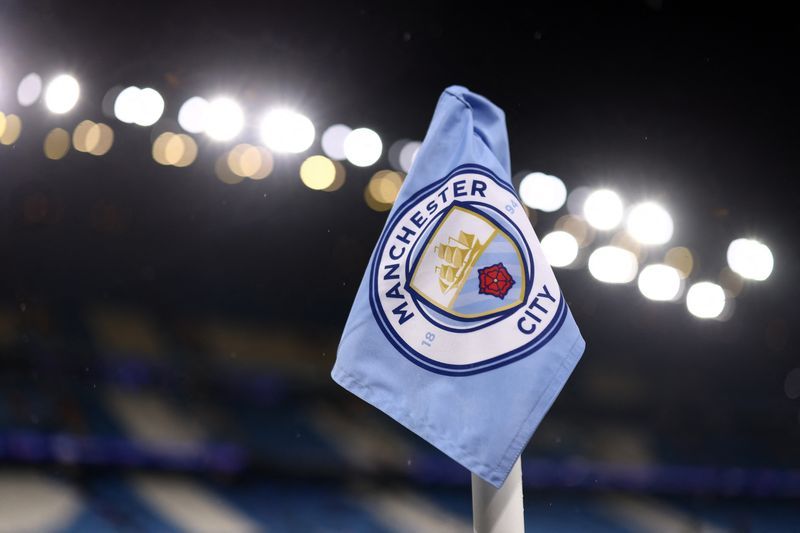
England's newly created independent football regulator holds the statutory authority to force club owners to divest their holdings and could initiate an inquiry into Manchester City once the club's legal challenge against a sweeping financial verdict concludes, according to David Kogan, the regulatory body's chair. The assertion underscores the far-reaching legal powers granted to the state-backed watchdog to protect the governance and financial stability of the English game, signaling that even the sport's wealthiest and most decorated clubs remain subject to outside administrative intervention.
Key facts
What happened
Speaking on the operational scope of the regulatory framework, Kogan clarified the extent of the authority granted to his office, specifically addressing questions regarding club ownership and compliance. He stated that the regulator wields the explicit legal mandate to compel team owners to relinquish control if they fail to meet statutory licensing standards or severely undermine the integrity and sustainability of a football club.
Addressing the specific circumstances surrounding Manchester City, Kogan explained that the watchdog is monitoring the situation but will not intervene prematurely while formal league adjudication is underway. Manchester City is actively contesting an independent commission verdict that sustained 114 charges against the club for alleged historical breaches of Premier League financial rules. Kogan indicated that once the club's appellate process reaches a definitive conclusion within the Premier League's judicial structure, the regulatory body could step in to review the findings and decide whether separate statutory action is warranted.
The regulatory structure does not replace initial league disciplinary bodies but operates as a supervisory authority over club licensing. Under the governing legislation, every club competing in the Premier League, Championship, League One, League Two, and National League must obtain and maintain an operating license. If an owner is deemed unfit to hold that license or if an entity systematically circumvents financial disclosure rules, the regulator has the legal tools to revoke the permit, issue financial penalties, or order mandatory divestiture.
Why it matters
Kogan's remarks mark a fundamental shift in the balance of power within English football, moving the sport away from decades of private self-regulation toward public-interest statutory oversight. For over thirty years, the Premier League operated as an autonomous private corporation owned by its 20 member clubs, resolving rule breaches and ownership disputes internally behind closed doors. The regulator's willingness to openly discuss forced ownership divestment demonstrates that the era of complete self-policing has concluded.
For club owners, particularly foreign sovereign-backed entities and private equity syndicates, the prospect of forced sales introduces unprecedented regulatory risk into multi-billion-pound assets. Manchester City, controlled by the Abu Dhabi United Group under Sheikh Mansour bin Zayed Al Nahyan since 2008, has evolved into the commercial and sporting benchmark of modern football. A regulatory finding that could mandate a change of ownership or strip operating rights would destabilize the club's global network, the City Football Group, which owns or holds stakes in clubs across several continents.
Beyond Manchester City, the stance establishes a deterrent for the wider pyramid. English football has struggled with acute insolvency risks, reckless owner spending, and widening financial polarization between the Premier League and the lower leagues. By making clear that statutory enforcement extends to the absolute summit of the pyramid, the regulator aims to show that financial transparency mandates are non-negotiable, regardless of a club's geopolitical stature or legal resources.
The background
The creation of an independent statutory regulator was born out of systemic crises across the English football landscape. In 2019, the financial collapse and expulsion of historic club Bury from the English Football League, followed by similar insolvency struggles at Macclesfield Town and Derby County, triggered mounting parliamentary concern. In April 2021, the abortive attempt by six leading Premier League teams—including Manchester City—to launch a closed-shop European Super League ignited public and political outrage, accelerating calls for external intervention.
In response, the British government commissioned the Fan-Led Review of Football Governance, chaired by former sports minister Tracey Crouch. Published in late 2021, the review's primary recommendation was the establishment of an Independent Football Regulator backed by primary legislation. The resulting Football Governance Bill progressed through Parliament to grant the body statutory oversight of club licensing, financial sustainability testing, and strengthened fitness tests for prospective and incumbent owners.
Parallel to this legislative process, the Premier League pursued its own domestic enforcement. In February 2023, following a four-year inquiry that began after the publication of leaked internal documents, the league referred more than 100 alleged financial rule violations by Manchester City to an independent commission. The charges spanned nine seasons, from 2009 to 2018, alleging that the club failed to provide accurate financial information concerning revenue, sponsorship contracts, and operating costs, while also failing to disclose full details of manager and player remuneration. The league further alleged that the club did not comply with UEFA financial fair play regulations and failed to cooperate in good faith with the league's investigation.
Manchester City consistently denied all allegations of wrongdoing, asserting that the club possessed comprehensive, irrefutable evidence to vindicate its practices. Following lengthy private hearings before an independent commission, the proceedings resulted in findings of 114 breaches, triggering the appellate phase currently under scrutiny.
Reaction
The prospect of regulatory intervention has generated intense debate among clubs, legal authorities, and fan organizations. Premier League leadership historically resisted the introduction of a statutory regulator, arguing that government-backed supervision could harm the league's global competitiveness, dampen investment, and create overlapping, inefficient layers of bureaucracy. While league officials have engaged with the new framework as required by law, they have repeatedly insisted that domestic rule enforcement remains the core responsibility of the league's established judicial panels.
Manchester City has not issued a new public statement regarding Kogan's comments, but the club has maintained throughout the multi-year legal process that its financial reporting is fully compliant with the law and that its operations are above reproach. Club representatives are expected to address regulatory interactions through formal legal filings rather than public pronouncements.
Advocacy groups, led by the Football Supporters' Association, have welcomed the regulator's firm posture, viewing it as confirmation that the watchdog will not shy away from confronting elite clubs. Legal scholars specializing in sports arbitration note that while the regulator's statutory power to compel a divestment is established in statute, actually executing such an order against a foreign sovereign-backed owner would inevitably face protracted challenges in the UK High Court.
What we don't know yet
Several substantive legal and procedural questions remain unresolved. The precise statutory conditions that would trigger an order for forced divestiture have not been tested in practice. It remains unclear whether the regulator would view historical financial non-compliance that predated the regulatory body's existence as sufficient justification to revoke a modern operating license, or whether divestment would be reserved exclusively for ongoing, contumacious refusal to comply with licensing terms.
Furthermore, the exact timetable for the resolution of Manchester City's appeal against the 114 breaches is not publicly known. Because independent commissions and appellate panels under Premier League jurisdiction operate confidentially, the duration of appellate deliberations remains subject to procedural uncertainty. Finally, it is unknown whether any subsequent regulatory inquiry would operate as a de novo hearing re-examining evidence, or if it would rely entirely on the factual findings established by the league's judicial bodies.
What to watch
The trajectory of the situation depends on several key legal benchmarks:
This article includes reporting originally published by Reuters correspondent Lori Ewing.
How this story was produced
This report was written by The Global Wire newsroom from reporting first published by Lori Ewing. We verify the core facts against the original report, write our own account, and add the background and consequences a short wire item leaves out. Drafting is AI-assisted inside an editor-supervised pipeline, and every story is checked for accuracy of attribution, structure and duplication before it appears — full detail in our AI and funding disclosure.
Spotted an error? Tell us at corrections@horizonglobalnews.com and read our corrections policy or editorial standards.



Reader comments
Loading comments…