

Surging Salaries and Modern Conditioning Drive Historic Aging of Australian Test Cricket Side
Rising compensation and specialized training regimens allow Australia to field its oldest Test lineup in a century, upending traditional assumptions about career longevity in elite cricket.
By The Global Wire Newsroom · Reported from Malcolm Knox
Link preview · horizonglobalnews.com
Surging Salaries and Modern Conditioning Drive Historic Aging of Australian Test Cricket Side
Rising compensation and specialized training regimens allow Australia to field its oldest Test lineup in a century, upending traditional assumptions about career longevity in elite cricket.
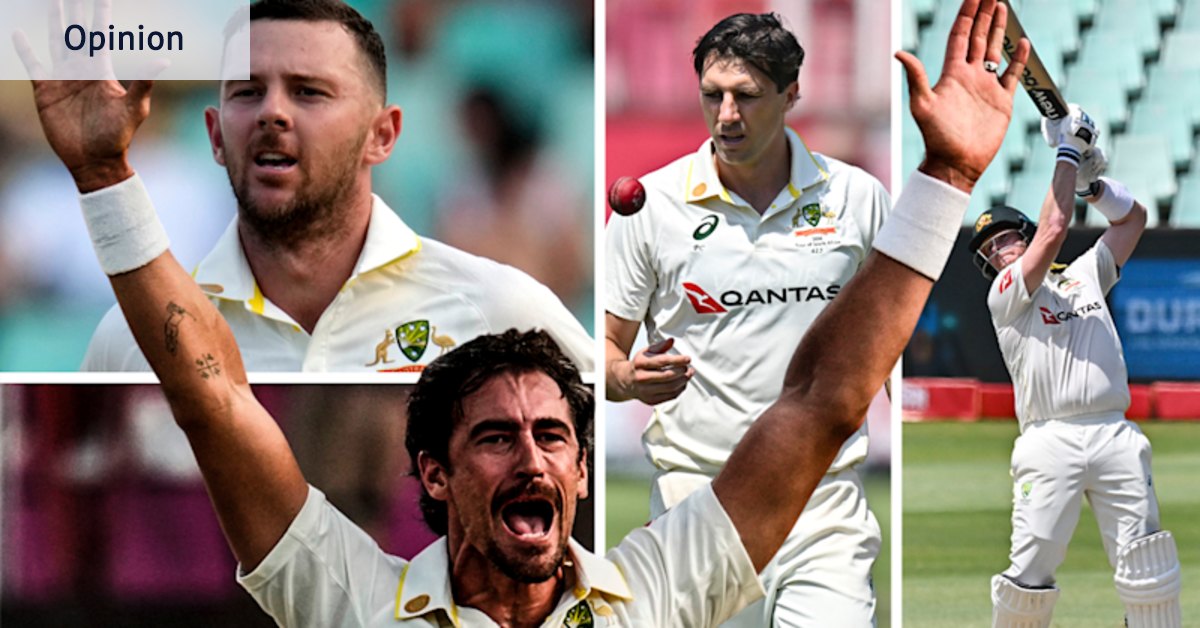
A structural shift in the economics of international cricket has enabled Australia to field its oldest men's Test match lineup since the 1920s, challenging long-held assumptions regarding peak athletic age in elite sport, according to an analysis by Malcolm Knox. The trend, driven by escalating central contract valuations, global franchise earnings, and sophisticated physical conditioning, has allowed veteran cricketers to extend their international careers well past their mid-thirties without suffering the traditional declines in form or fitness that once prompted retirement. Where previous generations often stepped away due to financial necessity, cumulative bodily wear, or pressure from national selection panels seeking youth, the modern commercial ecosystem has incentivized established stars to prolong their red-ball careers while maintaining competitive advantages over incoming domestic talent.
Key facts
What happened
In an examination of Australian cricket's shifting demographic balance, Malcolm Knox documented how higher remuneration has directly altered the retirement calculations and physical shelf lives of senior international players. Over the past several seasons, Australia's selection panel—chaired by George Bailey alongside head coach Andrew McDonald and Tony Dodemaide—has consistently favored a hardened core of seasoned veterans over younger Sheffield Shield standouts. While conventional cricket wisdom previously held that fast bowlers, opening batters, and wicketkeepers suffered sharp drops in performance after age 33 or 34, Australia's incumbent lineup has remained largely static, securing significant victories including the 2023 World Test Championship title and retaining the Ashes.
According to Malcolm Knox, the economic stability afforded by top-tier cricket contracts means players no longer face the pressing need to transition into secondary professional careers in their early thirties. Instead, financial autonomy permits athletes to reinvest substantial portions of their earnings into bespoke recovery systems, year-round physical therapy, and personalized workload management. The resulting longevity has created a generational logjam in the domestic system, where emerging players face extended waits for national opportunities while an entrenched cohort of seasoned players continues to perform at international standards.
This dynamic has shifted the broader conceptualization of aging in the sport. Where a 35-year-old cricketer in the 1980s or 1990s was considered an outlier entering the twilight of their career, the current Australian dressing room treats mid-thirties participation as an operational norm. The historical point of comparison identified by Knox stretches back nearly a century, to an era before strict physical regimens and hyper-professionalization, when amateur or semi-professional players like Clarrie Grimmett and Warren Bardsley represented Australia at advanced ages due to sheer skill retention and limited international competition volume.
Why it matters
The entrenchment of older players at the pinnacle of Australian cricket carries significant ramifications for the governance, economy, and talent development pipeline of the sport. At the elite level, national selectors have prioritized immediate competitive reliability over speculative generational succession. For administrators at Cricket Australia, having recognizable, battle-tested players on the field preserves the commercial appeal of marquee series, such as the Border-Gavaskar Trophy and the Ashes, which generate the bulk of the organization's broadcast and ticketing revenues. A seasoned squad reduces the competitive volatility often associated with blooding younger players against premier opposition like India and England.
However, this stability presents severe structural challenges for the domestic first-class system. With fewer vacancies opening up in the Test eleven, high-performing Sheffield Shield cricketers in their early to mid-twenties risk career stagnation or may find themselves financially incentivized to abandon the red-ball format altogether in favor of domestic and international Twenty20 franchise circuits. If younger athletes conclude that entry into the Test side is effectively closed for multi-year periods, the traditional domestic red-ball pathway could lose its most promising talent. Furthermore, maintaining an aging squad creates the risk of a sudden, simultaneous retirement cliff, where multiple senior players depart within a short window, forcing administrators to navigate an abrupt and destabilizing rebuilding phase.
The background
Historically, elite Australian cricketers retired far earlier than their modern counterparts. Before the advent of professional contracts in the World Series Cricket era of the late 1970s, Australian Test players were paid modest match fees and relied on outside employment—as teachers, clerks, tradesmen, or sales representatives—to sustain their livelihoods. Even during the golden era of the late 1990s and early 2000s under captains Mark Taylor, Steve Waugh, and Ricky Ponting, prominent figures such as Damien Martyn, Justin Langer, Shane Warne, and Glenn McGrath generally concluded their international careers in their mid-thirties as the intense travel schedule and bodily toll proved unsustainable.
The modern financial transformation gained significant momentum following the dispute and eventual settlement between Cricket Australia and the Australian Cricketers' Association in 2017, which preserved the historic revenue-sharing model established two decades earlier. Under the current five-year Memorandum of Understanding agreed in 2023, guaranteed payments for centrally contracted male cricketers rose substantially, with top-tier players earning base retainers exceeding 1.5 million Australian dollars annually before match fees, performance bonuses, and commercial endorsements.
Alongside domestic contracts, the proliferation of global Twenty20 tournaments—chiefly the Indian Premier League, established in 2008—injected unprecedented capital into individual player accounts. This private wealth has transformed physical management. Centrally contracted Australian bowlers such as Starc, Cummins, and Hazlewood benefit not only from Cricket Australia’s centralized medical department but also possess the personal resources to travel with private soft-tissue therapists, access cutting-edge hyperbaric and cryotherapy treatments, and obtain real-time biometric analysis. The professionalization of strength and conditioning, combined with data-driven bowling load tracking, has mitigated the soft-tissue injuries that historically shortened fast-bowling careers.
Reaction
While Malcolm Knox's analysis highlights the structural and financial mechanics driving this demographic trend, the philosophy underpinning national selection has drawn ongoing debate among Australian cricket observers, former players, and state cricket associations. Cricket Australia's executive leadership and the national selection panel have publicly maintained that performance in first-class and international cricket remains the sole qualifying criterion for squad inclusion, explicitly rejecting the notion that age should serve as an arbitrary disqualifier.
State cricket bodies, tasked with nurturing the next generation of players through the Sheffield Shield, have occasionally voiced concern regarding the path to higher honors. Promising state performers who post robust domestic averages have frequently found their progression blocked by incumbent Test players who continue to play well into their late thirties. Player union representatives, however, have welcomed the extended careers, pointing out that players have earned the right to maximize their earning windows and that high athletic standards—not tenure alone—have dictated selection outcomes.
What we don't know yet
Key uncertainties remain regarding how Cricket Australia plans to manage the eventual transition when this veteran generation finally steps aside. The reporting does not provide official succession timelines for senior players, nor does it quantify whether national selectors have established formal transition milestones for positions such as top-order batting and specialist spin bowling. It remains unclear whether the high-performance unit will choose to enforce phased retirements across different formats or risk a mass exodus following a major touring cycle.
Additionally, the broader physical tolerance of fast bowlers operating past the age of 35 in grueling five-Test series remains largely untested in the modern era of tightly packed international schedules. While high incomes provide the tools for elite recovery, it is not yet proven whether personalized medical support can completely prevent sudden, age-related performance decline under intense physical stress.
What to watch
The primary indicator of how this aging dynamic evolves will be the composition of upcoming Australian Test touring squads and the workload management decisions executed across future domestic summers. Observers will closely monitor squad announcements for marquee Test series to see whether selectors continue to retain veterans or begin intentionally introducing younger talent into reserve positions.
Other critical markers include the forthcoming renewal of central contracts and potential individual format retirements, where senior players might surrender white-ball responsibilities to concentrate solely on Test cricket. Furthermore, domestic Sheffield Shield attendance and performance figures will illustrate whether aspiring fringe players continue to commit to the red-ball format or increasingly turn toward global franchise leagues as their primary professional objective.
This account is based on original reporting and analysis published by Malcolm Knox detailing the demographic trends and financial underpinnings of the modern Australian men's Test cricket team.
How this story was produced
This report was written by The Global Wire newsroom from reporting first published by Malcolm Knox. We verify the core facts against the original report, write our own account, and add the background and consequences a short wire item leaves out. Drafting is AI-assisted inside an editor-supervised pipeline, and every story is checked for accuracy of attribution, structure and duplication before it appears — full detail in our AI and funding disclosure.
Spotted an error? Tell us at corrections@horizonglobalnews.com and read our corrections policy or editorial standards.





Reader comments
Loading comments…