

Surge in Driving Maul Tries Sparks Debate Over URC Tactics and Refereeing Standards
With 32 maul tries recorded early in the United Rugby Championship season, coaches and officials face growing debate over tactical dominance and set-piece laws.
By The Global Wire Newsroom · Reported from Ruaidhri O'Connor
Link preview · horizonglobalnews.com
Surge in Driving Maul Tries Sparks Debate Over URC Tactics and Refereeing Standards
With 32 maul tries recorded early in the United Rugby Championship season, coaches and officials face growing debate over tactical dominance and set-piece laws.
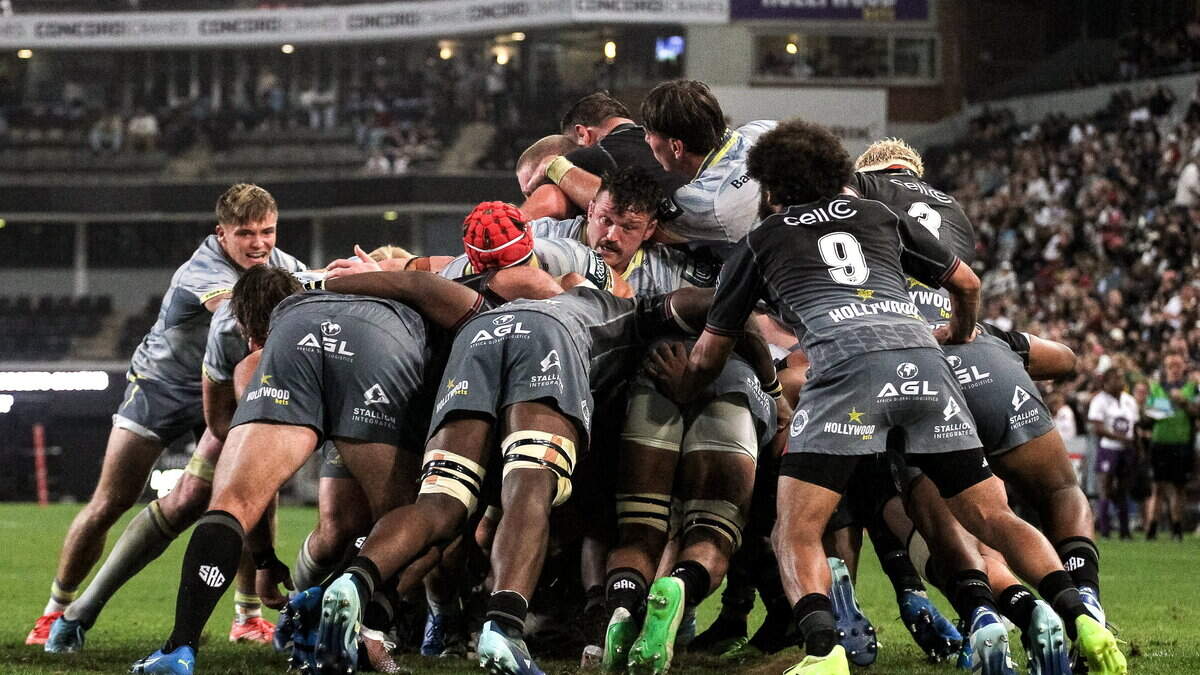
An extraordinary surge in driving maul scores across the United Rugby Championship has thrust one of rugby union's most contested set-piece tactics back to the center of global debate, following analysis by rugby reporter Ruaidhri O'Connor revealing that teams have accumulated 32 maul tries during the opening stretch of the 2026 season. The proliferation of lineout-driven tries across the 16-team cross-border competition—which features professional clubs from Ireland, South Africa, Scotland, Wales, and Italy—has raised urgent questions among head coaches, match officials, and supporters regarding tactical balance and refereeing standards. As attacking packs increasingly exploit recent law interpretations to secure high-probability points inside the opposition 22-meter zone, the phenomenon has reignited broader arguments over whether the modern driving maul has become an overpowered tactical mechanism that skews match outcomes and stifles open play.
Key facts
What happened
The early stages of the 2026 United Rugby Championship season have seen the driving maul transform from a standard set-piece option into the dominant scoring weapon across the competition. According to reporting and tactical analysis by Ruaidhri O'Connor, the tally of maul-generated tries reached 32 within the opening weeks of the campaign, reflecting a pronounced strategic pivot by head coaches across all five participating unions.
The sequence leading to these scores has become a familiar pattern in contemporary URC fixtures. Upon winning a penalty within midfield or opposition territory, team captains routinely forgo kickable attempts at goal, electing instead to kick for touch to secure a lineout within 5 to 15 meters of the opponent's try line. Once the hooker executes the throw and a jumper secures high possession, the attacking forward pack immediately forms a dense wedge around the ball carrier before the jumper contacts the ground.
As the physical drive commences, attacking forwards perform complex internal shifts: the ball is transferred backwards hand-to-hand or ripped to the player positioned at the rear of the mass—often referred to as the tail-end carrier. Meanwhile, front-bound forwards act as a physical shield, steering the momentum toward the weakest point of the defensive line.
This mechanical execution creates a major dilemma for match officials and defending teams. Under existing interpretations, defenders attempting to disrupt the drive risk immediate penalization if their entry point strays slightly off-axis or if their attempts to unbalance the carrier result in the structure collapsing. Conversely, if defending teams fail to generate equal counter-pushing mass at the exact moment of engagement, the attacking pack routinely drives five to ten meters directly over the try line. Analysis indicates that refereeing teams are issuing frequent yellow cards to defending sides caught repeatedly collapsing mauls on their own line, further compounding the numerical advantage for attacking teams and accelerating the scoring rate.
Why it matters
The dominance of the driving maul carries significant consequences for the competitive balance, refereeing integrity, and commercial presentation of professional rugby union. When a single set-piece tactic yields 32 tries in the early stages of a championship season, it fundamentally alters match dynamics and team strategy. Teams capable of executing high-efficiency lineout drives can convert minor defensive infractions near midfield into seven-point scores with minimal phase-play risk, disincentivizing expansive backline passing in favor of localized physical attrition.
For supporters and television broadcasters, the prevalence of repetitive maul sequences presents a double-edged sword. While forward aficionados admire the technical coordination, body height precision, and collective strength required to execute a textbook drive, critics argue that excessive reliance on maul tries reduces spectator enjoyment by replacing fluid, multi-phase running rugby with prolonged static wrestling contests on the goal line.
Furthermore, the operational burden on referees has reached a critical point. Distinguishing legal obstruction—where forward blocking players prematurely split from the ball carrier—from legitimate binding requires split-second judgment amidst a dense mass of bodies. For URC franchises competing for lucrative playoff berths and qualification for the European Rugby Champions Cup, subtle refereeing decisions at the maul can determine season outcomes, playoff seedings, and substantial financial rewards.
The background
The controversy surrounding the driving maul is rooted in decades of evolution within rugby union's laws and structural organization. The United Rugby Championship in its current format was launched in 2021, merging the former Pro14 league with four premier South African franchises—the Bulls, Lions, Sharks, and Stormers. This cross-hemisphere integration brought together contrasting tactical philosophies: the traditional, territory-based forward emphasis of northern hemisphere rugby and the high-tempo, physical power game of South African domestic teams.
Historically, World Rugby has struggled to calibrate rules governing contact area mechanics. Prior to the late 1990s, lineout regulations prohibited players from lifting jumpers in the air, making organized lineout catches less predictable and immediate maul setups far harder to coordinate. The legalization of lineout lifting transformed the set-piece into a highly reliable platform for launching structured attacks.
In 2008 and 2009, global rugby trialed a suite of Experimental Law Variations, one of which permitted defenders to pull down a driving maul above the waist. The trial drastically reduced the frequency of mauls and altered defensive tactics; however, safety concerns regarding neck and spinal strain led World Rugby to abandon the rule and reinstate strict prohibitions against collapsing.
Subsequent law modifications focused on refining the entry requirements and movement of the ball within the maul. World Rugby introduced directives mandating that players joining a maul must bind with their whole arm and enter behind the hindmost foot of their own team. To prevent artificial delay, lawmakers also introduced the "use it" directive, forcing teams to move the ball out of a stopped maul within five seconds of a second halt. Despite these adjustments, modern coaching staffs have refined legal shielding and ball-transfer techniques to optimize the tactic's success rate within the existing framework.
Reaction
The mounting volume of maul tries has generated widespread debate across the professional rugby landscape. Leading head coaches in the URC have expressed contrasting views depending on their squad composition. Outfits possessing heavy, well-drilled forward packs have defended the maul as a core element of forward craftsmanship that rewards physical discipline and rigorous set-piece training.
Conversely, technical directors and backline coaches have raised concerns that refereeing crews are granting attacking teams excessive leniency regarding obstruction and illegal shifting of the axis. Match official review panels within World Rugby and the URC oversight bodies are actively assessing game tape to determine whether existing officiating guidelines are being applied consistently across all fixtures. Meanwhile, player union representatives continue to monitor forward workload and collision frequency, as heavy mauling places intense physical strain on front-row and second-row players during congested fixture schedules.
What we don't know yet
Several critical operational and analytical details remain unresolved as the URC season progresses. It remains unclear whether World Rugby's Law Review Group will issue mid-season clarification memos to match officials regarding subtle maul infractions such as soft obstruction, pre-latching, or illegal transfer of the ball before contact.
Additionally, current public data does not fully break down the distribution of the 32 maul tries across specific clubs, leaving unanswered whether the trend is driven by a small cohort of elite forward packs or represents a league-wide systemic shift. It is also unknown whether defensive coaches will successfully pioneer new legal counter-measures—such as coordinated sack timing at the instant of landing, or intentional non-engagement at the lineout to trigger accidental offside—to neutralize the threat without conceding penalties. Finally, the exact injury rates specifically attributable to repeated goal-line mauling remain unquantified by league medical officers.
What to watch
In the coming weeks, rugby observers will closely monitor several key indicators to judge the trajectory of set-piece tactics in the United Rugby Championship. The immediate focus will be on upcoming fixture rounds to track whether the pace of 32 maul tries continues at its current rate or slows down as weather conditions and defensive adaptations evolve.
Key developments to track include:
This report incorporates analysis and reporting by Ruaidhri O'Connor regarding the United Rugby Championship's ongoing set-piece trends, scoring statistics, and refereeing developments.
How this story was produced
This report was written by The Global Wire newsroom from reporting first published by Ruaidhri O'Connor. We verify the core facts against the original report, write our own account, and add the background and consequences a short wire item leaves out. Drafting is AI-assisted inside an editor-supervised pipeline, and every story is checked for accuracy of attribution, structure and duplication before it appears — full detail in our AI and funding disclosure.
Spotted an error? Tell us at corrections@horizonglobalnews.com and read our corrections policy or editorial standards.






Reader comments
Loading comments…