

South Africa's Pieter Coetzé Targets World Records at World Cup Finale in Astana
Occupying second place in the overall standings, backstroke specialist Pieter Coetzé enters the final leg of the World Aquatics circuit in Kazakhstan.
By The Global Wire Newsroom · Reported from Wesley Botton
Link preview · horizonglobalnews.com
South Africa's Pieter Coetzé Targets World Records at World Cup Finale in Astana
Occupying second place in the overall standings, backstroke specialist Pieter Coetzé enters the final leg of the World Aquatics circuit in Kazakhstan.
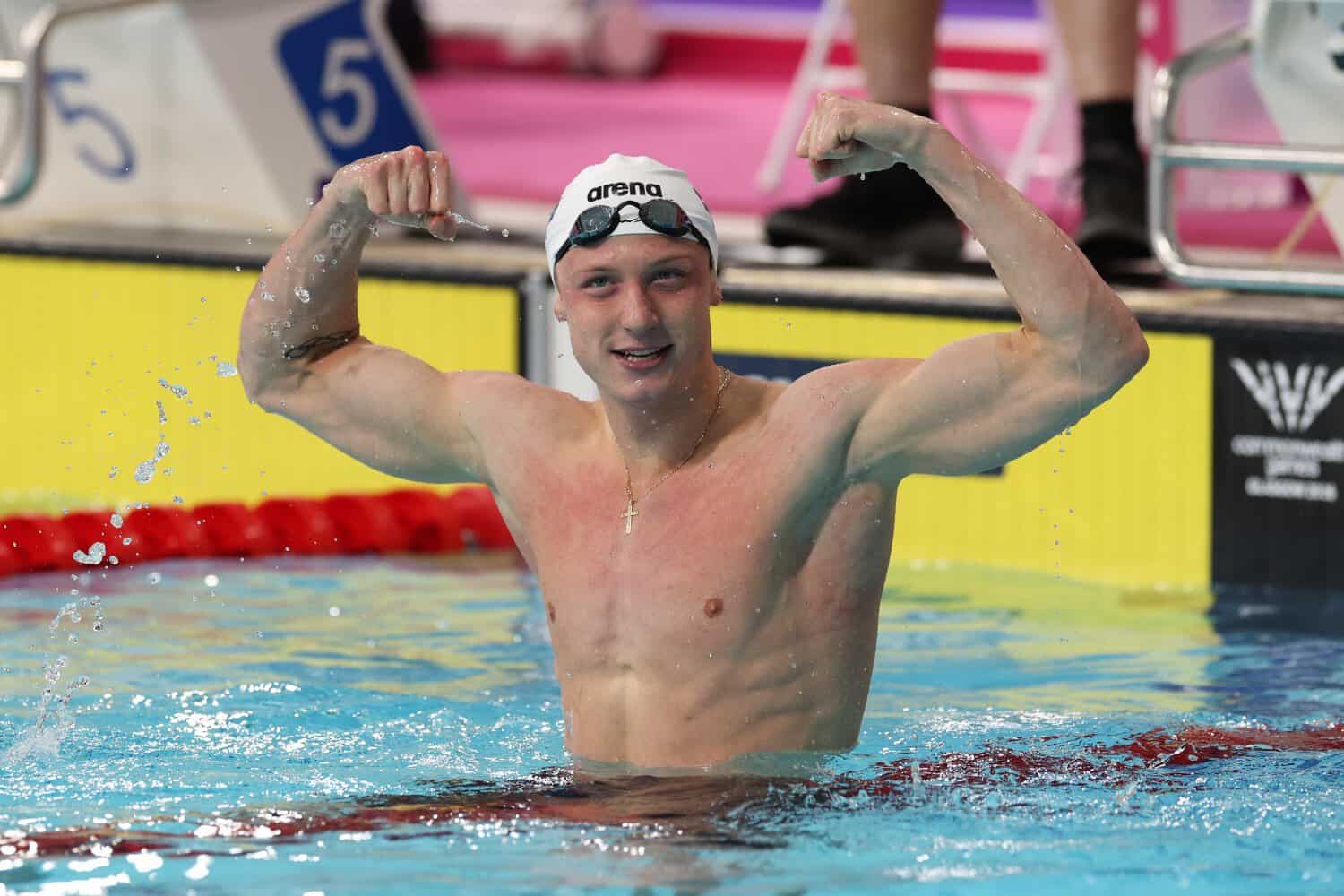
South African backstroke sprinter Pieter Coetzé is scheduled to compete in the final leg of the international Swimming World Cup series in Astana, Kazakhstan, where he aims to challenge world record marks and secure top placement in the overall series standings, according to reporting by The Citizen. Entering the final stop of the multi-city circuit, Coetzé currently occupies second place in the men's overall World Cup points table. The upcoming meet in Astana represents the decisive leg of the annual competition organized by World Aquatics, serving as a primary platform for elite swimmers to earn world classification points, financial bonuses, and international titles before the conclusion of the short-course season.
Key facts
What happened
According to reporting published by South African newspaper The Citizen, elite swimmer Pieter Coetzé has centered his focus on the upcoming final leg of the World Aquatics Swimming World Cup circuit in Astana, Kazakhstan. Entering the final stage of the series, Coetzé holds second position in the men’s general classification standings following strong performances across previous stops of the world tour.
The World Cup circuit gathers many of the world's premier aquatic athletes across a series of back-to-back international meets held in consecutive weeks. Points are awarded based on final event placings as well as performance scores linked to world record benchmark times established by World Aquatics. Coetzé’s standing near the top of the general table positions him as one of the leading contenders for the overall championship title as the circuit transitions to Central Asia.
In addition to competing for overall series points, Coetzé is targeting world record benchmarks during his scheduled events in Astana. As reported by Wesley Botton for The Citizen, the South African swimmer intends to capitalize on his late-season conditioning and short-course turn efficiency in Kazakhstan to pursue historical times in backstroke events. The Astana meet features a compressed program of heats and finals across short-course 25-meter pool conditions, where wall turns and underwater dolphin kick distance play a critical role in race times.
Why it matters
The final leg of the Swimming World Cup holds substantial sporting and financial stakes for international swimmers. World Aquatics structures the World Cup circuit to reward sustained excellence across all legs, distributing financial prize money based on cumulative overall rankings at the conclusion of the final meet. A top-two finish in the overall standings guarantees substantial financial compensation, while breaking a recognized world record triggers an additional performance bonus from the governing body.
For South African aquatic sports, Coetzé’s emergence as a top-tier performer on the global circuit reinforces the country’s established legacy in international swimming. South Africa has historically produced world-class talent in sprint and middle-distance events, including Olympic and world champions such as Chad le Clos, Cameron van der Burgh, Tatjana Smith, and Roland Schoeman. Coetzé’s strong positioning in the 2026 World Cup series underlines the continued strength of the nation’s elite swimming development pipelines operating out of domestic training centers.
From an athletic performance standpoint, short-course World Cup meets serve as a key technical indicator for backstroke specialists. The 25-meter pool format doubles the number of turns and push-offs relative to standard 50-meter Olympic long-course racing. Elite backstrokers rely heavily on underwater kick mechanics and tempo maintenance through turns. Achieving world-record pace in this environment demonstrates maximum efficiency in streamline execution and reaction time off the starter blocks, assets that translate directly to long-course international championships.
The background
The World Aquatics Swimming World Cup was established in 1989 to provide high-level international competition outside of the biennial World Aquatics Championships and the quadrennial Olympic Games. Historically held during the autumn months, the circuit traditionally features short-course 25-meter racing, although World Aquatics has occasionally adjusted the pool format to 50-meter long-course configurations during Olympic preparation years.
Under World Aquatics regulations, points are awarded to the top eight finishers in each individual final, supplemented by performance points calculated using the World Aquatics point scoring table. This system evaluates a swimmer's time relative to the existing world record in that specific event, awarding higher points for marks closer to or exceeding world records. Furthermore, swimmers who win the same individual event across all legs of a single World Cup cluster earn a designated Triple Crown distinction along with monetary prizes.
Pieter Coetzé emerged onto the international scene as a teenager, making his Olympic debut for South Africa at the Tokyo Games held in 2021 at age 17. He subsequently established himself as one of the southern hemisphere's top backstroke competitors at the 2022 Commonwealth Games in Birmingham, England, where he collected a complete set of medals, including gold in the 100-meter backstroke, silver in the 50-meter backstroke, and bronze in the 200-meter backstroke.
Coetzé further solidified his standing on the global stage at the Paris 2024 Olympic Games, earning individual Olympic medals in backstroke events and establishing new African continental records. His continuous progression through junior and senior ranks has positioned him as South Africa's flagship backstroke swimmer. His performance on the 2026 World Cup tour reflects a sustained period of physical maturity and international competition experience, bringing him into direct contention with top backstrokers from Europe, North America, and Australasia.
Reaction
While official post-meet comments from Coetzé and South African swimming officials will depend on his race outcomes in Astana, athletic federations and international analysts frequently view performance during the late stages of the World Cup tour as a bellwether for upcoming global short-course championships.
National sporting body Swimming South Africa monitors World Cup results as part of its elite athlete tracking and funding allocation criteria. Success on the World Cup tour provides essential competition practice against top international rivals under high-pressure conditions, which national coaches emphasize when preparing swimmers for major international meets.
Opponents in the men's field and international coaching staff monitor times set during the circuit to gauge technical adjustments in turns and start mechanics. With Coetzé actively pursuing world record marks in Astana, rival coaches and performance analysts are watching how his underwater distance and stroke rate hold up under the demanding schedule of consecutive heats and finals across three days of competition.
What we don't know yet
Several operational and competitive details remain unverified in the available reporting. The source material published by The Citizen does not explicitly state which specific backstroke distances—the 50-meter, 100-meter, or 200-meter events—Coetzé will target for his world record attempts in Astana, nor does it detail the exact margin of points separating him from the current men's standings leader.
Additionally, the complete entry list for the Astana meet has not been detailed in the initial report, leaving open questions regarding the exact international field Coetzé will face during the competition. Factors such as athlete travel schedules, mid-season fatigue, local pool water temperature, and turn margin precision will play a decisive role in whether world-record pace can be sustained across morning preliminaries and evening finals.
It is also unconfirmed whether Coetzé will participate in relay events or supplemental freestyle races during the Astana program, or whether he will strictly concentrate his energy on his core backstroke disciplines to maximize his chance at world records and overall series points.
What to watch
The primary focus moves to the opening day of competition in Astana, where morning preliminary heats will reveal Coetzé's tactical approach and initial form. Observers will track split times off the opening 25 meters and underwater breakout distances to determine if his pacing aligns with world-record splits.
Following each event final, World Aquatics will update the overall men's general classification table. Monitoring the point differential between Coetzé and the series leader after the first and second days of racing will clarify what results Coetzé requires on the final day to contend for the overall World Cup trophy and top prize money.
Finally, official race results certified by World Aquatics will confirm whether any new African records or world marks are officially ratified during the event. Swim fans and analysts will also look for post-race statements from Coetzé regarding his physical condition and technical execution as he completes the short-course World Cup circuit and begins preparation for subsequent international aquatic championships.
This report is based on original reporting published by Wesley Botton for South African news outlet The Citizen.
How this story was produced
This report was written by The Global Wire newsroom from reporting first published by Wesley Botton. We verify the core facts against the original report, write our own account, and add the background and consequences a short wire item leaves out. Drafting is AI-assisted inside an editor-supervised pipeline, and every story is checked for accuracy of attribution, structure and duplication before it appears — full detail in our AI and funding disclosure.
Spotted an error? Tell us at corrections@horizonglobalnews.com and read our corrections policy or editorial standards.


Reader comments
Loading comments…