

Arthur Gea Outplays Ben Shelton in Straight-Set Shanghai Masters Upset
French contender Arthur Gea defeated US Open finalist Ben Shelton in two tiebreak sets to advance from the third round of the Rolex Shanghai Masters.
By The Global Wire Newsroom · Reported from The Straits Times
Link preview · horizonglobalnews.com
Arthur Gea Outplays Ben Shelton in Straight-Set Shanghai Masters Upset
French contender Arthur Gea defeated US Open finalist Ben Shelton in two tiebreak sets to advance from the third round of the Rolex Shanghai Masters.
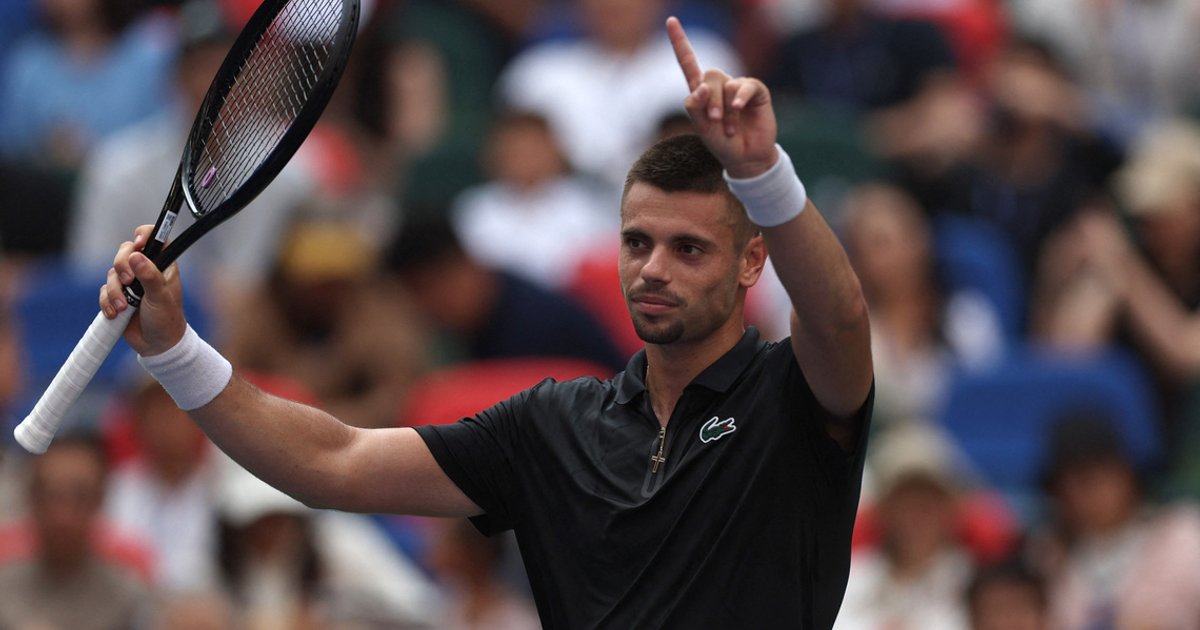
SHANGHAI — American tennis player Ben Shelton suffered an unexpected third-round exit at the Shanghai Masters on Sunday, falling in straight sets to France's Arthur Gea. Gea defeated the US Open finalist 7-6(5), 7-6(3) in a tightly contested match defined by narrow margins in two tiebreakers. Following the defeat, Shelton acknowledged that his French opponent had thoroughly outplayed him throughout the contest. The result eliminates one of the tournament's prominent seeds and marks a major career victory for Gea on the hard courts of China, while highlighting the unpredictable competitive environment of the late-season Asian swing on the ATP Tour.
Key facts
What happened
The third-round encounter between Shelton and Gea developed into a service-dominated battle where neither player established sustained momentum during regular games, forcing both sets into decisive tiebreakers. Across two tight sets, Gea demonstrated superior composure during key points to claim victory in straight sets.
In the opening set, both competitors held serve to reach 6-6, leading to an initial tiebreaker. Gea managed the crucial mini-breaks, securing a 7-5 win in the tiebreaker to take the first set. The second set followed a nearly identical pattern, with strong serve holds on both sides of the net pushing the set once again to 6-6. In the second-set tiebreaker, Gea elevated his consistency from the baseline and capitalized on unforced errors from the American, securing the tiebreaker 7-3 to wrap up the match in straight sets.
Speaking after the match, Shelton publicly assessed his performance with straightforward candor, acknowledging that Gea performed better at critical moments and earned the victory by outplaying him over the course of the match. The defeat ended Shelton's run in Shanghai prior to the round of 16, while advancing Gea into the later stages of a Masters 1000 main draw.
Why it matters
The early elimination of a high-profile player like Shelton carries tangible consequences for the ATP Tour standings and the race to the year-end championship. As an ATP Masters 1000 tournament, Shanghai is among the most lucrative and high-stakes events on the professional calendar, sitting just below the four Grand Slams in terms of available ranking points and prize money.
For Shelton, a third-round exit caps his potential points accumulation in Shanghai at just 50 ranking points. Players striving to secure or improve a top-10 world ranking rely heavily on deep runs in Masters 1000 events, particularly during the autumn swing when qualification for the season-ending ATP Finals in Turin, Italy, is finalized. Early round losses prevent players from padding their points total during a critical portion of the season, potentially altering tournament seedings for the upcoming Australian Open in January.
For Gea, defeating an opponent of Shelton's caliber on a stage as prominent as Shanghai represents a career-defining breakthrough. Securing a spot in the fourth round of a Masters 1000 event provides a significant infusion of ranking points, which can dramatically improve a player's entry status for future ATP Tour main draws, reducing reliance on qualifying rounds or wild-card entries. Furthermore, the result underscores the growing depth of young talent emerging on the ATP Tour, where lower-ranked players frequently challenge established seeds on fast hard-court surfaces.
The background
Understanding the significance of the Shanghai Masters requires examining its place within the broader architecture of men's professional tennis. The Rolex Shanghai Masters, held annually at the Qizhong Forest Sports City Arena, is the sole ATP Masters 1000 tournament staged outside North America and Europe. Staged during the autumn Asian swing, the tournament played a pioneering role in establishing elite men's professional tennis in East Asia.
The event features a 96-player single-elimination draw spread across nearly two weeks, mirroring the expanded format recently adopted by several other Masters 1000 tournaments such as Madrid, Rome, and Miami. Under this structure, the top 32 seeded players receive a bye directly into the second round, meaning a third-round match represents a seed's second appearance on court.
Shelton entered the tournament as one of the leading figures in American men's tennis. A former collegiate national champion at the University of Florida, Shelton transitioned rapidly into the upper echelons of professional tennis behind a formidable left-handed serve capable of exceeding 140 miles per hour and an aggressive, court-covering style. His breakthrough performance came at the US Open, where his deep run into the final stages established him as a premier hard-court competitor.
Gea, representing France, has spent recent seasons building his professional profile across the ITF World Tennis Tour and the ATP Challenger Tour, the feeder circuits designed to transition junior talent into full-time ATP competitors. Matches against top-tier opponents in Masters 1000 draws serve as the ultimate proving ground for emerging players seeking to transition from secondary circuits to regular main-draw participation.
Historically, the Shanghai hard courts have favored players capable of maintaining high first-serve percentages and controlling rallies from the baseline. Because late-season tournaments often coincide with physical fatigue accumulated across nine months of international competition, top-seeded players frequently face heightened vulnerability against aggressive opponents playing without expectations.
Reaction
Official reactions to the match focused largely on Shelton's post-match comments and the reaction from tennis analysts covering the Asian swing. Shelton offered no excuses for the outcome, offering a candid evaluation in which he praised Gea's play and admitted to being outmaneuvered during the high-pressure moments of the contest.
While Gea's immediate post-match press conference details were not expanded upon in initial wire summaries, French tennis observers and sports media customarily highlight victories of this scale as landmark indicators of player development within the national federation system. The victory is expected to draw praise from French sports media, which tracks the progression of young talent climbing the ATP rankings.
Tournament organizers in Shanghai, meanwhile, adjust match scheduling following the loss of major seeds. High-profile American players attract substantial fan interest and international television viewership; their early departures naturally shift broadcast focus onto remaining marquee players in the draw.
What we don't know yet
Several operational and competitive aspects of the outcome remain unconfirmed in available reports. The precise match duration, detailed statistical breakdowns—such as first-serve percentages, ace counts, break-point conversion rates, and unforced error counts—were not detailed in the initial coverage from The Straits Times. These analytical metrics are vital for determining whether Shelton's loss was driven by a dip in his serving efficacy or by Gea's exceptional returning and defensive baseline coverage.
Additionally, it remains unknown whether Shelton experienced any physical issues or lingering fatigue during the match, or how this early loss will impact his scheduled tournament entries for the remainder of the European indoor swing. For Gea, his next round opponent and potential draw path remain subject to the completion of surrounding third-round matches across the upper and lower halves of the Shanghai draw.
What to watch
In the immediate aftermath of the result, several clear indicators will determine the downstream impact for both players and the broader tournament:
This report is based on original news coverage published by The Straits Times on Oct. 11.
How this story was produced
This report was written by The Global Wire newsroom from reporting first published by The Straits Times. We verify the core facts against the original report, write our own account, and add the background and consequences a short wire item leaves out. Drafting is AI-assisted inside an editor-supervised pipeline, and every story is checked for accuracy of attribution, structure and duplication before it appears — full detail in our AI and funding disclosure.
Spotted an error? Tell us at corrections@horizonglobalnews.com and read our corrections policy or editorial standards.



Reader comments
Loading comments…