

Scrutiny Mounts Over FIFA Leadership as Observers Urge Challenge to Gianni Infantino
Analysis by Oliver Brown urges a contested presidential election at soccer's governing body, proposing technical director Arsène Wenger as a counterweight to Gianni Infantino's tenure.
By The Global Wire Newsroom · Reported from Oliver Brown
Link preview · horizonglobalnews.com
Scrutiny Mounts Over FIFA Leadership as Observers Urge Challenge to Gianni Infantino
Analysis by Oliver Brown urges a contested presidential election at soccer's governing body, proposing technical director Arsène Wenger as a counterweight to Gianni Infantino's tenure.
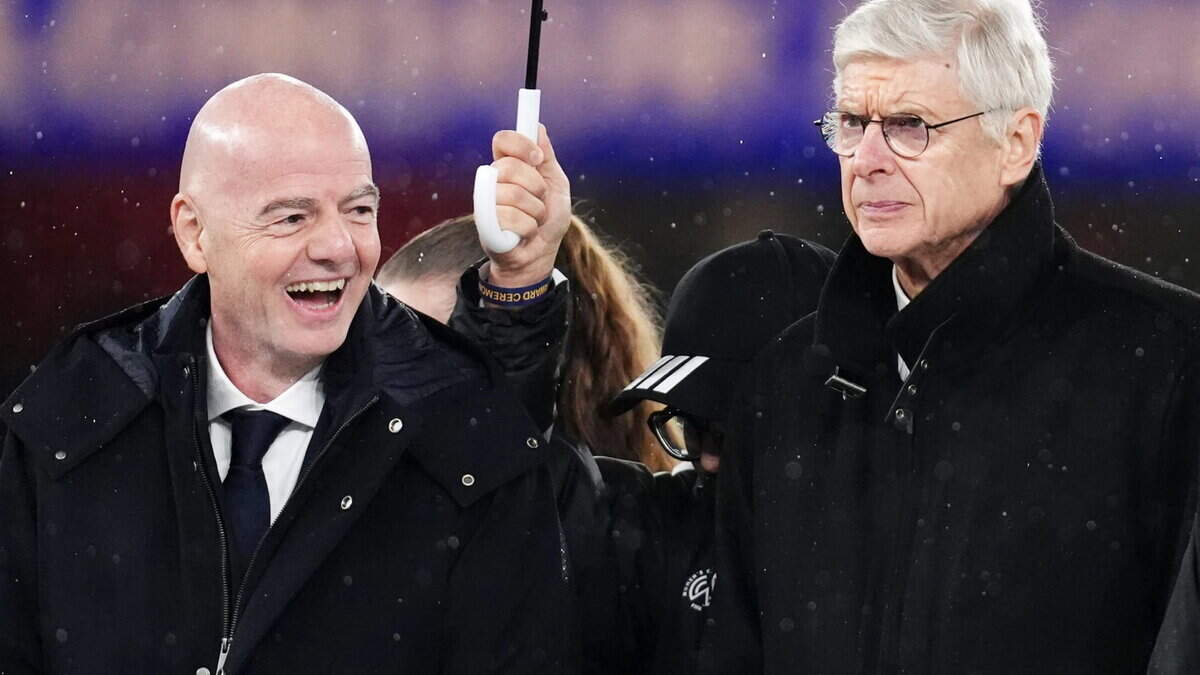
Growing debate over governance at football's international governing body has brought renewed attention to the leadership of FIFA President Gianni Infantino and the absence of institutional opposition within the organization. In an analytical assessment published by sports writer Oliver Brown, the case was presented that Infantino should face a contested ballot rather than securing an uncontested path to an extended tenure, with former Arsenal manager and current FIFA executive Arsène Wenger proposed as an alternative figure capable of mounting a credible challenge.
Key facts
What happened
According to an analysis by Oliver Brown, the governance structure of international football faces a critical juncture regarding the leadership of Gianni Infantino. Brown argued that allowing the Swiss-Italian administrator to move toward a prospective fourth term without a formal challenger undermines democratic accountability within the sport's global governing body.
In his assessment, Brown characterized Infantino's administrative maneuvers as focused primarily on institutional self-preservation and consolidation of executive power. Brown proposed that Arsène Wenger, who spent 22 years managing English Premier League club Arsenal before taking an executive position inside FIFA, represents one of the few figures in global football possessive of both worldwide stature and technical credibility sufficient to disrupt Infantino's uncontested control.
The commentary highlights a structural pattern in recent FIFA presidential cycles, where incumbent leaders have faced minimal or no formal electoral opposition from among the 211 national associations that cast votes at the FIFA Congress. While Wenger has worked inside FIFA headquarters in Zurich for nearly five years supervising technical initiatives, Brown's analysis positions him as a theoretical reform candidate who could bridge the gap between technical football expertise and high-level sports administration.
Why it matters
The leadership of FIFA directly shapes the competitive calendar, commercial distribution, and regulatory framework of the world's most popular sport. An uncontested presidency removes an essential forum for policy debate, where alternative visions for international tournaments, player workload, and financial distribution can be scrutinized by member federations and the public.
Under Infantino's tenure, FIFA has overseen significant expansions of its flagship competitions, including enlarging the men's World Cup from 32 to 48 teams beginning with the 2026 tournament in North America, and restructuring the Club World Cup into a 32-team quadrennial competition launching in 2025. These expansions generate billions of dollars in commercial revenue and broadcast rights, but they have also generated severe friction with domestic leagues, regional confederations, and player unions concerned about schedule congestion and physical burnout.
When presidential elections proceed without competing platforms, national football associations face no alternative policy choices regarding revenue distribution models or governance reforms. Infantino's administration distributes substantial development grants through the FIFA Forward program, which provides equal sums to each of the 211 member associations regardless of their size. This funding model has historically built durable electoral loyalty among smaller nations, effectively disincentivizing federations from nominating reformist challengers. A failure to debate these policies at congress risks entrenching administrative decisions without checks from outside Zurich.
The background
Gianni Infantino first assumed the presidency of FIFA in February 2016, following an extraordinary congress convened during the deepest governance crisis in the organization's history. Swiss and United States law enforcement authorities had indicted numerous high-ranking football officials in May 2015, an investigation that ultimately forced the resignation and subsequent ban of long-serving president Sepp Blatter, who had governed the body since 1998. Infantino, formerly the general secretary of European governing body UEFA, campaigned as a stabilizing reformer committed to transparency, term limits, and ethical renewal.
Following his initial victory, Infantino ran unopposed for re-election at the FIFA Congress in Paris in June 2019. In March 2023, at the 73rd FIFA Congress in Kigali, Rwanda, he was returned to office by acclamation for another four-year term running through 2027, again facing no opposition candidate.
Central to the controversy surrounding his potential longevity is FIFA's statutory term-limit rule. Introduced during post-2015 governance reforms, the rule caps presidential service at three four-year terms, totaling 12 years. However, the FIFA Council determined in December 2022 that because Infantino's first term from 2016 to 2019 was an incomplete term completing the remainder of Blatter's mandate, it does not count against the 12-year statutory ceiling. This legal interpretation allows Infantino to stand for re-election again in 2027, potentially extending his presidency until 2031, amounting to 15 years in office.
Wenger, meanwhile, left Arsenal in May 2018 after winning three Premier League titles and seven FA Cups. FIFA appointed him Chief of Global Football Development in November 2019, tasking him with overseeing the Technical Study Group, coaching education, and youth development. While at FIFA, Wenger has occasionally attracted controversy of his own, notably when he advocated in 2021 for holding the men's World Cup every two years—a proposal that was eventually shelved following fierce resistance from UEFA and South America's CONMEBOL.
Reaction
Neither FIFA nor Arsène Wenger has publicly responded to Oliver Brown's column floating Wenger's name for the presidency. Historically, FIFA has dismissed criticism of Infantino's unopposed mandates by pointing to the democratic structure of the FIFA Congress, where every national association holds an equal vote, and noting that broad support reflects satisfaction with global financial distribution.
If any formal pushback to Infantino's trajectory were to materialize, European governing body UEFA and South American confederation CONMEBOL would be the entities most likely to engage. Both organizations have occasionally clashed with Zurich over calendar expansion and revenue allocation. However, even within Europe, several national federations publicly backed Infantino's 2023 re-election, demonstrating the difficulty of assembling a unified oppositional bloc.
Player advocacy groups, including the global union FIFPRO, and the World Leagues Association have pursued legal actions against FIFA in European courts regarding match calendar congestion, but these legal challenges have targeted administrative decisions rather than mounting direct electoral campaigns.
What we don't know yet
Crucial variables remain unknown regarding whether an electoral challenge to Infantino is practically viable ahead of the 2027 presidential vote. Most fundamentally, there is no public indication that Arsène Wenger possesses any ambition to pursue the presidency. At age 74, Wenger is employed within FIFA's administrative structure, and entering an election against his current superior would require an immediate rupture with the governing body.
Furthermore, the electoral hurdle for any prospective challenger is high. Under the FIFA Statutes, a candidate must secure the written support of at least five member associations before entering the ballot, and must have played an active role in association football for two of the five years preceding candidacy. It remains unclear whether any coalition of national federations is willing to coordinate such a nomination and risk political estrangement from FIFA's executive leadership.
What to watch
The trajectory of FIFA's executive politics will become clearer as the organization approaches the next statutory milestones. Observers will monitor the formal opening of the presidential nomination window ahead of the 2027 FIFA Congress, which typically occurs several months prior to the election date.
Key indicators of institutional sentiment will also emerge during upcoming FIFA Council meetings and annual congresses, where member associations deliberate over financial reports, governance regulations, and tournament arrangements. Attention will center on whether dissident federations in Western Europe or Scandinavia attempt to present governance resolutions or question the council's legal interpretation of presidential term limits.
Finally, the rollout of the 2025 Club World Cup in the United States and the execution of the 48-team 2026 World Cup will serve as decisive performance tests for Infantino's administration, potentially influencing whether member federations maintain their unanimous support or seek alternative leadership.
This article draws on original reporting and commentary by Oliver Brown.
How this story was produced
This report was written by The Global Wire newsroom from reporting first published by Oliver Brown. We verify the core facts against the original report, write our own account, and add the background and consequences a short wire item leaves out. Drafting is AI-assisted inside an editor-supervised pipeline, and every story is checked for accuracy of attribution, structure and duplication before it appears — full detail in our AI and funding disclosure.
Spotted an error? Tell us at corrections@horizonglobalnews.com and read our corrections policy or editorial standards.



Reader comments
Loading comments…