

Canberra Faces Cross-Party Revolt Over Quiet $2 Million Funding Cut to Support Finder
The Coalition, Greens, crossbenchers, and nearly 200 charities have joined forces to demand the Albanese government restore funding for a digital welfare directory.
By The Global Wire Newsroom · Reported from Rob Harris
Link preview · horizonglobalnews.com
Canberra Faces Cross-Party Revolt Over Quiet $2 Million Funding Cut to Support Finder
The Coalition, Greens, crossbenchers, and nearly 200 charities have joined forces to demand the Albanese government restore funding for a digital welfare directory.
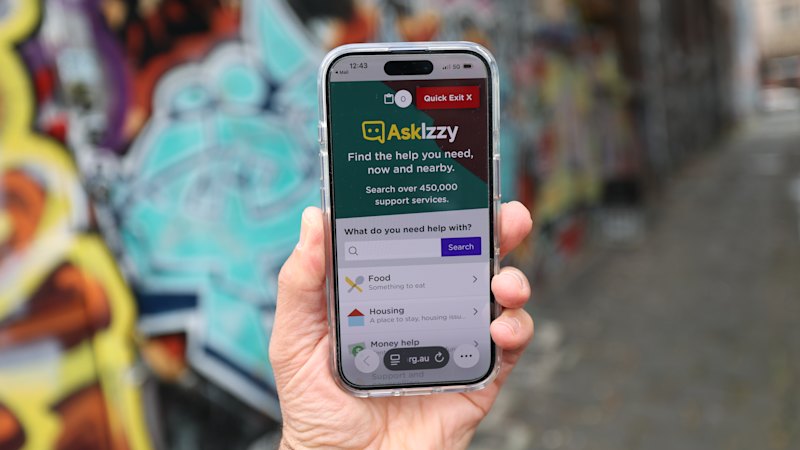
CANBERRA — Australian federal lawmakers spanning the political spectrum have aligned with an extensive coalition of nearly 200 community service organisations to demand that the federal Labor government reverse a quiet decision to terminate 2 million Australian dollars in annual funding for a digital support directory used by vulnerable Australians. The push unites the federal Coalition, the Australian Greens, and crossbench independents against the Albanese administration, presenting an unusual multi-party front over what advocates describe as a critical digital navigation tool for people seeking emergency housing, food relief, and family violence assistance during an enduring cost-of-living crisis.
Key facts
What happened
According to reporting by Rob Harris, the federal Labor government moved without public announcement to end its annual 2 million Australian dollar contribution to the nationwide social support finder service. The mechanism, which enables individuals in distress as well as frontline community caseworkers to locate local relief services, had previously relied on federal backing to maintain up-to-date listings, software infrastructure, and service integration across Australia's complex non-profit landscape.
Upon learning of the quiet cessation of funding, nearly 200 non-profit groups, charitable bodies, and non-governmental welfare providers mobilised a coordinated pushback. The sector warned that withdrawing foundational core funding would destabilise the primary digital infrastructure that directs people in crisis to shelters, food banks, mental health clinics, and financial counselling services.
The issue rapidly escalated into a broader political fight in Canberra. Members of the federal Opposition Coalition, the Australian Greens, and key crossbenchers in both the House of Representatives and the Senate formed a united front alongside community leaders. Together, they have called on the Albanese government, and specifically the Department of Social Services, to urgently intervene, reinstate the 2 million dollar allocation, and guarantee the continued operation of the platform.
Why it matters
The dispute over a relatively modest 2 million Australian dollar annual line item illuminates how fragile the connective tissue between vulnerable citizens and the social safety net has become. In modern welfare distribution, frontline charities do not operate in isolation; they depend on centralized, real-time digital databases to verify available beds in emergency accommodation, operating hours of food pantries, and open caseload slots for crisis counsellors. When a central directory loses federal operational funding, the cost of manual service discovery is transferred directly onto overstretched caseworkers and individuals navigating immediate personal crises.
Furthermore, the operational consequences extend into fiscal efficiency. State, territory, and federal governments allocate billions of dollars annually to community services, yet underfunded coordination platforms lead to service bottlenecks, duplicate intakes, and misdirected referrals. A citizen turned away from a closed pantry or full shelter due to outdated public information often ends up presenting at hospital emergency departments or police stations, which represent vastly more expensive points of public intervention.
Politically, the issue provides an effective wedge against the Labor administration, which came to power promising stronger social protection and enhanced cost-of-living relief. By uniting the conservative Coalition with progressive Greens and community-focused independents, the campaign deprives the government of its standard political counter-arguments. When fiscal conservatives and social progressives agree that a public expenditure delivers clear value, ministerial defences grounded in fiscal restraint face heightened scrutiny.
The background
Digital support finders in Australia have evolved over the past decade from rudimentary static web pages into sophisticated, location-based platforms that aggregate tens of thousands of community services nationwide. The most prominent tools, such as the Infoxchange-operated Ask Izzy platform and similar national databases, were developed precisely because frontline workers and people experiencing homelessness found navigating fragmented government registries too cumbersome during times of crisis. These systems catalogue emergency food parcels, safe accommodation for women fleeing domestic violence, substance use support, and legal aid.
Funding for these directories has historically sat within discretionary grant programs administered by the Department of Social Services. Over successive federal budgets, community sector umbrella bodies—most notably the Australian Council of Social Service (ACOSS) and state-based counterparts—have cautioned that project-based, short-term grants undermine the long-term sustainability of non-profit digital public goods. Maintaining an accurate national database requires constant verification with thousands of local charities, ongoing cybersecurity compliance to protect vulnerable users searching for crisis services anonymously, and regular software engineering.
Over the past three years, escalating inflation, rapid interest rate rises by the Reserve Bank of Australia, and a nationwide rental vacancy rate hovering near historic lows of roughly one percent have driven unprecedented demand for charitable assistance. Welfare providers across Melbourne, Sydney, Brisbane, and regional hubs have repeatedly reported turning away record numbers of people seeking emergency relief. Within this constrained environment, federal budget reviews across departments have sought to rein in discretionary spending, leading to the termination of various secondary grant lines, often without external consultation.
Reaction
The reaction from the non-profit sector has been swift and unusually uncompromising. Charitable executives and frontline providers have warned that withdrawing funding mid-crisis will directly disrupt service delivery, leaving vulnerable people stranded with outdated or non-functioning digital referral tools. Peak welfare bodies emphasized that 2 million dollars represents a negligible fraction of the Commonwealth's total social services envelope—an expenditure measuring in the hundreds of billions—yet delivers a high multiplier in operational efficiency across thousands of service providers.
In parliament, Coalition frontbenchers condemned the decision as an example of bureaucratic short-sightedness that hurts everyday citizens while achieving practically no meaningful fiscal consolidation. Greens parliamentarians framed the cut as an abandonment of vulnerable Australians by a government reluctant to adequately fund social infrastructure. Crossbench independent MPs and senators, whose balance-of-power leverage in the upper house is critical for the government's broader legislative agenda, signaled that they intend to use parliamentary committees and upcoming Senate estimates hearings to scrutinize how the Department of Social Services reached the decision.
Ministers within the Albanese government have not yet detailed a formal replacement mechanism, with government representatives generally pointing to existing overarching grant programs and broader investments in emergency relief funding when challenged on individual line items.
What we don't know yet
Several substantive operational and political questions remain unanswered. First, the specific departmental mechanism through which the 2 million dollar cut was executed has not been fully detailed, leaving unclear whether the allocation expired naturally as a term-limited grant or was terminated prematurely through an internal reallocation. Second, it remains unconfirmed what immediate operational adjustments the support directory's administrators will have to make, including whether platform features, data verification staffing, or public accessibility will be curtailed or decommissioned entirely. Third, the reporting does not disclose whether state and territory governments have been approached to co-fund the service to avert a total shutdown, or whether philanthropic organizations might be asked to step into the breach.
What to watch
The immediate test of this dispute will occur during upcoming federal parliamentary sessions, where the cross-party alliance has the numbers to force formal production-of-documents orders in the Senate regarding the funding cut. Observers should watch for direct questioning directed at Social Services Minister Amanda Rishworth during Question Time, as well as line-item interrogations of departmental officials during routine Senate estimates proceedings. Additionally, the coordinated non-profit bloc of nearly 200 groups is preparing public advocacy campaigns targeting marginal electorates, which could compel backbench Labor MPs to lobby ministerial offices internally. Whether the federal government holds its ground, offers a temporary bridge-funding extension, or incorporates a revised funding model into the next federal budget cycle will serve as a bellwether for its approach to wider community sector funding.
This account is based on original reporting published by Rob Harris on October 18, 2026.
How this story was produced
This report was written by The Global Wire newsroom from reporting first published by Rob Harris. We verify the core facts against the original report, write our own account, and add the background and consequences a short wire item leaves out. Drafting is AI-assisted inside an editor-supervised pipeline, and every story is checked for accuracy of attribution, structure and duplication before it appears — full detail in our AI and funding disclosure.
Spotted an error? Tell us at corrections@horizonglobalnews.com and read our corrections policy or editorial standards.






Reader comments
Loading comments…