

UC Berkeley Researchers Release Open-Source Bipedal Robot Powered by 3D-Printed Parts
The Berkeley Humanoid Lite platform provides an open-source, lower-cost structural design to broaden access for robotics researchers and independent developers.
By The Global Wire Newsroom · Reported from Jijo Malayil
Link preview · horizonglobalnews.com
UC Berkeley Researchers Release Open-Source Bipedal Robot Powered by 3D-Printed Parts
The Berkeley Humanoid Lite platform provides an open-source, lower-cost structural design to broaden access for robotics researchers and independent developers.
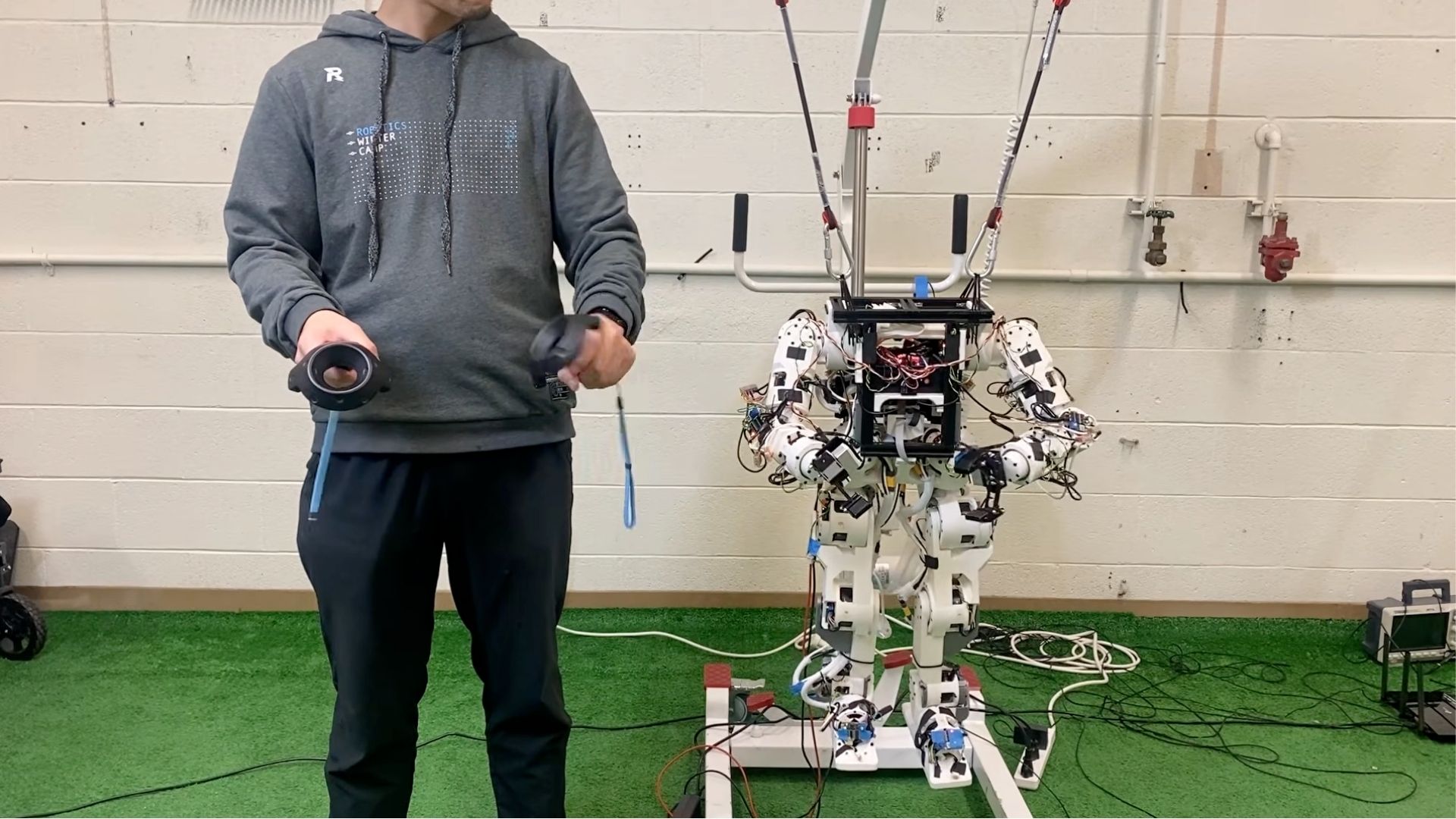
Engineers and computer scientists at the University of California, Berkeley have released an open-source hardware platform for bipedal robotics, introducing a lightweight humanoid system constructed largely from 3D-printed structural components. The project, named the Berkeley Humanoid Lite and detailed in reporting by tech journalism outlet Jijo Malayil on August 31, 2026, is engineered to significantly lower the financial and technical barriers associated with constructing and experimenting on two-legged robotic hardware. By distributing complete digital design files, mechanical blueprints, and component specifications online, the engineering team aims to provide academic labs, software developers, and independent researchers with an accessible foundation for testing motion control algorithms and embodied artificial intelligence systems.
Key facts
What happened
The release of the Berkeley Humanoid Lite marks a deliberate effort by academic developers to democratize humanoid hardware construction. Historically, research into full-body robotic locomotion and balance required access to expensive, custom-machined platforms developed by specialized industrial vendors. The Berkeley project circumvents traditional manufacturing bottlenecks by relying on additive manufacturing, allowing researchers to 3D-print core structural segments such as limbs, torso brackets, and joint mounts using standard thermoplastic materials or reinforced composite filaments.
According to reporting by Jijo Malayil, the platform provides an accessible entry point for engineers seeking to test reinforcement learning and real-time control algorithms on physical hardware without risking prohibitive financial loss from mechanical crashes. Bipedal systems inherent to balance research are prone to frequent falls during initial training phases, making durable, cheaply replaceable 3D-printed components a practical structural strategy.
The open-source repository distributed by the Berkeley team includes comprehensive Computer-Aided Design (CAD) files detailing frame geometry, motor mount positions, and joint articulation points. By pairing 3D-printed structural housings with off-the-shelf electric actuators and commercially available motor controllers, the architecture reduces reliance on proprietary gearboxes or bespoke assemblies. Developers can download the structural models, print the physical chassis on standard fused deposition modeling (FDM) or stereolithography (SLA) printers, and assemble the unit using standard industrial fasteners and off-the-shelf control electronics.
Why it matters
The availability of an open-source, 3D-printed humanoid framework addresses one of the most persistent bottlenecks in robotics research: the severe disparity in hardware access between corporate tech conglomerates and small academic or independent research laboratories. Proprietary humanoid platforms from commercial vendors often cost tens or hundreds of thousands of dollars per unit, placing physical validation of locomotion algorithms beyond the budget of many university departments and independent software developers.
By shifting the primary physical structure to additive manufacturing, the Berkeley Humanoid Lite dramatically reduces capital expenditure requirements. A low-cost, repairable hardware base enables researchers to conduct high-risk physical trials—such as aggressive dynamic walking, terrain navigation, and agility training—where falling and mechanical breakage are expected outcomes. When a 3D-printed limb segment fractures during a fall, researchers can re-print the replacement part within hours for a nominal material cost, rather than waiting weeks for custom-machined metal replacements from specialized suppliers.
Furthermore, standardized open-source hardware accelerates reproducible research across the global machine learning community. In artificial intelligence research, algorithm benchmarks often suffer from hardware variance across different testing environments. A widely accessible open-hardware model allows researchers across different institutions to test the same control policies, reinforcement learning models, and neural network architectures on identical physical chassis, establishing standard empirical baselines for bipedal stability, energy efficiency, and movement fidelity.
The background
Humanoid robotics has undergone a rapid structural evolution over the past decade, driven by parallel advances in artificial neural networks, computer vision, and high-torque electric motor technology. Historically, humanoid systems were developed almost exclusively by large institutional entities or well-funded industrial laboratories. Early pioneering platforms, such as Honda’s ASIMO project launched in the 2000s, relied on multi-million-dollar custom hardware, specialized hydraulic systems, and closed proprietary software stacks that prevented external modification or low-cost replication.
In recent years, the industry has seen a split between high-capital commercial humanoid programs and open-hardware academic initiatives. Private technology companies and venture-funded startups—including Tesla with its Optimus project, Boston Dynamics with the electric Atlas, Figure AI, and China-based Unitree Robotics—have poured billions of dollars into scaling full-sized humanoid robots intended for industrial manufacturing, logistics, and household support. While companies like Unitree have introduced commercial lower-cost models such as the G1 and H1 to lower purchase prices into the tens of thousands of dollars range, those systems remain closed hardware platforms subject to commercial vendor supply chains.
Concurrently, open-source software frameworks like the Robot Operating System (ROS and ROS 2), combined with open-source physical projects like Stanford University’s Mobile ALOHA manipulation platform, demonstrated the power of community-driven robotics. The introduction of the Berkeley Humanoid Lite represents an extension of this open philosophy into full-body bipedal locomotion platforms. By utilizing modular design principles pioneered in open-source drone ecosystems and hobbyist robotics, the Berkeley team builds upon a decade of progress in low-cost planetary gearboxes, direct-drive actuators, and rapid prototyping tools that have made desktop manufacturing increasingly capable of handling structural loads.
Reaction
The announcement of the Berkeley Humanoid Lite platform has generated interest across academic robotics and open-source hardware communities. University researchers, particularly those specializing in reinforcement learning and embodied artificial intelligence, have consistently called for accessible hardware platforms to complement simulator frameworks like NVIDIA Isaac Sim and MuJoCo. Industry analysts note that while commercial enterprises focus on heavy-payload industrial capabilities, academic institutions require agile, easily repairable testbeds designed specifically for rapid iterative experimentation.
Open-source hardware advocacy organizations and independent roboticists are expected to review the platform's CAD files and manufacturing tolerances to assess assembly complexity and structural endurance. Electronics suppliers and hobbyist kit manufacturers are also anticipated to monitor the project's reception to evaluate whether to offer pre-bundled component packages, such as tailored wiring harnesses, pre-programmed motor controllers, and fastener kits, to streamline construction for non-specialist builders.
What we don't know yet
While the initial release establishes the overarching design philosophy of the Berkeley Humanoid Lite, several key technical and operational parameters remain unconfirmed in current reporting:
Clarifying these operational limits will be critical for determining whether the system can function as an active research workhorse or primarily as an educational demonstration tool.
What to watch
The trajectory of the Berkeley Humanoid Lite platform will depend on several upcoming milestones across software development and physical deployment:
As research teams begin assembling and stress-testing the Berkeley Humanoid Lite in independent lab environments, real-world durability data will reveal whether 3D-printed bipedal structures can reliably support advanced dynamic locomotion research.
***
Reporting for this article is based on initial news coverage published by Jijo Malayil on August 31, 2026.
How this story was produced
This report was written by The Global Wire newsroom from reporting first published by Jijo Malayil. We verify the core facts against the original report, write our own account, and add the background and consequences a short wire item leaves out. Drafting is AI-assisted inside an editor-supervised pipeline, and every story is checked for accuracy of attribution, structure and duplication before it appears — full detail in our AI and funding disclosure.
Spotted an error? Tell us at corrections@horizonglobalnews.com and read our corrections policy or editorial standards.
Reader comments
Loading comments…