

Federal Reserve Poised to Hold Rates Steady Ahead of Midterm Elections
Policymakers are expected to pause rate increases this week, but persistent 3.7% inflation and elevated energy costs keep the door open for a December move.
By The Global Wire Newsroom · Reported from Quirino Mealha
Link preview · horizonglobalnews.com
Federal Reserve Poised to Hold Rates Steady Ahead of Midterm Elections
Policymakers are expected to pause rate increases this week, but persistent 3.7% inflation and elevated energy costs keep the door open for a December move.
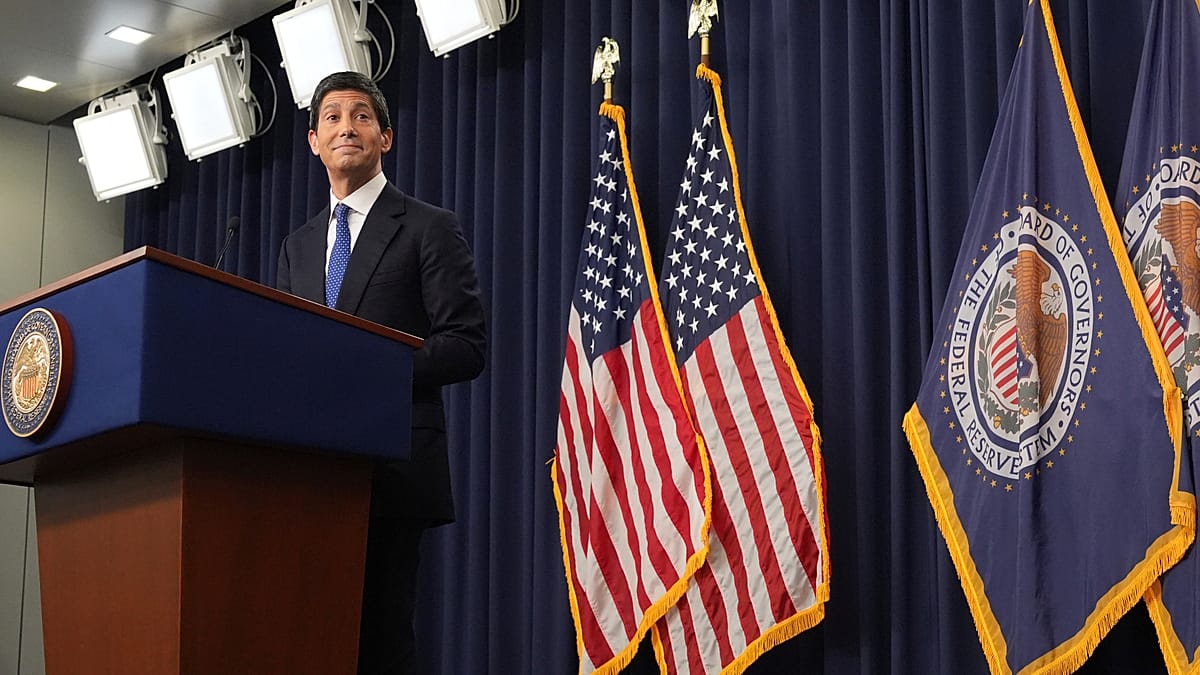
WASHINGTON — The Federal Reserve is widely anticipated to maintain its benchmark interest rate at its policy meeting on Wednesday, holding borrowing costs steady just six days before voters cast ballots in the United States midterm elections. The anticipated pause comes as monetary policymakers balance the political sensitivities of an imminent nationwide vote against macroeconomic pressures, including an annualized inflation rate running at 3.7 percent and sustained upward pressure on global crude oil prices. Financial markets are closely watching the forthcoming post-meeting press conference by Federal Reserve Chair Kevin Warsh, where investors and economists will analyze every statement for indications of whether the central bank plans to resume tightening monetary policy at its final meeting of the year in December.
Key facts
What happened
Central bank officials convened this week in Washington for the penultimate scheduled meeting of the Federal Open Market Committee (FOMC) in 2026. According to analysis reported by Quirino Mealha, consensus among institutional forecasters and interest rate traders indicates that policymakers will elect not to alter the federal funds target range at Wednesday's conclusion.
The backdrop to the two-day gathering presents a delicate economic equation. While the most acute phase of price spikes has receded from historic highs seen in earlier cycles, consumer prices remain stubborn, with annual inflation registering at 3.7 percent. At the same time, volatile energy commodities, notably elevated crude oil benchmarks, threaten to feed directly into domestic transportation costs, consumer fuel expenditures, and utility expenses. Under normal conditions, such numbers might encourage a central bank to apply additional restraint immediately.
However, the calendar has introduced an added layer of institutional caution. The policy announcement falls less than a week before the American midterm elections, an event that will determine control of both chambers of the United States Congress. By holding rates steady at this junction, the central bank avoids making an unexpected intervention that could directly disrupt financial conditions or become a political lightning rod in the final hours of campaign messaging.
Attention will focus primarily on the official FOMC policy statement released at 2:00 p.m. Eastern Time and the subsequent press conference led by Chair Kevin Warsh. Investors are parsing whether the committee characterizes the current policy stance as sufficiently restrictive or signals that the pause is purely temporary, clearing the deck for an increase before the calendar year closes.
Why it matters
The Federal Reserve's determination carries immediate consequences for corporate treasuries, mortgage lenders, individual consumers, and global currency markets. Holding the federal funds rate steady offers temporary stability to borrowing costs, yet the prospect of another rate hike in December guarantees that financing conditions will remain historically tight for the foreseeable future.
For households, the central bank's decisions dictate the cost of consumer credit, ranging from variable-rate credit cards and automotive financing to home equity lines of credit. Average mortgage rates, which track yields on the benchmark 10-year United States Treasury note, remain deeply sensitive to monetary policy expectations. If Chair Warsh delivers a hawkish message signaling that a December rate hike is probable, bond yields are likely to climb, pushing home borrowing costs higher and further dampening transactions in the residential housing market.
For the corporate sector, prolonged monetary restraint raises refinancing risks. Businesses that issued low-coupon debt during past easing cycles face steep rollover costs when refinancing maturing notes. A pause provides CFOs brief operational breathing room, but the implicit threat of higher terminal rates weighs on capital expenditure plans and corporate hiring decisions.
Globally, the stance of the Federal Reserve exerts an outsized gravitational pull on sovereign exchange rates and central bank policies worldwide. A strong U.S. dollar, supported by elevated interest rates and the threat of further tightening, exacerbates imported inflation for foreign economies that settle energy purchases and sovereign debt obligations in greenbacks. Emerging market economies, in particular, remain vulnerable to capital outflows whenever U.S. yields edge higher, compelling foreign central banks to maintain tighter domestic policy than their local economic conditions might otherwise warrant.
The background
The Federal Reserve operates under a dual statutory mandate established by the United States Congress: promoting maximum sustainable employment and maintaining stable prices, which the central bank formally defines as an average inflation rate of 2.0 percent over the longer term. When consumer price indexes outpace that objective, the primary policy lever available to the FOMC is the benchmark federal funds rate—the rate depository institutions charge each other for overnight loans of central bank reserves.
Raising this rate ripples through the wider economy by raising the prime rate, slowing aggregate demand, curbing business hiring, and reducing consumer expenditures. Conversely, lowering the rate stimulates economic activity during downturns. The central bank's modern operational framework also involves forward guidance—explicit signaling regarding the future path of interest rates—and adjustments to the composition of its massive balance sheet through quantitative easing or quantitative tightening.
Historically, central bankers strive to maintain strict institutional independence from partisan politics. The Federal Reserve Act designed the system with staggered terms for members of the Board of Governors to insulate monetary stewards from electoral cycles. Nonetheless, monetary policy actions implemented immediately adjacent to major federal elections frequently invite scrutiny. Federal Reserve officials traditionally avoid sharp or unexpected policy shifts in the days leading up to a general or midterm vote unless unexpected economic developments compel immediate intervention. A standstill decision six days prior to the midterms aligns closely with historical central bank norms aimed at avoiding public controversy or market instability on the eve of balloting.
Inflation persistence has proved notoriously difficult to eradicate in modern macroeconomic cycles. While goods deflation often provides initial relief following supply chain normalizations, services inflation and energy shocks tend to show greater inertia. With annual inflation measured at 3.7 percent, price growth sits nearly two full percentage points above the committee's objective. Oil price fluctuations introduce additional unpredictability, as energy prices pass through into headline consumer inflation within weeks, threatening to unseat consumer inflation expectations if left unchecked.
Reaction
Financial markets traded with measured restraint in the run-up to the policy statement, reflecting broad consensus that the committee would not alter interest rates at this meeting. Wall Street equity indices displayed range-bound movements, while yields on short-dated Treasury bills held firm, reflecting pricing that largely rules out an immediate rate change while factoring in substantial probabilities of action before year-end.
Market economists and fixed-income strategists have focused their pre-meeting commentary on the nuances of the FOMC's written communication. Analysts widely project that any alterations to the post-meeting statement will center on how the committee characterizes progress on disinflation and recent labor market conditions. Political observers and congressional campaigns across both parties have largely withheld direct commentary ahead of the announcement, though lawmakers from both sides of the aisle are anticipated to issue public assessments depending on how Chair Warsh frames the economic outlook and the cost-of-living challenges confronting voters next week.
What we don't know yet
Several critical elements of the central bank's upcoming decision and its medium-term strategy remain unresolved. Chief among them is the degree of internal consensus among the voting members of the FOMC. It is not yet clear whether the anticipated decision to hold rates steady will be unanimous or whether hawkish regional reserve bank presidents will register formal dissents in favor of an immediate rate hike to address 3.7 percent inflation.
Furthermore, the precise conditions required for the central bank to proceed with an interest rate increase in December remain undefined. Observers do not yet know the specific thresholds for upcoming nonfarm payroll releases, wage growth data, or Consumer Price Index prints that would definitively trigger another rate hike. The degree to which the Federal Reserve views elevated oil prices as a transitory supply-side shock versus a structural inflationary hazard that demands monetary counteraction is similarly ambiguous, pending Chair Warsh's scheduled remarks.
What to watch
In the immediate wake of Wednesday's announcement, market participants will concentrate on Chair Warsh's opening press briefing statements and his responses during the question-and-answer period. Observers will monitor whether he indicates that the committee discussed the possibility of an immediate hike, and how explicitly he connects the upcoming December policy gathering to subsequent monthly inflation prints.
Beyond the press conference, the economic calendar will quickly present major verification points. The United States midterm elections on the following Tuesday will settle the political composition of the incoming Congress, shaping future fiscal policy, federal spending trajectory, and regulatory oversight. Following the election, the Bureau of Labor Statistics will issue updated monthly employment and consumer price inflation figures for October. Those data releases, alongside changes in global crude oil benchmarks, will serve as the definitive metrics determining whether the Federal Reserve follows through on market expectations for a rate increase when the FOMC holds its final meeting of the year in mid-December.
This report is based on reporting published by Quirino Mealha.
How this story was produced
This report was written by The Global Wire newsroom from reporting first published by Quirino Mealha. We verify the core facts against the original report, write our own account, and add the background and consequences a short wire item leaves out. Drafting is AI-assisted inside an editor-supervised pipeline, and every story is checked for accuracy of attribution, structure and duplication before it appears — full detail in our AI and funding disclosure.
Spotted an error? Tell us at corrections@horizonglobalnews.com and read our corrections policy or editorial standards.





Reader comments
Loading comments…