

Pandemic Rescue Programme Purchases 7 Million Shellfish to Rebuild 35 U.S. Reefs
A relief effort launched during 2020 restaurant shutdowns has preserved over 1,000 coastal jobs while repurposing commercial oyster surpluses into marine restoration assets.
By The Global Wire Newsroom · Reported from TOI Science Desk
Link preview · horizonglobalnews.com
Pandemic Rescue Programme Purchases 7 Million Shellfish to Rebuild 35 U.S. Reefs
A relief effort launched during 2020 restaurant shutdowns has preserved over 1,000 coastal jobs while repurposing commercial oyster surpluses into marine restoration assets.
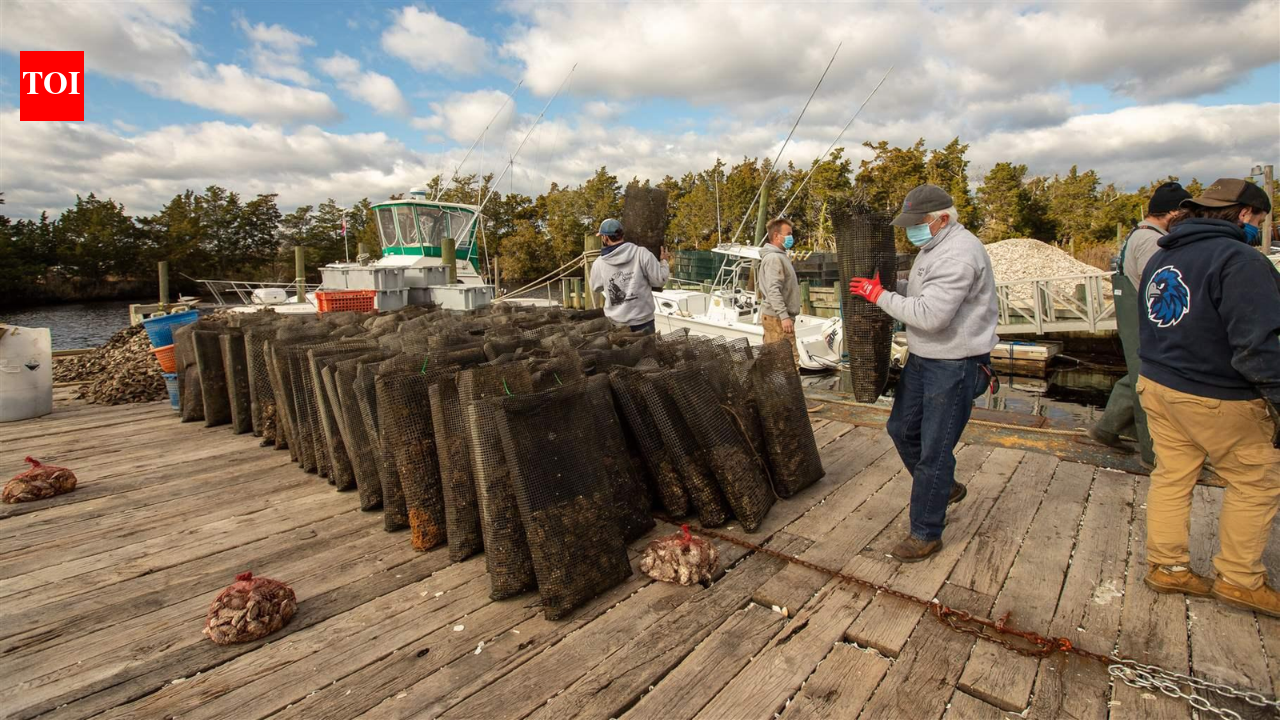
A multi-year coastal initiative established to absorb commercial shellfish surpluses during the 2020 pandemic has surpassed seven million oysters purchased and relocated across 35 degraded reef sanctuaries, according to reporting by TOI Science Desk. The intervention, originally devised to buffer commercial growers against the catastrophic loss of culinary wholesale markets, has successfully preserved more than 1,000 aquaculture and related maritime jobs along United States coastlines over a six-year period. By linking emergency agricultural relief with long-term ecological rehabilitation, the effort created a functional pipeline between private mariculture producers and publicly managed marine conservation zones.
Key facts
What happened
In March 2020, widespread public health mandates led to the immediate shuttering of hospitality venues, bars, and white-tablecloth restaurants across North America. Within days, commercial shellfish farmers found their primary distribution network severed. Unlike traditional livestock or dry commodities that can be butchered, frozen, or stored in grain elevators, live bivalves held in estuarine leases continue to feed, grow, and calcify. For the premium raw-bar market, oysters must strictly conform to specific dimensions, typically between two and a half and three inches. When these shellfish exceed market size, their commercial wholesale value drops precipitously because they become difficult to shuck and unappealing for half-shell presentation.
Faced with millions of rapidly growing, unsellable bivalves occupying valuable gear and lease space, commercial operators faced potential insolvency. In response, a coalition of conservation groups, industry bodies, and state and federal marine resource managers established a structured purchasing mechanism. Rather than allowing surplus stocks to suffocate in floating bags or dumping them into landfills, the program acquired marketable and oversized oysters directly from independent hatcheries and grow-out operations at baseline operational rates.
Over the subsequent six years, the initiative scaled from an ad-hoc emergency salvage effort into an institutionalized restoration engine. Maritime logistical networks were organized to gather harvested batches from local docks, transport them aboard working vessels, and deposit them onto pre-surveyed coastal sub-tidal zones. As documented by TOI Science Desk, the initiative has now channeled over seven million live oysters into 35 strategically selected reef footprints across multiple oceanic regions, while underwriting operational continuity for more than 1,000 maritime workers.
Why it matters
Commercial mariculture occupies a vulnerable node within the broader agricultural economy. Most oyster operations are small-scale, capital-intensive family businesses operating on thin margins and relying heavily on the leisure and dining sectors. The stabilization of more than 1,000 coastal livelihoods preserved generational maritime knowledge and prevented the collapse of private marine infrastructure that would have cost decades and tens of millions of dollars to rebuild.
Beyond direct payroll protection, the ecological implications of shifting seven million mature bivalves into natural marine waters are profound. A single adult eastern oyster (*Crassostrea virginica*) or Pacific oyster (*Crassostrea gigas*) is capable of filtering up to 50 gallons of seawater per day under optimal conditions. By removing suspended sediments, micro-algae, and excess nitrogen derived from agricultural runoff, large aggregates of oysters systematically clarify the water column. This clarity allows sunlight to penetrate deeper into estuarine basins, stimulating the regeneration of critical subaquatic vegetation like eelgrass, which in turn acts as nursery grounds for recreationally and commercially vital fish species.
Furthermore, the physical accumulation of calcareous shells on degraded seafloors acts as natural, living breakwaters. In an era marked by intensifying coastal storms and rising sea levels, structurally sound oyster reefs blunt incoming wave energy, diminishing coastal erosion and shielding vulnerable marshlands far more cost-effectively than poured concrete seawalls.
The background
Wild oyster populations throughout North America represent one of the most degraded marine habitats on the planet. Over the course of the 19th and 20th centuries, intensive mechanical dredging, destructive industrial harvesting, industrial pollution, and widespread siltation stripped an estimated 85 percent of wild oyster reefs from bays and estuaries such as the Chesapeake, Delaware Bay, and Long Island Sound. The devastation was compounded in subsequent decades by virulent protozoan parasitic diseases, notably MSX (*Haplosporidium nelsoni*) and Dermo (*Perkinsus marinus*), which wiped out vast swaths of unmanaged native stocks.
In response to the collapse of wild harvesting, modern marine aquaculture expanded rapidly over the late 20th and early 21st centuries. Private growers embraced containerized culturing methods, off-bottom cages, and triploid breeding techniques to cultivate uniform, pristine shellfish tailored specifically for upscale raw consumption. This technological boom successfully met consumer appetite but decoupled commercial supply from natural habitat restoration; farmed oysters were harvested, scrubbed, consumed, and their shells were predominantly discarded in municipal waste streams rather than returned to the sea to serve as settlement substrate for larval spat.
When the economic shocks of 2020 struck, commercial aquaculture lacked the standard federal safety nets historically enjoyed by terrestrial row-crop farmers, such as federal crop insurance or routine commodity purchasing programs run by the Department of Agriculture. The emergency framework developed during the pandemic effectively introduced a parallel mechanism: public-interest procurement that utilized environmental restoration funds to absorb commercial supply shocks, converting an agricultural surplus directly into natural capital.
Reaction
While formal individual statements were not detailed in the latest dispatch, coastal fisheries bodies, regional shellfish associations, and environmental non-governmental organizations have routinely praised the structural integration of private aquaculture with state restoration targets. Industry bodies representing coastal growers have emphasized in marine governance meetings that targeted public-private procurement remains one of the fastest mechanisms to inject working capital directly into coastal communities.
Marine scientists and policy analysts within coastal state natural resource departments are expected to review the six-year benchmark during upcoming coastal management panels. Discussions are likely to center on institutionalizing this procurement pipeline beyond emergency scenarios, establishing standing protocols where state conservation departments purchase excess agricultural stocks as regular inputs for climate adaptation and estuarine protection projects.
What we don't know yet
Despite the operational success reflected in the headline figures, several key biological and financial questions remain unanswered in the reported data. The survivorship, settlement rates, and reproductive output of the seven million transplanted oysters across the 35 specific reef sites have not been published in a comprehensive scientific assessment. Because farmed oysters are often moved from low-stress, predator-excluded mesh bags directly onto open benthic floors, their vulnerability to native predators, such as blue crabs, oyster drills, and cownose rays, varies significantly based on local environmental management.
Additionally, the reporting does not disclose the precise financial mechanisms that sustained the program over the full six-year duration. It remains uncertain what proportion of funding derived from initial federal pandemic stimulus programs, such as the CARES Act, versus philanthropic capital or ongoing state municipal resilience budgets. Without clarity on long-term funding sources, it is difficult to determine whether this procurement architecture can be permanently sustained or expanded to address other threatened aquaculture sectors.
What to watch
Moving forward, the primary metric of success will be whether these 35 reef sites transition into self-sustaining, multi-generational biogenic ecosystems. Independent biological surveys conducted by marine biology institutes and the National Oceanic and Atmospheric Administration (NOAA) over upcoming seasonal spawning cycles will determine whether the transplanted adult oysters have successfully produced sufficient larval spat to sustain reef volume without ongoing commercial replenishment.
Observers should also monitor coastal state legislative sessions and upcoming federal conservation allocations. Several coastal jurisdictions are drafting resilience and infrastructure spending measures that could permanently authorize environmental agencies to purchase shellfish directly from private aquaculture leases during localized market downturns. Finally, fisheries scientists will track whether the techniques refined across these 35 United States reef sites can be exported internationally to estuarine rehabilitation programs in Europe and the Asia-Pacific region.
This article is based on reporting published by TOI Science Desk.
How this story was produced
This report was written by The Global Wire newsroom from reporting first published by TOI Science Desk. We verify the core facts against the original report, write our own account, and add the background and consequences a short wire item leaves out. Drafting is AI-assisted inside an editor-supervised pipeline, and every story is checked for accuracy of attribution, structure and duplication before it appears — full detail in our AI and funding disclosure.
Spotted an error? Tell us at corrections@horizonglobalnews.com and read our corrections policy or editorial standards.






Reader comments
Loading comments…