

Centuries After Arrival as a Herb, Garlic Mustard Overruns North American Forests
Initially imported in the 1860s for cooking and folk remedies, an invasive biennial has established footholds across 37 U.S. states and six Canadian provinces.
By The Global Wire Newsroom · Reported from TOI Science Desk
Link preview · horizonglobalnews.com
Centuries After Arrival as a Herb, Garlic Mustard Overruns North American Forests
Initially imported in the 1860s for cooking and folk remedies, an invasive biennial has established footholds across 37 U.S. states and six Canadian provinces.
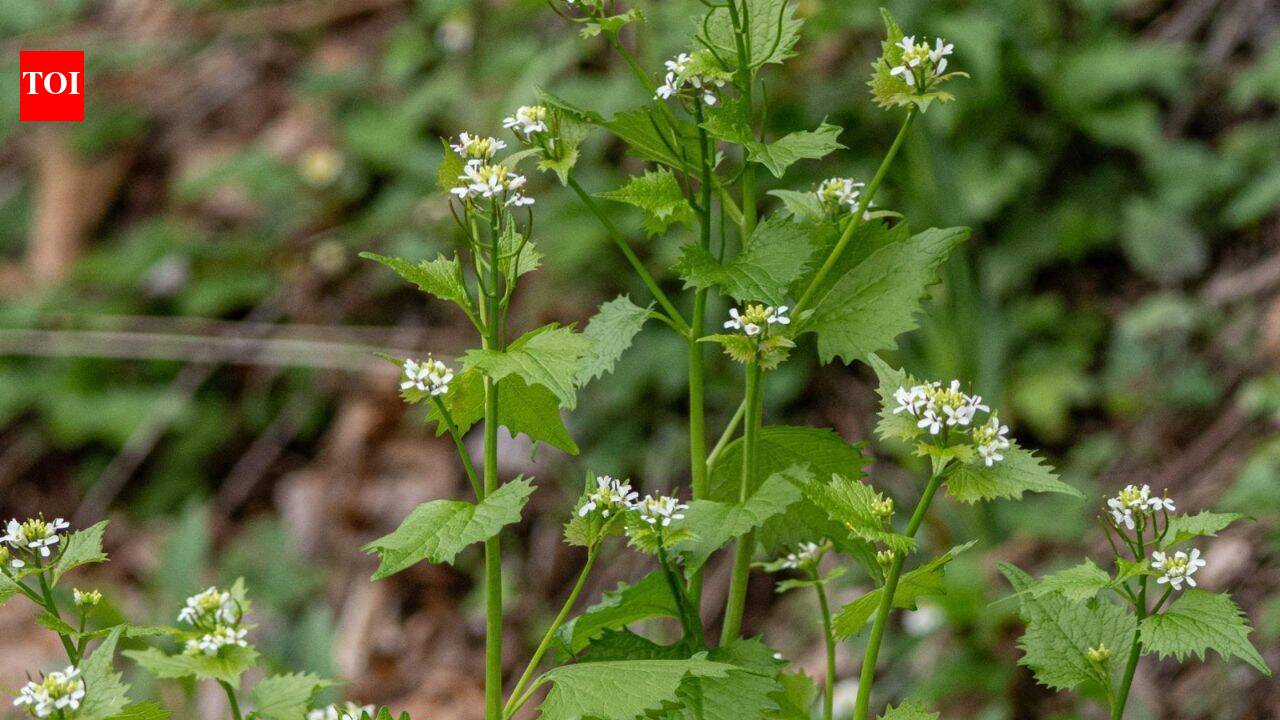
Forestry managers and conservation biologists across North America are contending with the long-term ecological fallout of a 19th-century botanical introduction, as garlic mustard continues to suppress native understory flora across dozens of jurisdictions. Originally brought across the Atlantic by European settlers in the 1860s to serve as a culinary seasoning and medicinal herb, the biennial plant has expanded far beyond its original domestic garden plots. Today, the non-native weed has established documented populations in 37 U.S. states and six Canadian provinces, transforming it from a minor domestic curiosity into one of the most persistent biological invaders threatening temperate deciduous woodlands on the continent.
Key facts
What happened
According to reporting by the TOI Science Desk, the transatlantic journey of garlic mustard, known botanically as Alliaria petiolata, began as an intentional importation during the mid-19th century. Early European immigrants carried seeds across the ocean, valuing the plant for its early spring foliage, high vitamin content, and sharp flavor reminiscent of garlic and brassicas, as well as traditional applications as an antiseptic poultice.
The earliest confirmed record of garlic mustard growing uncultivated in North America dates to 1868 on Long Island, New York. Once established in the wild, the plant capitalized on disturbed soils, river corridors, and the absence of co-evolved herbivores to initiate an aggressive westward and northward range expansion. Over the ensuing decades, what began as isolated patches along roadsides and forest edges evolved into widespread regional infestations.
As tracked by state wildlife services and federal conservation departments, the species progressively crossed state and provincial boundaries. It pushed westward through the Great Lakes basin and the Ohio River Valley, southward along the Appalachian mountain chain, and later established disjunct populations across the Rocky Mountains and the Pacific Northwest. In Canada, agricultural and natural resource surveys confirmed its spread across six provinces, primarily infesting southern Ontario and southern Quebec while encroaching into parts of New Brunswick, Nova Scotia, British Columbia, and Manitoba.
Across these regions, garlic mustard operates through a two-year biennial cycle. In its initial year, the plant develops a low-lying basal rosette of dark green, kidney-shaped leaves that can photosynthesize throughout mild winters. In its second spring, it rapidly bolts into erect flowering stems between 30 and 100 centimeters tall, bearing clusters of small, four-petaled white flowers. A single mature plant can produce hundreds of slender seed pods known as siliques, releasing anywhere from hundreds to several thousand seeds that remain viable in the forest seed bank for a decade or more.
Why it matters
The entrenchment of garlic mustard across 37 states and six provinces presents severe structural hazards for forest ecology, public land management, and timber economies. Unlike many non-native weeds that remain restricted to disturbed road shoulders, sunny meadows, or abandoned agricultural parcels, garlic mustard possesses an uncommon tolerance for deep forest shade. This capability enables it to penetrate interior, closed-canopy deciduous woodlands, displacing indigenous spring ephemerals such as trillium, bloodroot, wild ginger, and Dutchmans breeches.
Beyond basic spatial competition for sunlight, soil moisture, and nutrients, the plant deploys chemical weaponry through allelopathy. It exudes glucosinolates and related sulfur-rich secondary metabolites into the surrounding soil profile. These phytochemicals inhibit mutualistic arbuscular mycorrhizal fungi and ectomycorrhizal networks. Because dominant North American canopy trees—including sugar maple, white ash, red oak, and various hickory species—depend upon these subterranean fungal associations to facilitate water and mineral absorption, garlic mustard fundamentally impedes the survival of native tree seedlings. Consequently, long-term infestations jeopardize forest succession, limiting the ability of harvested or storm-damaged stands to regenerate commercially valuable hardwood canopies.
Furthermore, the plant disrupts indigenous faunal lifecycles. Garlic mustard is chemically lethal to the larvae of the West Virginia white butterfly and the mustard white butterfly. These native butterflies mistakenly deposit eggs onto the leaves of the invasive plant rather than on their traditional toothwort host plants. The toxic compounds within the alien foliage kill the emerging caterpillars before they can reach maturity, exerting heavy downward pressure on local insect biodiversity and, by extension, forest insectivores.
The background
Biological invasions represent one of the primary drivers of global biodiversity decline, alongside habitat fragmentation and climate disruption. Garlic mustard is indigenous to temperate regions across Europe, Western Asia, and portions of North Africa, where hundreds of specialized insect herbivores, parasitic fungi, and competing plant species maintain natural checks on its density and reproductive output.
When imported to North America in the 19th century, the plant escaped its natural ecological regulators. North American wildlife—most notably native insects and white-tailed deer—generally avoid consuming garlic mustard due to its bitter, sinigrin-derived compounds. This feeding behavior compounds the problem: burgeoning deer populations across eastern North America systematically overgraze native herbaceous perennials and tree saplings, selectively sparing garlic mustard and inadvertently eliminating its botanical competitors.
For more than four decades, land conservancies, national and state parks, and municipal authorities have deployed varied eradication strategies, often at considerable public and private expense. Manual pulling remains common across protected natural areas, but it requires labor-intensive root extraction to prevent resprouting and must be sustained annually over many years to exhaust the persistent subterranean seed reserve. Large-scale infestations frequently necessitate chemical remediation using foliar herbicides such as glyphosate or triclopyr. However, non-selective chemical applications risk non-target toxicity to dormant native perennials and nearby water bodies.
In response to the limitations of mechanical and chemical treatments, research institutions—including the United States Department of Agriculture’s Forest Service, Agriculture and Agri-Food Canada, and several university entomology divisions—have evaluated classical biological control options. Researchers have spent years examining specialized European insects, particularly the stem-mining and root-crown weevil Ceutorhynchus scrobicollis, to determine whether introducing a co-evolved specialist can selectively weaken garlic mustard populations without harming non-target native North American crucifers.
Reaction
The persistent colonization of forest floors has drawn sustained intervention from land trusts, academic ecologists, and governmental natural resource departments. In state-level conservation circles, naturalists have organized seasonal citizen-science campaigns—often dubbed garlic mustard pulls—aimed at clearing patches from high-value botanical reserves before the plants disperse their annual seed crops.
Meanwhile, federal and state natural resource agencies continue to classify garlic mustard as a noxious weed or prohibited invasive species within their respective plant protection frameworks, placing legal restrictions on the transport, propagation, and commercial sale of the plant. At the regulatory level, biological control practitioners and invasive species councils have directed their advocacy toward national agricultural clearinghouses, urging thorough environmental reviews and coordinated field-release permits for vetted biological control agents.
Forestry associations and timber organizations have similarly expressed ongoing alarm regarding the long-term viability of regeneration zones. With dense understory monocultures preventing seedling recruitment, timberland managers emphasize that unmanaged invasions degrade the future economic value of private and commercial forest leases, necessitating greater state and provincial grant funding for understory remediation.
What we don't know yet
Despite decades of field observation, critical scientific questions remain unanswered regarding garlic mustard’s long-term ecological trajectory and the total geographic extent of its southern and western expansion. Researchers continue to examine whether longstanding infestations eventually enter a self-limiting decline. Some isolated studies in older colonies have noted localized reductions in plant vigor and density, potentially caused by native soil pathogens adapting to the presence of the weed or through the self-inhibition of accumulating allelochemicals. However, whether this phenomenon represents an isolated anomaly or an impending continent-wide equilibrium remains unproven.
There is also uncertainty surrounding how shifting climatic regimes will affect the species’ range boundaries. As winters become milder and precipitation patterns become more erratic across the Great Lakes and Mid-Atlantic regions, it remains unclear whether garlic mustard will accelerate its migration into high-elevation boreal transition zones or whether increased heat stress during summer months will curtail its persistence along its southern range edge in the American South.
Additionally, comprehensive data detailing the total economic cost of garlic mustard control across municipal, state, provincial, and private sectors remain unaggregated, leaving policymakers with incomplete assessments of the true financial damage.
What to watch
The primary focus for forest managers in the coming seasons will be the ongoing field releases and regulatory monitoring of targeted biological control agents. Following preliminary experimental approvals in Canada, natural resource analysts are closely watching pilot release sites in Ontario to see whether the introduction of Ceutorhynchus weevils leads to measurable suppression of garlic mustard stands without generating collateral impacts on native Brassicaceae species.
In the United States, researchers await broader federal and state permissions for open-environment bioagent releases, which will depend on multi-agency environmental assessments overseen by the Animal and Plant Health Inspection Service (APHIS). Observers will also track the spring emergence patterns recorded by invasive plant tracking databases, such as EDDMapS, to monitor whether the plant bridges the remaining gaps into unaffected western states and Canadian territories.
Finally, municipal and regional land managers are monitoring new techniques in soil rehabilitation, particularly experimental soil amendments designed to re-inoculate mycorrhizal fungi into woodland plots after invasive garlic mustard patches have been eradicated.
This report is based on reporting by the TOI Science Desk.
How this story was produced
This report was written by The Global Wire newsroom from reporting first published by TOI Science Desk. We verify the core facts against the original report, write our own account, and add the background and consequences a short wire item leaves out. Drafting is AI-assisted inside an editor-supervised pipeline, and every story is checked for accuracy of attribution, structure and duplication before it appears — full detail in our AI and funding disclosure.
Spotted an error? Tell us at corrections@horizonglobalnews.com and read our corrections policy or editorial standards.





Reader comments
Loading comments…